


Vernacular Rush Seated Chairs
Vernacular rush seated chairs are honest country seating built from local timbers and woven grass, prized for warmth and utility.
Vernacular Rush Seated Chairs
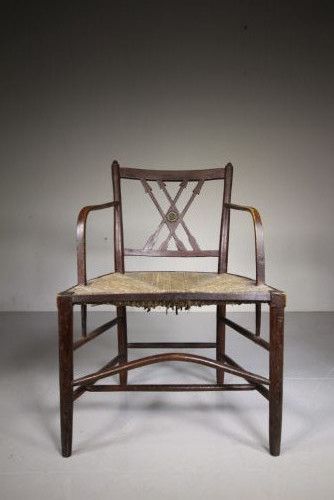
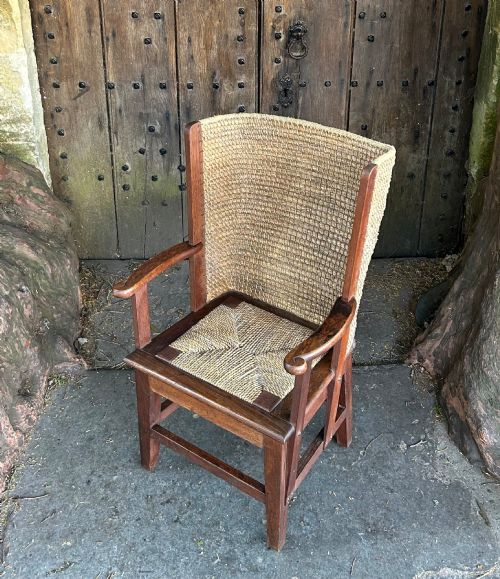
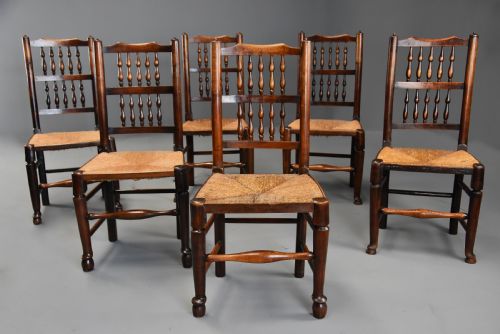
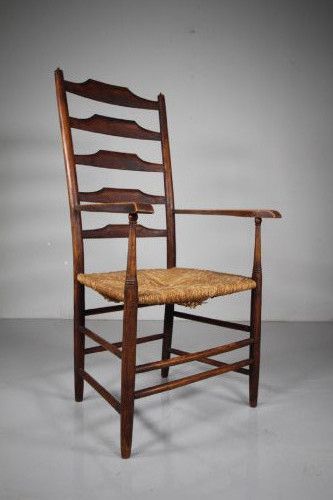
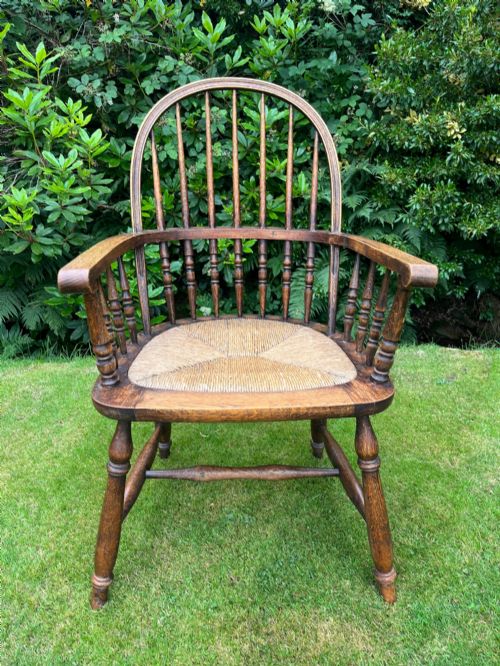
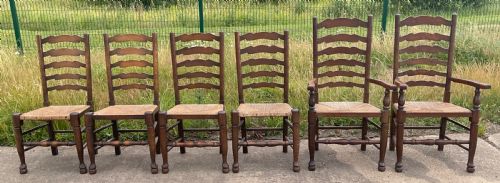
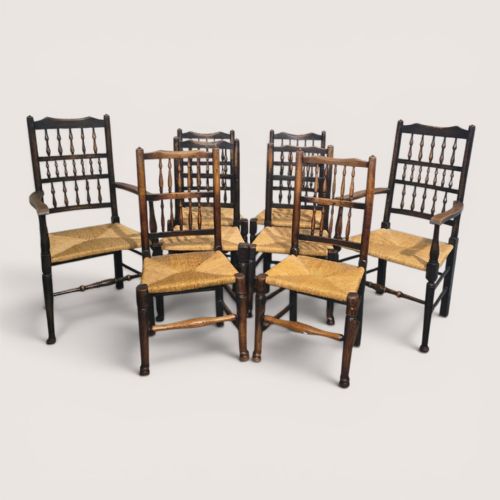
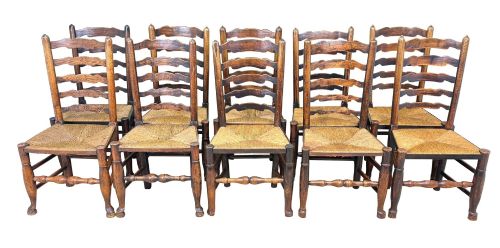
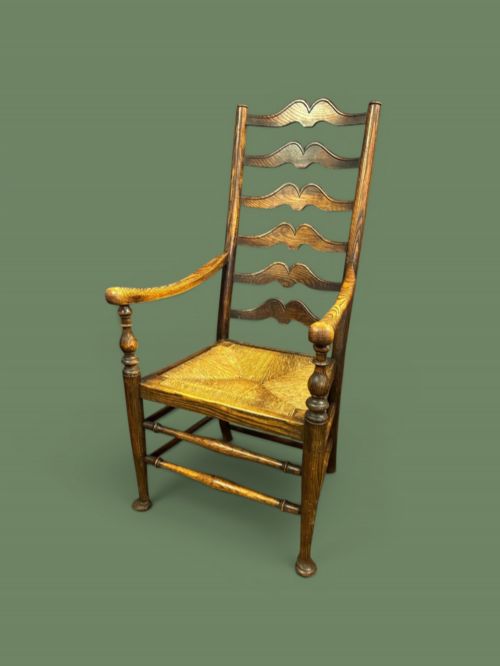
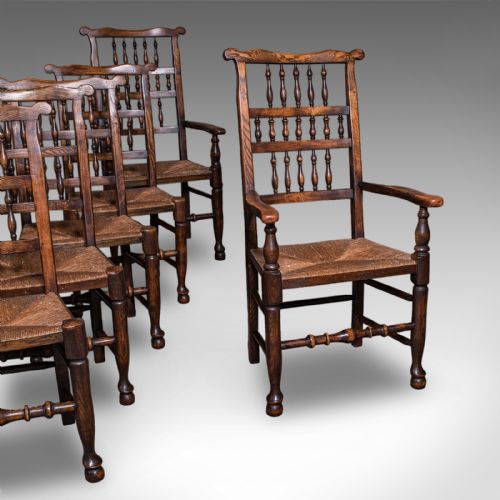
Vernacular rush seated chairs encompass functional seating produced in regions like Lancashire, Cheshire, and Orkney using regional timbers. Buyers encounter ladderbacks, spindlebacks, and Windsor forms shaped by local traditions rather than metropolitan fashion.
The selection ranges from eighteenth-century oak and elm examples to nineteenth-century ash and beech dining sets and armchairs. Smaller pieces such as children's high chairs and rocking chairs also appear regularly among the larger dining sets.
Geographic styles such as Scottish crofter chairs and Irish súgán variants demonstrate distinct regional framing methods. Most pieces follow English country and Georgian farmhouse aesthetics intended for everyday domestic use.
Construction and materials
Local timbers dictate the frame construction, with elm, ash, beech, and oak providing sturdy legs, stretchers, and curved backs. Turners and village joiners shaped these woods while green or unseasoned, allowing joints to tighten as the timber dried.
Seats employ woven rush or plaited straw, wound tightly around seat rails to create a resilient platform. Painted surfaces and stained finishes frequently seal the timber, protecting softer woods from heavy kitchen use.
Assessing quality and proportion
Quality rests upon the integrity of the frame and the tightness of the rush weaving. Better examples retain crisp turnings on spindles and ladderback slats without excessive replacement timber in the legs or stretchers.
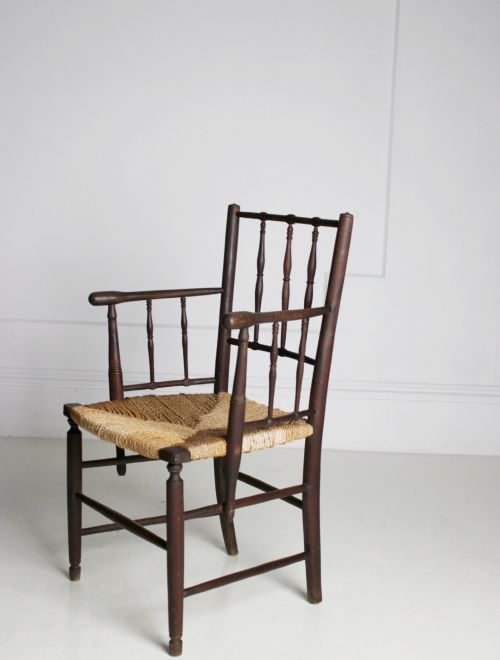
Proportion and stance separate standard utility seating from finer country pieces. Chairs with well-sculpted arms, balanced rake in the back legs, and unclipped rush edges command greater appreciation among collectors.
Philip Clissett
The Vernacular Rush Seated Chairs Glossary
- Rush
- Dried marsh grass twisted into cords and hand-woven to form resilient chair seats. It provides a natural, flexible surface that adapts to the sitter.
- Ladderback
- A chair back featuring horizontal arched slats resembling the rungs of a ladder. This form dominated regional English and Scottish seating for centuries.
- Spindleback
- A chair back constructed with numerous vertical turned rods supporting the top rail. These slender members distribute weight evenly across the frame.
- Súgán
- An Irish term for twisted straw or hay rope used as seating material. It performs the same function as rush in vernacular Irish country chairs.
- Carver
- An armchair designed to match a set of single dining chairs, often placed at the head of a table. These pieces feature substantial arm supports integrated into the lower frame.
Vernacular Rush Seated Chairs: Frequently Asked Questions
How do I clean a rush seat?
Dust the woven surface gently with a soft brush or vacuum attachment on low power. Avoid liquid cleaners, as moisture causes dried marsh grass to become brittle and snap.
Keep the chairs away from direct heat sources and damp environments to preserve the natural flexibility of the rush fibres over decades of use.
Can broken rush seats be repaired?
Traditional rush seating can be completely re-woven by a skilled craftsperson using new marsh grass or paper rush alternatives. The old framing rails remain untouched while fresh cord is wound around them.
Professional re-weaving restores the structural tension required for comfortable seating without altering the original wooden framework of the chair.
Are these chairs suitable for daily dining?
Most vernacular chairs were built for rugged kitchen and farmhouse use, making them durable enough for contemporary dining. Their lightweight frames and supportive woven seats offer practical comfort for everyday meals.
Placing felt pads beneath the legs helps protect modern hard floors from wear caused by unfooted wooden stretchers and feet.
How do I date an elm ladderback?
Examine the tool marks on the underside of the seat rails and the wear patterns on the foot extremities. Hand-turned spindles and pegged joinery generally indicate eighteenth or early nineteenth-century origin.
Compare the patina of the elm frame and the taper of the upright posts against documented examples from specific regions like Lancashire or Cheshire.