





Vernacular Oak and Elm Furniture
Vernacular oak and elm furniture brings honest country character into a room through sturdy utilitarian forms built by local makers.
Vernacular Oak and Elm Furniture
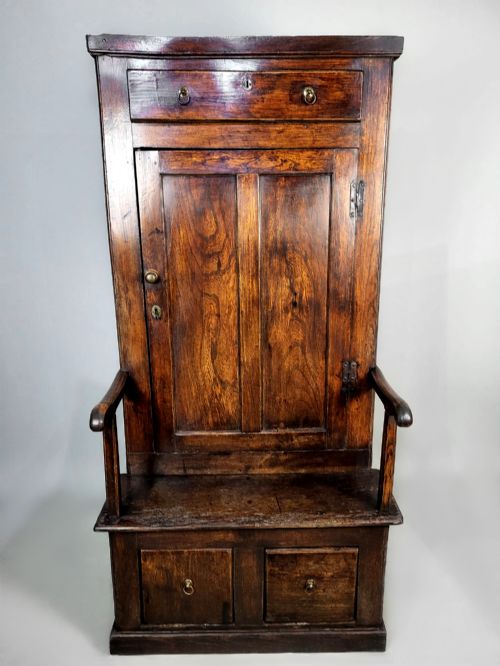
When you search for vernacular oak and elm furniture, you encounter practical household items shaped by regional British country traditions rather than London workshops. The pieces span the eighteenth century and nineteenth century, taking forms such as armchairs, settles, cupboards, tables, dressers, and stools.
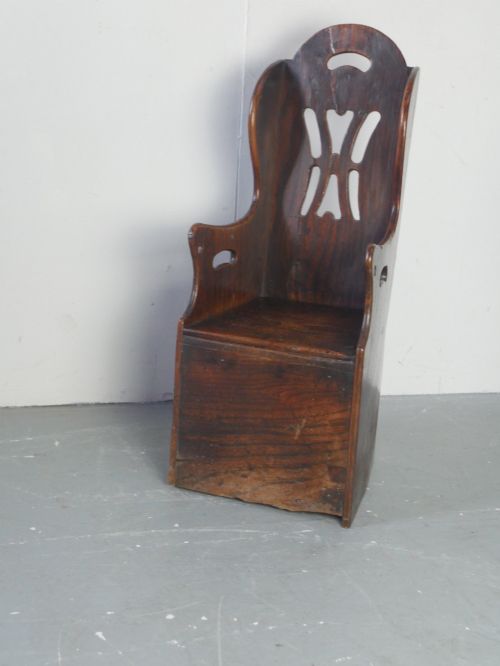
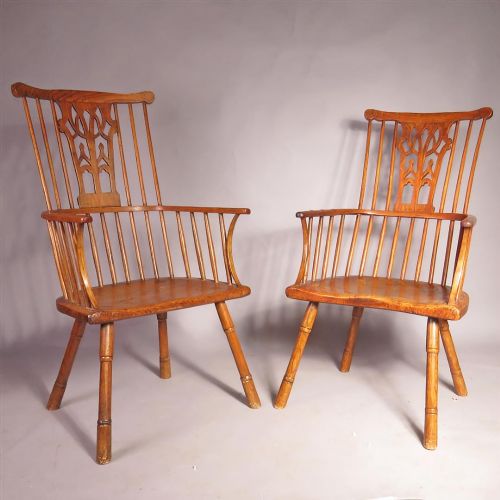
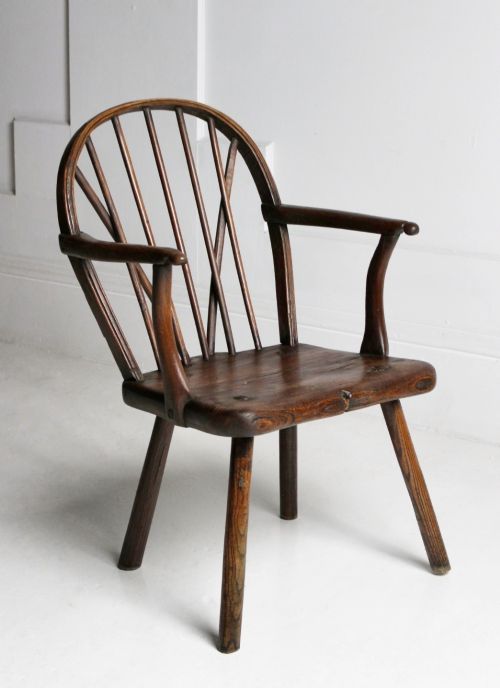
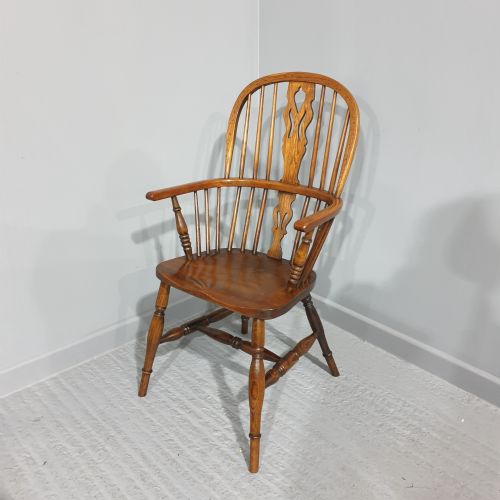
You are most likely to meet elm and oak seating, including comb back and stick back Windsor chairs, children's high chairs, and spindleback armchairs. These functional domestic items reflect English country, rustic farmhouse, and Welsh vernacular styles.
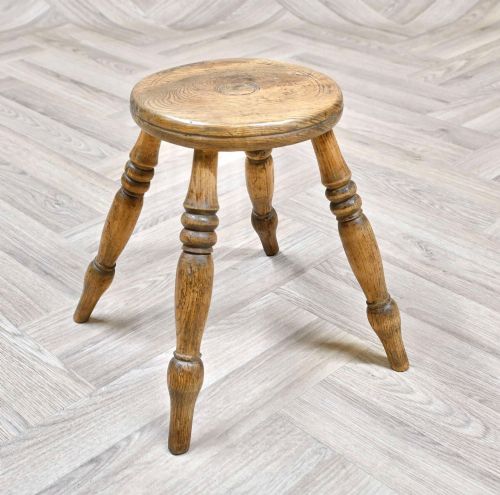
The selection ranges from simple tripod cricket tables and milking stools to substantial court cupboards and bacon settles. Each piece demonstrates how rural makers utilised available local timbers to furnish everyday farmhouses and cottages.
Materials and construction
Makers built these pieces primarily from solid oak for structural frames and elm for seats, chosen for their toughness and resistance to splitting. Ash, beech, and yew also appear in chair spindles and bending members, while iron and brass provide necessary hinges and structural reinforcement.
Joinery relied on traditional methods suited to unpretentious country workshops, including pegged mortise and tenon joints and through-wedged legs. Seat boards were often heavily saddled and shaped from single thick slabs of elm, supported by sturdy turned or cleft underframes.
Vernacular Oak and Elm Furniture Retail Price Guide 2026
Typical asking prices for vernacular oak and elm furniture among the pieces listed under this phrase on Sellingantiques today, from the lower quarter to the upper quarter. They describe what is for sale here now, not the wider market.
Surviving comb back chairs still bear the distinct thumb-prints and tool grooves left by woodworkers shaping seats centuries ago.
Assessing quality in country pieces
Quality in this furniture rests upon the harmony of proportions, the integrity of the timber, and the balance of the regional design. Better examples display confident turning on legs and spindles, thoughtful grain selection in elm seat boards, and minimal unskilful replacement of parts.
The distinction between a humble utility item and a superior piece lies in the fluid lines of a comb back or the sculptural sculpting of a solid seat. Patina built up through generations of daily use further separates well-preserved survivals from heavily altered objects.
The Vernacular Oak and Elm Furniture Glossary
- Comb back
- A chair design where the high vertical spindles of the backrest pierce a top rail that resembles the teeth of a comb.
- Court cupboard
- A low enclosed wooden storage cabinet used in domestic interiors for food and utensils, frequently constructed in oak.
- Cricket table
- A small, lightweight three-legged occasional table designed to remain stable on uneven farmhouse floors.
- Bacon settle
- A high-backed wooden bench with an integrated storage cupboard in the upper section, historically used for curing and storing meat.
- Saddle seat
- A wooden chair seat hollowed out into a concave shape to provide comfort without upholstery.
Vernacular Oak and Elm Furniture: Frequently Asked Questions
What is vernacular furniture?
Vernacular furniture refers to utilitarian domestic pieces made by local country craftsmen for everyday use rather than urban high-style workshops.
These items rely on regional traditions, native timbers like oak and elm, and straightforward construction methods suited to rural life.
How do I care for antique elm?
Elm is a dense timber that responds well to minimal maintenance using natural beeswax to nourish the wood surface.
Keep pieces away from direct heat sources and sudden humidity changes to prevent the timber from splitting.
Where were these pieces made?
Country furniture was produced across various regions of Britain, including Welsh valleys and English rural counties where local woods were abundant.
Makers utilised timber available in their immediate surroundings, giving each piece distinct regional characteristics.
How can I date an oak and elm chair?
Dating relies on examining construction techniques, tool marks, timber shrinkage, and the evolution of chair styles across the eighteenth and nineteenth centuries.
Hand- cleft components and early joinery methods indicate earlier eighteenth-century origins, while later nineteenth-century pieces often show more standardised turning.