
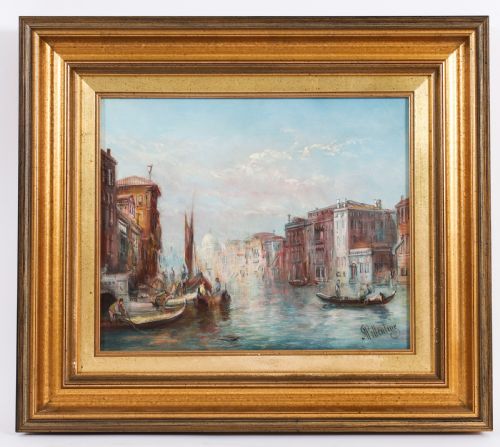
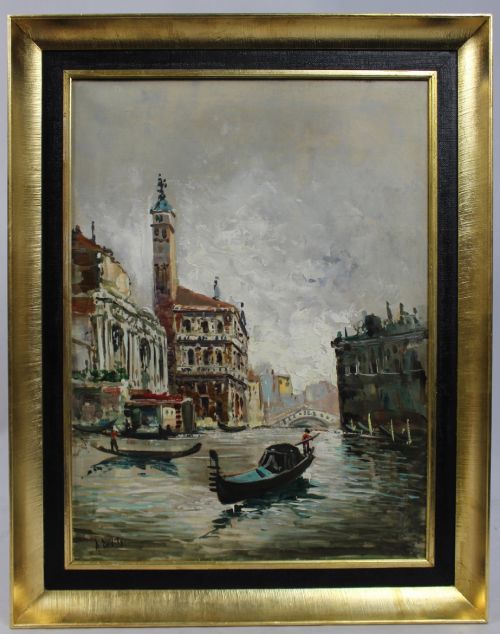
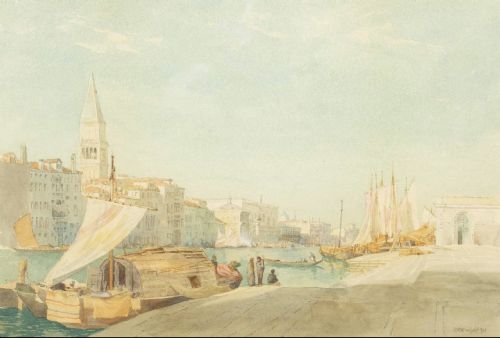
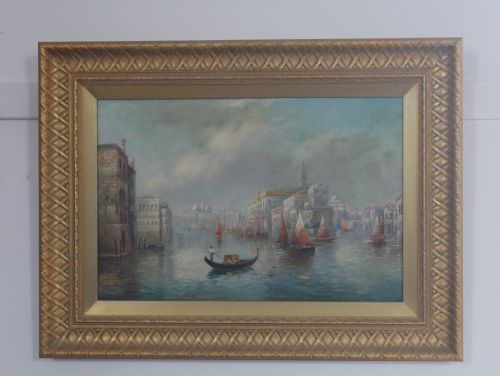
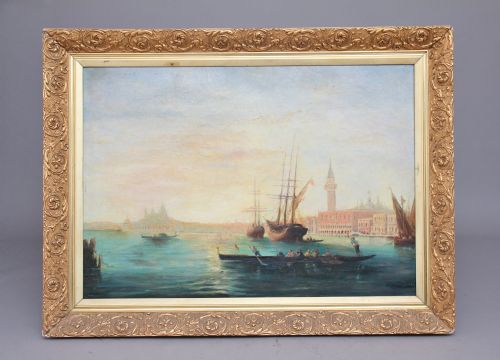


Venetian Cityscape Painting
These works capture the enduring allure of the lagoon through oil and watercolour, bringing historic canals and palaces directly into your room.
Venetian Cityscape Painting
A venetian cityscape painting depicts the unique architecture, waterways, and light of Venice across various historical periods. The works on this page span from the Victorian era into the mid-century, capturing familiar landmarks such as the Grand Canal, the Doge's Palace, and Santa Maria della Salute.
Buyers will encounter oil on canvas and delicate watercolours representing the city in both traditional detail and impressionistic brushwork. These pieces range from grand nineteenth-century townscapes to smaller twentieth-century impressions of the lagoon and its gondolas.
Materials and Technique
Artists painted these scenes primarily in oil on canvas or board, utilising oil paint to build rich textures and deep tones for water and sky. Watercolour on paper was equally common for capturing the luminous atmosphere and fleeting light across the Venetian lagoon.
Framing often involves giltwood and gilded wood, complementing the warm palettes of the paintings. Mixed media and pastel or gouache also appear among the later twentieth-century works on paper.
Several canvases manage to make the Venetian pigeons look remarkably dignified against the grandeur of the Doge's Palace.
Assessing Quality
Quality rests upon the artist's ability to render the distinctive light and perspective of the Venetian waterways convincingly. The strength of the brushwork and the clarity of architectural detail distinguish the finer works from more formulaic compositions.
The integration of original framing, such as period giltwood, and the preservation of the paint surface or paper condition further differentiate the works within the range.
Alfred Pollentine·Antonio DeVity·Claude Jousset·Marc Aldine·Jane Vivian·William Raymond Dommersen·Vittore Zanetti Zilla
The Venetian Cityscape Painting Glossary
- Lagoon
- The shallow body of water in which Venice is situated. Painters often depict its wide expanses and shifting light from the Molo or nearby islands.
- Giltwood
- Wood carved and covered with a thin layer of gold leaf or gold paint. This material forms the traditional ornate frames often found on nineteenth-century oil paintings.
- Impressionism
- An art style focused on accurate depiction of light in its changing qualities. Several works apply this approach to capture the atmospheric conditions of the canals.
- Watercolour
- A paint method where the colour pigments are suspended in a water-based solution. Many artists utilised this medium on paper for rapid, translucent views of Venetian monuments.
- Townscape
- A painting or drawing representing a urban landscape or city view. These pieces focus specifically on the streets, canals, and facades of Venice.
Venetian Cityscape Painting: Frequently Asked Questions
How do I care for a vintage oil painting?
Keep the canvas away from direct sunlight and dramatic temperature shifts to prevent paint cracking and warping. Dust the surface gently with a soft, dry brush without applying pressure.
Ensure the room maintains moderate humidity levels to protect both the wooden stretcher bars and the oil medium. Professional cleaning should be left to conservators if grime accumulates over decades.
What is the difference between oil and watercolour views?
Oil paintings on canvas offer rich textures and deep colour layering, suitable for substantial wall displays. Watercolours on paper provide a lighter, more translucent quality that captures atmospheric lagoon light.
Watercolours require protective glass framing to prevent moisture damage, whereas oil canvases remain open to the air.
How can I date a nineteenth-century Venetian scene?
Examine the preparation of the canvas, the stretcher frame construction, and any inscriptions or signatures on the reverse. Stylistic clues such as Victorian costume details or architectural changes also help establish the date.
Archival records and artist signatures often provide precise decades for works produced in the later Victorian period.
Where should I hang a large cityscape?
Select a wall with stable environmental conditions, avoiding fireplaces and damp exterior walls. A well-lit room enhances the atmospheric brushwork of the canals without exposing the pigments to harsh sunbeams.
Ensure the hanging hardware securely supports the weight of the frame, particularly for large giltwood pieces.