


Venetian Canal Scene Art
Venetian canal scene art captures the timeless waterways and historic palazzos of the floating city through oil and watercolour.
Venetian Canal Scene Art
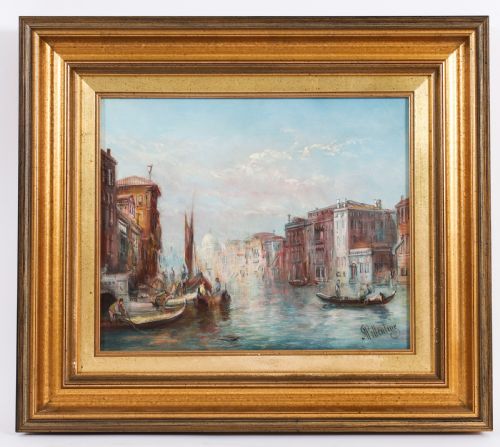
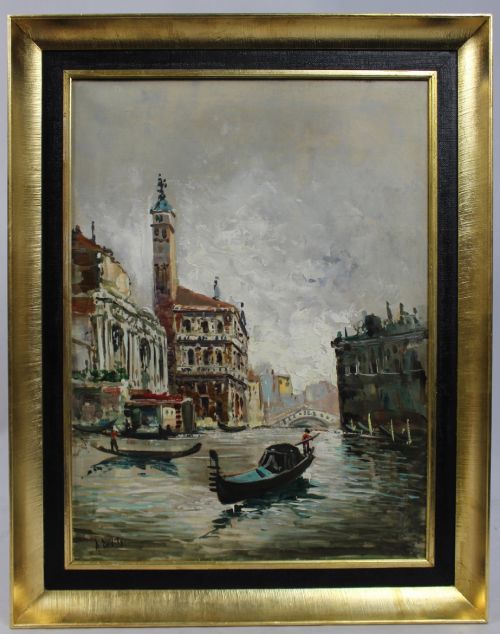
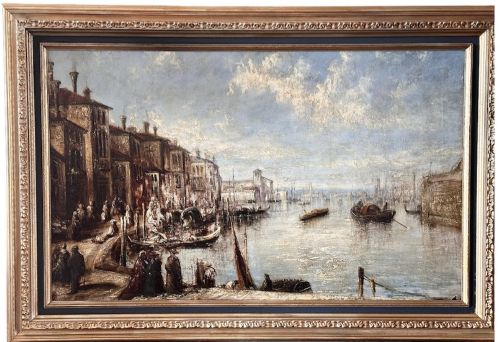
When you search for venetian canal scene art, you encounter framed paintings and watercolours depicting iconic waterways, bridges, and historic palazzos. These works record the changing light and architecture of Venice across different eras.
The selections span the nineteenth century through the mid-twentieth century, featuring traditional Italian views alongside French and British interpretations. Canvases and paper supports preserve these atmospheric urban vistas for modern interiors.
What varies in quality
The distinction between works rests on the artist's ability to handle light, perspective, and atmospheric depth across the water. Stronger examples display confident brushwork and accurate architectural proportions that bring the canal scenes to life.
The condition of the original canvas or paper, alongside the preservation of the gilded frame, influences the overall character of each piece. Finer works maintain vibrant pigments and secure mountings that reflect their period origins.
Listings feature works created using oil on canvas, watercolour, gouache, and pastel, housed within traditional gilded wood frames.
Alfred Pollentine·Antonio DeVity·Francis Moltino·Claude Jousset·Marc Aldine·William Raymond Dommersen·Vittore Zanetti Zilla·Frank Wasley·William Knox·Charles Clement Calderon·Helen Donald-Smith·Mary Hagarty
The Venetian Canal Scene Art Glossary
- Oil on Canvas
- Pigments bound in a drying oil applied to a stretched woven fabric support. This medium permits rich colour blending and textured application.
- Watercolour
- A paint consisting of soluble pigment suspended in a water-based solution, typically applied to paper. It offers translucent washes and delicate detail.
- Giltwood
- Wood carved and treated with a thin layer of gold leaf or gilt powder. It frequently frames nineteenth-century and early twentieth-century paintings.
- Gouache
- An opaque watercolour paint mixed with a white pigment filler, producing a heavier and more solid colour effect than standard watercolours.
- Impressionism
- A style of painting emphasising spontaneous brushstrokes and the shifting effects of light. Many twentieth-century lagoon and canal works adopt these principles.
Venetian Canal Scene Art: Frequently Asked Questions
What periods do these paintings come from?
The available works primarily date from the nineteenth century through the mid-twentieth century. Painters captured Venetian waterways across Victorian times and into the 1960s.
Specific decades represented include the 1880s, 1900s, 1920s, and 1930s. Each era brought its own stylistic interpretation to the classic canal views.
What materials were used by the artists?
Artists utilised oil paint on canvas and wood panels to record the city's architecture and canals. Others preferred watercolour, pastel, and gouache on paper.
Many of these paintings retain their original gilded wood or giltwood frames. These surrounds complement the traditional and impressionistic styles of the artwork.
How should I display a painting?
Hang your artwork away from direct sunlight and excessive moisture to protect the canvas, paper, and gilt frames. Proper wall placement preserves the integrity of nineteenth and twentieth-century pigments.
Ensure the piece is secured safely on the wall using appropriate fixings for its weight. Adequate spacing allows the framed composition to stand out in a room.
How do I identify different painting styles?
Traditional Italian and nineteenth-century works focus on detailed architectural precision and clear depictions of palaces and gondolas. Impressionist pieces emphasise loose brushwork and the play of light over the water.
Examining the handling of paint and the treatment of light helps distinguish academic recordings from mid-century impressionist interpretations.