


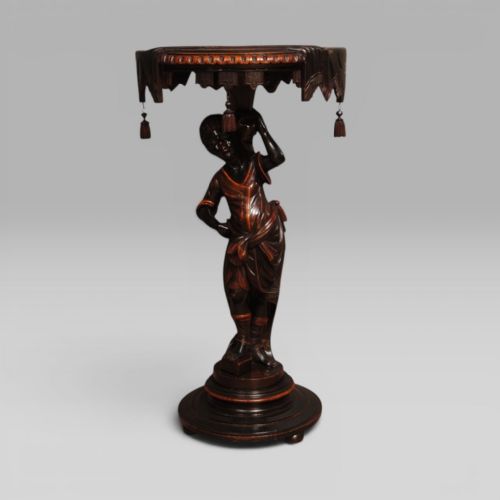


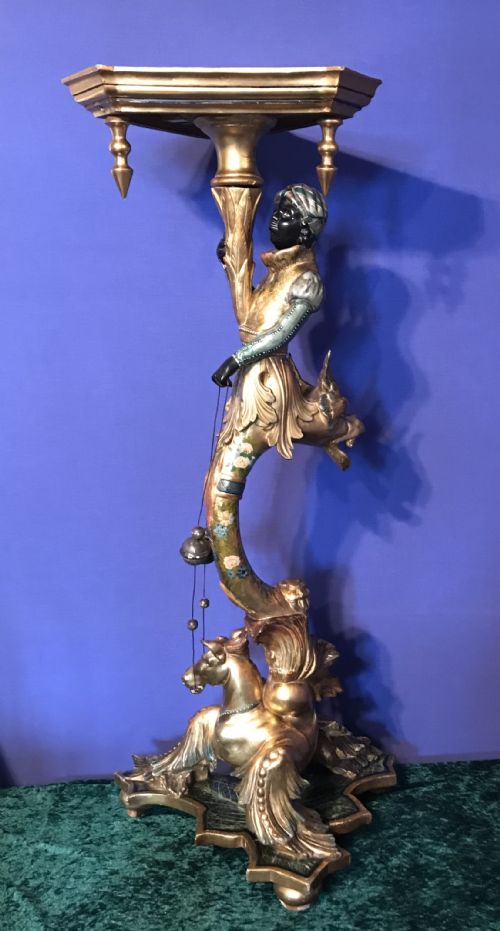
Venetian Blackamoor Torchere
These striking venetian blackamoor torchere figures bring theatrical Italian craftsmanship and dramatic lighting into a grand interior.
Venetian Blackamoor Torchere
A venetian blackamoor torchere combines figurative sculpture with functional display, serving as a stand, plant pedestal, or standard lamp. These pieces draw heavily on Venetian Baroque and Rococo traditions, originating mainly from the nineteenth century.
The most common forms on this page include carved wooden figures holding trays, torcheres, or tables, decorated with detailed polychrome paint and gilding. They operate as both decorative statues and practical furniture within period rooms.
How They Were Made
Carvers shaped these figures primarily from walnut and other dense woods, building up form and depth before applying surface decoration. Gesso layers provided a smooth base for subsequent painting and gilding.
Artisans applied polychrome paint and gold leaf by hand to achieve rich surface detail and vibrant colour. Original painted surfaces often show complex layering that distinguishes authentic period execution.
One determined gondolier figure stands ready to guide visitors through the room.
What Varies in Quality
The preservation of the original gilt and polychrome finish dictates desirability. Pieces retaining undisturbed historic paintwork stand far above those with heavy modern repainting.
The Venetian Blackamoor Torchere Glossary
- Torchere
- A tall ornamental stand designed to hold a light or a candle. These functional pillars elevated illumination sources to eye level in grand rooms.
- Polychrome
- Decorated in multiple colours. This term describes the vibrant painted surfaces found across traditional wooden figures.
- Gesso
- A plaster-like mixture applied to wood surfaces as a preparation for gilding and painting. It creates a smooth ground for intricate detail.
- Giltwood
- Wood that has been coated with gold leaf or gold paint. This technique added metallic brilliance to decorative furniture.
- Baroque
- An ornate artistic style characterised by drama and movement. Venetian interpretations of this aesthetic heavily influence these figural stands.
Venetian Blackamoor Torchere: Frequently Asked Questions
What is a torchere used for?
A torchere serves as a decorative stand or pedestal designed to support lighting, plants, or small display items. Historically, these pieces illuminated dark corners of grand rooms.
Today, collectors utilise them as striking sculptural statements in hallways, living rooms, or dining spaces to hold lamps or decorative objects.
How do I identify a nineteenth-century piece?
Nineteenth-century examples show traditional hand-carving techniques in woods like walnut, paired with authentic gesso and layered polychrome paint finishes. Examination of the timber age and surface wear helps confirm the era.
Stylistic cues such as Venetian Baroque Revival details also point toward this active period of production.
Are these figures made of solid wood?
Most pieces feature solid carved wood construction, frequently enhanced with gesso layers to refine the sculptural details before painting. Walnut is a common timber found in these constructions.
The weight and grain visible beneath any minor losses in the paint surface confirm the primary wooden material.
How should I care for original paintwork?
Preserving original polychrome and gilt surfaces requires gentle dusting with a dry, soft cloth and avoiding all chemical cleaning agents. Direct sunlight should be avoided to prevent paint fading.
Stable indoor humidity protects both the underlying carved wood and the historic gesso layers from cracking.
What is the difference between a pedestal and a torchere?
A pedestal generally functions as a standalone column for displaying sculptures or urns. A torchere specifically relates to lighting support, though the terms often overlap in historic inventory.
Many pieces listed under these terms combine both functions by incorporating a small attached table or tray.