



Carved Italian Pedestal Statue
A carved Italian pedestal statue brings dramatic presence and rich regional character into a room, drawing the eye instantly.
Carved Italian Pedestal Statue
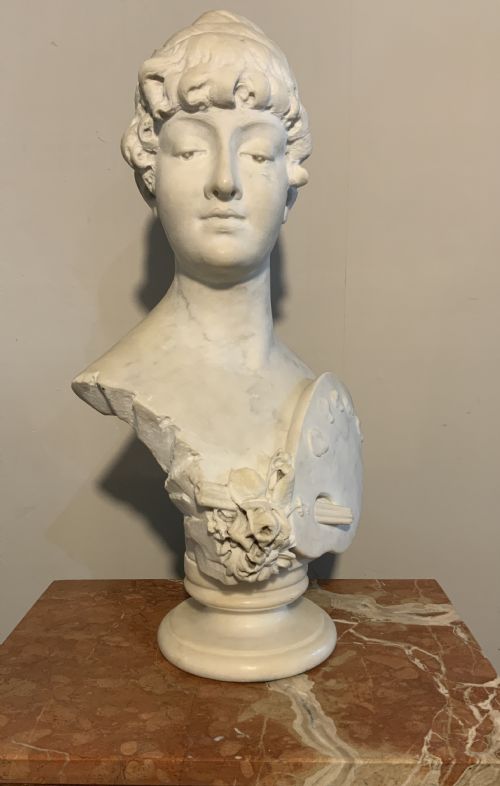
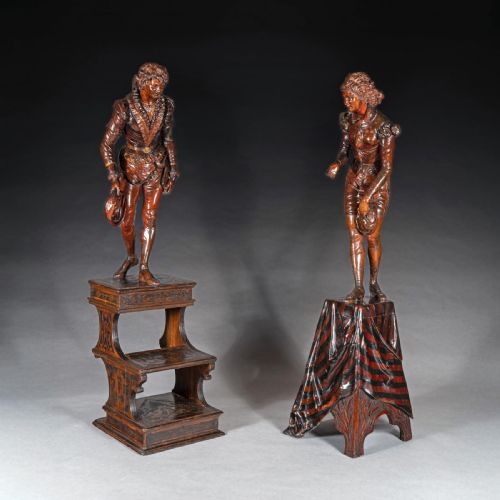
A carved Italian pedestal statue encompasses figures, busts, and torcheres created across several centuries, ranging from the seventeenth to the early twentieth century. When searching for a carved Italian pedestal statue, collectors encounter marble busts, alabaster groups, and elaborate wooden figures.
The selections on this page span diverse aesthetic movements including Venetian Baroque, Neoclassical, and Italian Renaissance styles. Many pieces combine structural stands with sculptural figures, such as blackamoor torcheres and gondoliers.
Origins stretch from Venetian workshops to broader Italian centres, reflecting the enduring skill of southern European artisans. Materials vary from Carrara marble and alabaster to carved wood enriched with polychrome paint and gold leaf.
Assessing quality and execution
The condition and survival of original polychrome paint and gilding significantly influence the character of wooden figures and torcheres. Pieces retaining their early or original surface treatments preserve a greater historical integrity.
A youthful marble girl gently strums her mandolin while children enthusiastically push a heavy cart through stone.
Valentino Besarel·Eduardo Giolli
The Carved Italian Pedestal Statue Glossary
- Torchere
- A tall ornamental stand or floor lamp designed to hold a light source or display a figure. These often form the structural base for decorative statues in grand interiors.
- Polychrome
- Decorated in multiple colours, typically applied to wood or plaster surfaces. This technique adds lifelike vibrancy to carved figures and architectural elements.
- Carrara marble
- A type of white or blue-grey marble quarried in the city of Carrara in Tuscany. Sculptors prized this stone for its fine grain and suitability for detailed busts and statues.
- Gesso
- A plaster mixture used as a smooth base for paint and gold leaf on wooden objects. It provides a stable ground for intricate surface decoration.
- Giltwood
- Wood that has been treated with a thin layer of gold leaf or gold paint. This finish creates a reflective, luxurious surface popular in Baroque and Neoclassical design.
Carved Italian Pedestal Statue: Frequently Asked Questions
What periods do these statues come from?
The pieces span from the seventeenth century through the nineteenth century and into the early twentieth century.
Most examples date specifically from the nineteenth century, reflecting various revivals of Baroque and Renaissance styles.
Where should I place a heavy marble statue?
Stone and marble pieces require sturdy structural support due to their significant weight.
Placing them on stable floor surfaces or dedicated pedestals ensures safety and proper display.
How do I care for original polychrome paint?
Painted and gilt wooden surfaces require gentle dusting with a soft brush without moisture or harsh chemical cleaners.
Keeping them away from direct sunlight and dramatic humidity changes protects the fragile gesso and pigment layers.