





Veneered Walnut Side Table
A veneered walnut side table brings warmth and rich grain patterning to a room, ranging from sleek 1930s geometric forms to earlier period revival designs.
Veneered Walnut Side Table
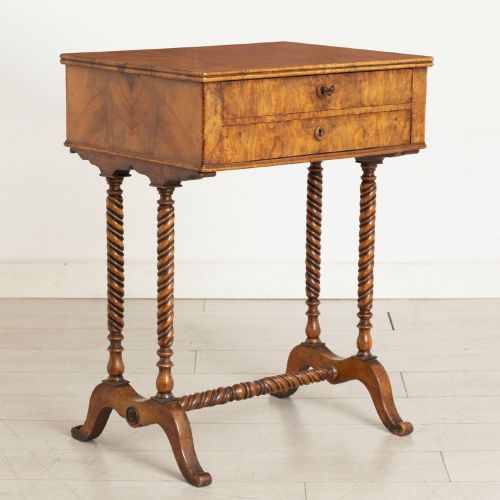
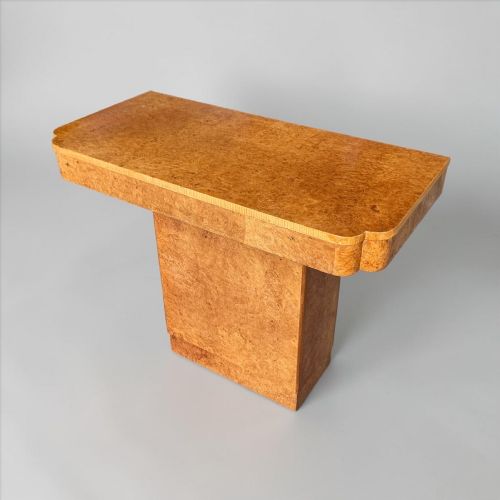
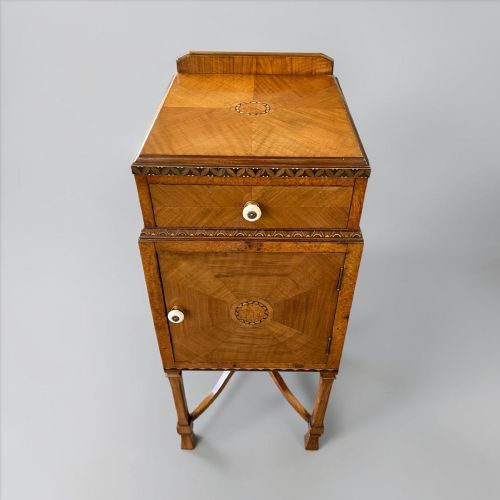
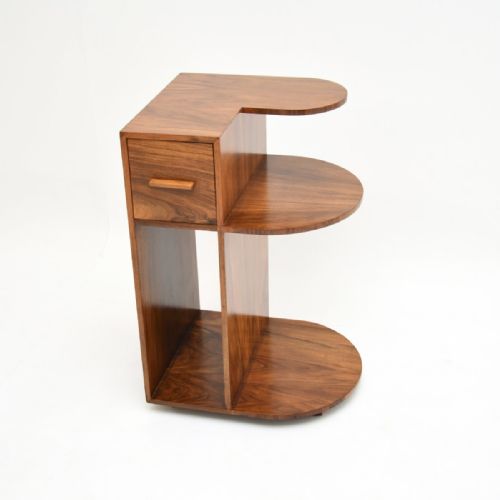
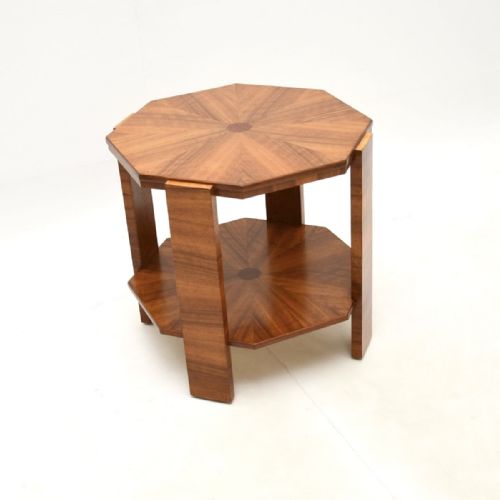
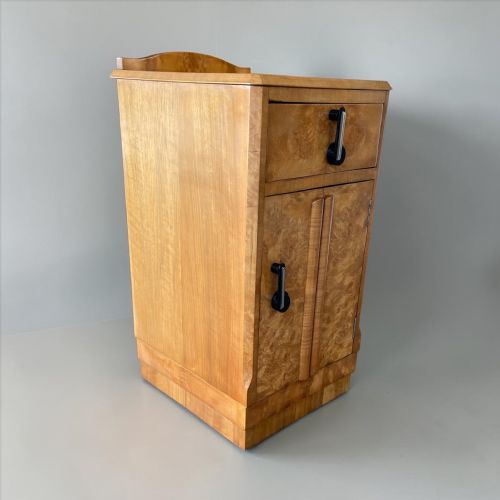
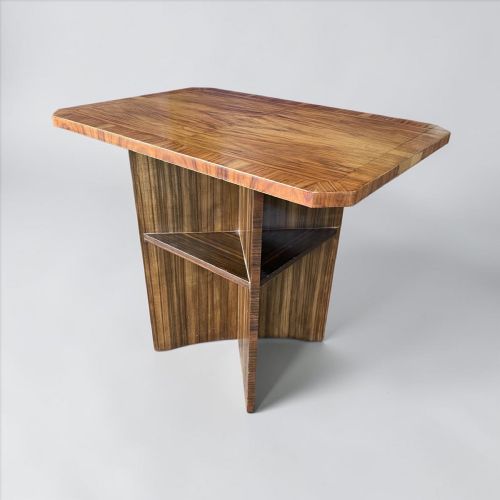
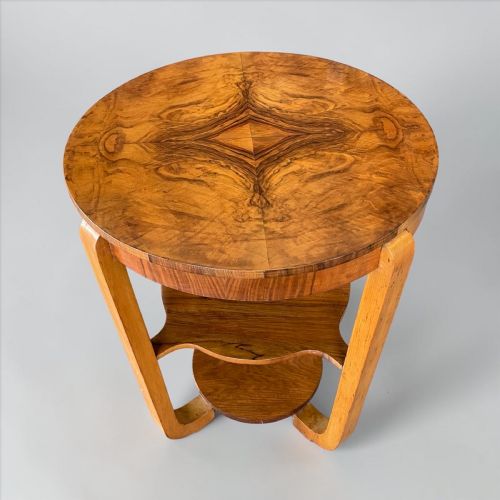
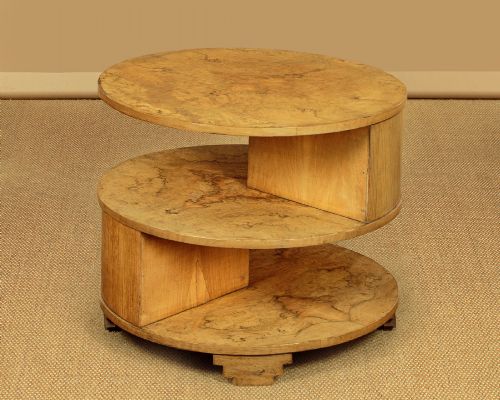
When you search for a veneered walnut side table, you encounter a diverse selection of small furniture designed for occasional use, storage, or display. These pieces span centuries of cabinet-making, appearing in forms such as lowboys, bedside cabinets, console tables, and multi-tiered coffee tables. The most common examples on this page date from the Art Deco period of the 1930s, featuring striking geometricveneers and functional surfaces.
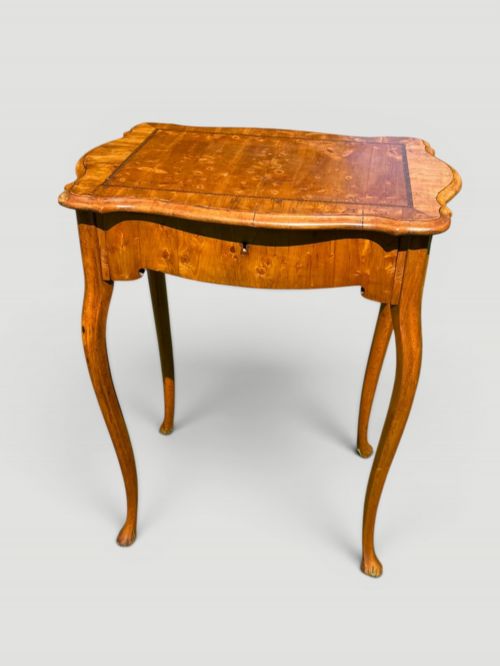
Earlier periods are also represented, including Georgian lowboys with featherbanding, 17th-century console tables, and Edwardian occasional tables. Makers utilised walnut timber for its distinct brown tones and versatile working properties, often applying decorative veneers to create symmetrical patterns across the top surface. Whether configured as a simple tri-pod stand or a fitted bedside chest, each piece serves as a compact focal point in a domestic interior.
Materials and construction
Cabinet-makers relied on walnut and its highly figured variants, such as burr walnut and oyster veneer, applied over secondary timbers to create stable yet decorative surfaces. Slices of walnut timber were arranged symmetrically to form quarter-veneered tops, sometimes enhanced with contrasting stringing, featherbanding, or marquetry details in satinwood and maple. Brass handles, hinges, and mirror tops occasionally complemented the woodwork, particularly on 1930s pieces and French revival cabinets.
Construction techniques evolved from the solid timber frames and applied mouldings of the 17th and 18th centuries to the smooth, curved outlines of Art Deco design. Workshops utilised skilful sawing to produce thin veneers that exposed the intricate twists of the grain, securing them to carcases with traditional animal glues. This method allowed craftsmen to decorate simple side tables and occasional stands with complex visual patterns without risking the warping associated with solid boards of equal width.
Listings feature walnut side tables spanning from the 17th century to the Art Deco period of 1930, utilising burr walnut, satinwood, and brass.
Factors of quality
The visual impact of a veneered walnut side table depends largely on the selection and alignment of the timber grain across the top. Pieces featuring matched burr walnut or precise quarter-veneering demonstrate superior craftsmanship, as does the continuity of grain pattern around the edges and drawer fronts. The integration of fine details, such as delicate featherbanding, crisp marquetry, and well-fitted brass hardware, distinguishes standard production from finer workshop output.
Structural integrity and the preservation of the original veneer surface also govern the standing of individual tables. Examples that retain their distinct colour and original polished finish without excessive restoration hold greater fidelity to their period of origin. Furthermore, the complexity of the form - ranging from simple occasional stands to multi-tiered tables and kidney-shaped bedside chests - reflects the ambition of the original design.
Maurice Adams·Maple
The Veneered Walnut Side Table Glossary
- Burr walnut
- A veneer taken from the wart or growth on a walnut tree, producing a swirling, highly decorative grain pattern. It appears frequently on tabletops from the 19th and 20th centuries.
- Quarter veneered
- A technique where four matching slices of veneer are placed together symmetrically to create a diamond or cross pattern. This method highlights the natural grain of the timber.
- Featherbanding
- A form of inlay consisting of small pieces of veneer arranged in a herringbone pattern within narrow bands. It is commonly found on Georgian furniture.
- Oyster veneer
- Cross-sections cut transversely from small branches or roots, resulting in circular or oval shapes resembling oysters. This decorative surface is typical of 17th-century and revival pieces.
- Lowboy
- A small table with one or more drawers, standing on relatively tall legs, typically used as a dressing table or side table in 18th-century interiors.
Veneered Walnut Side Table: Frequently Asked Questions
What is a veneered walnut side table?
A veneered walnut side table is a small piece of furniture surfaced with thin sheets of figured walnut wood over a supporting timber structure. These tables function as occasional stands, bedside units, or lowboys across various historic periods.
They offer a compact surface for lamps and decorative items while showcasing the natural grain patterns of the walnut timber.
How do I date a walnut side table?
Dating relies on observing the overall style, construction methods, and veneer patterns characteristic of specific eras. For example, 1930s pieces often exhibit clean Art Deco geometric lines, whereas 18th-century examples feature detailed featherbanding and traditional lowboy proportions.
Comparing the secondary timbers and hardware styles further helps distinguish between original period pieces and later revivals.
Where should I place a side table?
These versatile tables fit easily beside a sofa, armchair, or bed to provide a convenient surface for lighting and small objects. Console and side cabinets also suit hallways and living spaces where surface area is required without occupying much floor space.
Placing them away from direct heat sources helps protect the delicate walnut veneers from drying and cracking over time.
How do I care for burr walnut?
Caring for burr walnut involves keeping the timber away from direct sunlight and maintaining a stable indoor humidity level. Regular dusting with a soft, dry cloth preserves the polished finish without the need for heavy chemical treatments.
Occasional application of appropriate wax polish helps maintain the lustre of the veneer surface.