


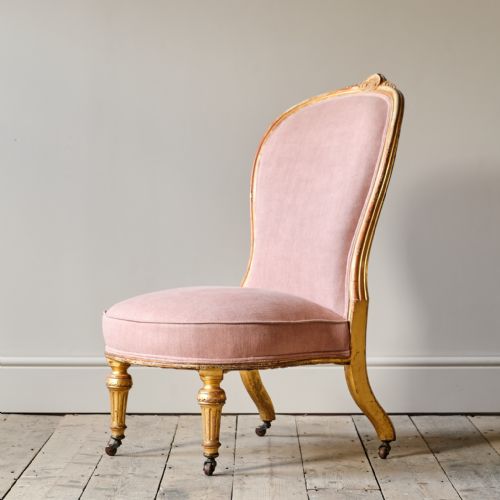


Velvet Seat Gilt Chairs
Velvet seat gilt chairs bring a touch of French Revival elegance and Regency severity to a room, offering both luxurious texture and gilded flash.
Velvet Seat Gilt Chairs
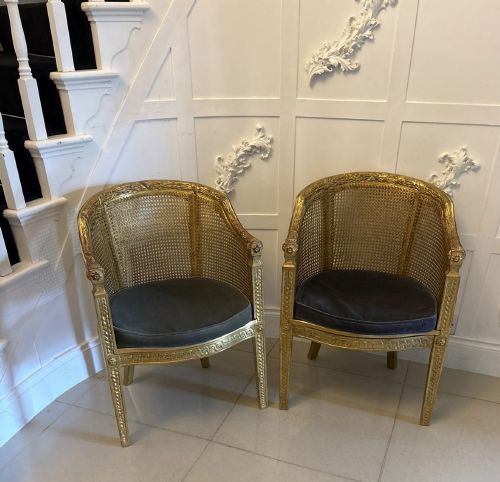
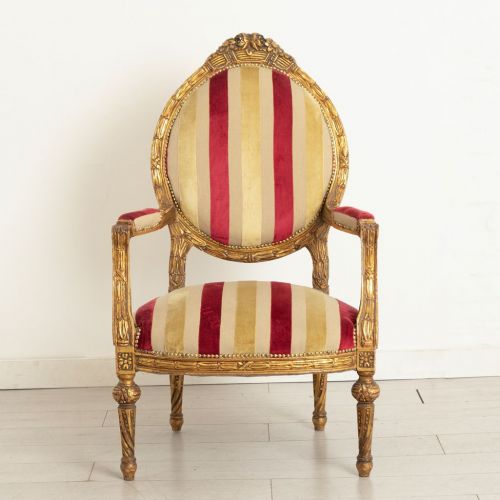
When you search for velvet seat gilt chairs, you are looking at seating finished in gold leaf or paint, paired with plush pile upholstery. These pieces range from substantial bergere armchairs to lighter side chairs and salon seating, spanning the nineteenth century up to the early twentieth century.
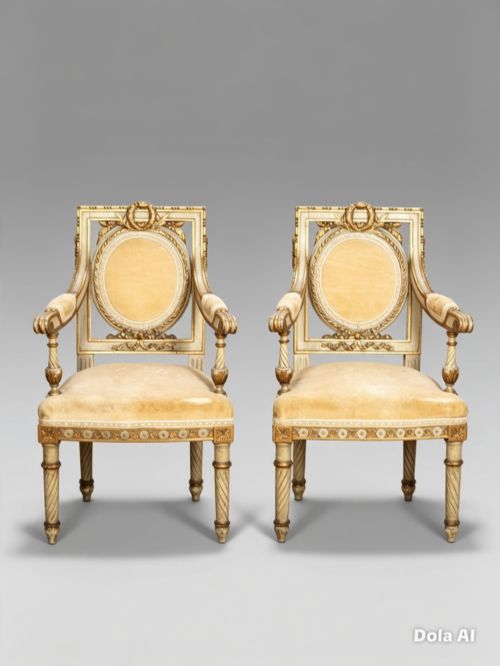
The versions you are most likely to meet on this page hail from nineteenth-century French and English workshops. They carry styles such as Louis XVI Revival, Regency, and French Neoclassical, often appearing in pairs or small sets.
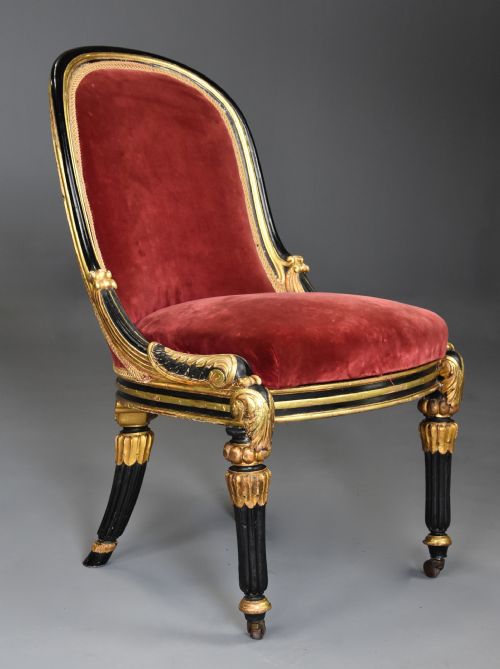
Forms vary from grand armchairs designed for drawing rooms to modest nursing chairs, hall chairs, and window seats. Their shared characteristic is the combination of a gilded or ebonised wooden frame with a soft velvet pad.
Materials and construction
Makers shaped these frames from solid hardwoods including beech and mahogany, sometimes employing ebonised wood or cane alongside the primary structure. Giltwood and ormolu finishes provided the characteristic metallic sheen, applied via gold leaf or fine paint over gesso.
Upholstery relied on traditional stuffing techniques to support the rich velvet seat coverings. Structural elements often featured carved decorative motifs typical of French Louis styles and English Regency cabinet-making.
Velvet Seat Gilt Chairs Retail Price Guide 2026
Typical asking prices for velvet seat gilt chairs among the pieces listed under this phrase on Sellingantiques today, from the lower quarter to the upper quarter. They describe what is for sale here now, not the wider market.
Current listings demonstrate a strong presence of nineteenth-century French revival designs, alongside English Regency and Victorian beechwood seating.
Quality and execution
The distinction between ordinary and exceptional pieces lies in the crispness of the wood carving and the depth of the gilding. Master carvers produced intricate botanical and classical motifs that remained sharp beneath layers of gold leaf, whereas lesser work relied on heavy plaster composition over softer timber.
Proportion and structural integrity also separate the finer examples from standard commercial output. Well-balanced frames with tight joinery and high-grade velvet upholstery hold their posture and presence over generations of use.
Lamb of Manchester·Holland and Son
The Velvet Seat Gilt Chairs Glossary
- Giltwood
- Timber coated with gold leaf or metallic powder over a prepared gesso ground. This finish provides a warm, reflective surface characteristic of formal period seating.
- Ebonised
- Wood stained or painted to imitate ebony. This dark finish creates a sharp contrast against gilt highlights and velvet upholstery.
- Fauteuil
- An open-armed upholstered armchair with exposed wooden armrests and legs. Originating in France, it provides a lighter silhouette than the bergere.
Velvet Seat Gilt Chairs: Frequently Asked Questions
How do I clean a velvet seat?
Velvet requires gentle brushing with a soft-bristled brush to keep the pile aligned and free of dust. Avoid heavy water or standard household cleaners, which can crush the delicate fibres.
For stubborn marks, consult a professional textile conservator who understands antique fabric. Harsh rubbing will permanently flatten the pile and expose the base cloth.
Are these chairs comfortable for daily use?
Many of these pieces were designed for formal drawing rooms rather than lounging for hours. Their upright backs and firm period padding offer structured support rather than deep sink-in comfort.
Lighter salon chairs and boudoir seating work well for reading or conversation. Larger bergere armchairs provide a more relaxed sit depending on their internal stuffing.
How do I identify a Regency style chair?
Regency seating often draws inspiration from classical Greek, Roman, and Egyptian forms. Look for clean architectural lines, sabre legs, and restrained use of brass or gilt trim.
Ebonised surfaces combined with gilt details are also common in this period. The overall aesthetic feels more severe and linear than the ornate curves of Louis revival pieces.
Can I mix these chairs with modern furniture?
Gilded frames and velvet seats introduce a strong focal point that contrasts well with minimalist contemporary decor. Placing a single period side chair in a modern hallway adds texture and historic contrast.
Keeping the surrounding palette neutral allows the metallic finish of the wood to stand out. Pairs work effectively as accent seating in a contemporary sitting room.