
Velvet Library Chair
Velvet library chair pieces combine sturdy desk forms with plush seating, offering a comfortable place to read or work.
Velvet Library Chair
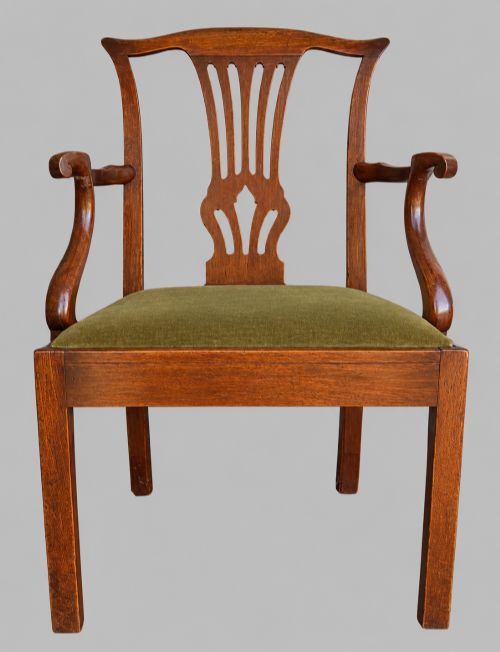
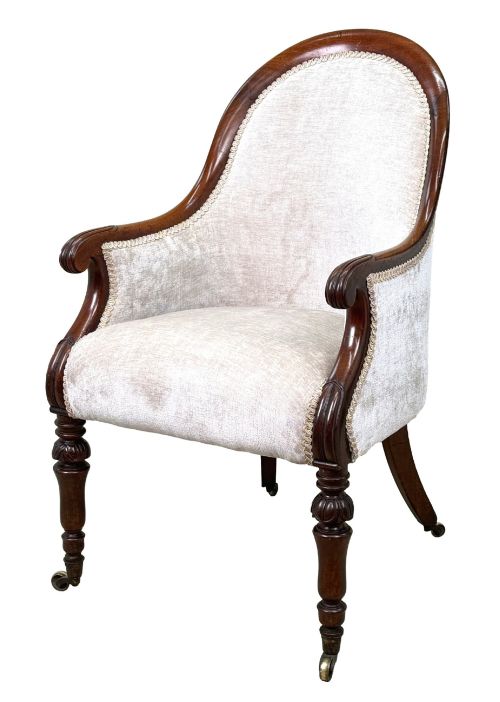
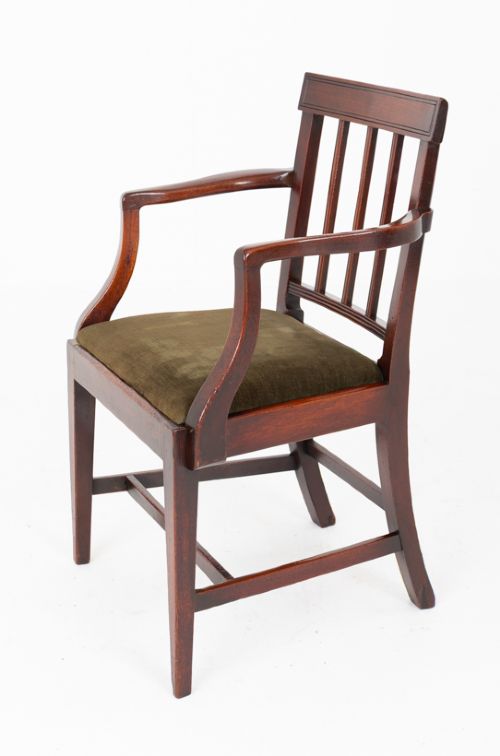
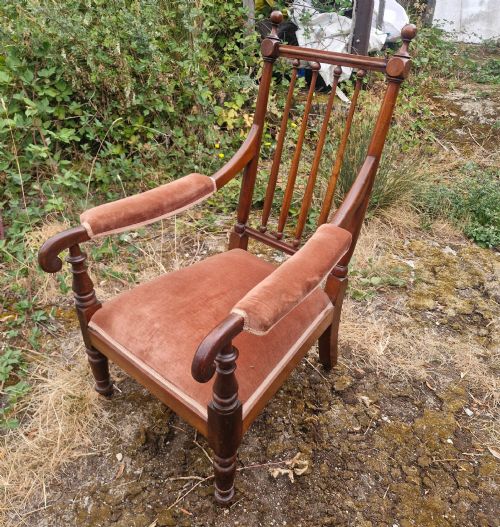
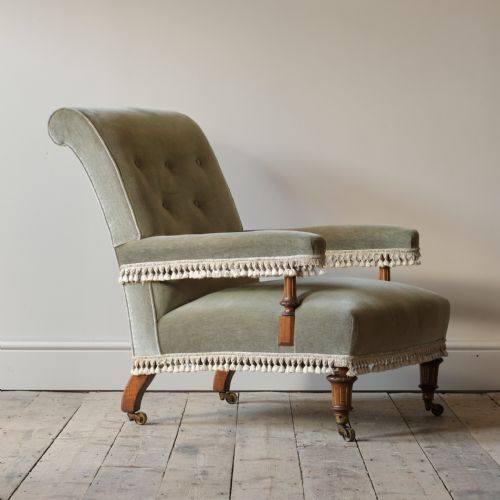
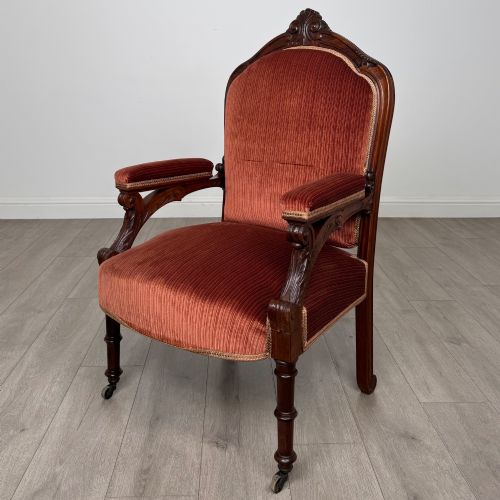
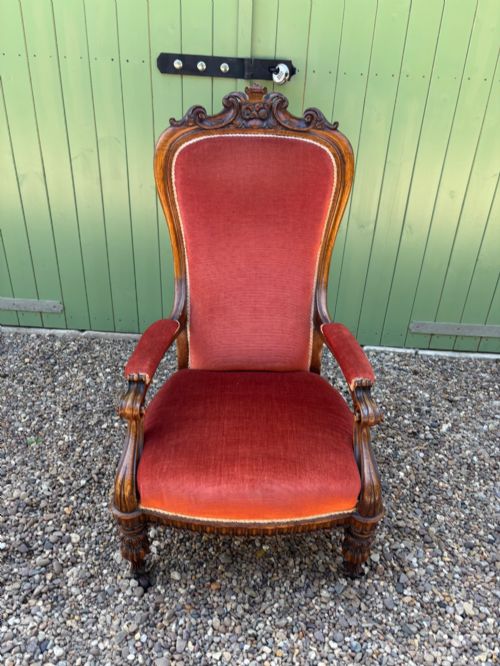
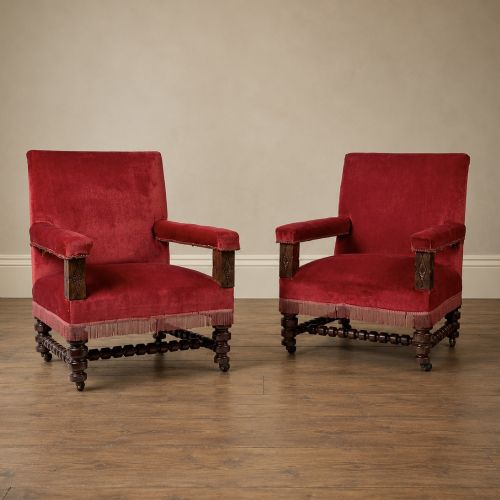
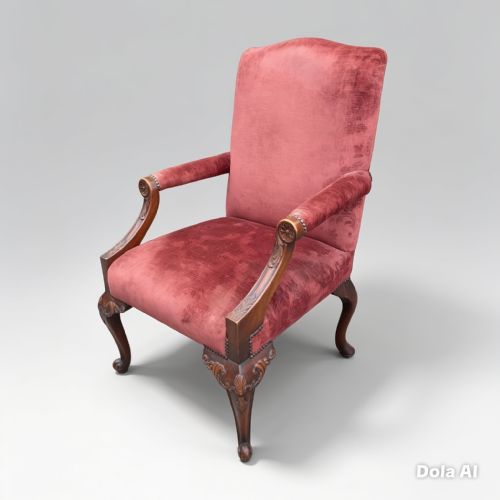
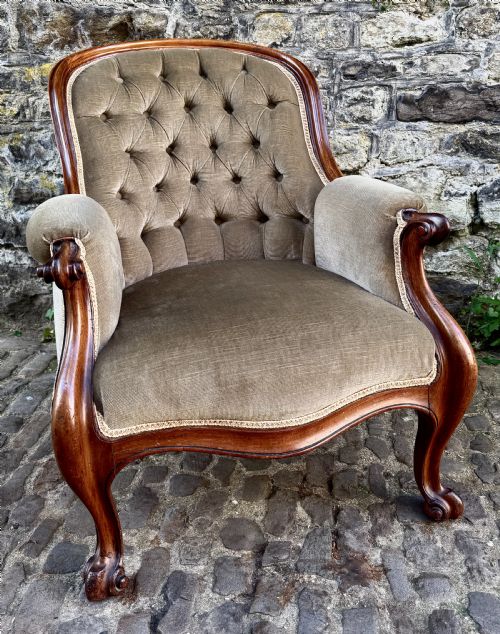
A velvet library chair provides a supportive seat for study and reading rooms, taking forms such as armchairs, desk chairs, and tub chairs. When you search for a velvet library chair, you encounter a selection spanning the 18th century, Regency, Victorian, and Edwardian periods.
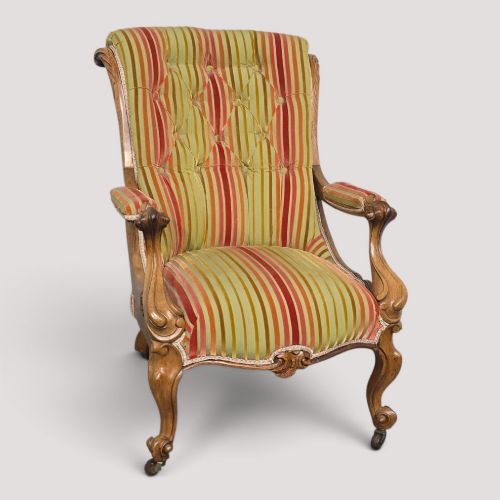
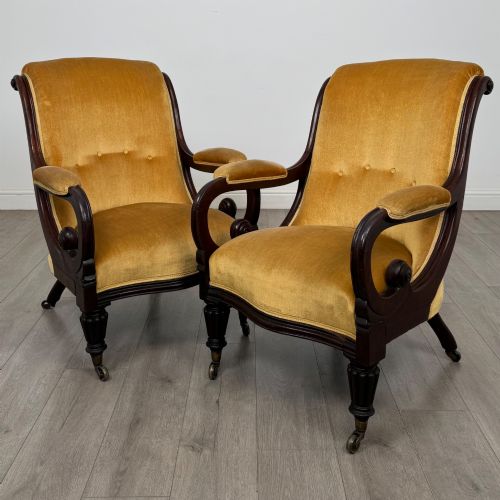
The most common examples on this page are Victorian and 19th-century mahogany or walnut armchairs upholstered in velvet or fabric. Makers varied their designs across Georgian, William IV, and Sheraton Revival styles, incorporating open arms or enclosed backs.
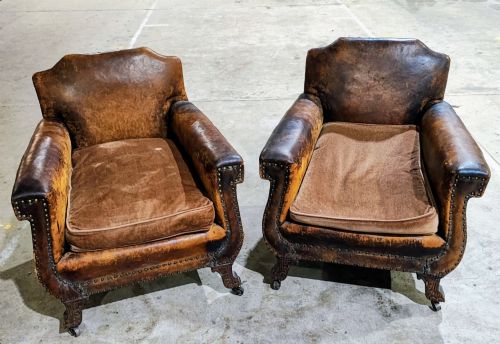
These seating options range from compact desk chairs to large country house wingback and club armchairs. Each piece reflects the interior trends of its era, from early neoclassical revivals to later nineteenth-century comfort.
How they were made
Wood frameworks form the structural core of these seats, utilising solid timbers such as mahogany, walnut, oak, and rosewood. Craftsmen shaped these materials into curved frames, spindle backs, and carved arm supports.
Upholstery techniques applied velvet, fabric, leather, and cane over padded interiors, sometimes finished with brass details. The integration of textiles with dense hardwood frames created durable seating designed for long hours at a desk or in a study.
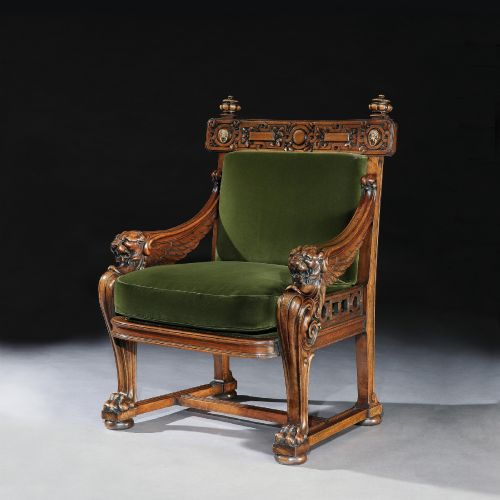
One exceptional armchair rests on lion monopodia feet after Thomas Hope, bringing ferocious botanical authority to your study.
What varies in quality
The standard of a piece depends on the precision of the timber carving and the architectural balance of the frame. Examples associated with prominent workshops display superior joinery and refined proportions compared to simpler utility seating.
The selection and application of upholstery materials also distinguish finer pieces, where high-grade velvet or leather matches the dignity of the supporting hardwood structure.
Gillows·Thomas Hope·Shoolbred
The Velvet Library Chair Glossary
- Tub armchair
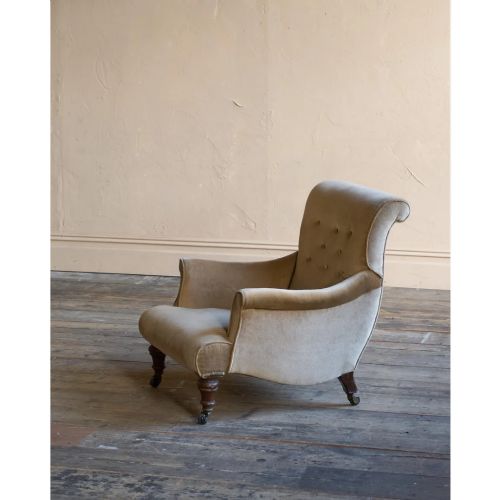
- A comfortable chair with a continuous curved back and arms forming a rounded enclosure. This form appears frequently in Regency and nineteenth-century studies.
- Bergère
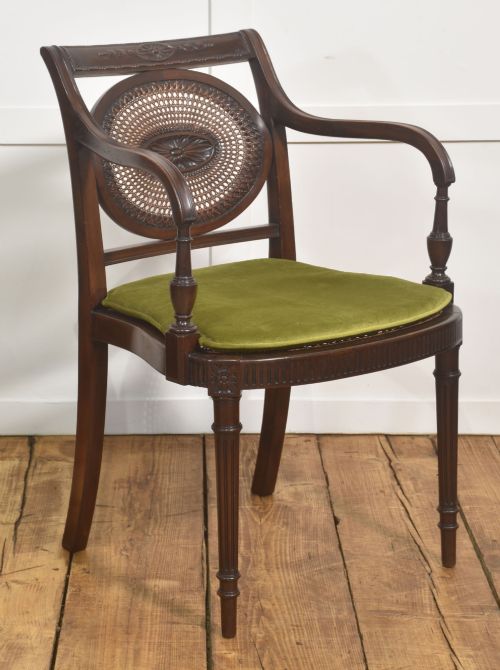
- An enclosed upholstered armchair with wooden frames and typically cane sides or backs. These chairs offer a lighter visual weight while maintaining structural support.
- Monopodia
- Furniture supports carved in the form of a single animal leg, often ending in a paw or claw. This classical motif appears on revival armchairs influenced by antique design.
- Gainsborough chair
- A wide, open-armed armchair with a padded back and seat, designed in the mid-18th century for writing desks. They stand on short legs and feature upholstered armrests.
Velvet Library Chair: Frequently Asked Questions
What is a library chair?
A library chair is a sturdy, comfortable armchair or desk chair designed for reading and writing rooms. They often feature upholstered seats and supportive backs suited for long periods of study.
These pieces draw on periods from the Georgian era through to the Edwardian period, utilising dense woods like mahogany and walnut.
Where should I place a velvet library chair?
These chairs suit studies, home offices, and living rooms where a combination of seating comfort and formal presence is required. They pair well with writing desks and reading tables.
The rich texture of velvet works effectively alongside wooden furniture and traditional interiors.
What is the difference between an armchair and a desk chair?
Desk chairs are generally proportioned for movement and placement close to a table, sometimes featuring swivel mechanisms or open arms. Library armchairs prioritize deep cushioning and relaxed seating.
Both types utilise durable wooden frames built from mahogany, walnut, or oak.