

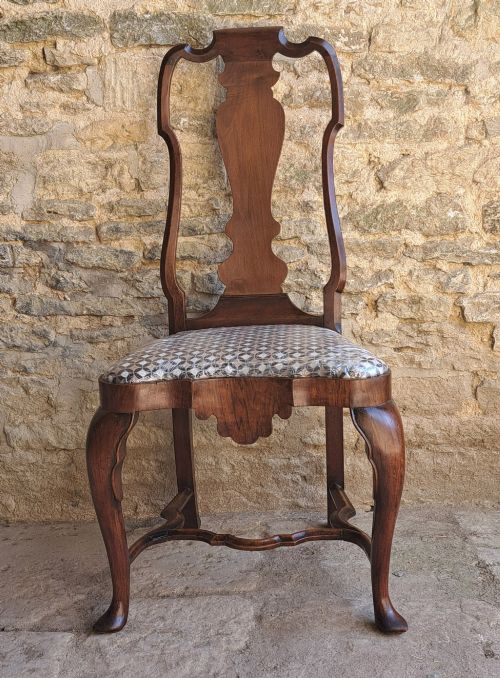
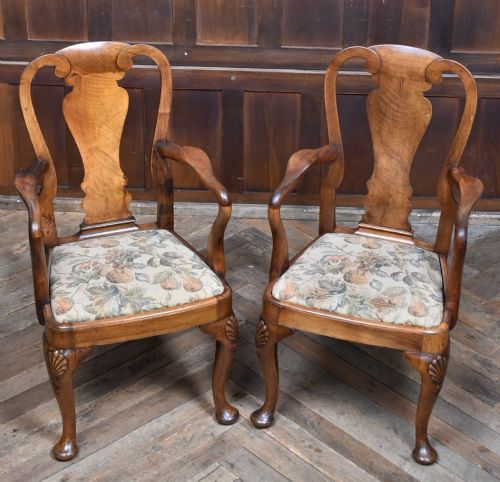
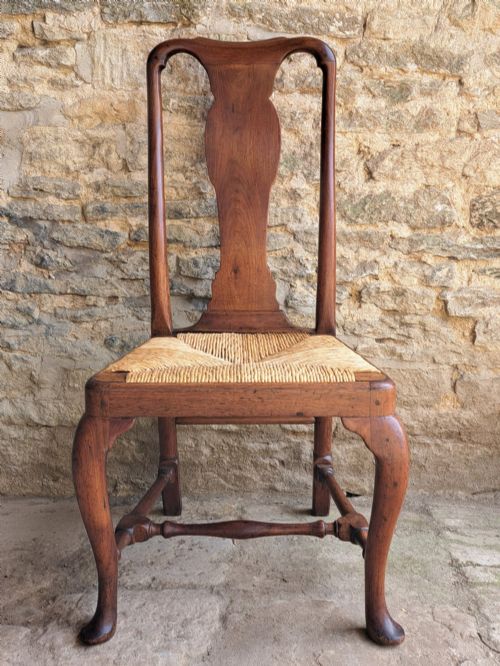

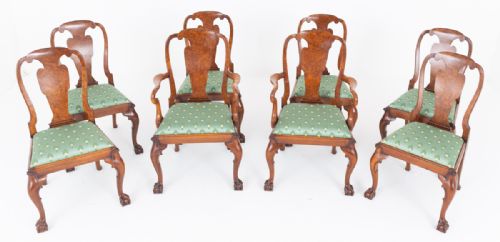


Vase Back Chairs
Vase back chairs are classic seating forms defined by their distinctive central splat, offering refined elegance and enduring support for the dining room or parlour.
Vase Back Chairs
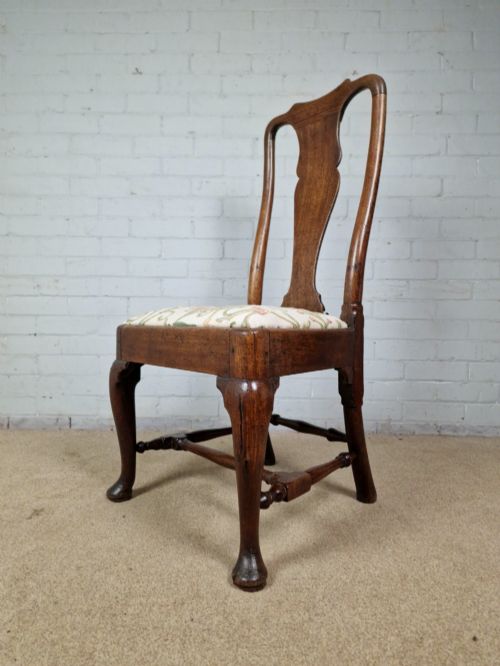
Vase back chairs encompass a range of formal seating from the early eighteenth century onward, taking their name from the silhouette of the central back splat that mimics the contour of a classical vase. Buyers seeking this phrase encounter both authentic period seating from the eighteenth century and later revivals spanning the Victorian era through the early twentieth century.
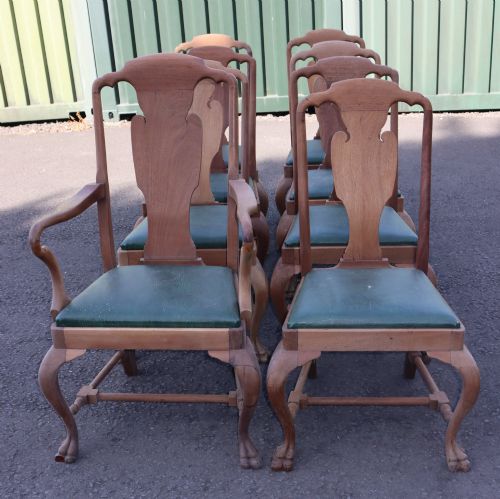
The form appears most frequently within matching sets for dining tables, alongside individual armchairs, carver chairs, and occasional side chairs. Materials span native timbers like walnut, mahogany, oak, and elm, often paired with upholstered drop-in seats covered in fabric, leather, or velvet.
How they were made
Cabinetmakers constructed these frames using dense hardwoods such as mahogany and walnut, frequently selecting burr veneers to add decorative grain patterns to the splats and seat rails. Joinery relied on precise mortise and tenon construction to ensure the structural integrity of the backrest under daily use.
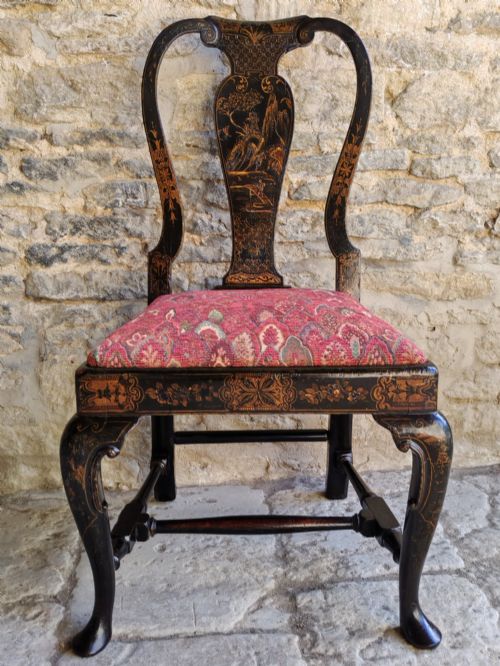
Surface decoration incorporated carving, japanning, marquetry, and gilt detailing, reflecting the prevailing taste of periods from Queen Anne through the Georgian era and later revivals. Seats were commonly designed as drop-in frames padded with traditional stuffings and secured with textile, leather, or velvet coverings.
What varies in quality
The refinement of the central vase splat and the crispness of any carved detailing distinguish superior examples from simpler production. Master makers achieved fluid, organic curves in the upright stiles and cabriole legs, whereas lesser seating displays stiffer proportions and thicker sections of timber.
The choice of primary wood and veneer selection also dictate the calibre of the piece, with richly figured walnut and dense mahogany marking the upper tier. Originality of surface finish and the retention of period upholstery methods further elevate the standing of a chair.
Charles Tozer
The Vase Back Chairs Glossary
- Vase splat
- The central vertical wooden element of a chair back shaped to resemble the profile of a classical vase. This contour provides lumbar support while defining the stylistic period of the seating.
- Cabriole leg
- A furniture leg that bends outward in a convex curve at the knee and tapers inward in a concave curve toward the foot. It frequently terminates in pad, claw-and-ball, or hoof feet.
- Drop-in seat
- A removable wooden frame upholstered separately and dropped into a recess in the chair seat rail. This construction allows for straightforward reupholstery without dismantling the main frame.
- Carver chair
- An armchair designed to match a set of dining side chairs, traditionally positioned at the head of the table. These incorporate open arms attached to the seat rail and stiles.
- Marquetry
- The art of applying pieces of veneer to a structure to form decorative patterns and pictorial designs. Cabinetmakers utilised contrasting exotic woods to create intricate surface ornamentation.
Vase Back Chairs: Frequently Asked Questions
What defines a vase back chair?
These seats are identified by the central wooden splat in the backrest that resembles the contour of an ancient vase. The silhouette narrows from the shoulders down to a waist before flaring outward again.
This form evolved during the early eighteenth century and remained popular across subsequent revival periods, appearing in both dining sets and single armchairs.
How do I date a chair?
Dating relies on examining the timber species, joinery techniques, and stylistic markers such as cabriole leg profiles and foot designs. Walnut predominated in the early eighteenth century, while mahogany became more common later in the Georgian period and nineteenth century.
Revival pieces from the Victorian era and early twentieth century often employ machine-cut elements and denser secondary woods that distinguish them from original antiques.
Were these made as sets?
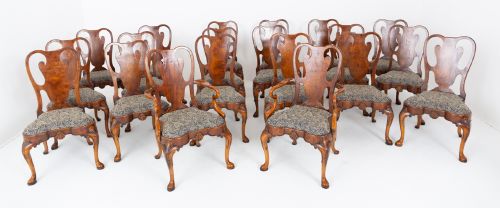
Cabinetmakers produced vase back chairs singly, in pairs, and in larger dining sets consisting of side chairs and matching carver armchairs. Surviving large sets often include a combination of dining chairs and armchairs intended for formal interiors.
Smaller groupings of four or six are typical for domestic dining rooms, while larger sets reflect grander entertaining spaces.
How should I care for the wood?
Maintenance involves keeping wooden surfaces away from direct heat sources and strong sunlight to prevent the timber and veneers from drying out or splitting. Gentle cleaning with a soft cloth preserves the historic patina and polish.
Upholstered drop-in seats require periodic vacuuming around the joints and careful attention if the covering fabric or leather is of vintage origin.