

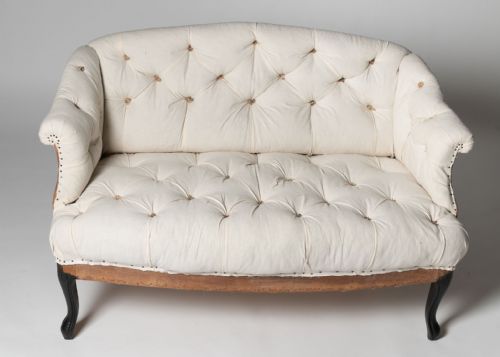
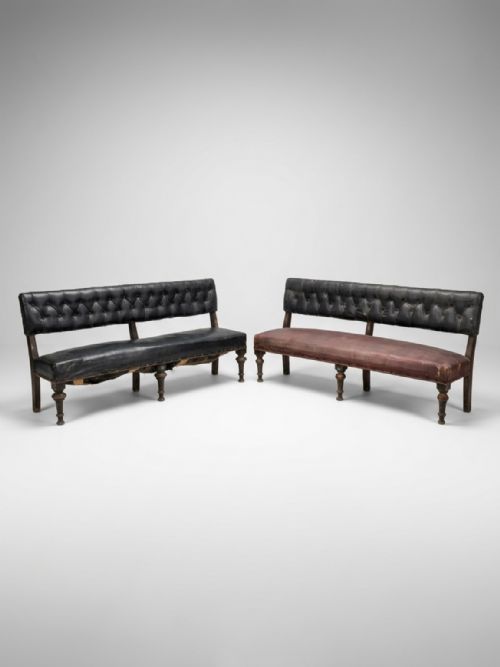
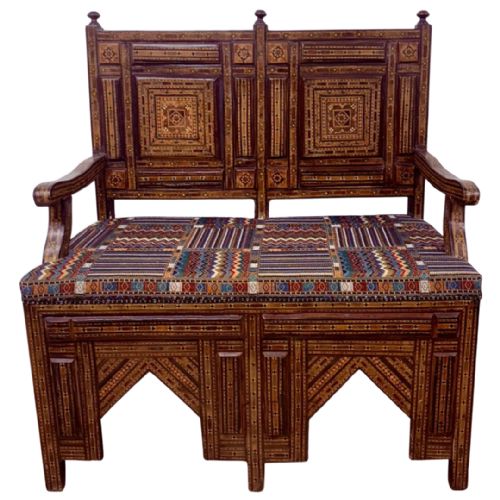
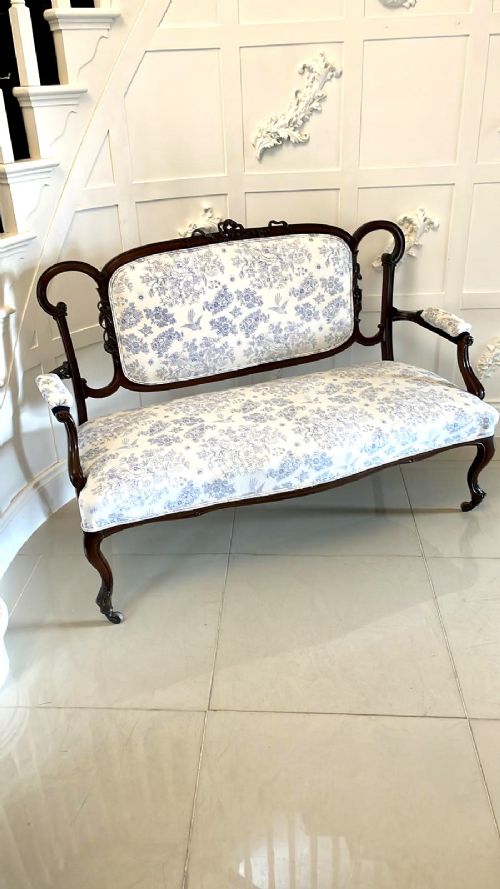

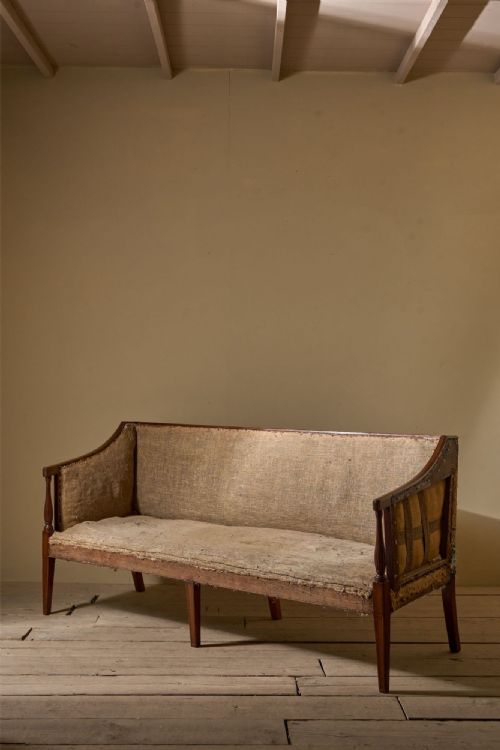
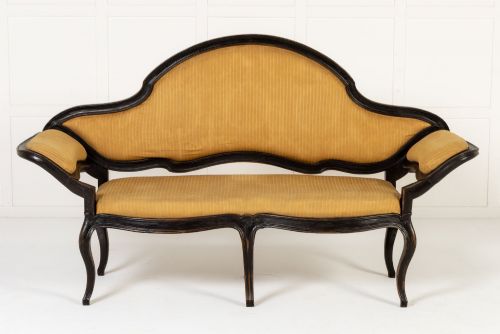


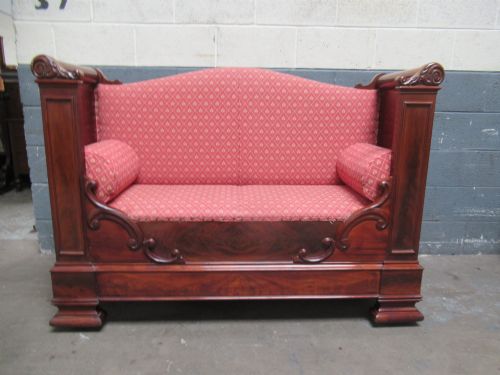


Upholstered Wooden Settee
An upholstered wooden settee brings timber and textile together into a seat for two or more, grounding a room with historical form.
Upholstered Wooden Settee
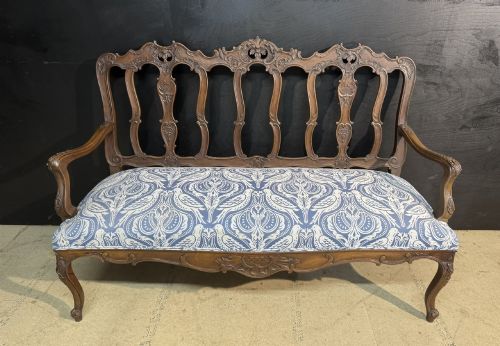
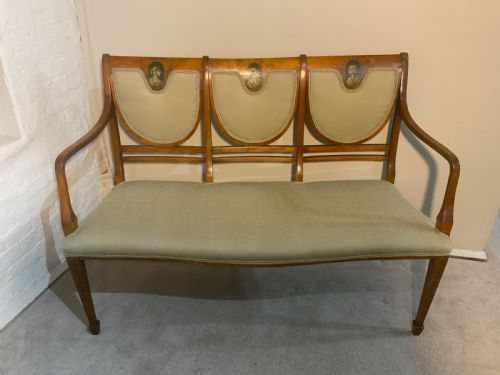
An upholstered wooden settee combines a timber frame with padded seating, appearing across the eighteenth, nineteenth, and early twentieth centuries in forms ranging from heavy mahogany frames to painted satinwood and giltwood designs.
Buyers meet pieces stretching from Georgian and Regency periods through Victorian and Edwardian iterations, encompassing French styles, Italian ebonised frames, and Syrian hardwood benches.
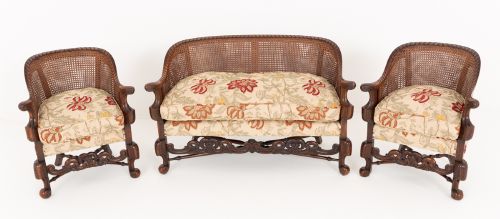
The category spans larger country house sofas, twin chair-back settees, and window seats, uniting rigid structural wood with soft upholstery fabric.
Materials and construction
Maker construction relies heavily on native and exotic timbers such as mahogany, walnut, satinwood, and oak, often shaped with carved scroll ends, ladderbacks, or exposed wooden frames.
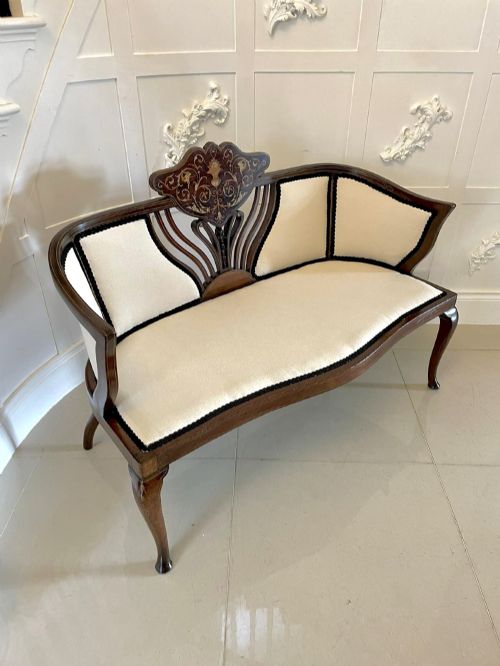
Surface treatment incorporates intricate inlay, painted decoration, ebonising, or giltwood finishes, paired with traditional upholstery fabrics to pad the seat and back.
Upholstered Wooden Settee Retail Price Guide 2026
Typical asking prices for upholstered wooden settee among the pieces listed under this phrase on Sellingantiques today, from the lower quarter to the upper quarter. They describe what is for sale here now, not the wider market.
Several pieces incorporate unexpected touches of Islamic inlay and Boulle work alongside standard European revival styles.
Assessing quality
Quality rests in the crispness of the timber carving, the choice of dense woods like walnut or mahogany, and the fidelity of revival styles such as Chippendale or Louis XV.
Finer examples display careful joinery, integrated brass details, or precise inlay work, separating standard production from exceptional pieces.
The Upholstered Wooden Settee Glossary
- Settee
- A long upholstered seat with a back and arms, designed to seat multiple people. It serves as a principal form of domestic seating alongside the sofa and bench.
- Canapé
- An ornamental French upholstered sofa characterised by an exposed wooden frame. These pieces often exhibit giltwood or painted finishes reflecting Louis periods.
- Bergère
- An enclosed upholstered armchair or settee featuring upholstered sides. The design prioritises comfort through padded panels set within a wooden framework.
- Inlay
- A technique where pieces of contrasting wood, brass, or other materials are inserted into depressions in the base timber. This decorates flat surfaces on frames and rails.
- Giltwood
- Timber coated with a thin layer of gold leaf. It appears frequently on decorative French and Empire frames.
Upholstered Wooden Settee: Frequently Asked Questions
What is an upholstered wooden settee?
An upholstered wooden settee is a multi-seater bench or couch featuring an exposed wooden structural frame paired with padded fabric seats and backs. These pieces emerged in various stylistic periods to provide comfortable communal seating.
They function as focal points in drawing rooms, hallways, and large living spaces, bridging the gap between rigid wooden chairs and fully upholstered sofas.
How do I date an antique settee?
Dating relies on identifying the prevailing style, timber choices, and construction methods characteristic of periods like the Georgian era, Regency, Victorian, or Edwardian times. Details such as carved scroll ends or specific inlay patterns offer clear chronological markers.
Comparing the frame architecture against documented revival styles helps narrow down the decade of manufacture, distinguishing eighteenth-century originals from later nineteenth-century interpretations.
Where should I place a wooden settee?
These settees fit well against principal walls in living rooms, at the foot of large beds, or positioned beneath windows as window seats. Their decorative wooden frames ensure they look appealing from all angles in an open room.
Consider the traffic flow around the room, as carved wooden arms and protruding scroll ends require adequate clearance to avoid accidental damage.
How do I care for the wood and fabric?
Maintenance involves dusting the exposed timber frame regularly with a dry cloth and keeping the piece away from direct sunlight to protect both wood finishes and textiles. Periodic waxing helps preserve polished mahogany, walnut, or satinwood surfaces.
Upholstery fabric requires gentle vacuuming with a soft brush attachment to lift surface dust without snagging the weave or pulling at the padding beneath.