
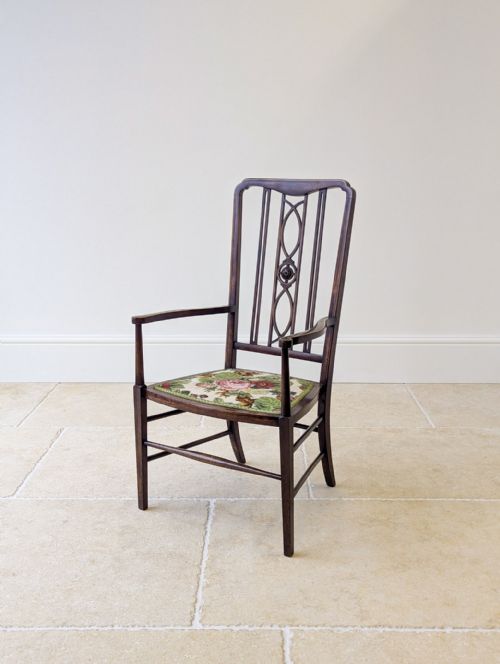
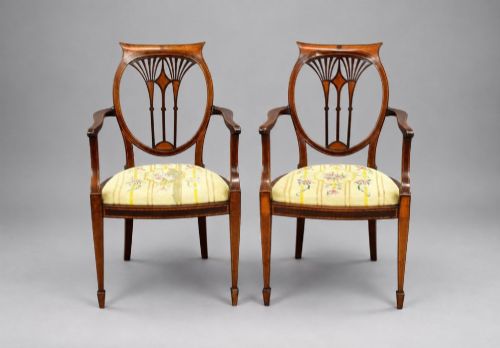
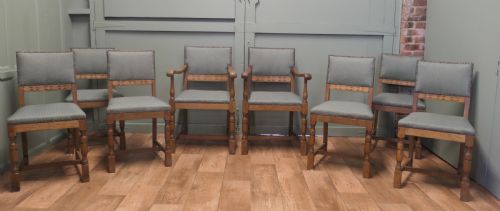
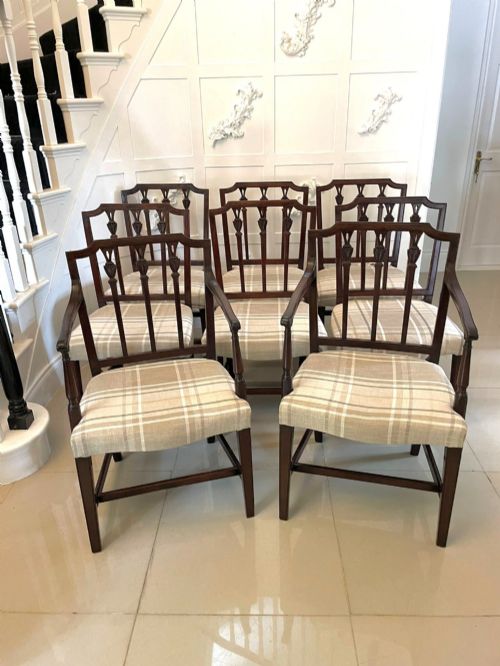
Upholstered Wooden Carver
An upholstered wooden carver provides a commanding seat at the head of the table, combining structural timber with comfortable padded upholstery.
Upholstered Wooden Carver
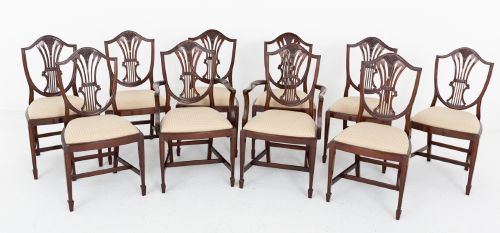
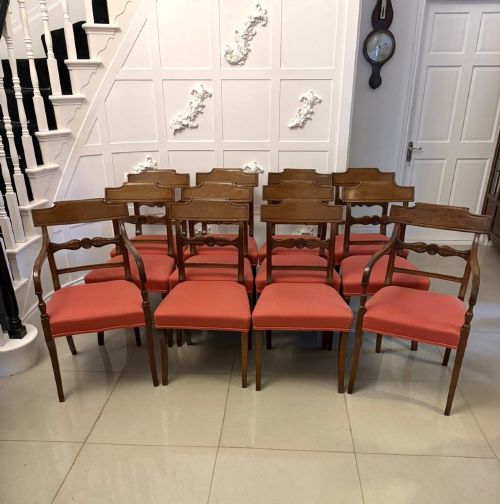
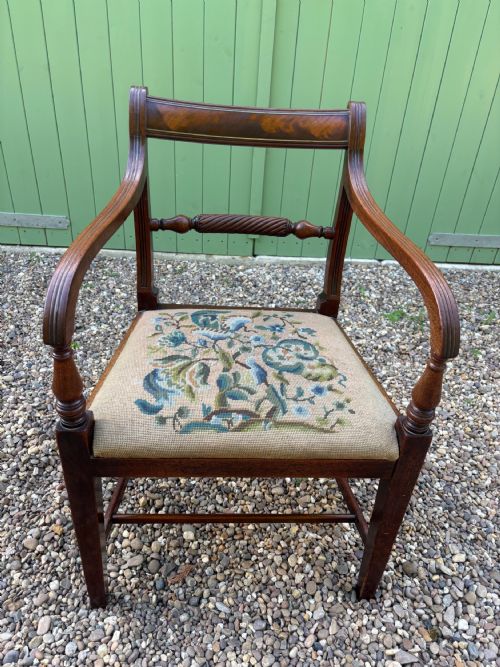
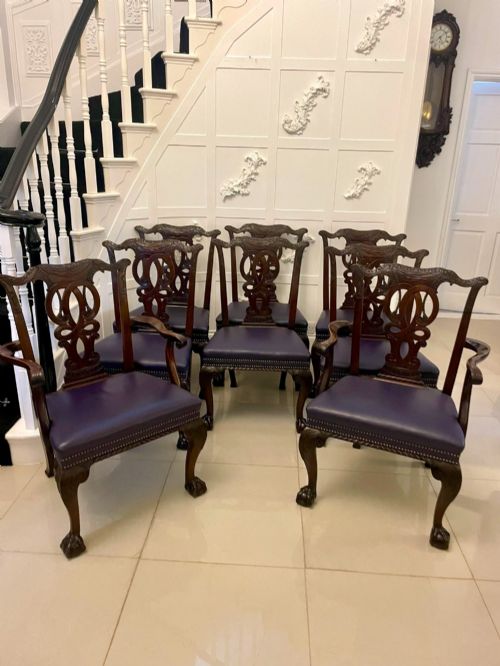
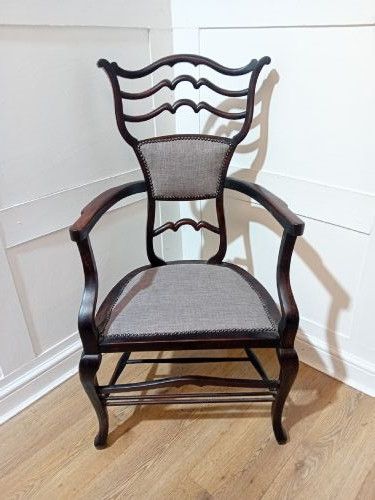
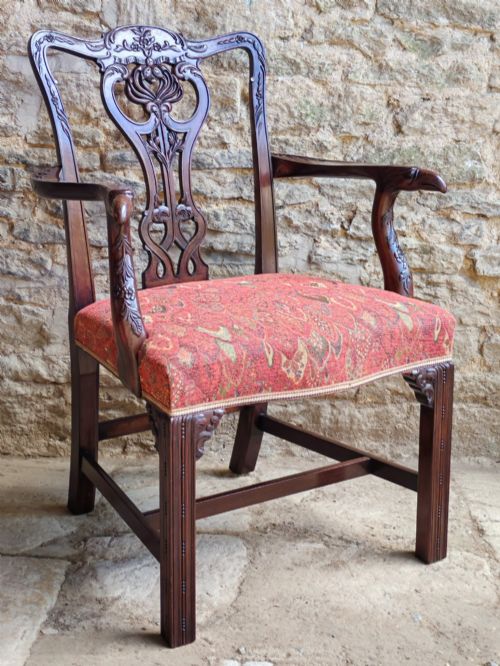
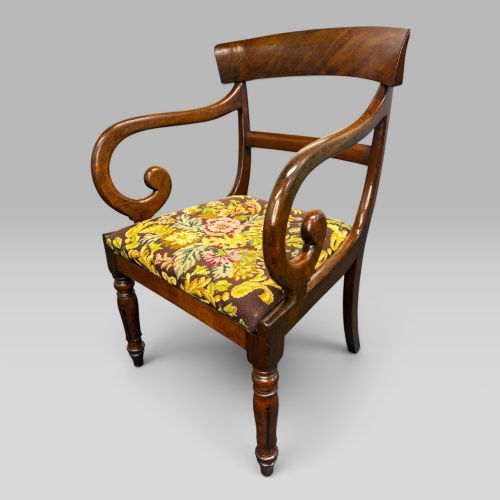
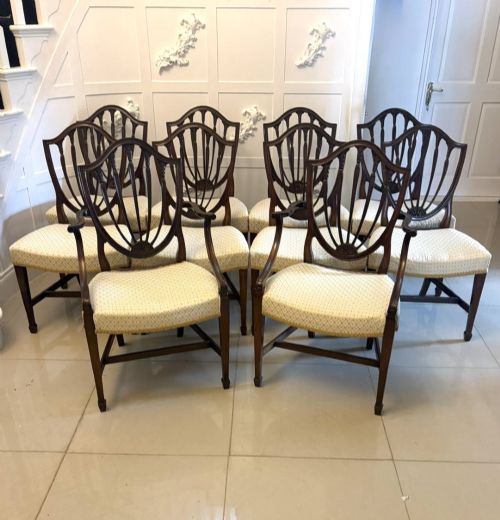
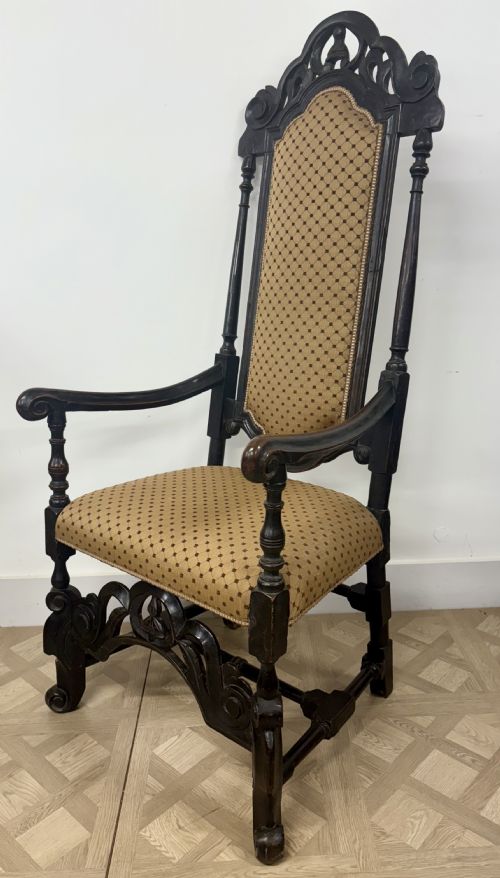
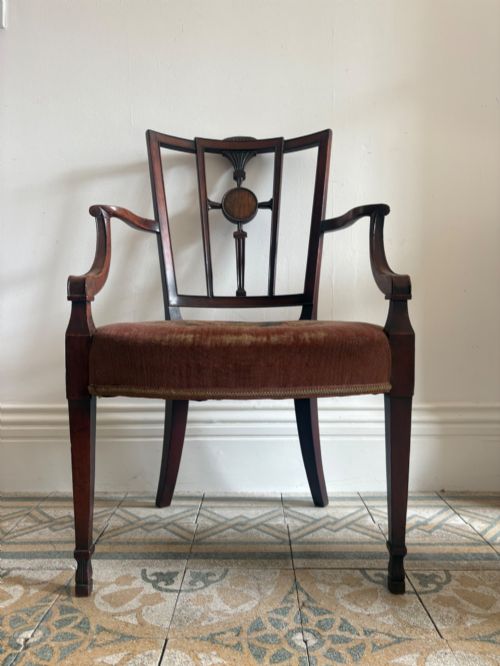
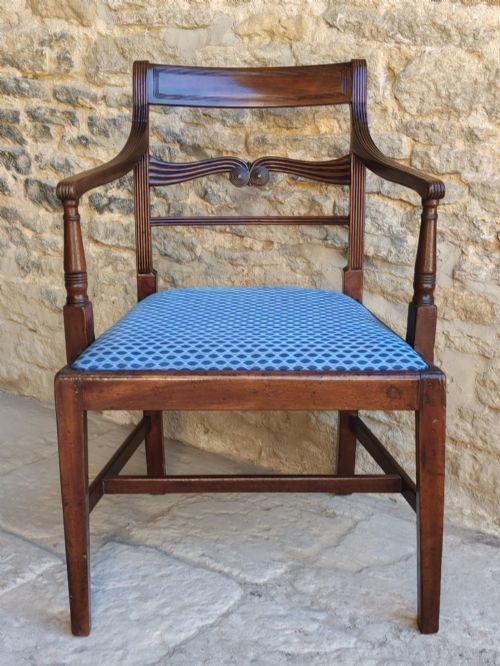
An upholstered wooden carver is a seated piece featuring armrests designed primarily for use as a dining chair head or an armchair. The selection spans periods from the late seventeenth century through the Georgian, Victorian, and Edwardian eras, incorporating styles such as Regency, Hepplewhite Revival, and Arts and Crafts.
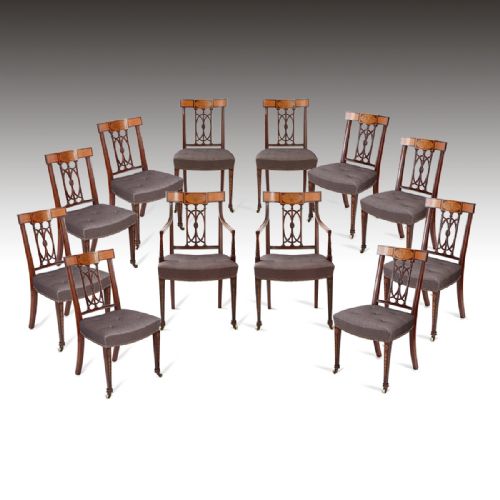
Most examples found on this page are constructed from mahogany, walnut, or oak, often fitted with fabric or upholstery material. Forms range from single armchairs to pairs and those paired within larger dining sets.
Buyers seek these pieces to anchor a dining room layout or to provide a substantial standalone reading chair. Their armrests and padded seats distinguish them from standard side chairs.
Assessing Quality
The standard of a carver is determined by the crispness of the timber carving and the integrity of the frame construction. Superior examples maintain tight joints and retain original timber surfaces without excessive sanding.
Subtleties in proportion, timber selection, and period-appropriate upholstery elevate certain pieces above standard production work. Stamped signatures or maker attributions also distinguish notable workshop output from provincial equivalents.
Listings span from the late seventeenth century through the Georgian, Victorian, and Edwardian periods up to the early twentieth century.
Howard and Sons·Maple and Co·Gillows
The Upholstered Wooden Carver Glossary
- Carver chair
- An armchair, typically with open arms, traditionally placed at the head of a dining table. These pieces match or complement the surrounding set of dining chairs.
- Shield back
- A chair back design popularised in the eighteenth century featuring an outline resembling a heraldic shield. This form often incorporates carved splats and is frequently seen in Hepplewhite style furniture.
- Elbow armchair
- An alternative term for an armchair or carver, referencing the prominent position provided for the sitter's arms. Such chairs frequently accompanied sets of dining chairs.
- Rope back
- A chair back design incorporating carved wooden rope twists into the crossrails or splats. This motif appears primarily in Regency period seating.
- Faux birds eye maple
- A decorative timber finish applied to simulate the characteristic dotted figuring of natural birds eye maple. This technique appears on twentieth-century revival furniture.
Upholstered Wooden Carver: Frequently Asked Questions
How do I date a wooden carver?
Dating relies on identifying the prevailing style, timber choices, and construction methods characteristic of specific periods like the Georgian or Edwardian eras. Details such as leg shape, stretcher placement, and carving motifs offer clear chronological indicators.
Comparing the piece to documented examples from known eras helps narrow down the decade of manufacture.
Can I use an antique carver daily?
Antique carvers are built from durable hardwoods like mahogany and oak, making them structurally sound for everyday seating. Routine care and sensible weight distribution ensure these chairs withstand regular domestic use.
Upholstery can also be refreshed or replaced when necessary to maintain comfort without altering the underlying wooden frame.
What timber was used most often?
Mahogany is the most frequent timber encountered across these listings, prized for its strength, rich colour, and stability. Walnut and oak also appear regularly, particularly in earlier seventeenth and eighteenth-century pieces.
Alternative woods like satinwood and maple were utilised for decorative accents and inlay work.