


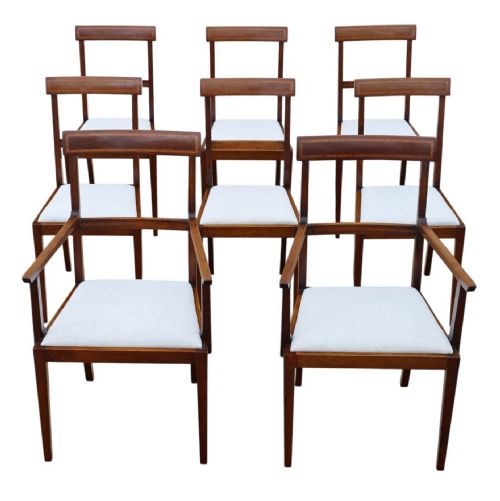


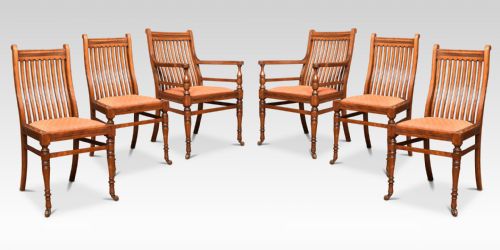


Edwardian Furniture Carver Chair
These edwardian furniture carver chair pieces are sturdy timber armchairs built for dining rooms and parlours, offering solid proportions and period character.
Edwardian Furniture Carver Chair
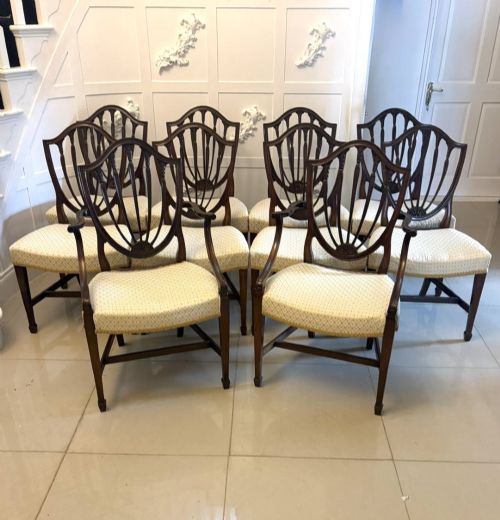
When you search for an edwardian furniture carver chair, you find robust armchairs originating primarily from the early twentieth century. The selection spans single armchairs alongside larger sets of dining chairs that include carver variants.
The pieces on this page draw upon diverse historical influences including Arts and Crafts, Queen Anne Revival, Georgian Revival, and Jacobean Revival styles. Makers adapted these past aesthetics for Edwardian homes using mahogany, oak, walnut, and satinwood.
How they were made
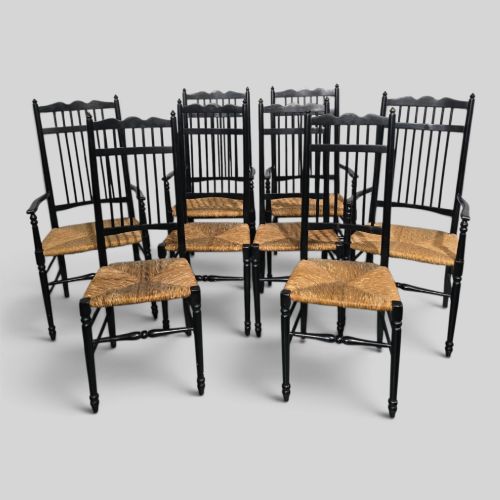
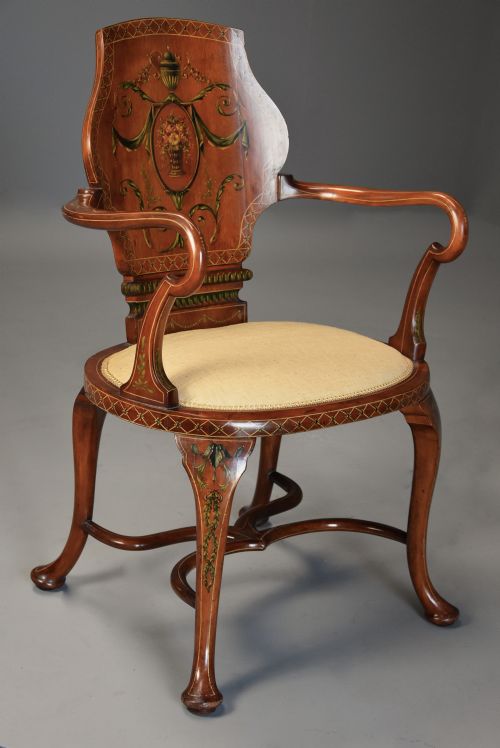
Carpenters constructed these armchairs using dense hardwoods like mahogany, oak, and walnut, frequently shaping timber into shield backs or ladder backs. Some examples incorporate decorative elements such as satinwood paintwork, barley twist turnings, or hand carving.
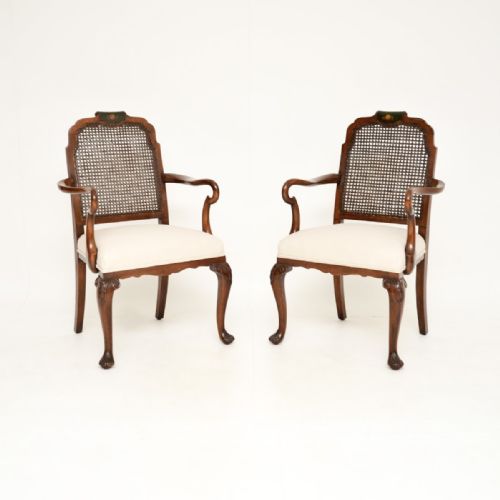
Seating surfaces utilised traditional methods, incorporating rush, cane, or fabric upholstery to provide support. Workshops also produced specialised variations like Anglo-Indian colonial armchairs alongside standard dining carvers.
Some sturdy carvers travelled far from home, arriving as Anglo-Indian colonial armchairs before reaching British drawing rooms.
What varies in quality
Quality depends upon the choice of timber and the precision of the joinery and carving applied to the frame. Pieces featuring figured mahogany, detailed painted satinwood, or intricate carved walnut demonstrate higher levels of workshop execution.
The integrity of the seating material, whether woven rush, woven cane, or upholstered fabric, marks a distinction between standard production chairs and finer decorative examples.
Liberty Morris & Co·Maple & Co·Liberty & Co·James Shoolbread·Spillman & Co
The Edwardian Furniture Carver Chair Glossary
- Carver chair
- An armchair designed with open sides to accommodate the fuller garments of the period, frequently placed at the heads of a dining table.
- Rush seat
- A seating surface woven from dried marsh grasses, commonly found on Arts and Crafts chairs.
- Cane
- Material woven from peeled rattan stems to form a patterned grid seat or back panel.
- Shield back
- A chair back shaped in the outline of a heraldic shield, popular during revival periods.
- Barley twist
- A spiral turning technique used on chair legs and structural supports.
Edwardian Furniture Carver Chair: Frequently Asked Questions
What is an edwardian furniture carver chair used for?
These armchairs served primarily as principal seating at the ends of a dining table or as occasional chairs in a parlour.
Their sturdy frame construction and open arms provided comfort and utility for daily household use.
How do I identify an Arts and Crafts carver?
Arts and Crafts examples typically feature exposed construction, ladder backs, and woven rush seats rather than elaborate carving.
They emphasise simpler timber forms and honest materials over historical revival decoration.
What woods were used for these chairs?
Cabinetmakers utilised dense hardwoods including mahogany, oak, walnut, and maple for structural strength.
Finer decorative pieces occasionally employed satinwood with painted surface details.
Are carver chairs sold individually or in sets?
While some carvers appear as individual armchairs or pairs, others form part of larger dining chair sets.
Sets frequently comprise a number of standard dining chairs accompanied by matching carvers.