





Upholstered Swivel Chair
An upholstered swivel chair brings movement and support to a desk or music room, combining period timber frames with practical revolving mechanisms.
Upholstered Swivel Chair
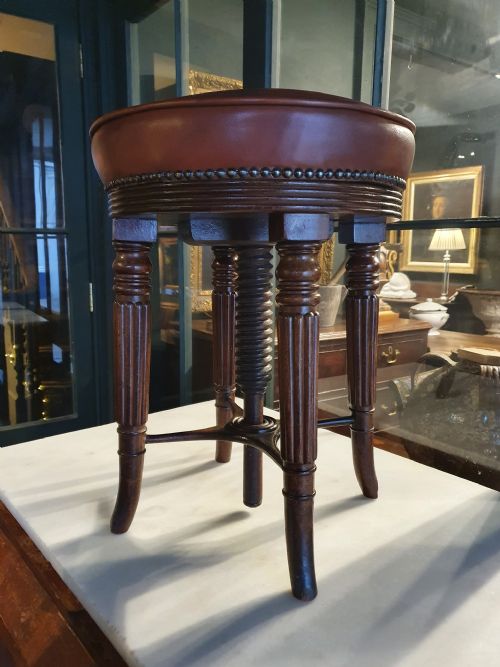
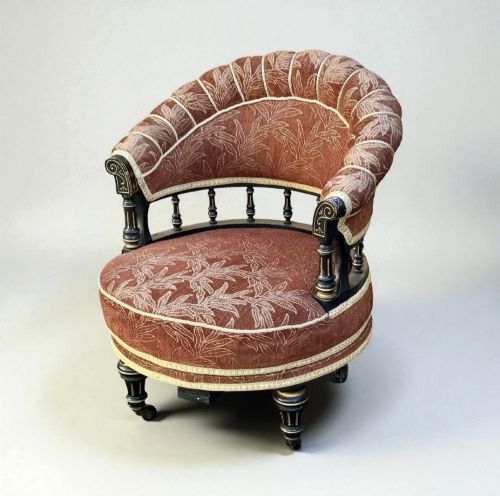
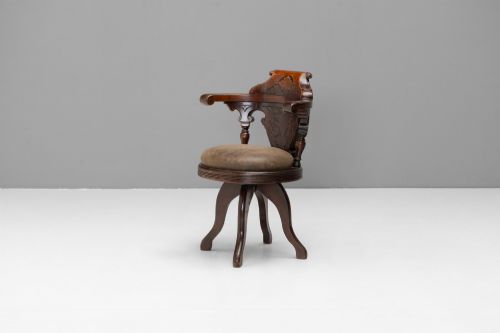
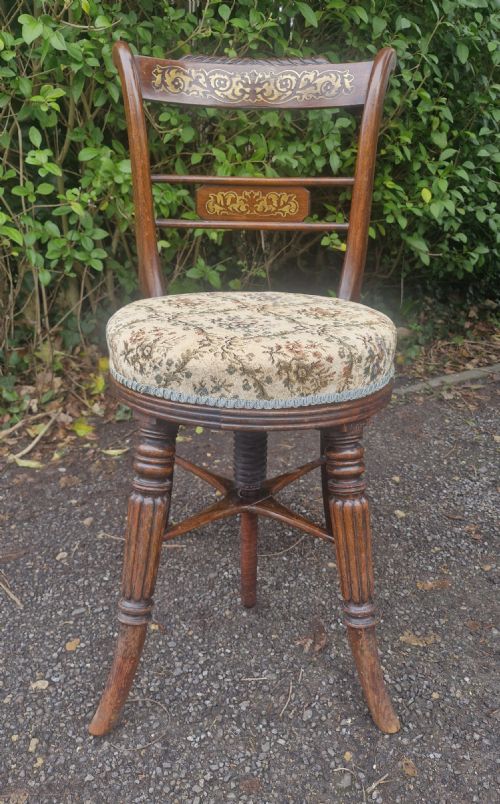
When searching for an upholstered swivel chair, buyers encounter a diverse selection ranging from nineteenth century piano stools and music chairs to heavy oak and mahogany desk armchairs. The pieces on this page span several eras, including the Georgian, Regency, Victorian, Edwardian, and Art Deco periods, reflecting how seating evolved to serve musicians, writers, and clerks.
The most common forms are adjustable piano stools, music chairs, and revolving desk armchairs designed for steady movement. Makers adapted domestic seating by mounting revolving mechanisms onto timber columns or cast iron bases, pairing functional utility with traditional upholstery in fabric, leather, or hide.
Origins vary across British workshops and continental styles, with materials shifting according to the intended room. A buyer is equally likely to find a rosewood music stool intended for a parlour or a robust mahogany office chair built for a Victorian study.
How they were made
Carpenters utilised dense hardwoods like mahogany, rosewood, walnut, satinwood, and oak to construct the sturdy frames required to support a revolving mechanism. These timbers were turned, carved, or ebonised depending on the prevailing style of the nineteenth and early twentieth centuries.
Makers integrated brass screw threads, iron spindles, and heavy cast iron components to achieve height adjustment and smooth rotation. Upholsterers then finished the seats and backs using traditional stuffing materials covered in leather, hide, or woven fabric, often securing the edges with brass tacks.
What varies in quality
The distinction between standard utility seating and finer examples rests on the execution of the timber frame and the sophistication of the mechanical adjustment. Superior pieces exhibit carefully turned columns, inlaid brass details, or robust cast iron swivel actions that operate smoothly without excessive play in the spindle.
The choice of covering also signals grade, as thick hides, buttoned leather, or figured rosewood and satinwood indicate higher workshop standards than plain oak or simpler fabrics. The integration of the swivel mechanism into the overall design without compromising the stability of the chair defines the upper tier of the range.
James Shoolbred
The Upholstered Swivel Chair Glossary
- Rise and fall
- A mechanical arrangement allowing the seat height to be adjusted by rotating the top. This system is commonly found on nineteenth century piano and music stools.
- Revolving
- Describing a seat or chair that turns fully on a central axis or pivot. It provides mobility for the user without requiring the entire base to move.
- Ebonised
- Timber treated with a dark stain or finish to imitate ebony. This technique was popular in Victorian furniture manufacturing for creating sharp contrast.
- Simulated rosewood
- Painted or grained wood finished to mimic the appearance of genuine rosewood. Makers used this method on secondary timbers to achieve a decorative surface affordably.
- Buttoned hide
- Leather upholstery pulled into regular indentations using buttons or tufts. This method secures the internal padding and creates a distinctive padded texture.
Upholstered Swivel Chair: Frequently Asked Questions
How do I adjust the height on these chairs?
Most period adjustable chairs rely on a central wooden or metal screw mechanism hidden beneath the seat. Turning the upper portion clockwise or anticlockwise raises or lowers the seating surface along the threaded spindle.
Some later designs incorporate levers or rise and fall actions operated by internal springs. It is advisable to turn the mechanism gently to check that the threads move freely without binding.
Were swivel chairs only used for offices?
Historical examples served several different functions across the home and workplace. Many early revolving seats were designed specifically as piano stools or music chairs to give musicians flexibility while playing.
Heavier models in oak and mahogany with leather upholstery were built for libraries, counting houses, and studies. The form adapted to whatever room required seated mobility.
How do I distinguish a Victorian model from a Georgian one?
Georgian and Regency examples tend to feature lighter proportions, restrained classical lines, and woods like rosewood or mahogany with subtle brass stringing. Victorian pieces often display heavier turning, deeper upholstery, and more complex mechanical hardware.
Arts and Crafts variants from the late nineteenth century introduce simpler structural forms and exposed joinery. Examining the turning style and the type of metal used in the swivel mechanism helps clarify the date.
What maintenance do leather upholstered swivel seats need?
Leather and hide surfaces benefit from occasional cleaning with a damp cloth followed by a suitable leather conditioner to prevent drying and cracking. The wooden frame requires standard dusting and protection from direct sunlight or sudden temperature shifts.
Period mechanical parts appreciate a light application of lubricating oil if the rotation becomes stiff over time. Regular checks ensure the central spindle remains secure within the base.