

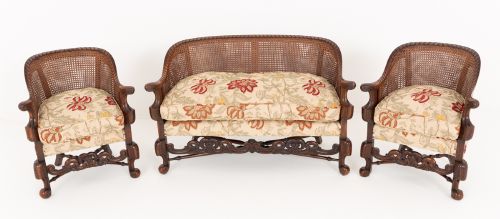
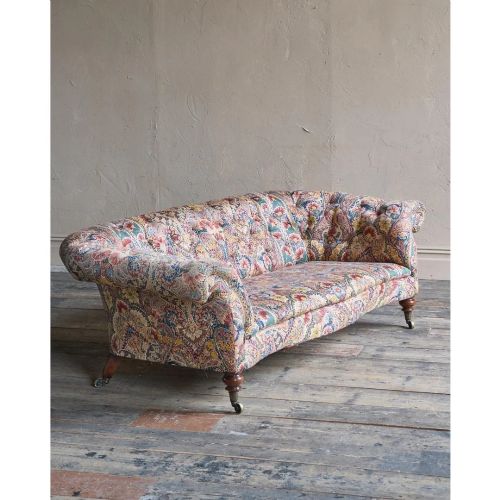
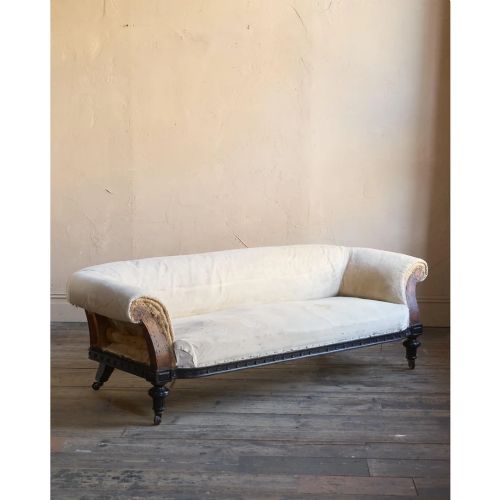
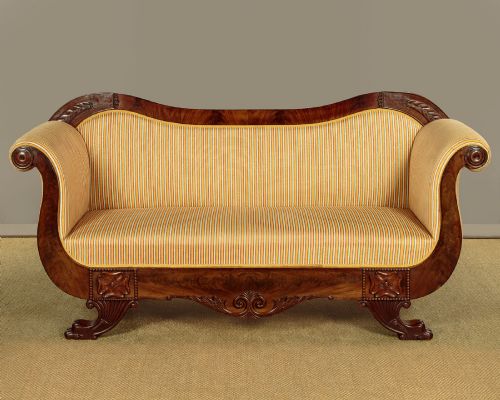
Upholstered Scroll Sofa
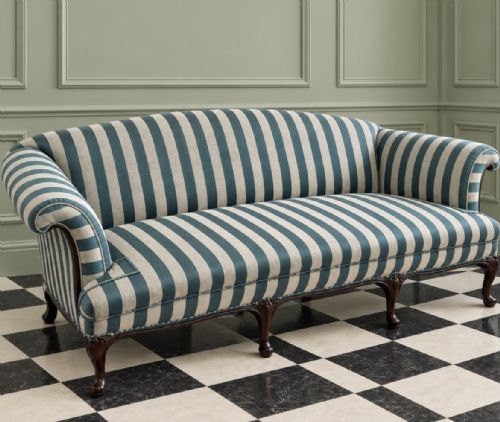
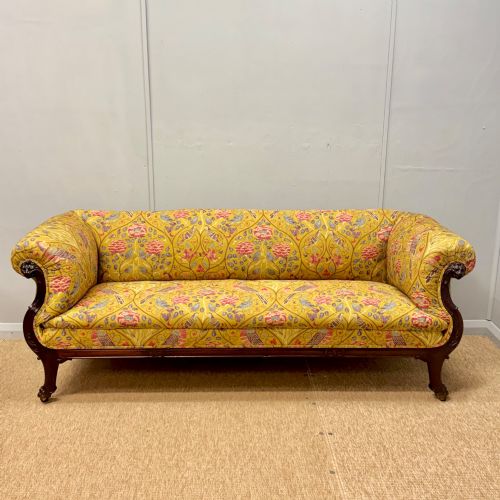
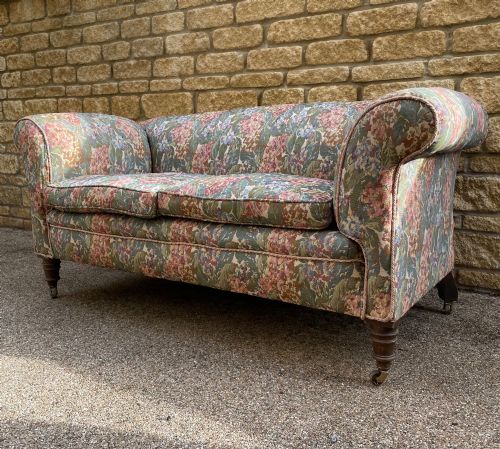
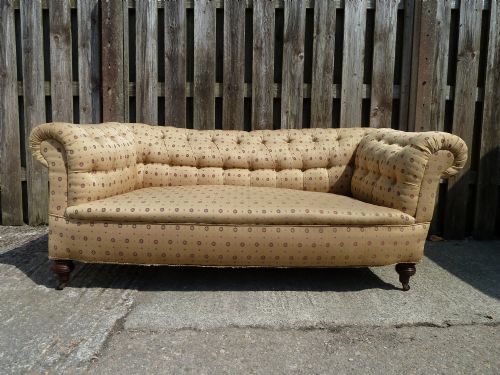
An upholstered scroll sofa brings a distinct architectural line to a room, combining deep timber frames with curving ends designed for posture and rest.
Upholstered Scroll Sofa
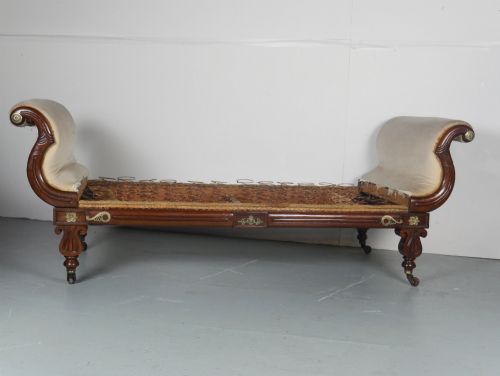
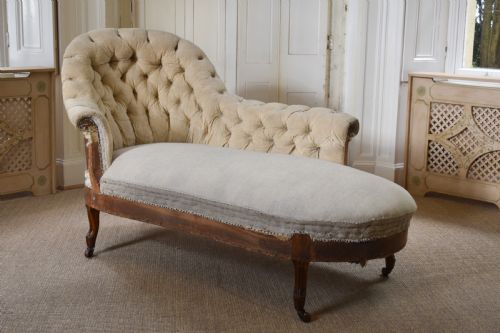
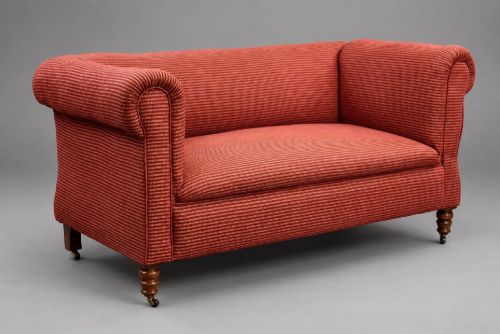
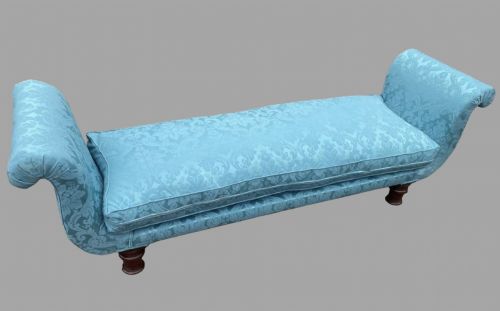
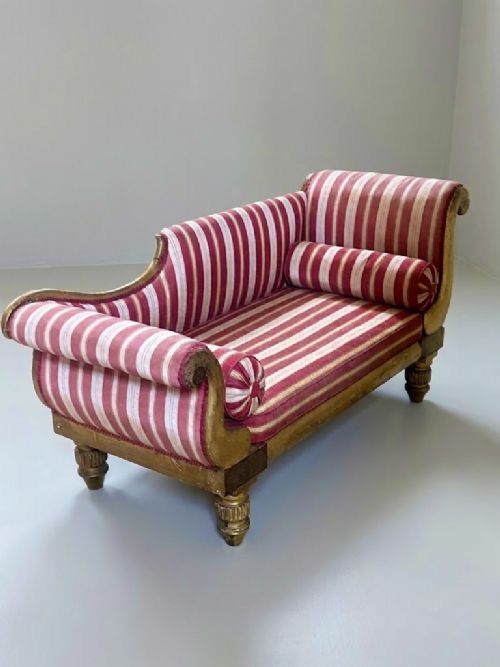
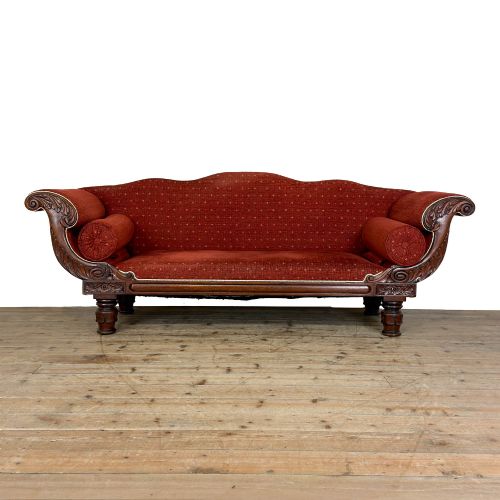
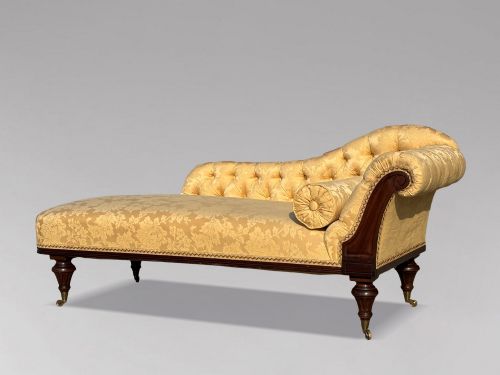
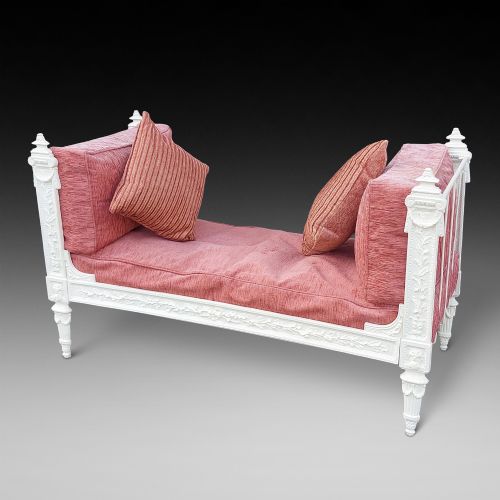
When searching for an upholstered scroll sofa, you encounter a range of forms spanning from the Regency and William IV eras into the Victorian period, Edwardian years, and early twentieth century. The selection includes country house sofas, chaises longues, daybeds, and settees that share characteristic scroll ends and soft fabric coverings.
The Regency examples often feature mahogany, rosewood, or simulated rosewood with pronounced scroll arms, whilst Victorian pieces lean towards walnut, mahogany, and cast iron supports. Later twentieth century interpretations introduce Art Deco lines and deep seated proportions alongside traditional forms.
Makers such as Miles & Edwards, Howard and Sons, and Holland & Sons appear amongst the inventory, marking pieces with notable workshop provenance. These items vary from formal giltwood parlour seating to robust country house furniture designed for daily use.
Assessing quality and execution
Quality rests in the precision of the timber framing, the integrity of the scroll carving, and the fidelity of the period style. Finer examples display balanced proportions, substantial timber weight, and authenticated workshop attribution.
Simpler workshop pieces use standard turnings and modest secondary timbers, whereas grander country house iterations employ choice veneers, detailed mouldings, and superior upholstery materials.
Upholstered Scroll Sofa Retail Price Guide 2026
Typical asking prices for upholstered scroll sofa among the pieces listed under this phrase on Sellingantiques today, from the lower quarter to the upper quarter. They describe what is for sale here now, not the wider market.
Several pieces manage to combine the strict dignity of the Regency with the sheer comfort of a nineteenth century nap.
Miles and Edwards·Howard and Sons·Holland and Sons
The Upholstered Scroll Sofa Glossary
- Scroll end
- A sweeping, curved terminal to a sofa arm or couch back. This architectural flourish defines the silhouette of Regency and Victorian seating.
- Chaise longue
- An elongated upholstered chair designed for reclining. These pieces combine backrests with a single scroll end or extended seat.
- Chesterfield
- A deep buttoned upholstered sofa featuring arms and back of equal height. It remains a staple of nineteenth century seating design.
- Giltwood
- Timber treated with gold leaf or gilding composition. This finish appears on formal Regency and period salon furniture.
- Bergere
- An enclosed upholstered armchair or suite with exposed wooden frames. These seats often incorporate woven cane or padded fabric panels.
Upholstered Scroll Sofa: Frequently Asked Questions
How do I identify a Regency scroll sofa?
Regency pieces typically exhibit dense hardwoods like mahogany and rosewood, often featuring brass inlays, lyre supports, or crisp scroll arms derived from classical motifs.
Proportions remain architectural and restrained, reflecting the neoclassical tastes of the early nineteenth century.
What is the difference between a settee and a chaise longue?
A settee provides a symmetrical seating arrangement for multiple occupants with a uniform backrest and matching arms.
A chaise longue is built for reclining, featuring an extended seat platform paired with a single raised scroll end or partial back.
Where were these sofas placed in a historic home?
Grand scroll sofas stood in principal reception rooms, drawing rooms, or country house libraries as statement pieces of furniture.
Smaller variants and chaises longues found placement in boudoirs, dressing rooms, or adjacent to large windows for daytime rest.
How do Howard and Sons sofas differ from standard Victorian pieces?
Howard and Sons pieces utilise superior internal framing, advanced spring systems, and precise upholstery specifications that set them apart from commercial contemporaries.
Their marked work commands distinct recognition among collectors of nineteenth century seating.