

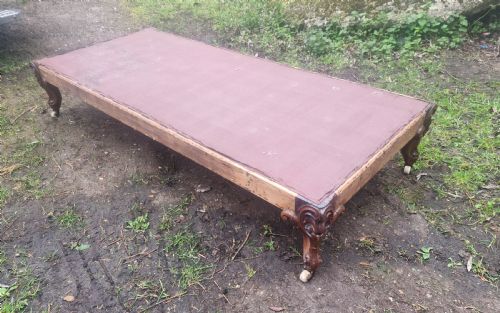
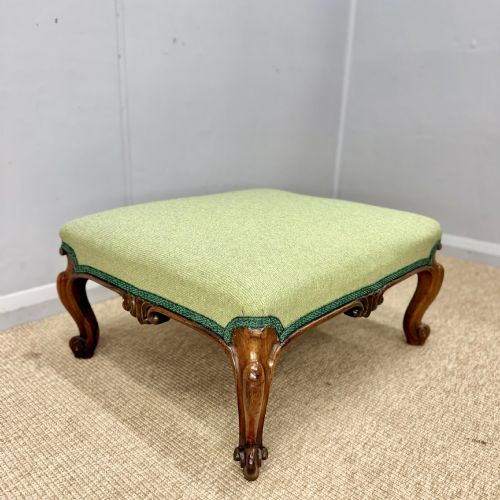


Upholstered Rosewood Ottoman
An upholstered rosewood ottoman brings rich timber and tactile seating to a room, drawing on nineteenth-century design.

Upholstered Rosewood Ottoman
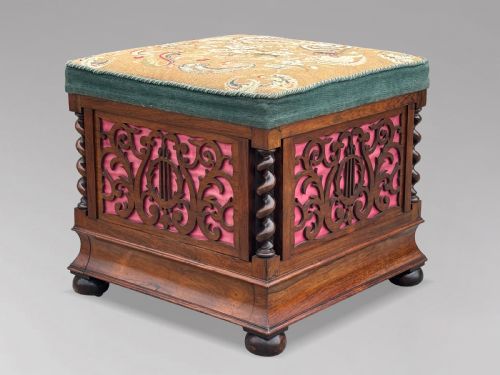
When searching for an upholstered rosewood ottoman, collectors encounter a variety of nineteenth-century forms designed for domestic comfort. These pieces range from compact footstools and dressing stools to large box ottomans and centre stools.
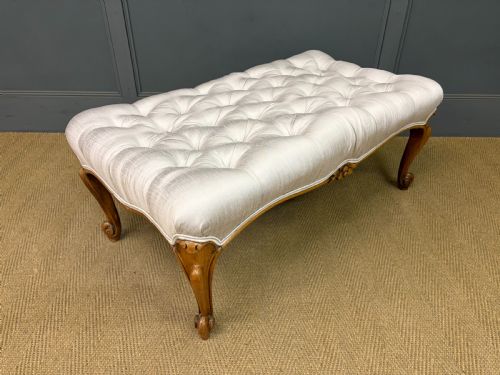
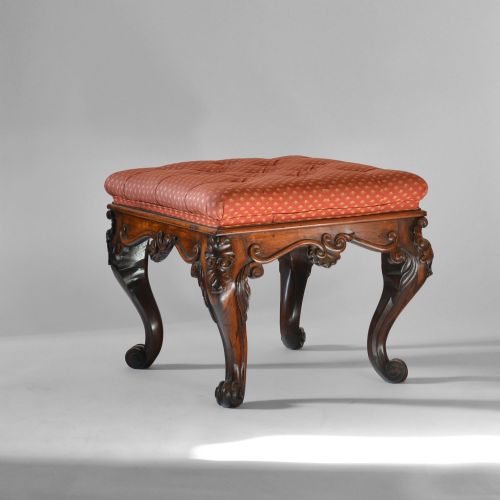
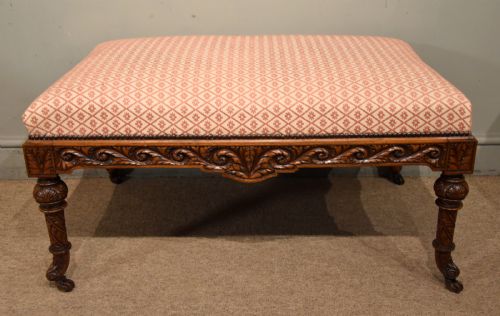
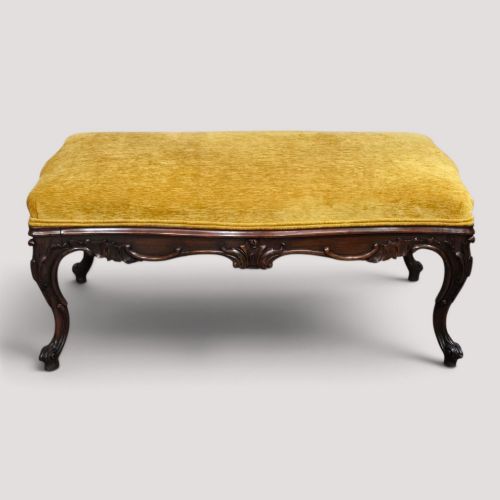
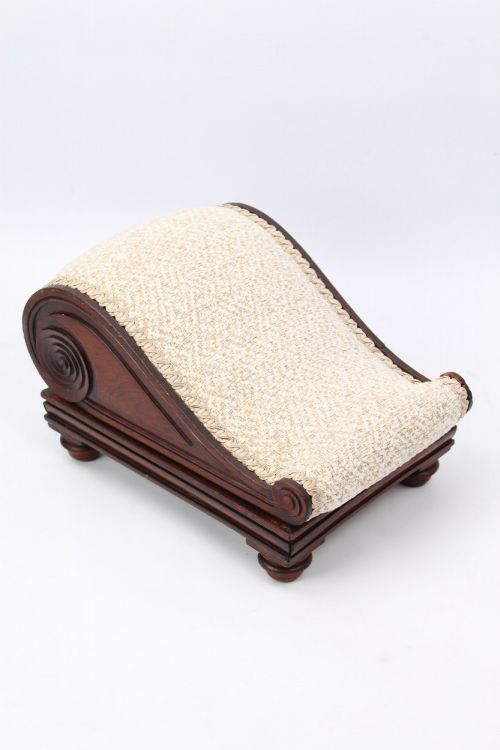
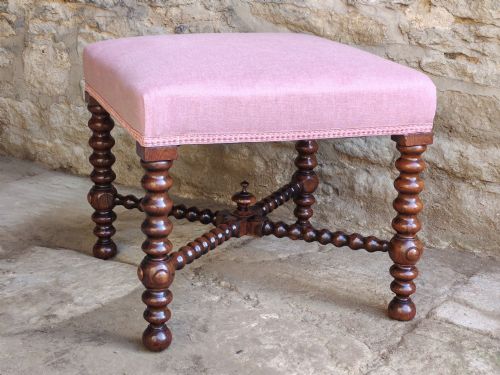
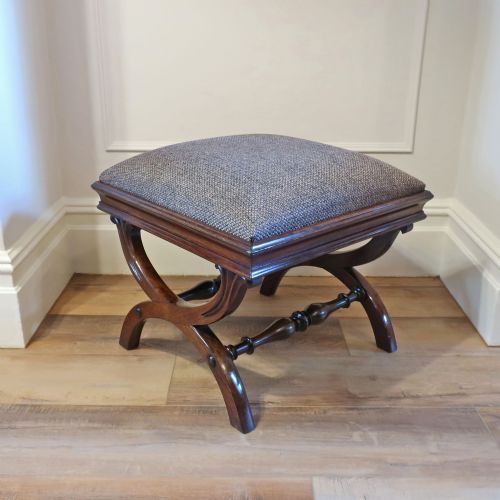
Victorian and Regency examples dominate the selection, often combining dense timber frames with soft textile tops. Buyers will frequently find pieces featuring cabriole legs, bobbin turnings, or robust X-frames supporting the upholstered seat.
Materials and construction
Craftsmen built these frames using dense rosewood and timber, often shaped with carved details or left with smooth polished surfaces. Brass fittings occasionally appear on castors or hinges within box seat designs.
Upholstery methods varied from traditional horsehair stuffing beneath buttoned leather to delicate tapestry and velvet textiles. Many surviving examples retain their original textiles or have been newly covered in complementary fabrics.
Listings feature pieces spanning the Georgian, Regency, and Victorian periods, constructed from rosewood, timber, leather, and tapestry.
Judging quality and proportion
The distinction between standard pieces and the finest examples lies in the crispness of the timber carving and the balance of the proportions. Superior frames display deeply figured rosewood grain and secure structural joinery.
Attention to detail in the turning of legs, such as bobbin patterns or cabriole curves, elevates the design. Pieces with functional storage compartments or box seats demand robust internal construction to endure daily use.
The Upholstered Rosewood Ottoman Glossary
- Ottoman
- A low upholstered seat or footstool without a back or arms, often containing an internal compartment for storage. These versatile items served multiple functions in nineteenth-century drawing rooms.
- Rosewood
- A heavy, durable timber prized for its dark grain and reddish-brown coloration. It provides a stable and decorative structural frame for seating furniture.
- Cabriole leg
- A furniture leg that curves outward and then tapers inward, finishing in a ornamental foot. This style appears frequently on mid-century Victorian examples.
- Tapestry
- A thick textile woven with decorative pictorial or floral designs. Such fabrics frequently cover nineteenth-century footstool tops.
- Box ottoman
- A seating form featuring a hinged top that lifts to reveal a storage cavity. These items combine practical utility with decorative upholstery.
Upholstered Rosewood Ottoman: Frequently Asked Questions
What is a rosewood ottoman?
A rosewood ottoman is a nineteenth-century upholstered seat constructed with a dark tropical timber frame. These pieces function as footstools, low seats, or storage boxes.
Many examples date from the Regency and Victorian periods, showcasing carved wooden details beneath textile or leather upholstery.
How do I date an ottoman?
Dating relies on stylistic markers such as turned bobbin legs, cabriole supports, or heavy mahogany and rosewood frames. Regency pieces often exhibit classical restraint, while Victorian versions favour heavier carving.
Internal construction methods and joinery details also offer clues to the exact decade of manufacture.
Are these seats comfortable?
Most pieces were designed for resting feet or casual seating rather than long lounging. The internal padding typically consists of traditional horsehair or modern firm cushioning.
Many surviving examples have been newly upholstered to provide soft support while retaining their historic wooden frames.
How do I care for rosewood?
Rosewood requires protection from direct sunlight and excessive moisture to prevent the polished timber from fading or drying out. Gentle dusting with a soft cloth maintains the natural lustre of the wood grain.
Conditioning the timber occasionally helps preserve the depth of the finish.