
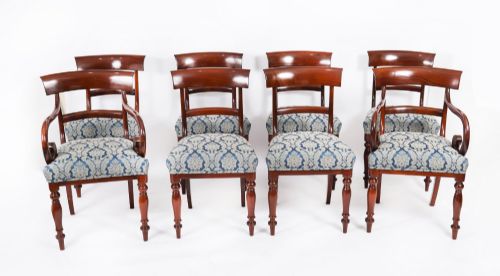
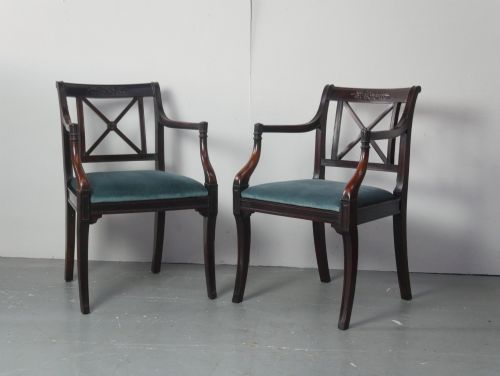
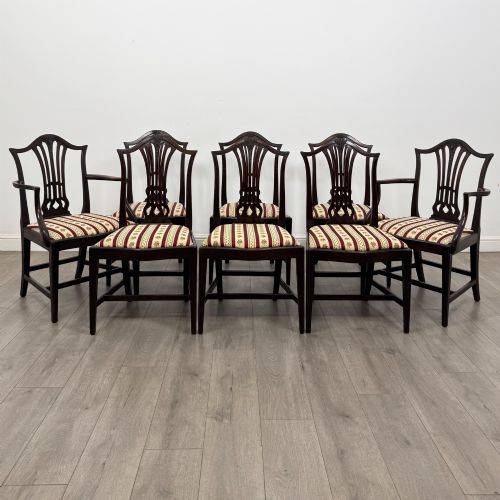
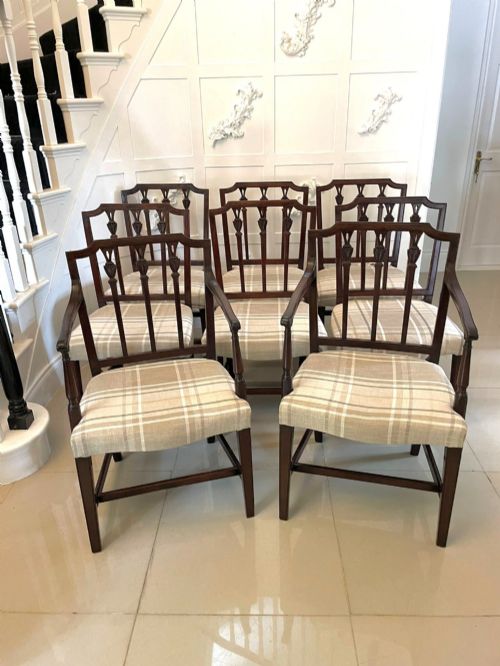
Upholstered Mahogany Carver Chairs
Upholstered mahogany carver chairs bring formal seating traditions into daily use with rich timbers and supportive armrests.
Upholstered Mahogany Carver Chairs
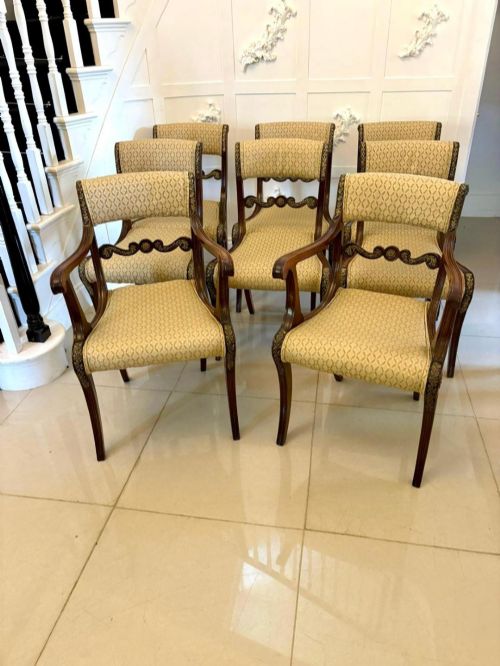
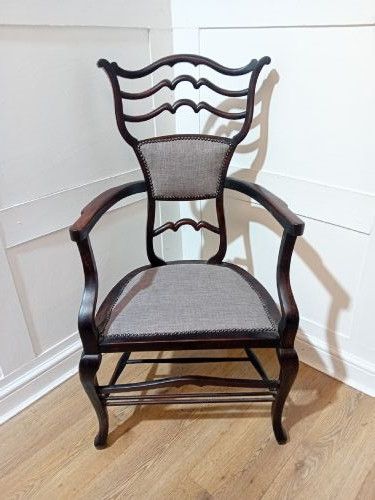
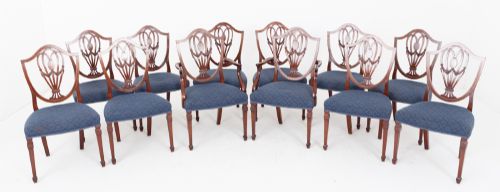
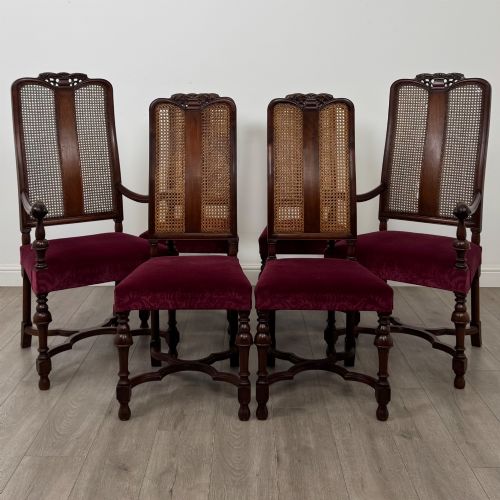
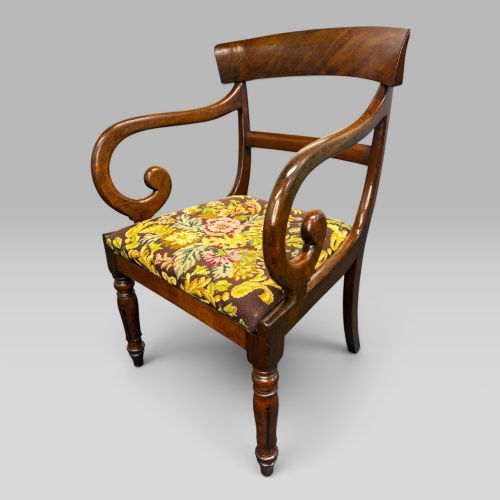
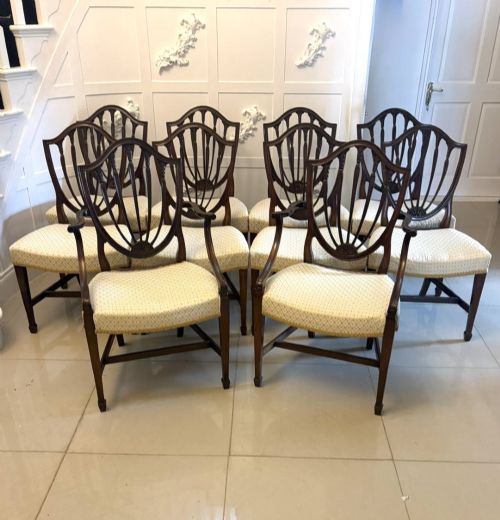
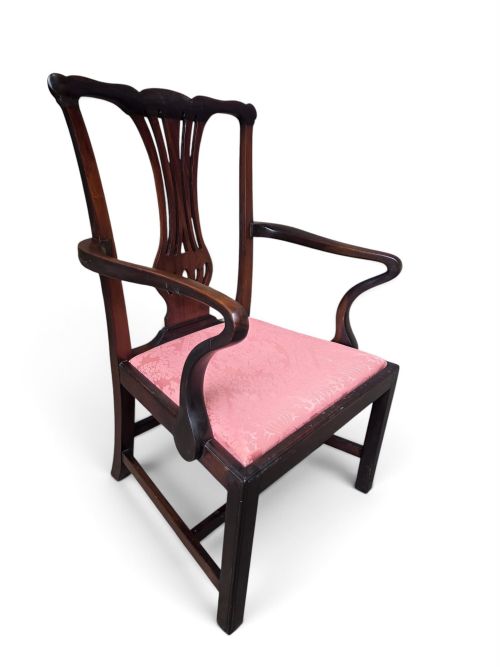
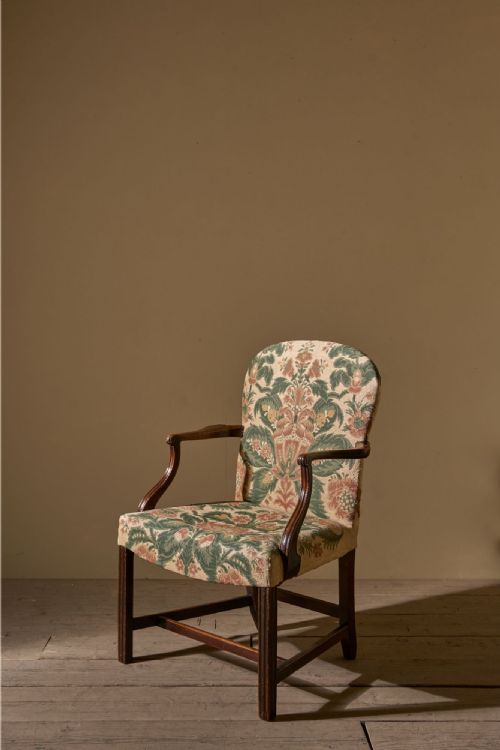
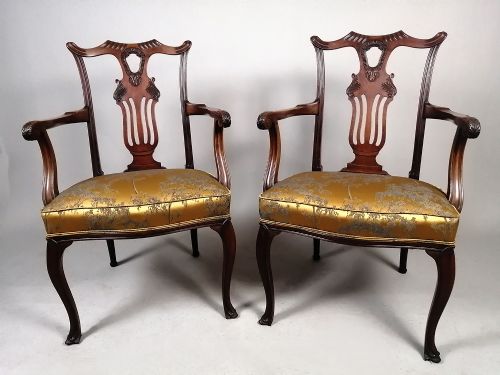
These upholstered mahogany carver chairs serve as the larger armchairs accompanying dining sets, desks, or parlour arrangements, designed with structural support for the arms. The pieces span periods from the eighteenth century through the Georgian, Regency, and Victorian eras into Edwardian and later revivals.
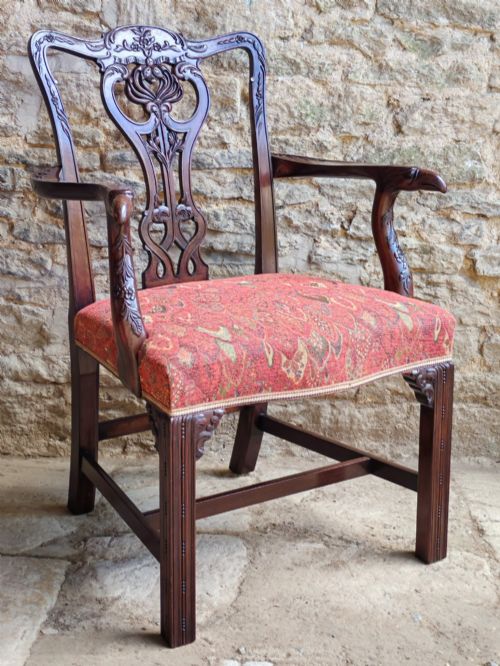
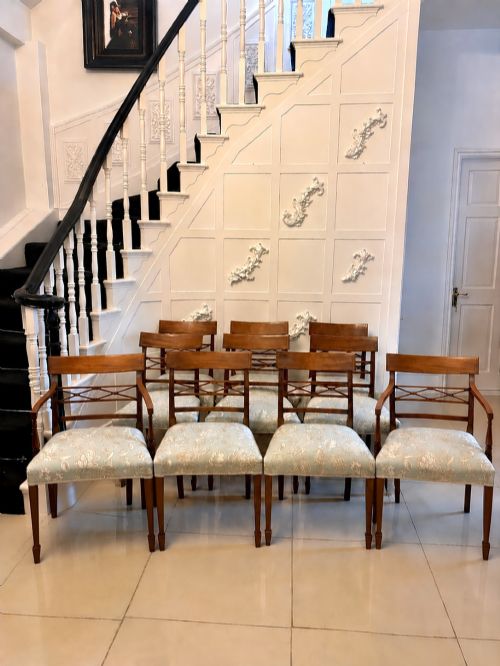
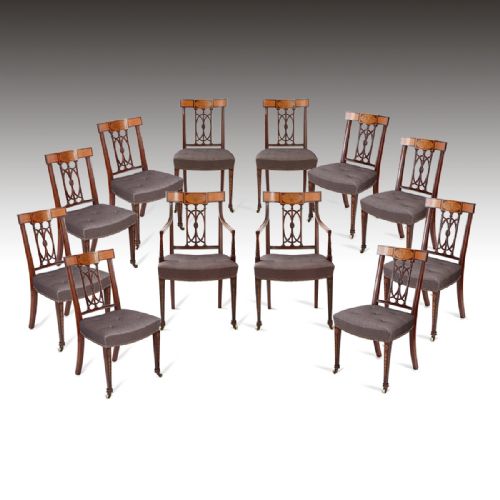
A buyer frequently encounters versions built in the Hepplewhite, Chippendale, and Regency styles, alongside sets that pair multiple dining chairs with matching carvers. The forms range from shield backs and lyre backs to open armchairs and elbow chairs.
Origins stretch across English workshops as well as Scottish and continental makers, incorporating timber frames with diverse fabric coverings. They function practically as desk chairs or dining ends while maintaining historical aesthetic value.
Materials and construction
Frames are built predominantly from solid mahogany, occasionally accented with secondary timbers like satinwood, rosewood, or maple, relying on traditional joinery methods. Selected pieces incorporate brass details or structural reinforcements.
Upholstery employs textiles such as velvet, leather, tapestry fabric, and general upholstery fabric fixed over padding. The combination of dense hardwood and tightly secured fabric provides structural endurance across centuries.
Several armchairs incorporate hidden rosewood roundels, adding a subtle secret detail beneath the polished mahogany surface.
Distinctions in craftsmanship
Superior examples demonstrate crisp, deeply defined hand-carving along the splats, arms, and legs, whereas lesser versions rely on softer or more simplified moulding. The precision of the joinery determines the stability of the arm supports under daily use.
The choice of primary mahogany grain and the integrity of the surviving upholstery materials dictate the overall visual coherence of the chair. Pieces bearing maker stamps or retaining original period textiles hold distinct architectural and historical standing.
Howard and Sons·Alfred Allen of Birmingham·Gillows
The Upholstered Mahogany Carver Chairs Glossary
- Carver chair
- An armchair, traditionally placed at the head of a dining table or used at a desk, distinguished by its fixed wooden arms. These items provide broader seating than standard side chairs.
- Shield back
- A chair back design shaped in the outline of a heraldic shield, popularised during the late eighteenth century. This form often incorporates carved splats and symmetrical woodwork.
- Lyre back
- A chair back featuring an openwork central splat shaped like the musical instrument. This motif frequently appears in Regency and revival design contexts.
- Elbow chair
- An alternative designation for an open armchair, referencing the prominent wooden rests designed to support the sitter's arms. The style bridges desk seating and formal parlour furniture.
- Splat
- The vertical wooden strip down the middle of a chair back, connecting the top rail to the seat. Carvers often display intricate pierced or carved designs on this component.
Upholstered Mahogany Carver Chairs: Frequently Asked Questions
How do I use carver chairs with a dining table?
Place the carvers at the head and foot of the table where the armrests fit comfortably beneath the top surface. They serve as primary seating for hosts while standard side chairs line the sides.
Ensure the arm height matches the clearance under the table apron so the chairs push in neatly when not occupied. This arrangement creates a balanced formal layout for dining spaces.
How do I tell an original Georgian chair from a revival?
Examine the timber construction, interior joinery methods, and wear patterns beneath the seat frame. Eighteenth-century pieces exhibit hand-cut joints and timber ageing consistent with period tool marks.
Revival pieces from later periods often display machine-tooled elements or standardised components beneath the upholstery. Consulting maker stamps or specific regional design traits helps confirm the exact era.
Are these chairs suitable for daily desk work?
Desk chairs and carver chairs from these periods provide sturdy arm support and upright seating postures suited for writing tasks. Many examples were originally constructed for library or study use.
Pairing them with a modern desk requires checking the seat height and arm clearance against the work surface. The solid wood construction ensures durability for regular daily tasks.
What maintenance do antique upholstered chairs require?
Keep the timber frames nourished with appropriate furniture wax to protect the mahogany surface from drying out. Avoid placing the chairs in direct sunlight to prevent fading of the wood and the fabric upholstery.
Vacuum upholstered surfaces gently using a soft brush attachment to remove dust without stressing the textile. Professional cleaning preserves delicate fabrics like velvet or tapestry over time.