



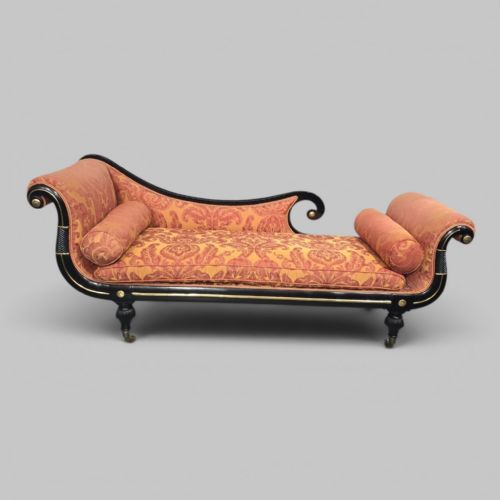


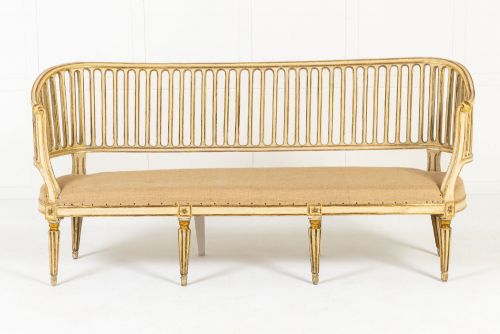

Upholstered Gilt Sofa
An upholstered gilt sofa brings carved wood, gold leaf and textile together to anchor a grand interior.
Upholstered Gilt Sofa
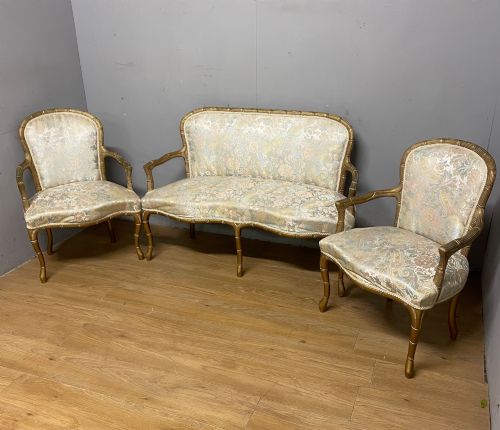
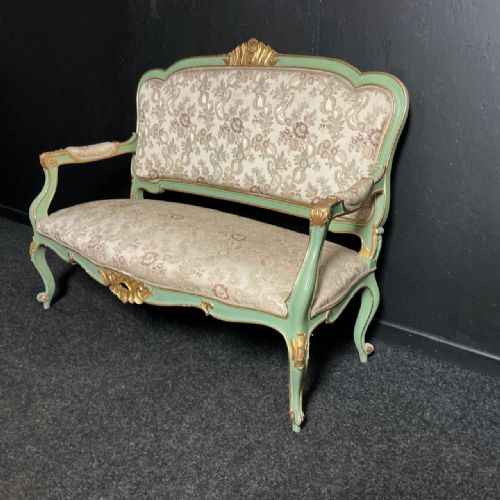
When you search for an upholstered gilt sofa, you encounter seating designed for formal reception rooms, featuring carved frames finished in gold leaf or paint alongside soft textile covers. The forms range from compact boudoir settees and chaise longues to large country house settees and multi-piece salon suites.
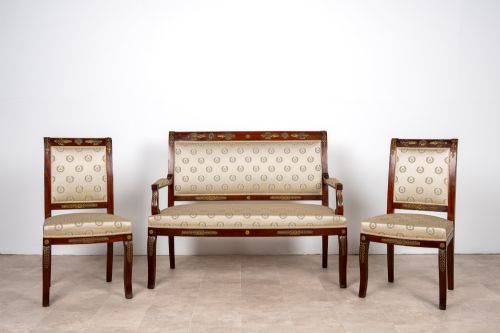
The pieces on this page lean heavily towards nineteenth-century Continental and English production, with Louis XV and Louis XVI revival styles appearing frequently. You will also find Regency, Empire, and Victorian interpretations alongside occasional mid-century and earlier Italian examples.
Makers and workshops across France, Italy, England, Sweden, and Austria produced these varied seating forms for aristocratic and wealthy domestic interiors. They served as both functional furniture and statements of social standing, often matching larger salon arrangements.
How they were made
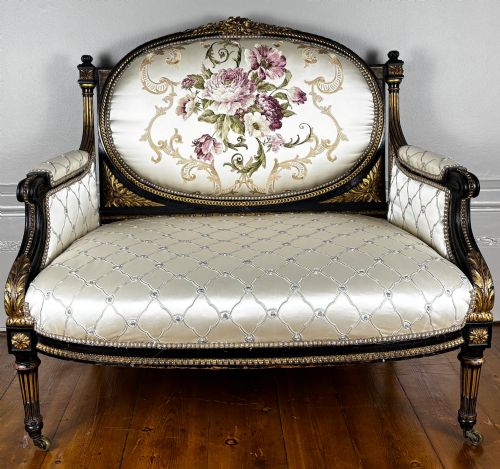
Frames were carved from hardwoods like wood and ebonised wood, then meticulously prepared for gilding with gold leaf or gilt. Artisans applied thin sheets of metal over a prepared bole ground to create the luminous surfaces characteristic of these pieces.
Upholstery involved traditional stuffing techniques enclosed in silk upholstery, fabric, and silk, secured to webbed bases with careful stitching and trim. Brass details and ormolu mounts sometimes accented the structural joints and decorative carvings.
Upholstered Gilt Sofa Retail Price Guide 2026
Typical asking prices for upholstered gilt sofa among the pieces listed under this phrase on Sellingantiques today, from the lower quarter to the upper quarter. They describe what is for sale here now, not the wider market.
Sunflower motifs carved into Aesthetic Movement frames reveal a fleeting nineteenth-century obsession with cheerful botany.
What varies in quality
The depth and crispness of the wood carving separate standard production from superior examples, where artisans spent significantly more time refining acanthus leaves, floral motifs, and structural lines. The quality of the gilding itself, whether using genuine gold leaf or paint, dictates the longevity and visual warmth of the frame.
Proportion and scale also define the hierarchy of these pieces, as balanced frames with harmonious curves command greater presence than heavier or more rigid constructions. The integrity of the underlying joinery and the retention of period textiles or appropriate historically sympathetic re-upholstery complete the distinction.
The Upholstered Gilt Sofa Glossary
- Giltwood
- Wood that has been coated with gold leaf or powder over a prepared gesso and bole ground. This technique creates the rich, metallic sheen seen on traditional European seating frames.
- Canapé
- A traditional French term for a decorative sofa or settee, usually featuring an exposed carved wood frame and upholstered seat and back. They often appear in suites alongside matching armchairs.
- Ormolu
- Gilded bronze mounts applied to furniture for decorative accent, popular in French Empire and revival pieces. The technique involves mercury gilding cast bronze elements to achieve a bright golden finish.
- Ebonised wood
- Timber treated to imitate ebony, typically through staining and polishing to achieve a deep, glossy black surface. This dark finish provides a sharp contrast against gilt highlights.
- Regency
- A British design period spanning the early nineteenth century, characterised by classical restraint, neoclassical motifs, and bold architectural lines. Pieces from this era often incorporate gilt frames and sabre legs.
Upholstered Gilt Sofa: Frequently Asked Questions
Where did people place these sofas?
These sofas were primarily positioned in formal reception rooms, drawing rooms, and large parlours where guests were received. They served as central seating elements within grand domestic interiors.
Smaller boudoir settees and chaise longues found their way into private dressing rooms or intimate sitting spaces, matching the scale of more private apartments.
How do I care for gilt frames?
Giltwood frames require gentle maintenance using a soft, dry cloth to remove dust without disturbing the delicate gold leaf surface. Avoid liquid cleaners and modern polishes, which can strip or discolour the historical finish.
Keep these pieces away from direct sunlight and fluctuating humidity to prevent the underlying wood from warping and the gesso ground from cracking.
Are these sofas comfortable for daily use?
Many period settees were built with firm, upright padding intended for formal posture rather than casual lounging. The depth and slant of the backrest reflect nineteenth-century standards of social sitting.
If you plan to use one daily, check the internal webbing and spring construction, keeping in mind that older upholstery may require professional conservation or restoration.
How do I identify a revival style?
Revival pieces, such as those in the Louis XV or Louis XVI style, are typically nineteenth-century interpretations of earlier eighteenth-century designs. Look closely at the timber seasoning, tool marks, and construction methods, which often reveal Victorian or later manufacturing techniques beneath historicist decoration.
Hardware, screw types, and secondary woods also help distinguish a later nineteenth-century revival piece from an authentic eighteenth-century original.