


Upholstered Corner Armchair
An upholstered corner armchair fits neatly into a room to offer a seat designed for angles.
Upholstered Corner Armchair
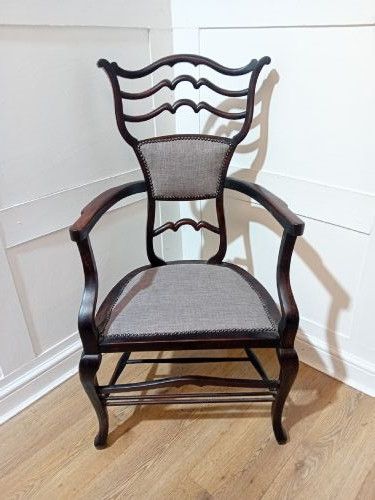
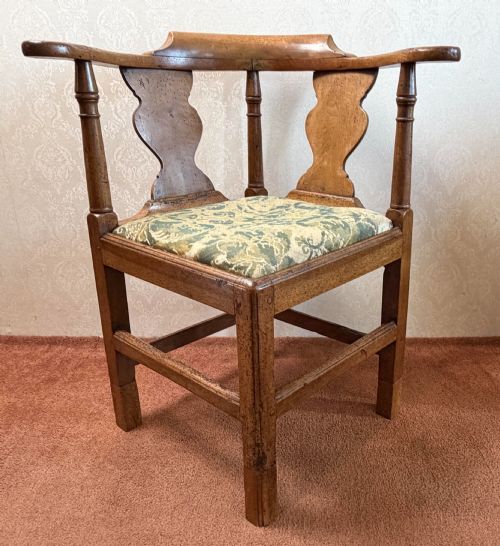
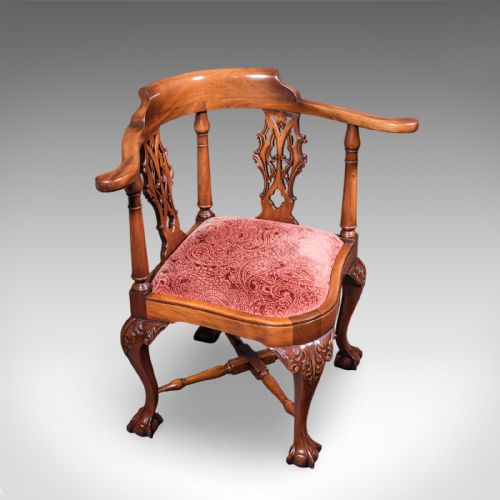
When you search for an upholstered corner armchair, you encounter seating designed to fit into ninety-degree room angles. The selections span the eighteenth century, the Victorian era, and the Edwardian period, with numerous examples incorporating inlaid mahogany, oak, and rosewood.
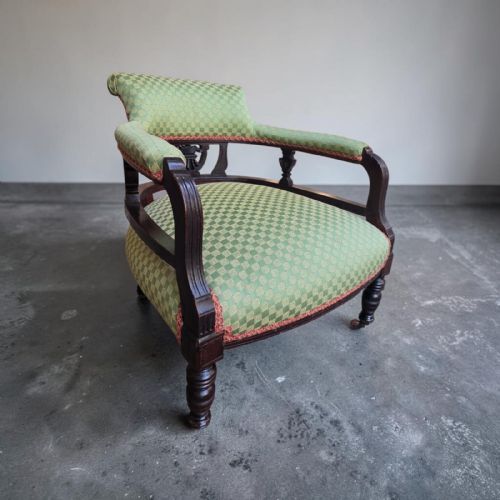
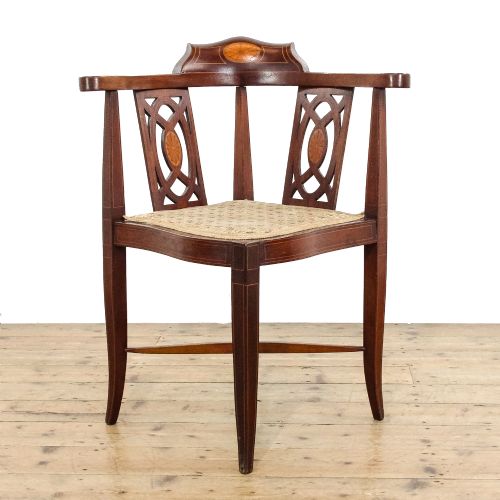
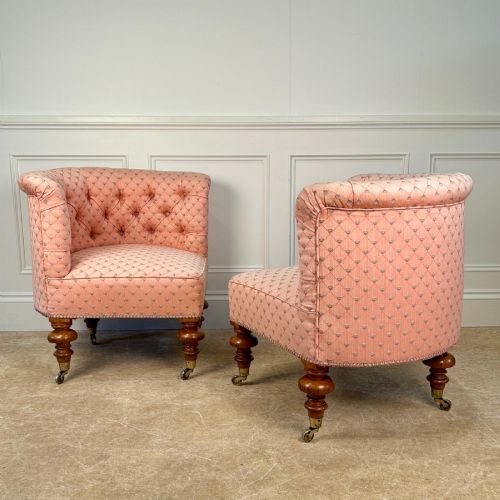
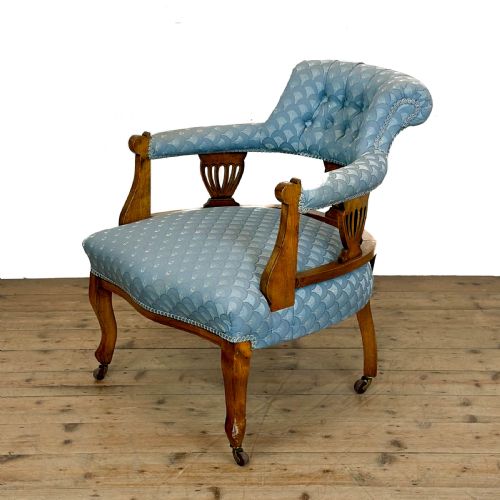
The version you are most likely to meet on this page is the Edwardian inlaid mahogany corner chair or its Victorian predecessor. These forms often feature textile upholstery, ranging from simple squab seats to fully padded backs designed for dressing rooms, bedrooms, and parlours.
How they were made
Cabinetmakers constructed the frames of these chairs using timbers such as mahogany, oak, and walnut, often shaping the corner posts and legs to support the unusual diagonal stress. Workshops applied decorative techniques including wood inlay, boxwood stringing, and marquetry to enrich the surfaces.
Upholstery completed the piece, utilising textiles fixed over padding to create functional seats. Brass elements sometimes appeared on castors or decorative mounts, while carving added texture to rosewood and oak frames.
The listings on this page span the eighteenth, nineteenth, and twentieth centuries, featuring woods such as mahogany, oak, walnut, and rosewood.
What varies in quality
The standard of a corner chair rests on the crispness of its timber construction and the refinement of its joinery. Superior examples display precise wood inlay and well-balanced proportions that manage the structural demands of a diagonal seat without appearing clumsy.
The treatment of the upholstery and the depth of the carving separate standard workshop pieces from finer salon items. The integrity of the frame and the quality of the primary wood dictate the overall standing of the chair.
Miles & Edward’s
The Upholstered Corner Armchair Glossary
- Squab seat
- A loose cushion placed upon the base of a chair. This type of seat is easily removed or reupholstered.
- Marquetry
- Decorative veneer work forming pictures or patterns using various woods. Craftsmen applied this technique to panels and backrests.
- Tub chair
- An armchair with a continuous curved back and arms forming a rounded enclosure. These often feature low profiles suitable for bedrooms.
- Boxwood
- A dense, pale wood frequently used for contrasting stringing and inlay details on darker timbers. It provides sharp visual lines in Edwardian pieces.
Upholstered Corner Armchair: Frequently Asked Questions
Where did these corner chairs go in a house?
These chairs fit directly into room corners, making efficient use of awkward spaces in parlours, bedrooms, and dressing rooms.
Their diagonal orientation allowed them to serve as intimate seating areas without blocking central pathways through the room.
How do I spot an eighteenth-century example?
Early pieces from the eighteenth century rely on solid timbers like oak and walnut with restrained structural forms. They generally lack the extensive marquetry inlay found on later Edwardian versions.
Construction details and timber patination help distinguish these early frames from nineteenth-century revivals.
Are these chairs comfortable for daily use?
Many of these chairs were built for dressing rooms or decorative corners rather than lounging. Their upright postures and firm padding reflect the formal seating habits of past periods.
Their compact scale makes them practical occasional seats for modern living spaces.