





Upholstered Chesterfield
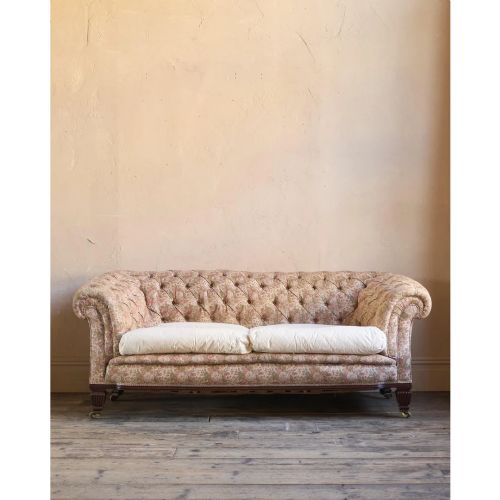
An upholstered chesterfield brings deep buttoning and rolled arms to a room, offering enduring comfort and traditional seating.
Upholstered Chesterfield
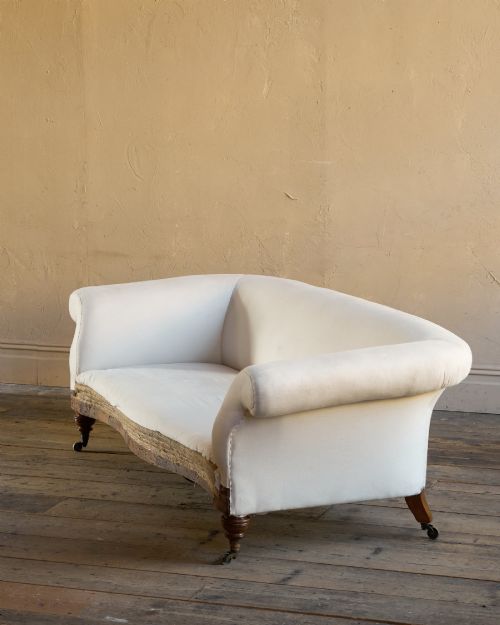
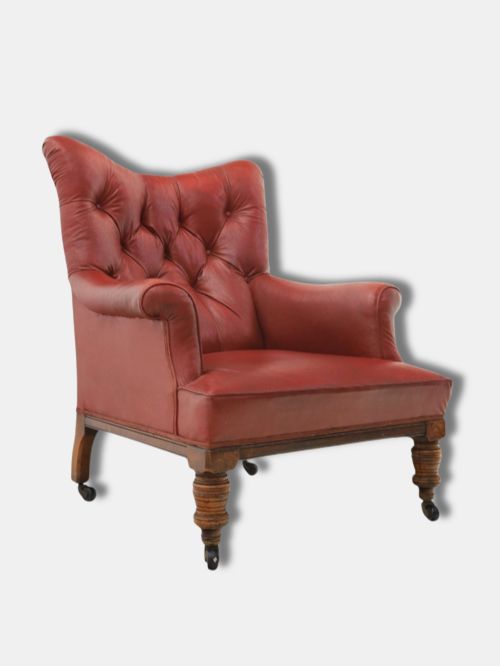
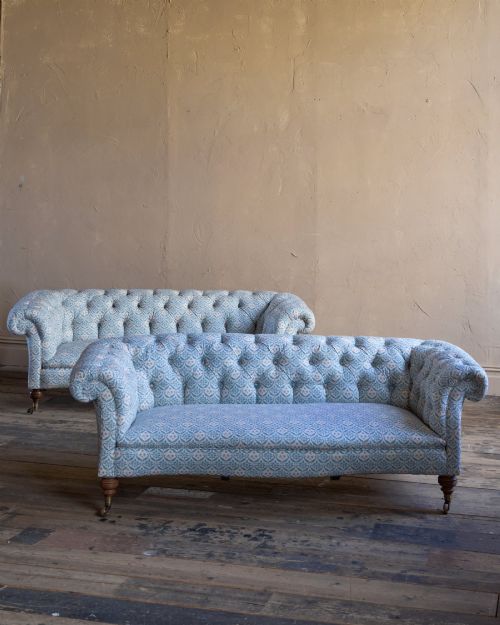
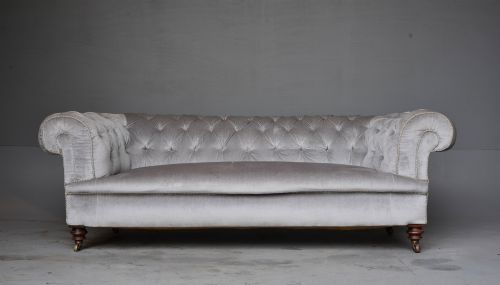
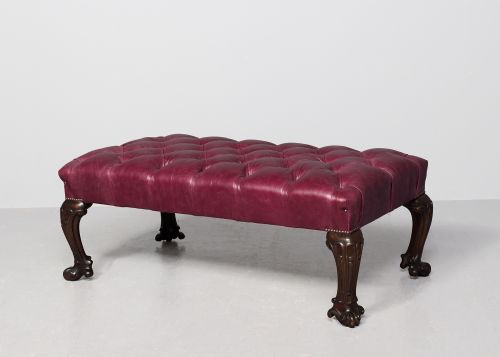
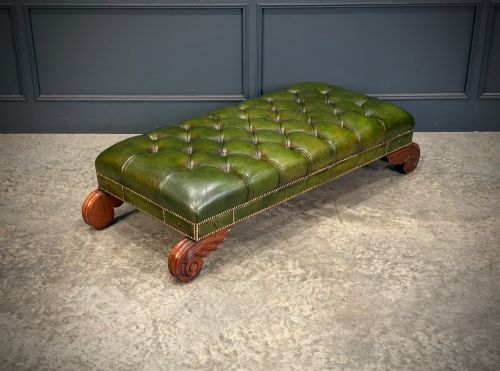
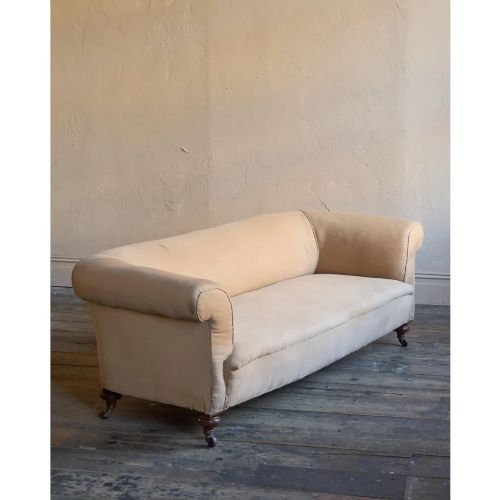
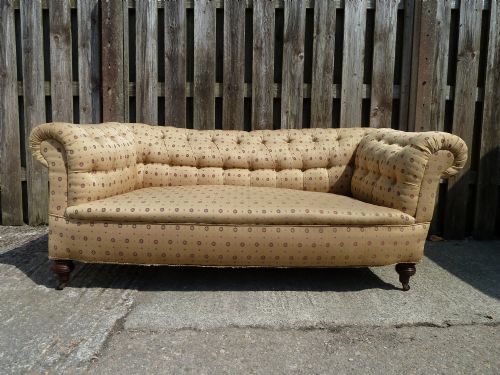
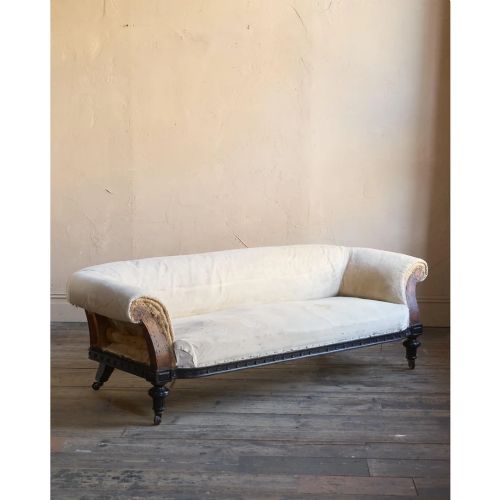
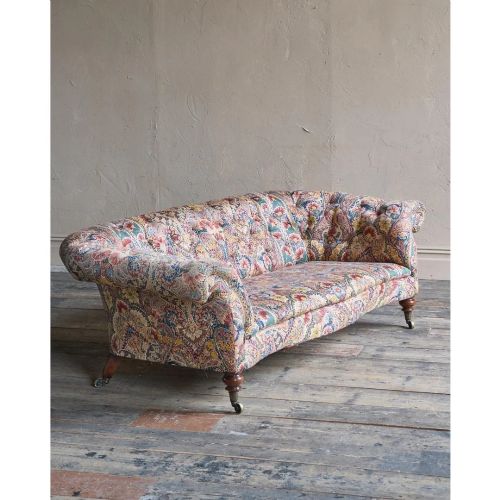
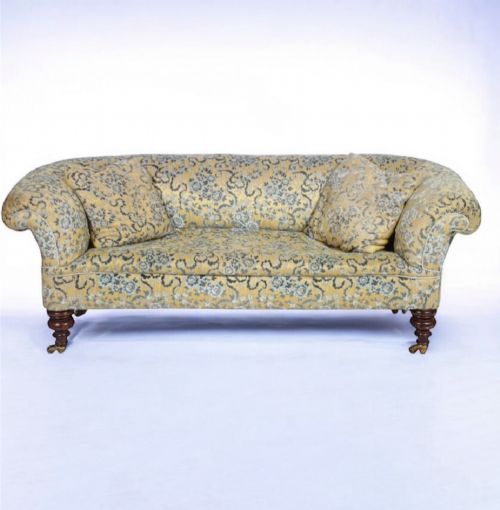
The upholstered chesterfield appears across this page primarily as spacious sofas, library footstools, and deep-seated armchairs. These pieces span periods from the nineteenth century into the Edwardian era, showing traditional English forms designed for formal rooms and studies.
Sofas form the core of what you will encounter, often featuring low backs and sweeping scrolled arms. Footstools and ottomans appear frequently in buttoned leather, matching the classic aesthetic of the larger seating pieces.
Makers and workshops of the nineteenth century shaped these designs in mahogany, walnut, and timber frames. The most common versions on this page carry Victorian or Edwardian pedigree, upholstered in hand-dyed leather or fabric.
Materials and construction
Upholstery relies on traditional techniques, utilising leather, fabric, velvet, and hide secured with deep buttoning. Artisans pulled the covering tight against internal stuffing to create the characteristic dimpled surface.
Upholstered Chesterfield Retail Price Guide 2026
Typical asking prices for upholstered chesterfield among the pieces listed under this phrase on Sellingantiques today, from the lower quarter to the upper quarter. They describe what is for sale here now, not the wider market.
A nineteenth-century club fender provides padded leather seating right around the hearth.
Judging quality
Quality rests in the integrity of the timber frame and the depth of the upholstery work. Pieces constructed by notable nineteenth-century workshops display superior joinery and more balanced proportions in the arms and back.
The grade of the leather and the precision of the buttoning distinguish finer examples from standard production. Hand-dyed hides and traditional stuffing show an attention to detail that elevates a piece above simpler utilitarian seating.
Howard and Sons·Robert Strahan and Co·Jas Shoolbred·Gillows·Hampton and Sons·C Hindley and Sons
The Upholstered Chesterfield Glossary
- Chesterfield
- A large sofa or seating form traditionally characterised by deep buttoning and rolled arms of equal height. It serves as a central piece in traditional English interiors.
- Buttoning
- An upholstery technique where twine pulls the leather or fabric deep into the stuffing, secured with buttons to create a diamond pattern. This method keeps the internal padding evenly distributed.
- Footstool
- A low, upholstered seat designed to support the feet, often matching the height and buttoning style of a companion sofa. Nineteenth-century examples frequently employ sturdy mahogany frames.
- Chaise longue
- An elongated upholstered chair designed for reclining, combining elements of a sofa and a single armchair. These pieces often feature a single raised end for head support.
- Library armchair
- A sturdy, upholstered seat intended for prolonged reading, frequently finished in dark leather with deep padding. These chairs combine comfort with formal nineteenth-century styling.
Upholstered Chesterfield: Frequently Asked Questions
What is an upholstered chesterfield?
An upholstered chesterfield is a traditional seating form, most commonly a sofa or armchair, defined by deep buttoning and rolled arms.
These pieces originate largely from the nineteenth century and use materials like leather, mahogany, and walnut.
Where were these pieces used?
They served primarily in formal drawing rooms, libraries, and country house studies where comfort and formal presentation mattered.
Library armchairs and footstools were built to endure heavy daily use in private reading spaces.
How do I care for leather upholstery?
Leather upholstery requires regular dusting and occasional conditioning to keep the hide supple and prevent cracking over time.
Keeping the material away from direct sunlight and heat sources preserves the hand-dyed finish.
How do I identify a Victorian piece?
Victorian pieces show distinct stylistic markers such as dense timber frames, buttoned hide, and traditional joinery methods.
Maker stamps or specific period proportions also help date these items to the nineteenth century.