


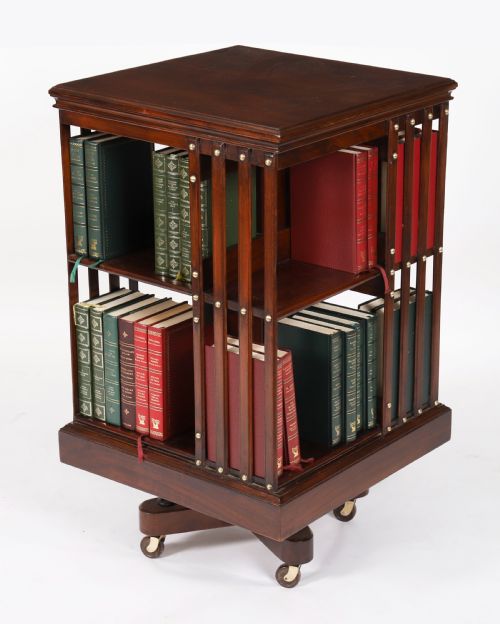
Two Tier Library Stand
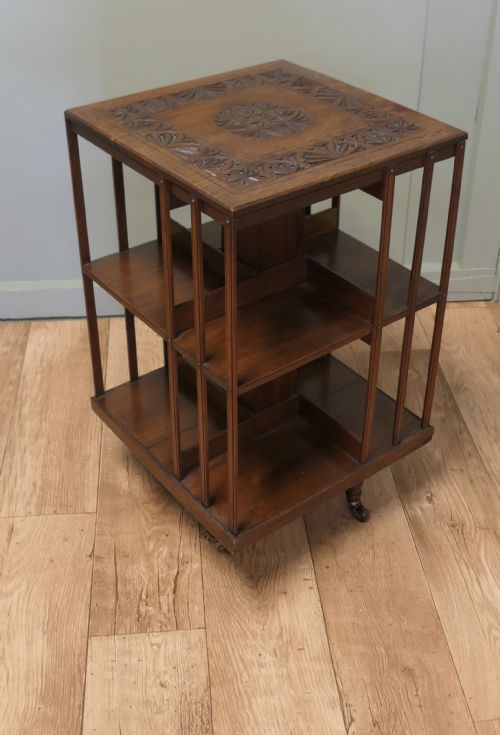
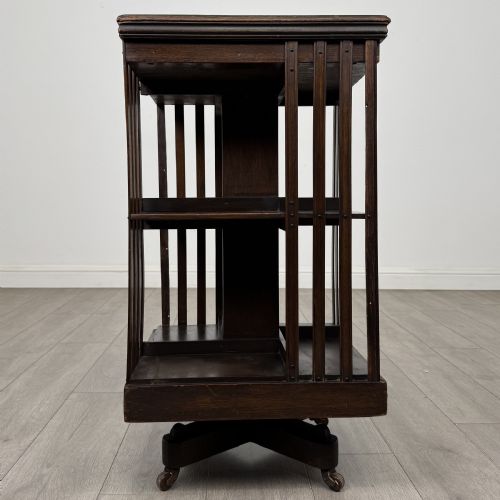
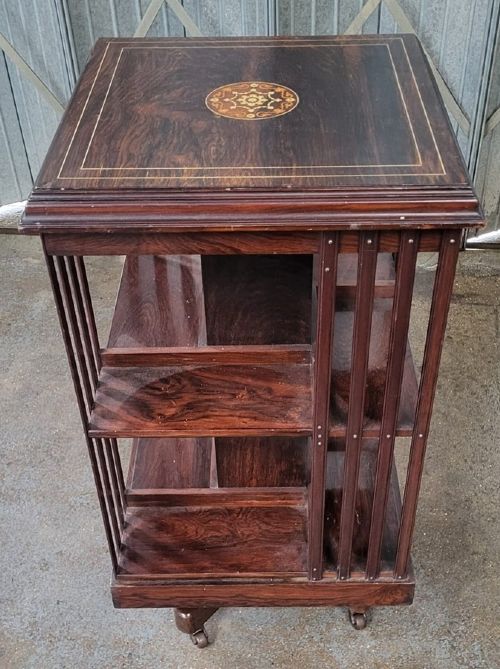
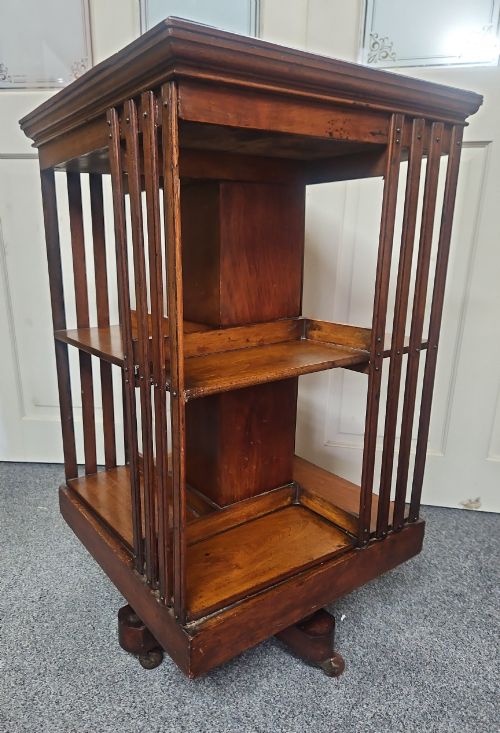
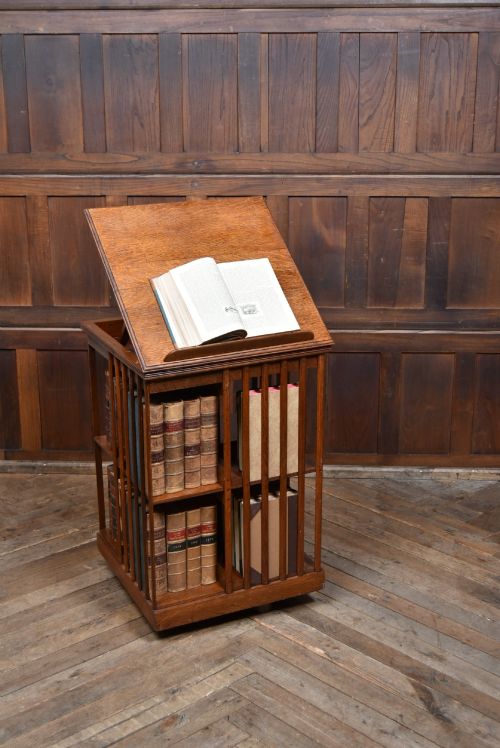
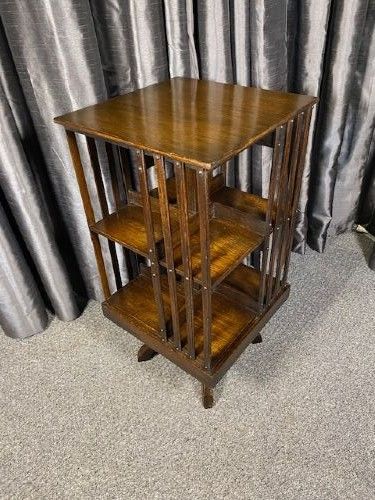
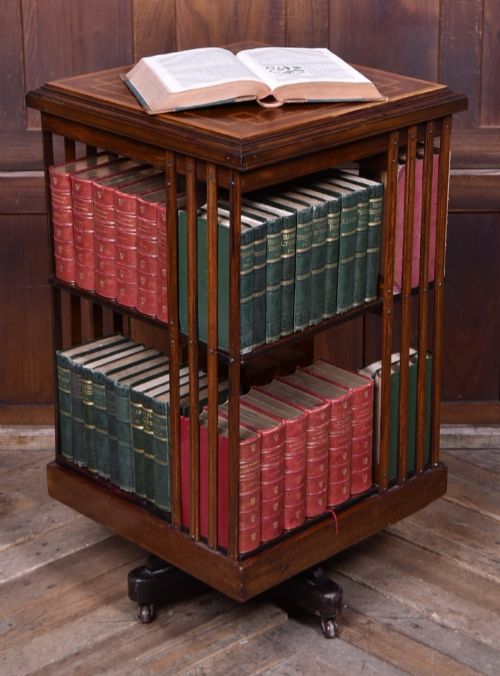
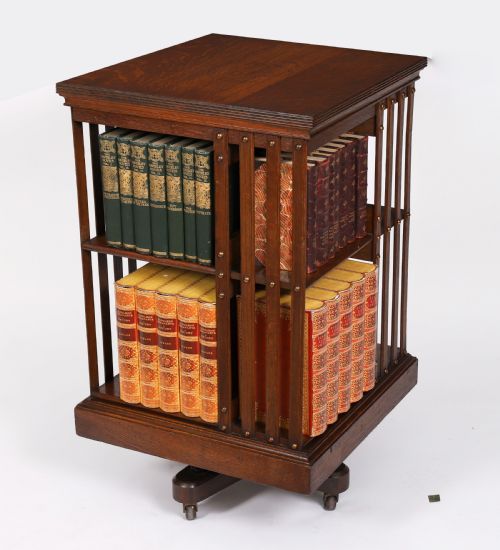
A two tier library stand brings revolving bookcases and reading tables together to keep reference volumes close at hand.
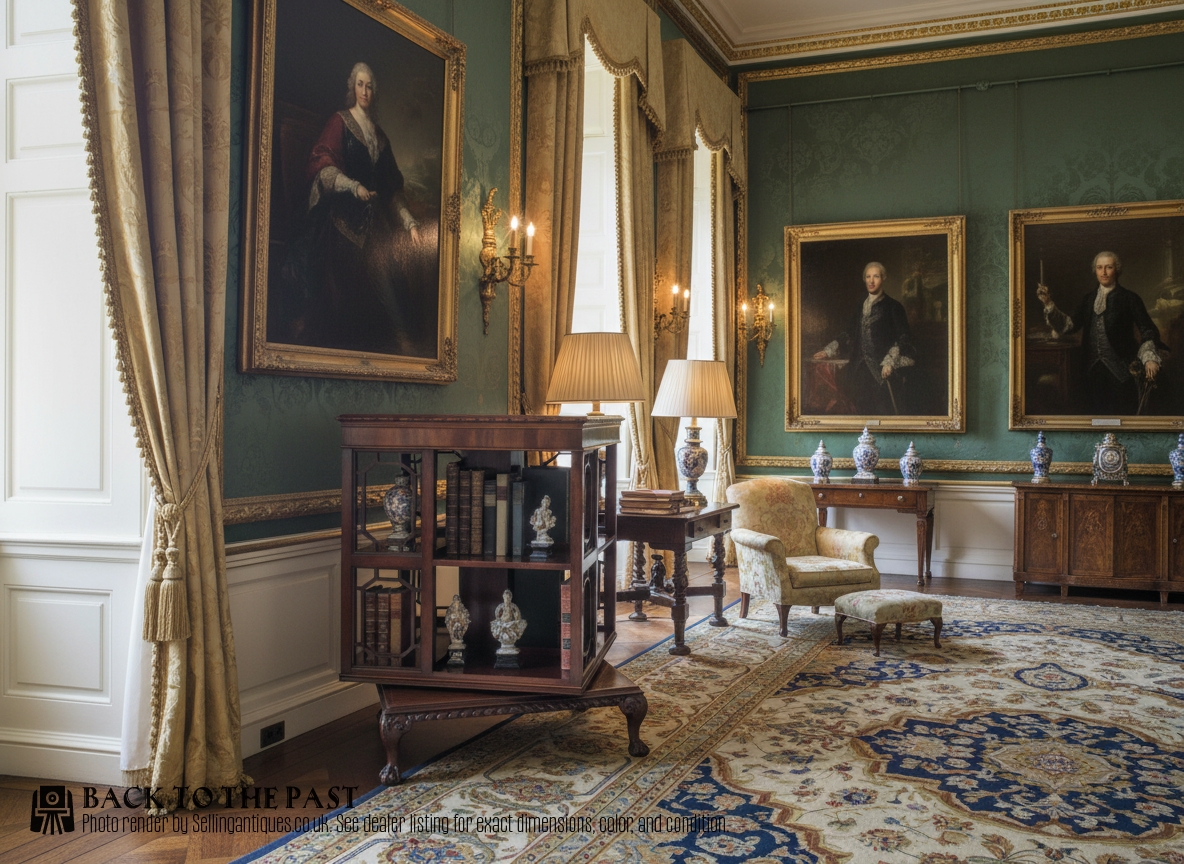
Two Tier Library Stand
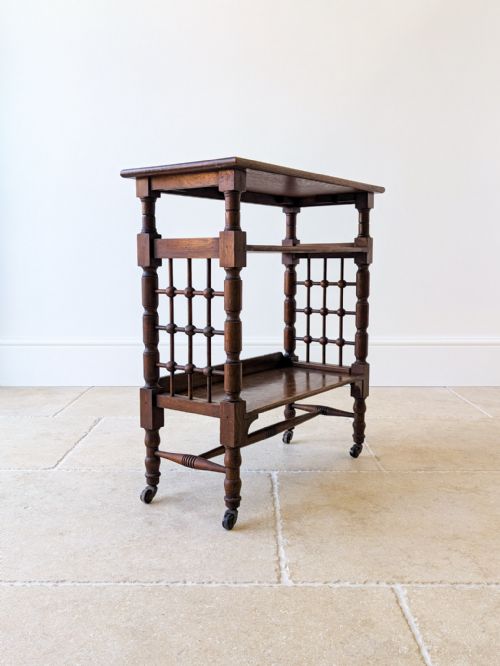
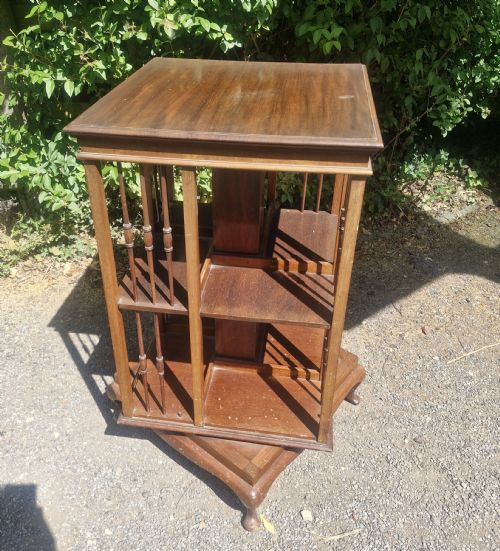
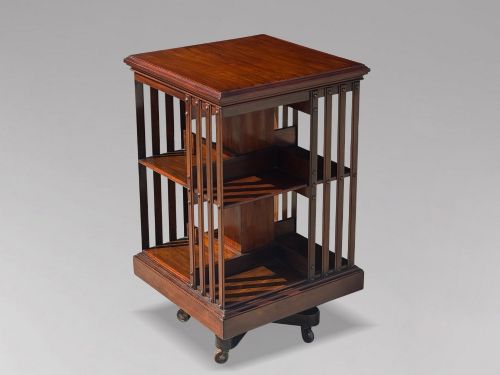
When buyers search for a two tier library stand, they encounter revolving bookcases and reading tables spanning the nineteenth and early twentieth centuries. These pieces function as accessible book storage beside armchairs or desks.
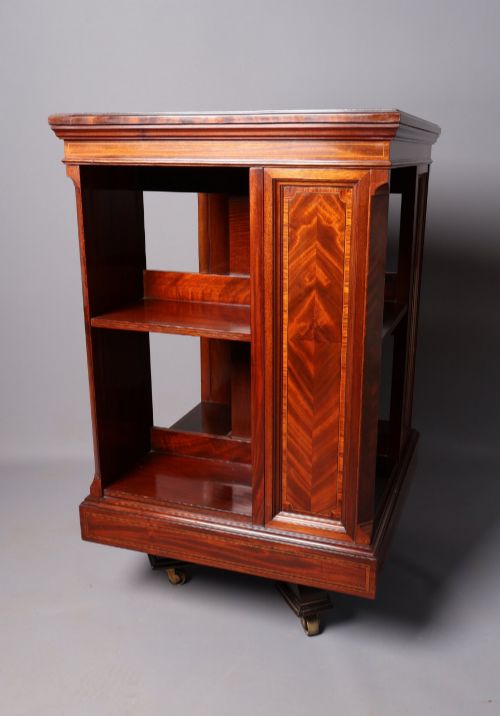
The version most frequently met on this page is the Edwardian mahogany revolving bookcase, often decorated with inlay and resting on a cast iron or brass mechanism. Simpler oak and walnut examples also appear alongside nineteenth century reading tables.
Forms vary from compact table-top revolving bookstands to taller freestanding variants and two-tier book troughs. Each design serves the practical demand of keeping multiple volumes organised within arm's reach.
Materials and construction
Makers relied primarily on mahogany, rosewood, oak, and walnut, frequently enhancing the timber with satinwood inlay or flame veneers. These woods provided both structural stability and a polished surface suited to domestic libraries.
Internal mechanisms incorporated brass and cast iron to facilitate smooth rotation in revolving models. Joinery techniques ensured that frames could support the heavy weight of stacked reference books without sagging.
Listings feature mahogany, oak, rosewood, and walnut across Victorian, Edwardian, and Regency periods.
Distinctions in quality
Quality rests upon the selection of timber figures, such as flame mahogany or figured rosewood, matched with crisp satinwood stringing and marquetry. Superior examples exhibit tighter grain alignment and more refined proportions.
The underlying mechanism dictates longevity, where a well-engineered brass and iron pivot allows effortless rotation without excessive wobble. Cabinetmaking finesse shows in the hand-cut dovetails and the integrity of the tiered structure.
Maple & Co·Waring and Gillows
The Two Tier Library Stand Glossary
- Revolving bookcase
- A freestanding or table-top unit mounted on a concealed pivot mechanism allowing it to spin freely. This enables access to books stored on multiple sides from a single seated position.
- Flame mahogany
- A distinct veneer cut from timber where the branch meets the main trunk, producing a rippling, flame-like grain pattern. Cabinetmakers reserved this decorative wood for prominent exterior surfaces.
- Inlay
- The technique of inserting contrasting strips or pieces of wood, such as satinwood, into recesses carved into the primary timber. It creates decorative borders and geometric motifs across the surface.
- Book trough
- An open-topped container designed to hold books upright or at a slight slant for easy browsing. These pieces sit atop tables or serve as dedicated floor-standing stands.
Two Tier Library Stand: Frequently Asked Questions
How do I maintain the revolving mechanism?
Keep the central pivot clean and occasionally apply a light lubricant if rotation feels stiff. Avoid overloading individual tiers beyond their balanced capacity.
Regular dusting prevents grit from entering the moving parts. This ensures the pivot continues to turn smoothly over decades of daily use.
Can these stands support heavy books?
Most revolving bookcases and library stands were built to hold standard reference volumes and novels securely. The solid timber construction and internal frames distribute weight effectively.
However, distributing exceptionally heavy encyclopaedias evenly across all sides prevents uneven strain on the central pivot. Proper balance preserves both the timber and the turning action.
Where should I place a library stand?
These pieces suit positions beside reading chairs, sofas, or large desks where frequent reference is necessary. Their compact footprint allows them to occupy corners or open floor spaces without obstruction.
Because many designs rotate, ensure sufficient clearance on all sides for the books to spin freely. Direct sunlight should be avoided to protect polished mahogany and rosewood finishes.
How do I distinguish Edwardian pieces from Victorian ones?
Victorian examples often display heavier proportions, darker finishes, and simpler oak or plain mahogany construction. They frequently date back to the late nineteenth century.
Edwardian pieces tend to feature lighter mahogany, delicate satinwood inlay, and refined Edwardian or Sheraton revival styling. Craftsmanship from this later period typically emphasises elegance alongside utility.