


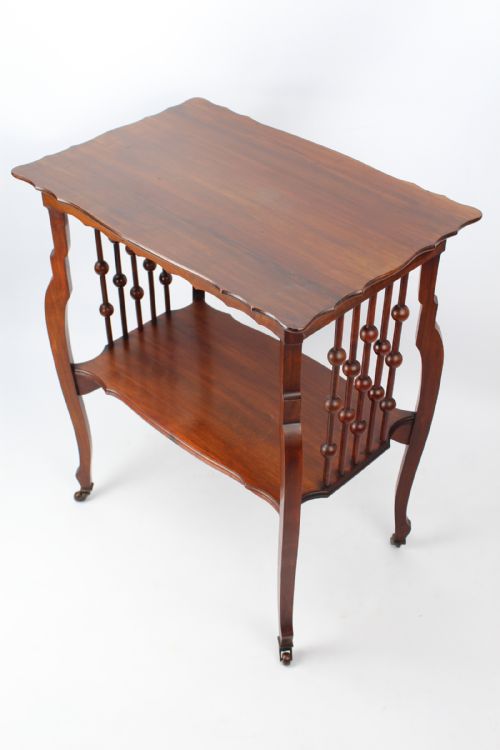
Two Tier Book Stand
A two tier book stand keeps volumes near at hand while adding architectural timber to a room.
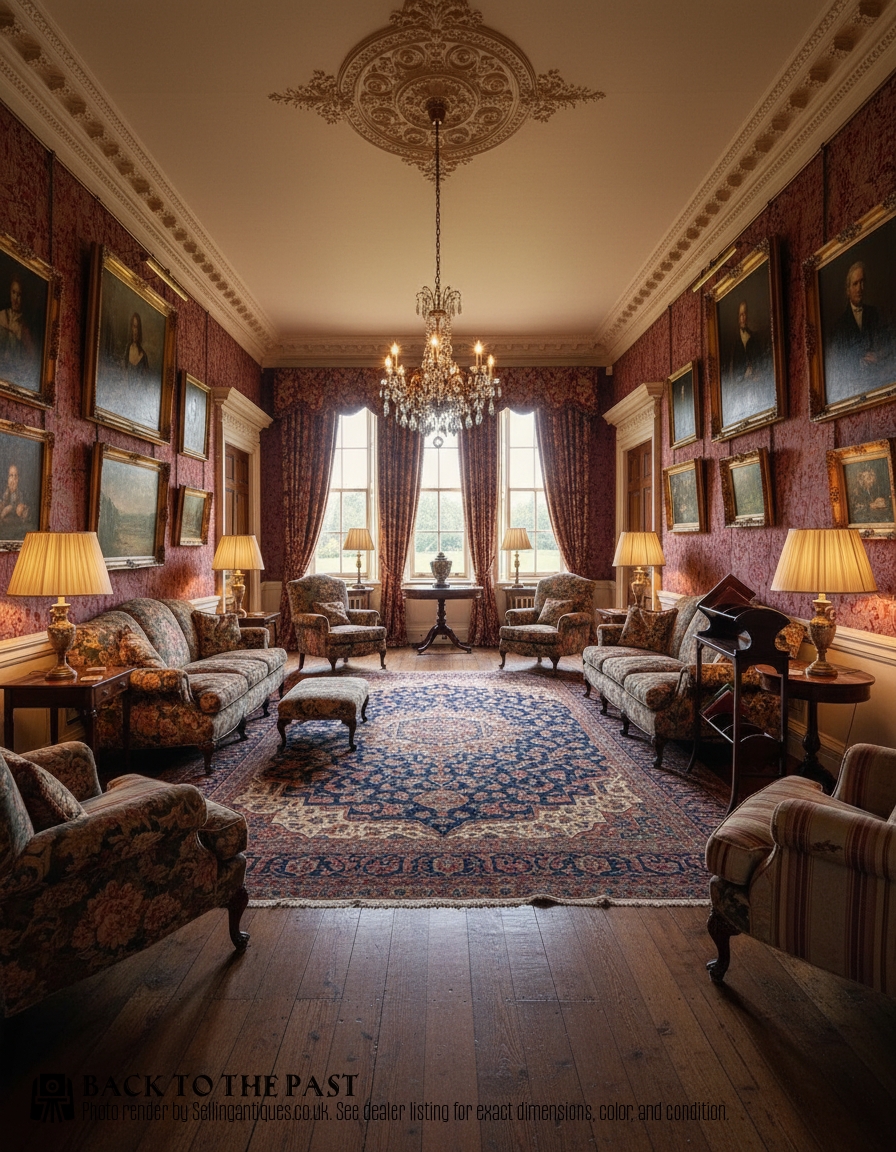
Two Tier Book Stand
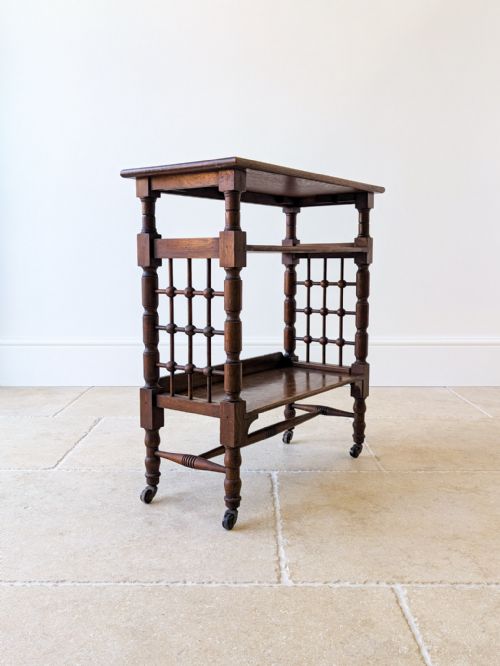
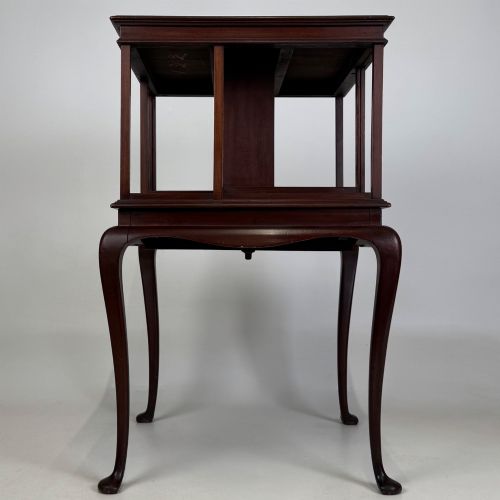
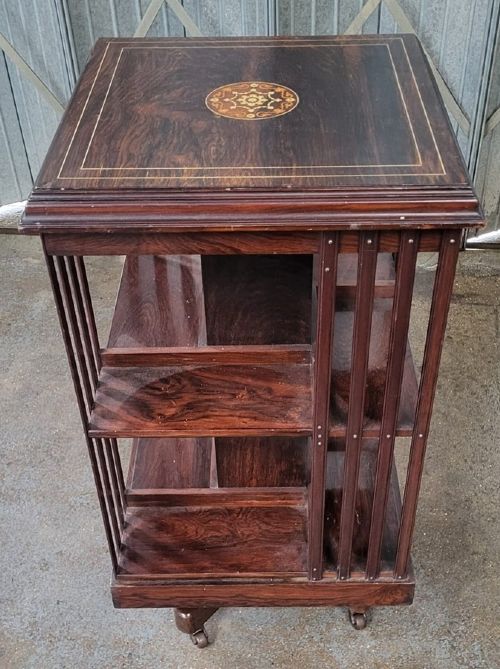
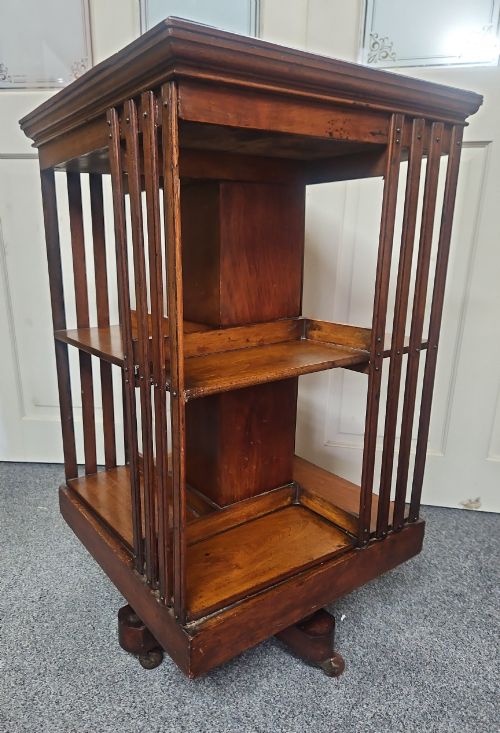
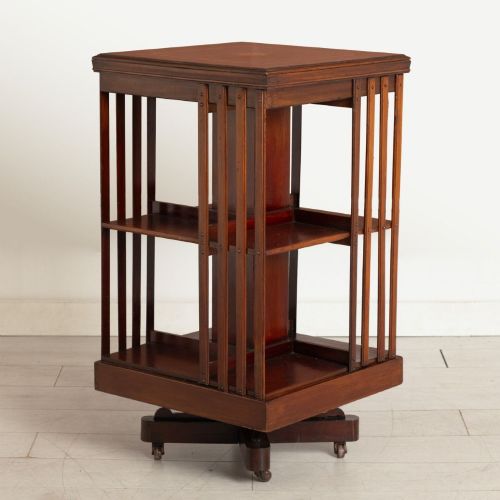
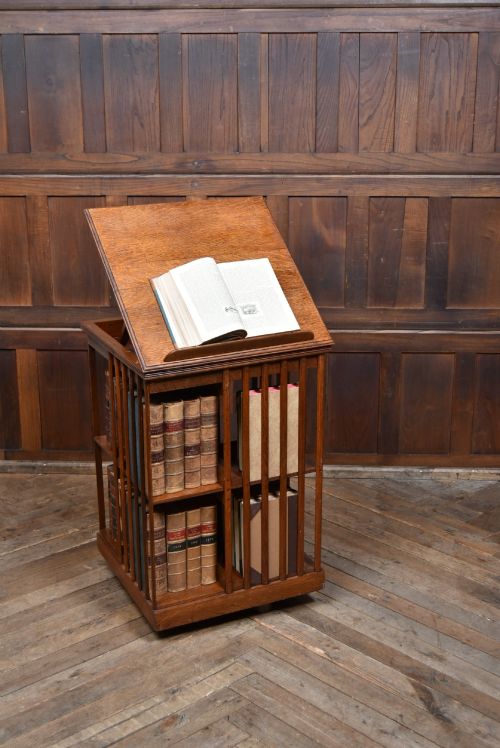
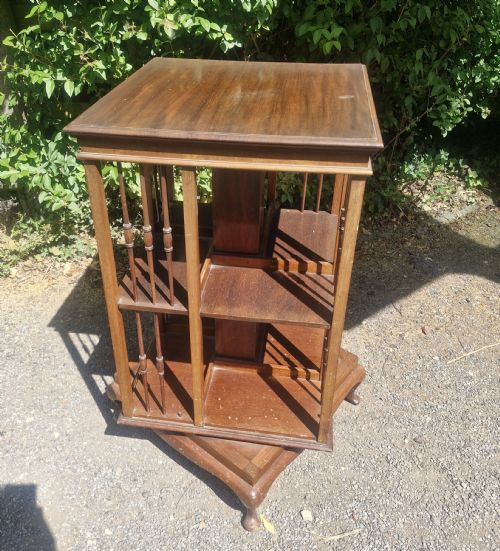
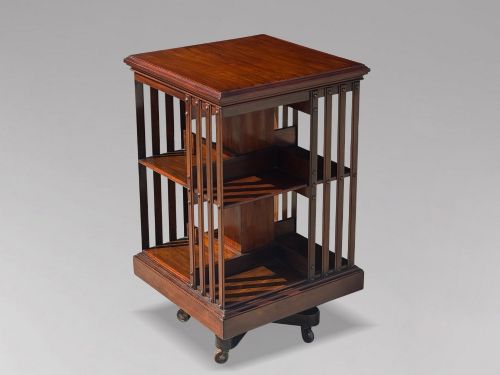
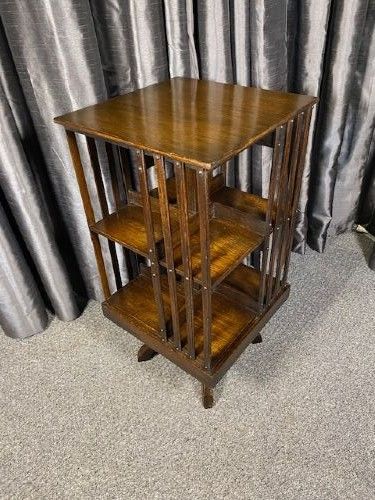
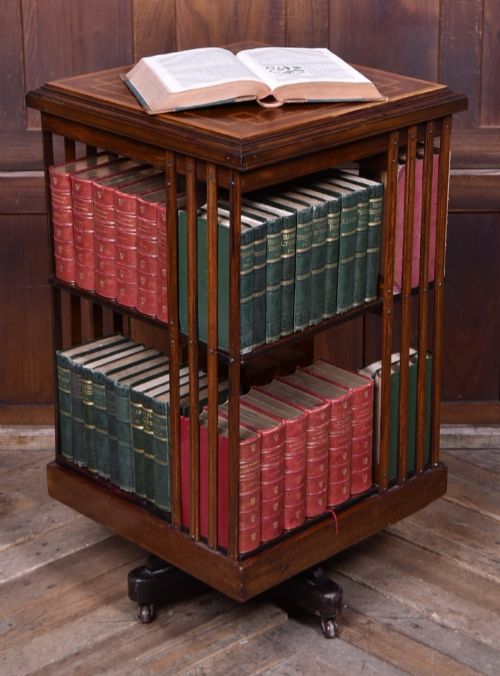
A two tier book stand groups volumes across multiple levels, most commonly seen here in the revolving bookcase and the low book trough. These pieces serve sitting rooms and libraries by holding working collections within arm's reach of a chair or desk.
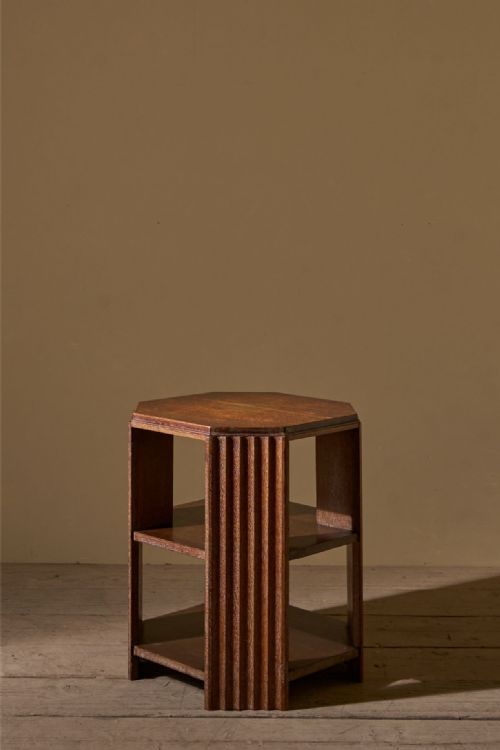
The Edwardian period supplies the greatest number of examples on this page, predominantly constructed in mahogany with occasional satinwood inlay. Alongside these turn-of-the-century pieces, forms stretch from Regency rosewood open bookcases down to Art Deco limed oak side tables.
How they were made
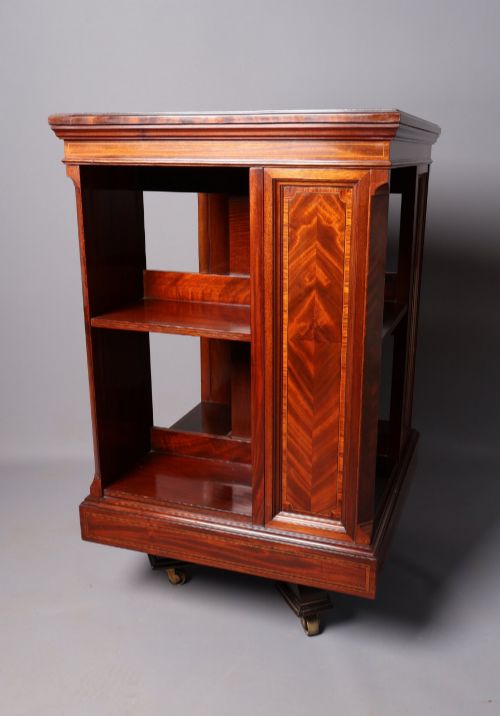
Makers built these pieces primarily using solid mahogany, oak, rosewood, and walnut, often applying satinwood inlay or flame veneers to visible surfaces. Brass and cast iron appear frequently in internal mechanisms and supports, particularly on revolving models.
Joinery techniques balance the need for stability under the weight of books with the rotational freedom required by revolving designs. Sloping shelves and tiers are secured to central columns or upright frames to handle daily use.
Many a Victorian reader depended on a revolving bookcase to prevent the domestic dispute of reaching across the sofa.
What varies in quality
The refinement of the timber selection and the crispness of any inlay dictate the visual standing of a piece. Finer examples display carefully matched flame veneers and subtle stringing rather than plain, unfigured boards.
The smoothness of the mechanical action separates standard revolving book stands from superior ones. A well-adjusted internal pivot allows the tiers to turn silently and evenly without listing to one side.
Maple and Co·Waring and Gillows
The Two Tier Book Stand Glossary
- Revolving bookcase
- A freestanding tiered book stand designed to rotate on a concealed base or spindle. This allows access to multiple compartments of books from a single seated position.
- Book trough
- An open-topped container for books with sloping sides, often built with two tiers or incorporated into a fireside table. It keeps volumes upright and visible.
- Flame mahogany
- A veneer cut from the fork of a mahogany tree where the branches join the trunk, producing a distinctive rippled pattern. Cabinet makers used it on prominent exterior surfaces.
- Satinwood
- A durable, lustrous timber with a golden yellow colour, used extensively for contrasting inlay work and banding on Edwardian furniture.
Two Tier Book Stand: Frequently Asked Questions
How do I use a revolving book stand?
Place the stand beside a favourite chair or desk where books are frequently consulted. The rotating tiers let you browse an entire selection without leaving your seat.
Ensure the weight of the volumes is distributed evenly across the compartments to maintain a smooth turning motion.
Where did two tier book stands originate?
These forms evolved through the nineteenth and early twentieth centuries to meet the demand for accessible home libraries. Edwardian makers refined the revolving bookcase into a compact household staple.
Earlier Regency and Victorian variants leaned towards open tables and reading desks before the rotating mechanism became widespread.
How do I care for mahogany furniture?
Dust the timber regularly with a dry, soft cloth to prevent particulate buildup. Keep the piece away from direct sunlight and heat sources to protect the polish and prevent the wood from drying.
Apply a traditional wax polish sparingly when the wood appears dry to maintain its natural lustre.