
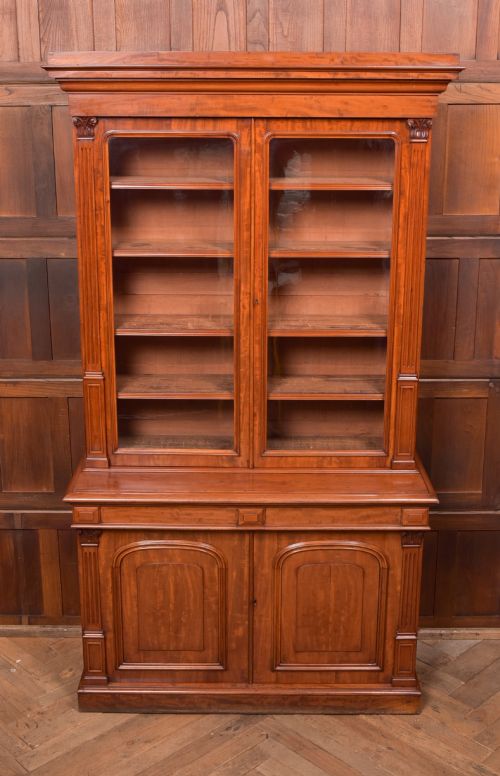


Two Shelf Bookcase
A two shelf bookcase brings compact order to a room, offering practical storage for everyday volumes without dominating the floor space.
Two Shelf Bookcase
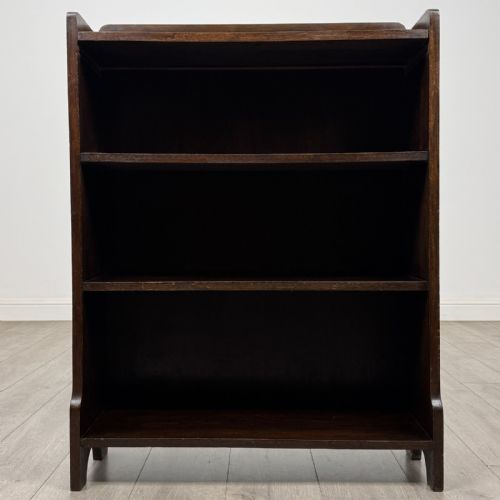
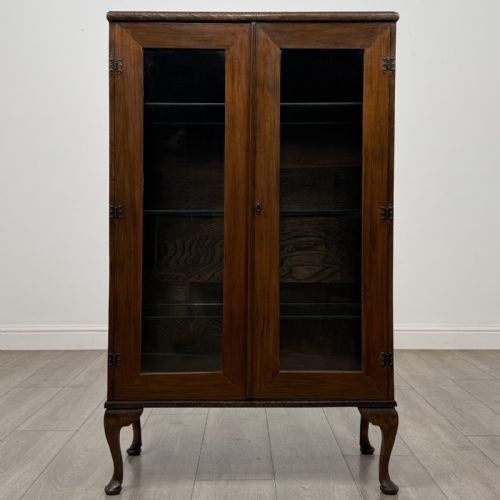
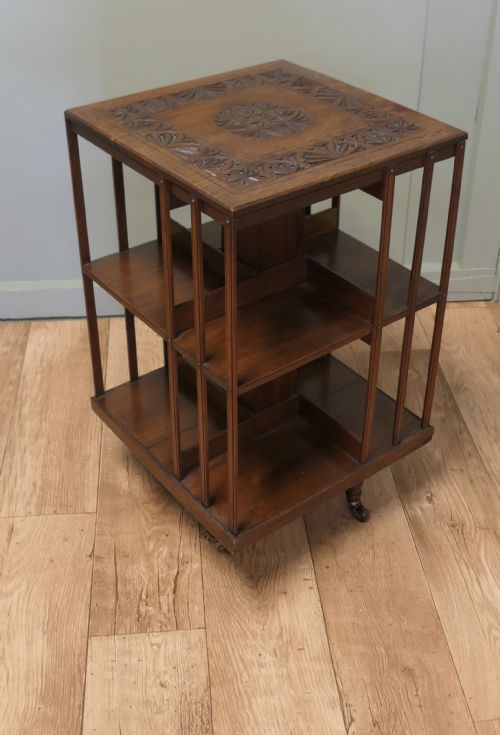
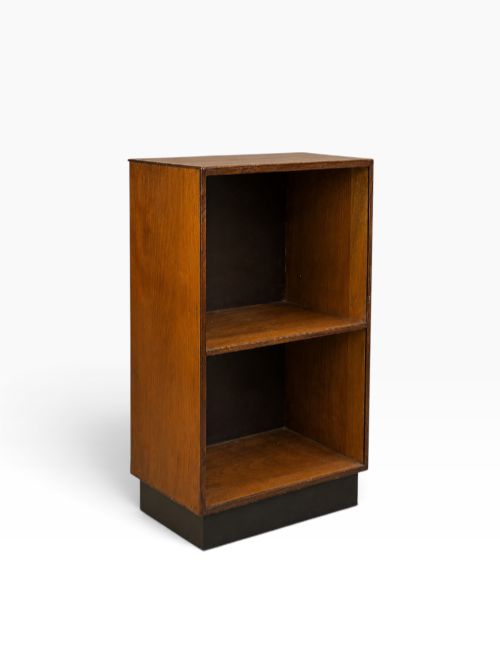
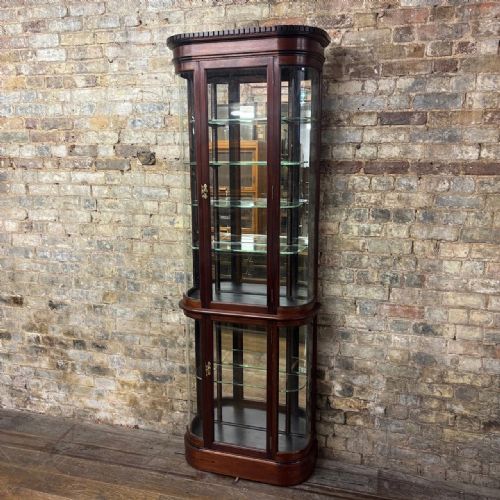
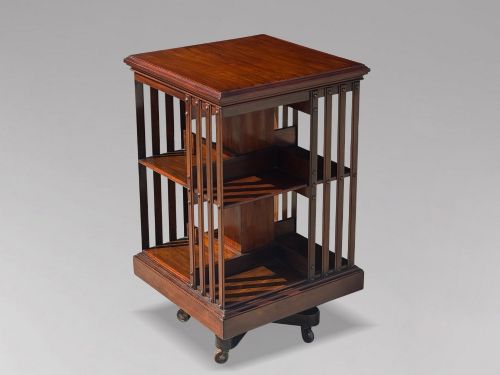
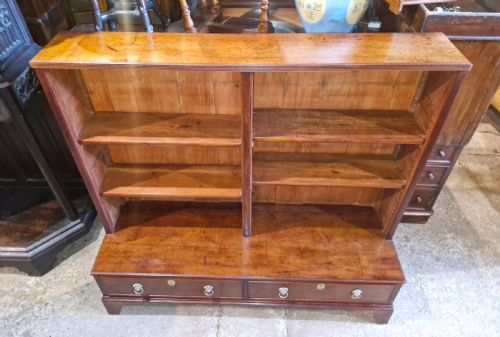
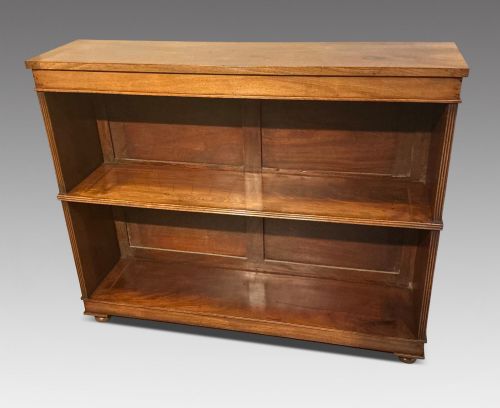
A two shelf bookcase appears in forms ranging from open fronted library pieces to revolving desk companions and glazed display cabinets. These pieces span periods from the Regency era through Victorian, Edwardian, and Art Deco designs, using woods such as mahogany, oak, walnut, and ash.
The version most commonly met on this page is the Victorian or Edwardian mahogany cabinet, often fitted with adjustable shelving and sometimes paired with glazed doors or lower cupboards. Compact dimensions make these pieces adaptable for smaller rooms while retaining traditional timber construction.
Materials and construction
Cabinet makers relied predominantly on solid timbers and veneers of mahogany, oak, and walnut, frequently enhancing surfaces with burr walnut figuring or satinwood inlay. Glass panes found in display sections are set into timber frames, while brass hardware provides functional hinges, handles, and revolving mechanisms.
Joinery techniques prioritised durability, incorporating adjustable shelf brackets, panelled doors, and two-part carcass construction for taller formats. Revolving variants utilise internal wooden and brass pivots to support the weight of stacked volumes smoothly.
Some revolving bookcases turn so lightly a cat can spin them.
Distinction in execution
The standard of a two shelf bookcase rests on the selection of timber figures, such as matched burr walnut or figured mahogany, and the precision of cabinet joinery. Finer examples show careful attention to internal fittings, including properly functioning adjustable shelving tracks and well-fitted doors.
Design flourishes also set pieces apart, distinguishing plain utility items from enhanced versions featuring brass mounts, inlaid satinwood stringing, or bespoke revolving mechanisms. The integrity of the original glass and hardware further indicates the original tier of production.
Epstein
The Two Shelf Bookcase Glossary
- Adjustable shelves
- Internal shelving supported on movable wooden ratchets, brass studs, or slots that allow the height between tiers to be altered. This system appears frequently in Victorian and Edwardian glazed bookcases.
- Revolving bookcase
- A freestanding compact unit designed to rotate on a central spindle, allowing access to books from any angle. These models are common in late Victorian, Edwardian, and 1930s walnut or mahogany formats.
- Two-part bookcase
- A tall storage piece constructed in separate upper and lower sections that sit one upon the other. This method eases transport and placement of substantial cabinets.
- Dwarf bookcase
- A low-standing piece of furniture designed to sit beneath window height or within domestic alcoves. Regency and Victorian makers produced these formats in mahogany and rosewood.
Two Shelf Bookcase: Frequently Asked Questions
How do I adjust the shelves?
Shelves typically rest on wooden support pins, metal tracks, or ratchets set into the interior walls. Lifting the shelf allows the supports to be repositioned into alternative slots.
Care should be taken with older timber grooves to avoid splitting the surrounding wood when shifting heights.
Are revolving bookcases stable?
Revolving models rely on a weighted cruciform or circular base paired with a central internal pivot. This engineering keeps the centre of gravity low during rotation.
Even distribution of books ensures the unit turns smoothly without tipping.
How do I clean mahogany?
Maintenance requires only a soft, dry cloth to remove dust from polished surfaces. Periodic application of traditional beeswax nourishes the timber and preserves the grain.
Moisture and direct sunlight should be avoided to prevent fading and veneer lifting.
What is a two-part cabinet?
A two-part cabinet consists of a distinct upper shelving section resting directly upon a lower base or cupboard. This construction method helped tradesmen move heavy furniture through narrow domestic doorways.
The pieces separate easily for relocation.