
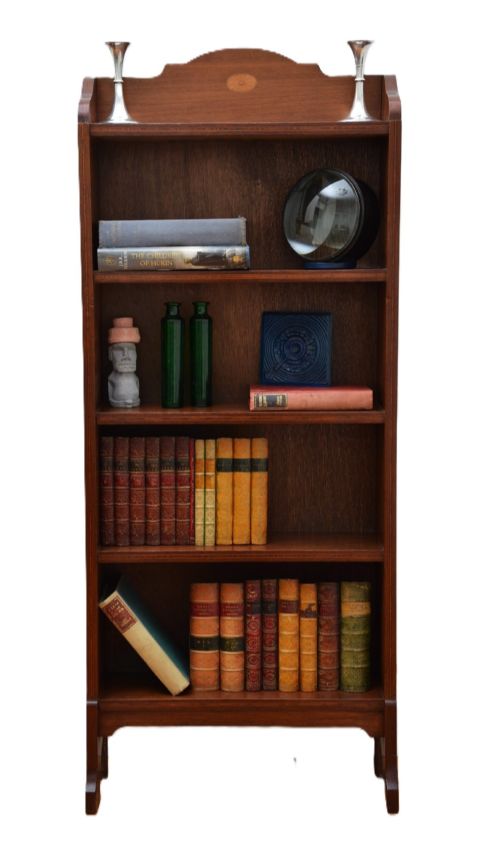
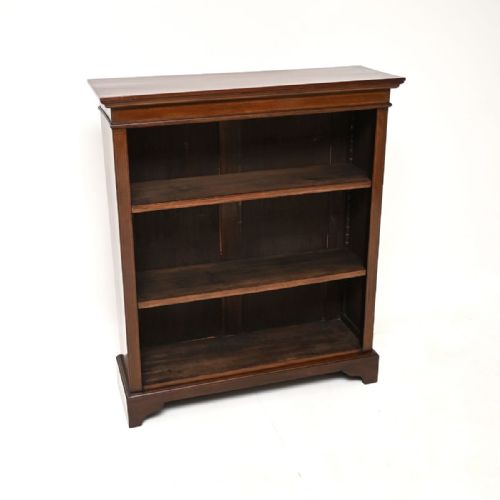
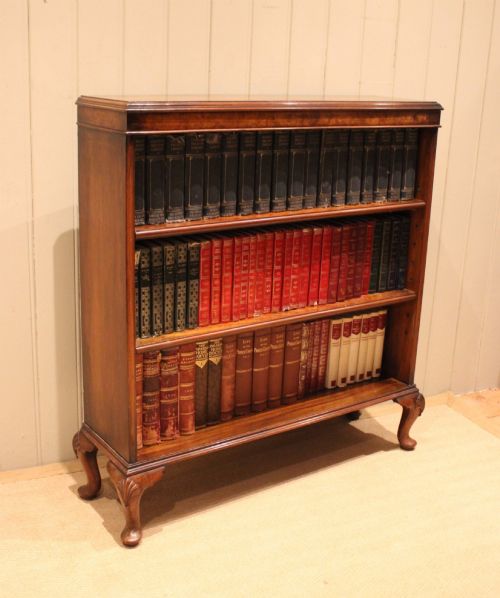
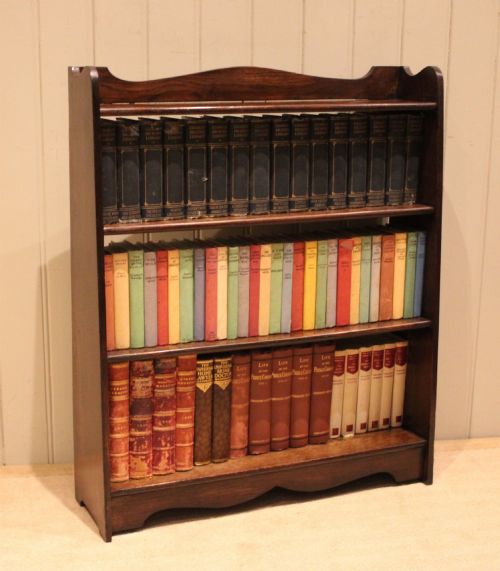
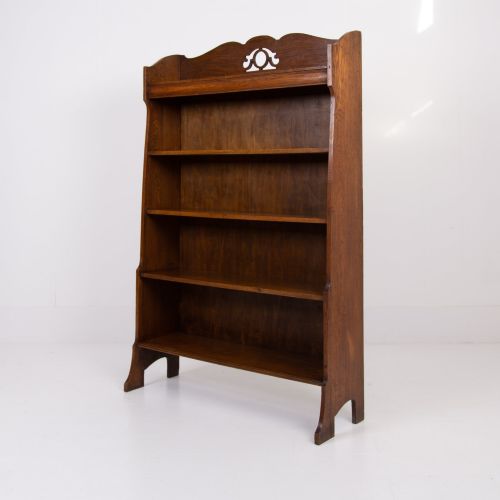
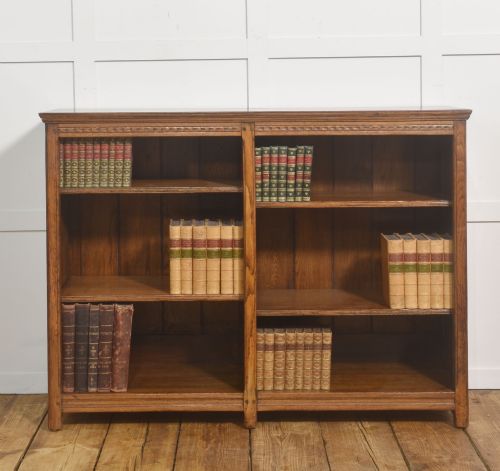
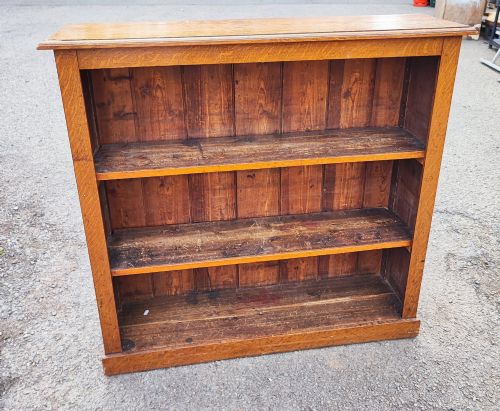
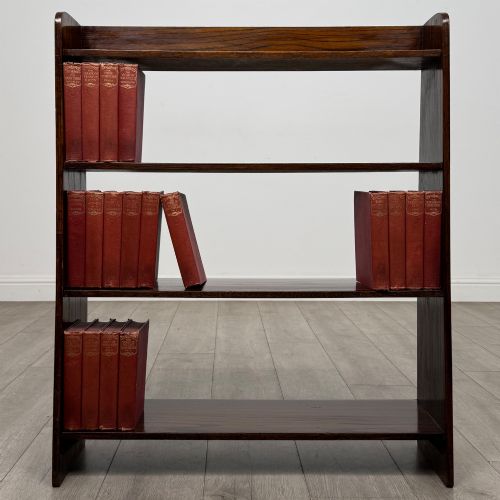
Edwardian Wooden Bookshelf
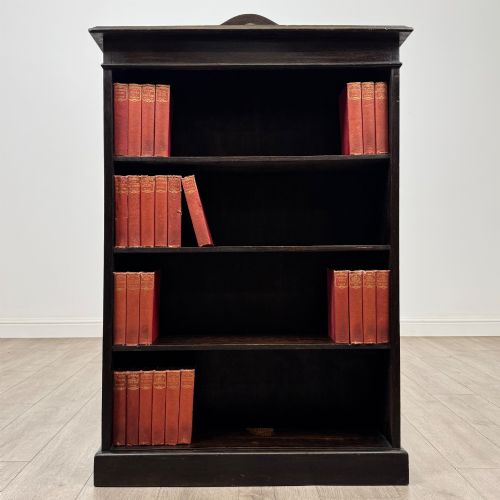
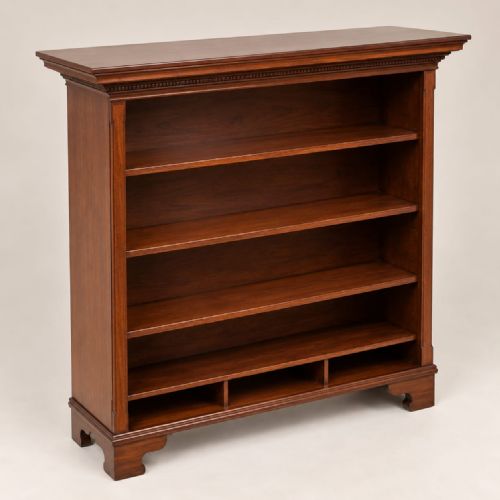
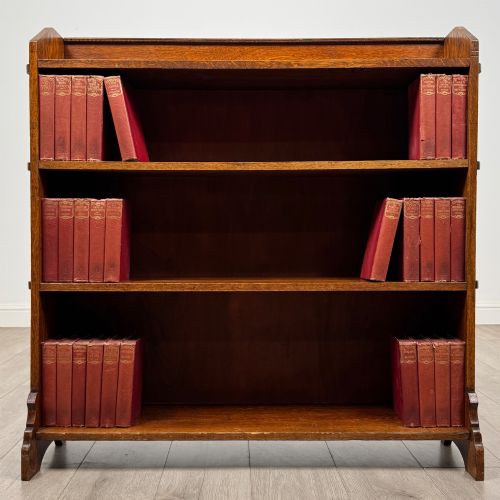
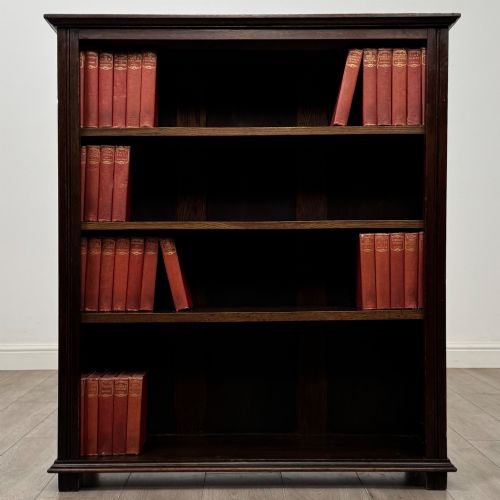
An edwardian wooden bookshelf brings practical storage and period character into a room, offering sturdy timber construction to hold everyday volumes.
Edwardian Wooden Bookshelf
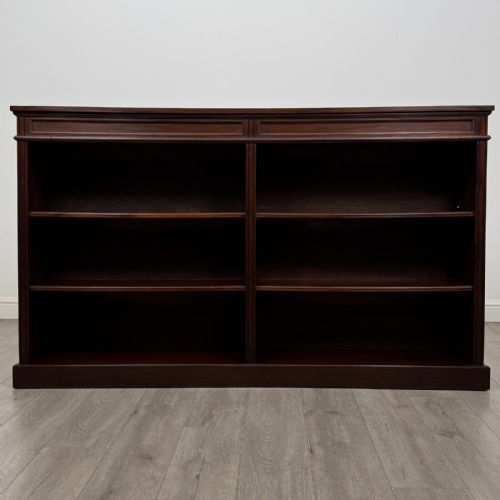
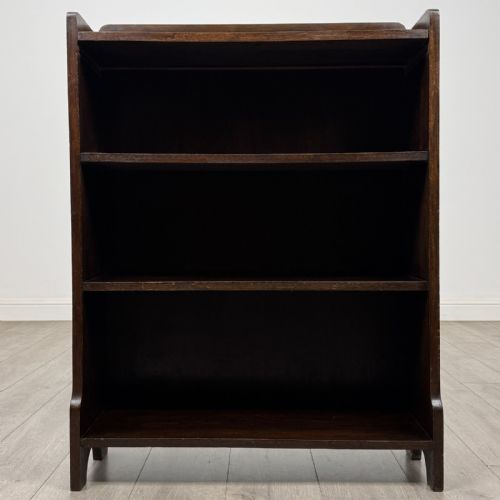
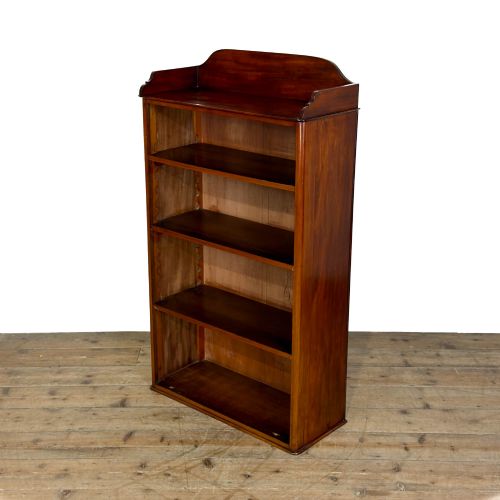
An edwardian wooden bookshelf typically takes the form of an open bookcase with multiple shelves, designed for domestic libraries and parlours. These items emerge predominantly from the Edwardian period and early twentieth century, alongside Victorian and later examples.
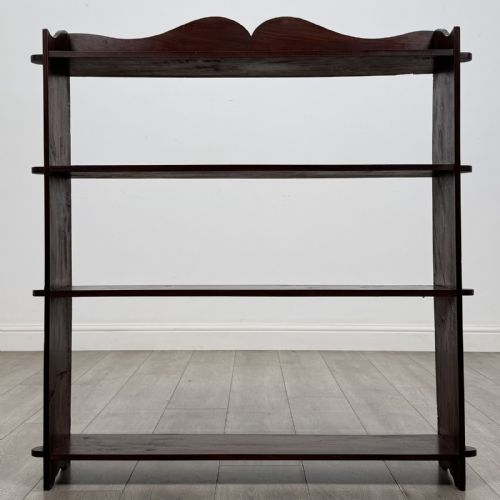
Makers constructed these pieces in various timber forms, including open designs, items with raised or carved galleries, and narrow or small formats suitable for compact spaces. Buyers also encounter related storage formats such as wall shelves, whatnots, book stands, and revolving bookcases.
The prevailing aesthetic leans towards straightforward utility combined with subtle decorative details like inlaid wood or brass castors. Oak and mahogany dominate the selection, providing reliable support for books while fitting neatly against domestic walls.
Materials and Construction
Joiners relied heavily on solid oak and mahogany as the primary timbers for these bookcases, occasionally incorporating walnut, satinwood, and burr walnut veneer for surface refinement. Timber selection dictated the structural integrity and the grain patterns visible across the shelves and sides.
Makers utilised traditional jointing methods to assemble uprights and fixed or adjustable shelves, ensuring the framework could bear the weight of heavy volumes. Brass hardware, including castors on larger library pieces, facilitated movement across wooden floors.
Listings demonstrate a strong preference for oak and mahogany, spanning the Edwardian era, the Victorian period, and the Arts and Crafts movement.
Quality and Craftsmanship
The distinction between standard and finer pieces rests on the selection of timber and the execution of decorative elements such as inlaid banding, carved galleries, and moulded top edges. Superior examples display carefully matched wood grains and robust construction that withstands decades of daily use.
Adaptability also marks the upper tier of pieces, particularly those featuring adjustable shelving mechanisms rather than fixed boards. The presence of secondary timbers and the precision of the joinery determine the overall longevity and finish of the item.
The Edwardian Wooden Bookshelf Glossary
- Inlay
- A decorative technique where contrasting woods or other materials are inserted into recessed portions of the base timber. This method creates geometric patterns or floral motifs.
- Whatnot
- A piece of freestanding open shelving designed for displaying books or ornaments. These tiered stands date across the nineteenth and early twentieth centuries.
- Veneer
- A thin layer of superior timber applied over a base wood surface to provide a decorative grain pattern. Burr walnut frequently appears in this format.
- Waterfall bookcase
- A tiered shelving unit where each successive shelf steps back from the one below. The sides often curve downwards in a continuous line resembling falling water.
Edwardian Wooden Bookshelf: Frequently Asked Questions
Where should I place an edwardian wooden bookshelf?
These pieces suit living rooms, studies, and hallways where accessible open storage is required for daily reading material.
Keep timber furniture away from direct heat sources and strong sunlight to protect the polish and prevent the wood from drying out.
How do I adjust the shelves?
Many examples include adjustable wooden shelves supported by side brackets or metal pins inserted into pre-drilled interior slots.
Lift the shelf gently upwards and tilt it to clear the supports before repositioning it at the desired height.
Are these bookcases suitable for heavy books?
Solid oak and mahogany constructions provide substantial weight capacity for standard hardcover volumes and reference sets.
Distribute heavier folios evenly across the lower shelves to maintain overall balance and prevent board sagging over time.
How do I clean the wood surface?
Dust the timber regularly with a soft, dry cloth to remove particles that might settle into the grain or carved details.
Apply a traditional beeswax polish occasionally to nourish the wood and maintain a natural sheen without building up sticky residue.