


Two Part Cupboard
A two part cupboard offers practical division and vertical presence, separating storage from display across periods from the seventeenth century onward.
Two Part Cupboard
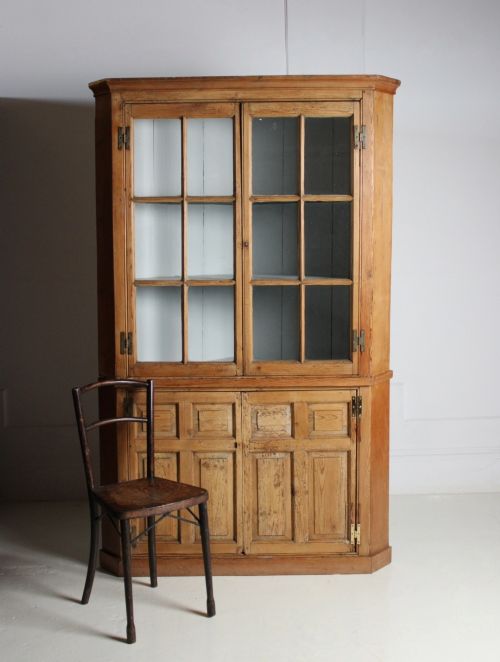
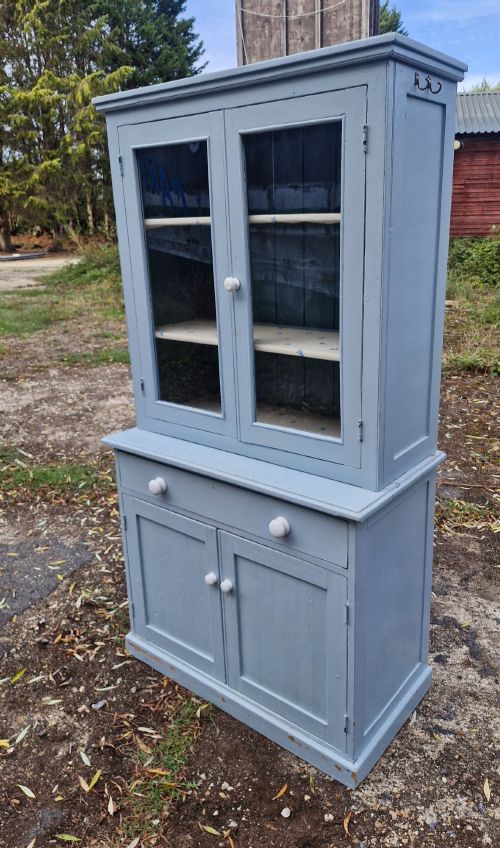
A two part cupboard consists of a distinct upper section sitting upon a lower base, designed for modular movement and substantial storage within domestic spaces. These pieces span centuries of regional craftsmanship, serving variously as kitchen dressers, corner cabinets, bookcases, and linen presses.
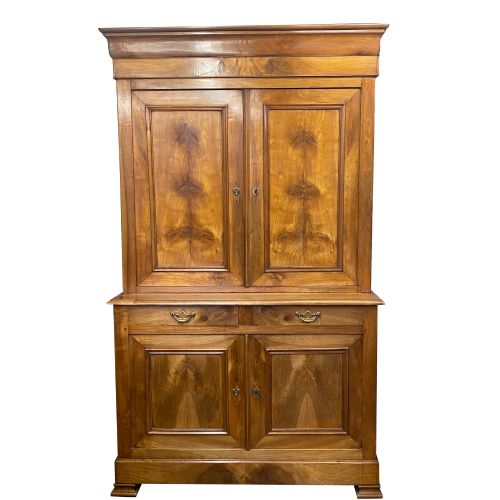
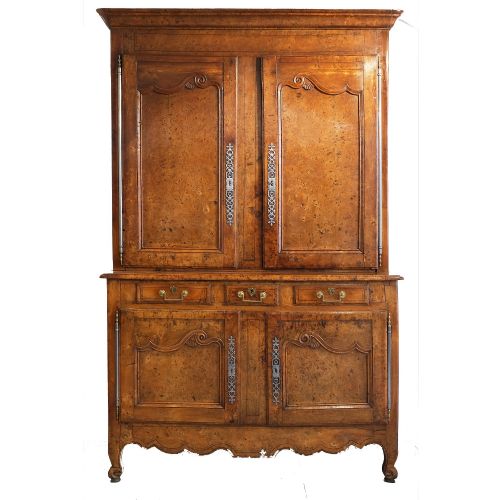
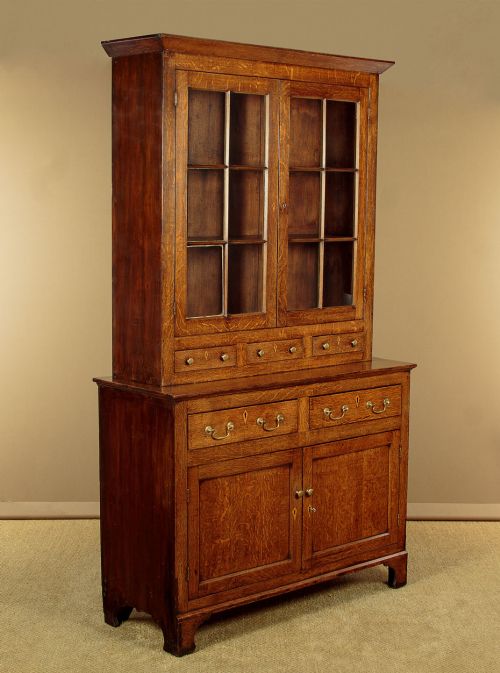
The version most commonly encountered on this page is the oak or mahogany Welsh dresser and corner cupboard from the eighteenth and nineteenth centuries. Alongside these British country forms, continental examples such as French walnut and cherry buffets deux corps appear regularly in the selection.
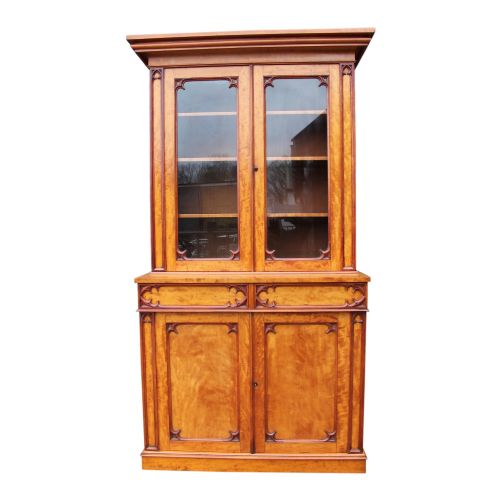
Makers utilised the split construction to ease transport through narrow doorways, uniting the upper and lower halves with robust mouldings or simple dowels. The upper tiers frequently display glazed doors for books and china, while lower sections conceal deep drawers and heavy timber doors.
How they were made
Construction relies upon native timbers such as oak, ash, elm, and pine, frequently supplemented by imported mahogany, walnut, and satinwood for finer urban commissions. Cabinetmakers joined primary boards with mortise and tenon joints, securing back panels with hand-riven tongue and groove planks.
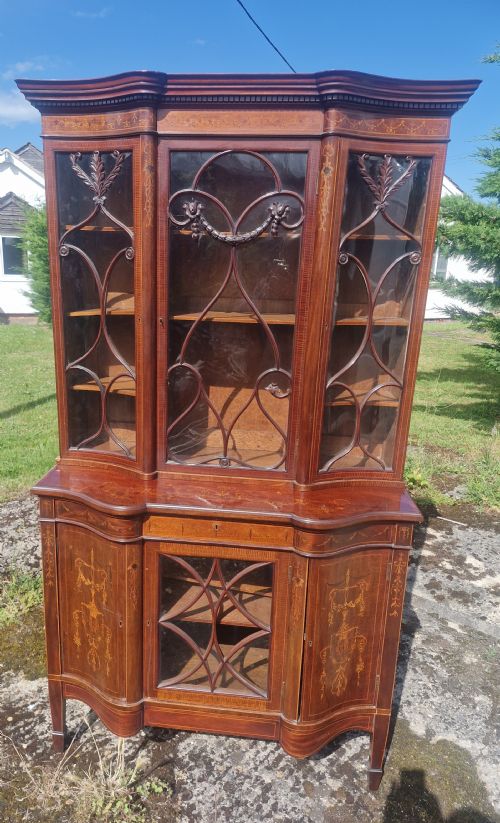
Surface finishes range from scrubbed natural grain and clear wax to original painted schemes, black lacquer, and delicate marquetry inlay. Brass hardware, including drop handles and escutcheons, fastens doors and drawers, while glass panes are held securely with wooden glazing bars.
Listings feature oak, mahogany, pine, walnut, satinwood, ash, and elm across Georgian, Victorian, Edwardian, and earlier periods.
What varies in quality
The distinction between standard utility items and masterworks rests upon timber selection, proportion, and the sophistication of decorative carving or inlay. Finer pieces demonstrate tight grain alignment, hand-cut dovetails within drawer boxes, and architectural cornices that balance the upper and lower sections harmoniously.
Regional vernacular items display charming irregularities in construction, whereas formal Georgian and Edwardian examples prioritize symmetry, refined veneers, and complex glazing patterns. Original surface treatments and untouched hardware significantly elevate the integrity of a piece compared to later restorations.
Gordovil Spain
The Two Part Cupboard Glossary
- Deux Corps
- A French term denoting a large two-part cupboard or buffet featuring an upper cabinet set upon a matching lower base. These pieces provide monumental storage capacity in dining halls and farmhouses.
- Linen Press
- A tall two-part storage piece designed with sliding trays or shelves in the upper section for folded textiles, positioned above a chest of drawers in the base.
- Corner Cupboard
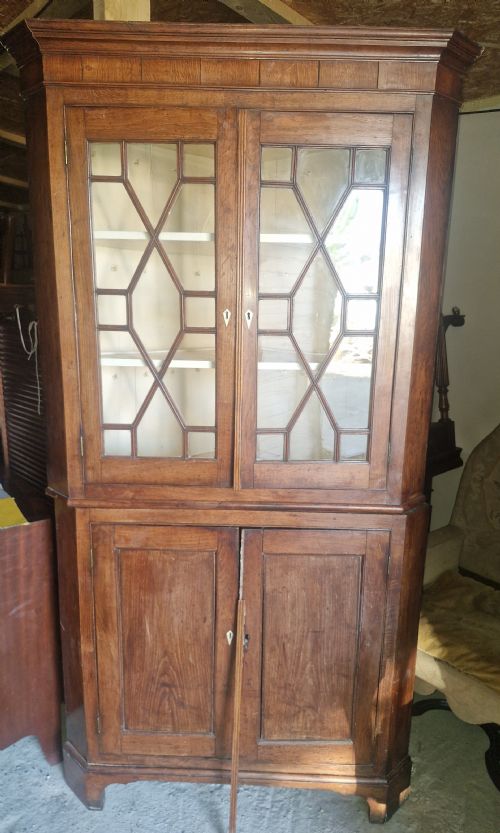
- A cabinet constructed specifically to fit into the right-angle intersection of a room, frequently built in two parts to facilitate installation in domestic interiors.
- Glazing Bar
- A narrow wooden strip holding individual panes of glass within a cabinet door. Finer pieces employ slender moulded bars arranged in geometric or Gothic Revival patterns.
Two Part Cupboard: Frequently Asked Questions
What is a two part cupboard?
A two part cupboard is a piece of furniture built in separate upper and lower sections that stack together. This modular construction allowed heavy wardrobes, dressers, and bookcases to be moved more easily between rooms.
Historically, these cabinets served to store provisions, display ceramics, or house household linens. The split design remains practical for modern homes with restricted access routes.
How do I date a two part cupboard?
Dating relies upon timber species, construction techniques, and stylistic ornament. Seventeenth and eighteenth-century examples are predominantly solid oak with hand-carved panels, while nineteenth-century pieces often incorporate mahogany, walnut, or pine.
Examining drawer joints reveals age: hand-cut dovetails indicate earlier periods, whereas machine precision points to later Victorian or Edwardian manufacturing. Hardware and original painted finishes also offer reliable clues to the decade of origin.
Are two part cupboards difficult to move?
Lifting a two part cupboard is considerably simpler than moving a single solid cabinet of the same height. Separating the top section from the heavy base reduces weight and lowers the centre of gravity during transport.
Most sections simply lift apart once any securing brackets or cornices are unfastened. Two people can easily manoeuvre the individual halves through standard doorways and stairwells.
Where should I place a two part cupboard?
These cabinets suit dining rooms, kitchens, and libraries where vertical wall space allows the full height to be appreciated. Corner variants fit snugly into neglected room angles, transforming dead space into functional storage.
Proper placement avoids direct sunlight to protect antique timber veneers and fragile glass panels. Ensuring the floor is level helps the heavy upper and lower sections align correctly without straining the doors.