
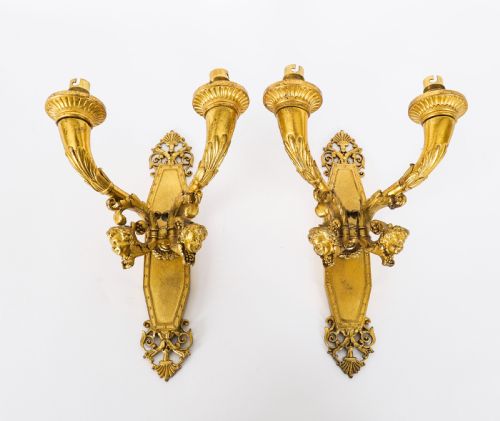
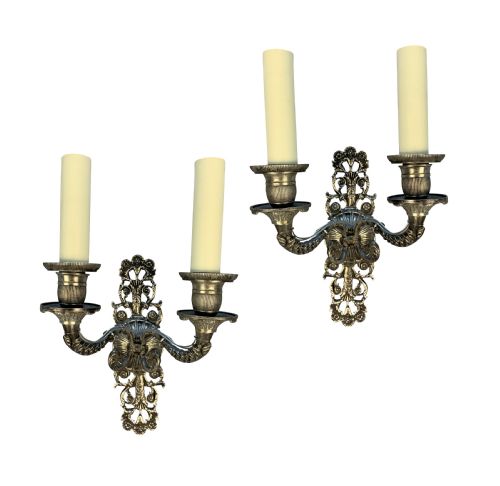
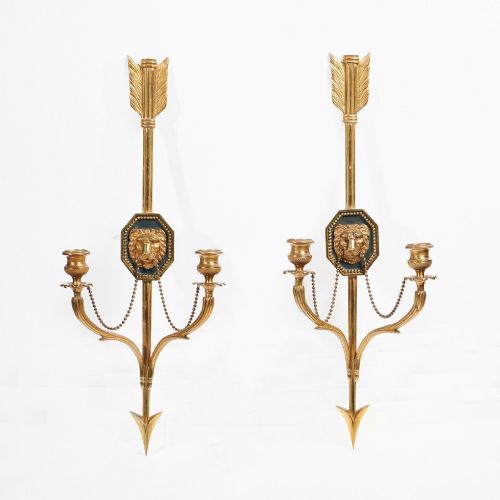
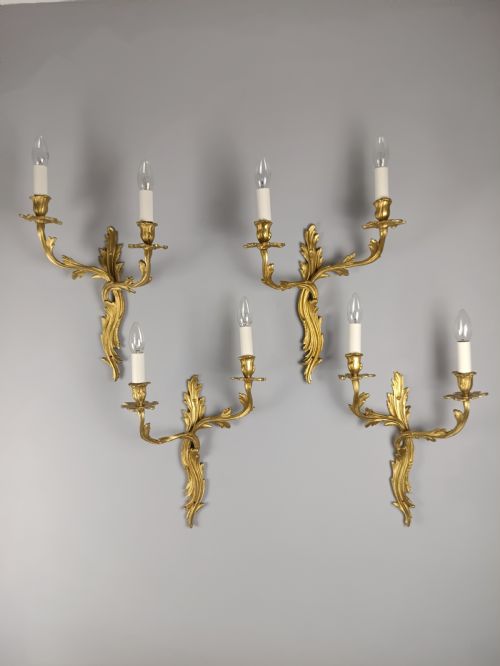
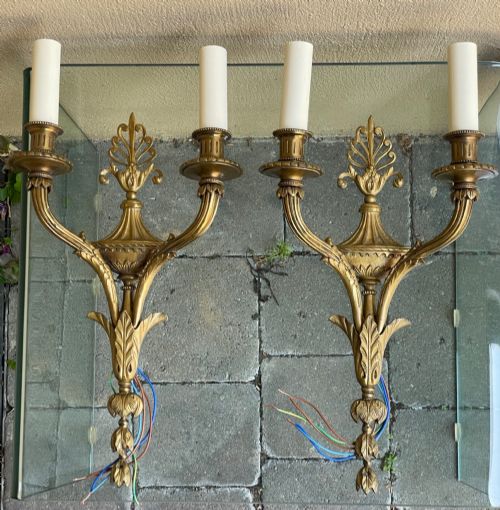
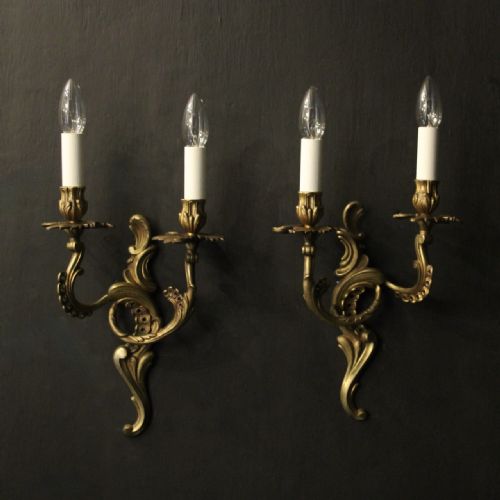
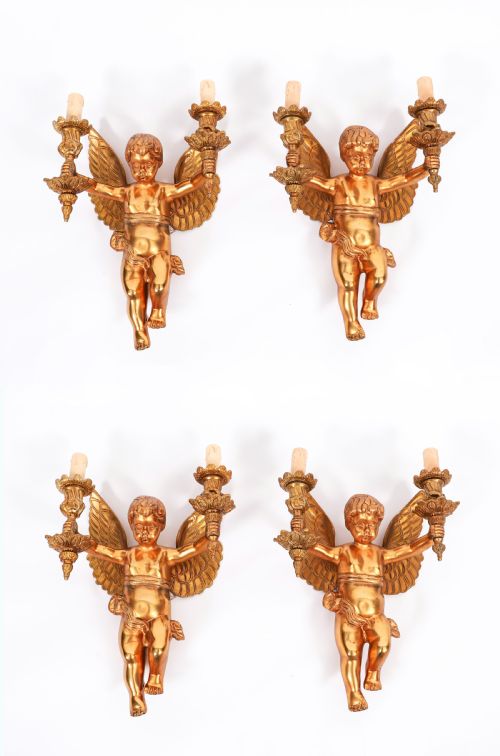


Two Light Wall Appliques
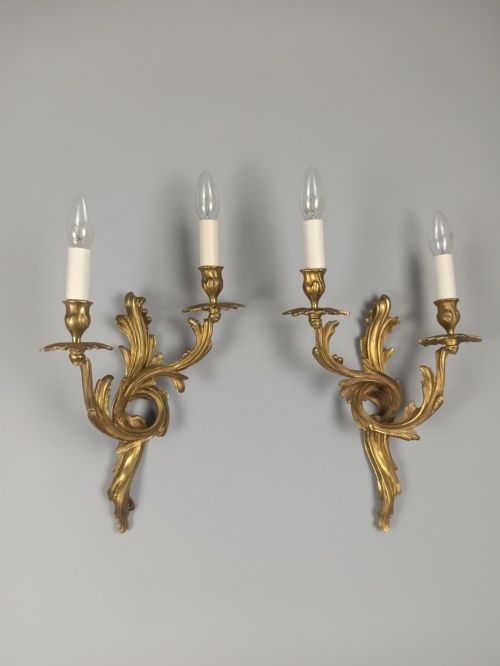
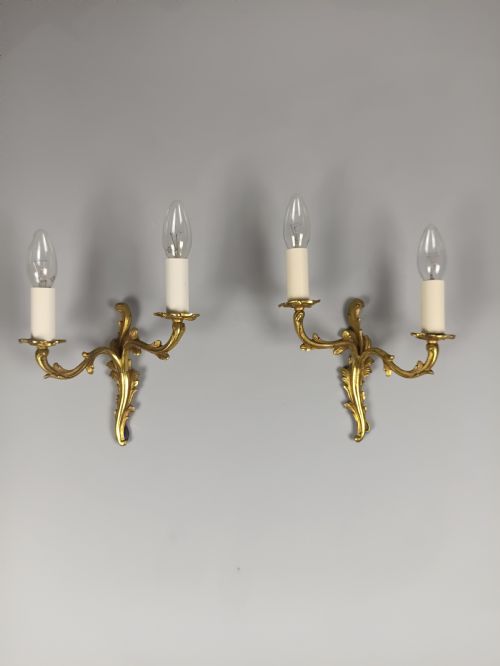
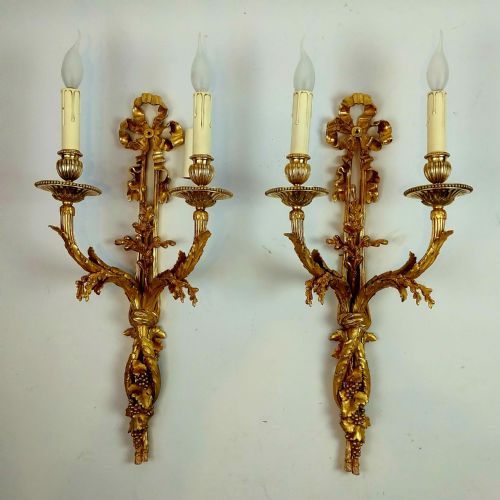
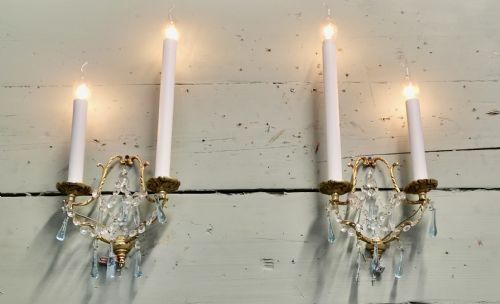
These two light wall appliques bring paired illumination to a room, drawing on centuries of French and Italian design.
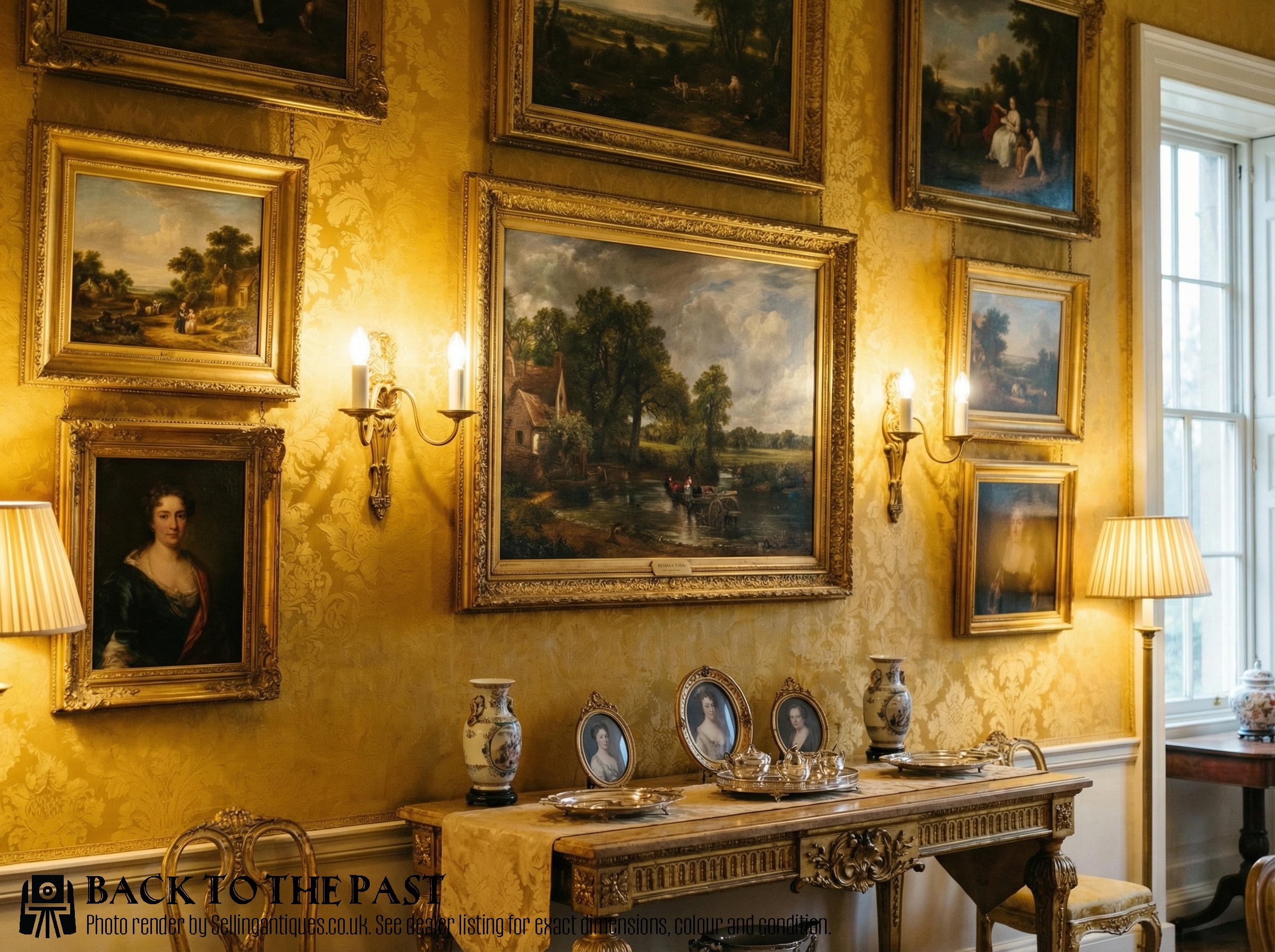
Two Light Wall Appliques
When you search for two light wall appliques, you encounter paired lighting fixtures designed to mount directly onto a wall surface. These pieces take the form of wall lights, wall sconces, and wall chandeliers holding a pair of branches.
The selections span from nineteenth-century nineteenth century models to twentieth-century twentieth century examples, with French and Italian origins appearing frequently across the inventory. You meet styles ranging from French Empire and Louis XV revival to Rococo and Art Nouveau.
How They Were Made
Foundry workers cast these fixtures primarily in bronze, brass, and metal, often applying fire-gilding to create ormolu and gilded bronze surfaces. Giltwood and silver-plated finishes also appear, particularly on Italian and Florentine pieces.
Casting and chasing techniques allowed artisans to shape complex scrollwork, cherub figures, and neoclassical motifs into rigid metal frames. Crystal drops and glass components were then suspended from the arms to refract the illumination.
Listings feature materials including crystal, glass, giltwood, ormolu, and silver plate across nineteenth and twentieth century periods.
What Varies in Quality
The depth and crispness of the metal chasing separate standard production from superior examples, as hand-finished details create sharper definition in leaves, scrolls, and figural elements. Heavier metal gauges provide structural stability to multi-branch arms.
The preservation of the original fire-gilding or surface gilding determines visual impact, alongside the clarity and completeness of any integrated crystal or glass pendants.
The Two Light Wall Appliques Glossary
- Ormolu
- Gilded bronze produced by applying a mercury and gold amalgam to a bronze base and heating it. This technique creates a durable, golden finish characteristic of French decorative metalwork.
- Wall Sconce
- A decorative lighting fixture fixed to a wall that holds one or more candles or electric bulbs. The form projects outward to illuminate surrounding spaces.
- Empire Style
- A neoclassical design movement from the early nineteenth century defined by military motifs, classical symmetry, and rich gilding. Pieces from this aesthetic draw on Roman and Greek visual vocabulary.
- Crystal
- High-lead glass cut into facets to refract light. Pendants and drops of this material hang from wall fixtures to enhance sparkle.
Two Light Wall Appliques: Frequently Asked Questions
How do I install antique wall lights?
These fixtures require mounting directly to wall studs or reinforced plaster using appropriate brackets and fixings. Many period pieces arrive rewired for modern electrical standards, though professional installation remains advisable for heavy bronze frames.
Position the fixtures at eye level or flanking a central architectural element such as a mirror or mantelpiece. Ensure the electrical supply matches the voltage requirements of the specific lamp holders.
What is the difference between an applique and a sconce?
The terms are largely interchangeable within the antique trade, referring to wall-mounted lighting fixtures with projecting branches. Applique often denotes continental European pieces, particularly French designs.
Both types served the historical function of holding candles before the advent of electricity. Today, both descriptions apply to twin-branch units designed for wall mounting.
How do I date a pair of wall lights?
Dating relies on stylistic markers, casting techniques, and material composition characteristic of specific periods. Pieces exhibiting Louis XIV or Louis XV revival traits often date from the nineteenth century, while simpler gilt brass forms frequently emerge from the early twentieth century.
Examine the backplates, screw types, and mounting hardware for signs of age. Rewired examples often combine historical frames with twentieth-century electrical components.
Can these fixtures be used with modern bulbs?
Rewired pieces accommodate standard low-wattage LED or incandescent bulbs designed to mimic candle flames. Check the internal lampholders to ensure compatibility with current safety standards.
Using lower-wattage bulbs preserves the delicate wiring and protects historic glass or crystal components from excessive heat. Consult a qualified electrician if the fixture retains its original historical wiring.