
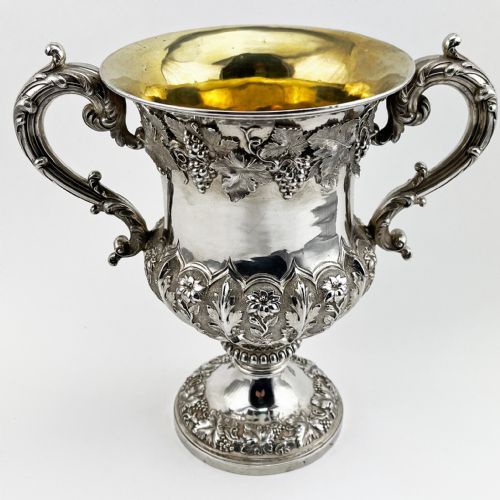


Two Handled Chalice
These two handled chalice pieces are historic drinking vessels and trophies crafted in silver, glass, and brass from the eighteenth century to the twentieth.
Two Handled Chalice
A two handled chalice brings together centuries of drinking vessels, loving cups, and commemorative trophies made across Britain and France. When you examine this search phrase, you encounter substantial presentation pieces designed for communal toasts, sporting victories, and royal celebrations.
The versions you are most likely to meet on this page span the Georgian, Victorian, and Edwardian eras, alongside later Art Deco and Art Nouveau designs. They appear in sterling silver, silver plate, old Sheffield plate, brass, and lead crystal, often featuring maker marks or commemorative inscriptions.
Formations range from classical urn-shaped trophy vases to deep loving cups with twin handles meant for passing between guests. Whether Irish silver from the seventeen-twenties or English glass from nineteen-eleven, each piece reflects the social rituals of its specific period.
Materials and construction
Silversmiths constructed many of these items from heavy sterling silver or fused old Sheffield plate, hammering and raising the metal into deep bowls before soldering on cast handles. The incorporation of gilt vermeil interiors or fitted glass liners provided protection against acidic contents during use.
Makers working in brass utilised turning and casting techniques to achieve sturdy trophy vases with decorative handles suited to late nineteenth-century interiors. Glass pieces relied on heavy lead crystal moulding and wheel-engraving to display commemorative royal portraits and heraldic details.
Makers represented include Irish silversmiths from seventeen-twenty-seven alongside Sheffield manufacturers and London trophy designers.
Assessing quality and character
The distinction between standard vessels and exceptional pieces rests upon the crispness of the chased decoration, the weight of the metal, and the balance of the applied handles. Superior examples maintain clear hallmarks, crisp armorial engravings, and original surfaces without excessive polishing wear.
Makers such as designated silversmiths or established workshops imparted distinct artistry through hand-beaten textures and balanced proportions that separate mass-produced items from bespoke presentation pieces.
Joseph Rodgers & Sons·Thomas Sutton
The Two Handled Chalice Glossary
- Loving cup
- A large drinking vessel equipped with two or three handles, designed to be passed around a table among guests. Such cups often marked weddings, civic events, or corporate banquets.
- Old Sheffield plate
- A composite material formed by fusing a thin sheet of sterling silver to a thicker copper base before rolling and shaping. This technique preceded modern electroplating.
- Hallmark
- An official stamp applied by an assay office to indicate the metal purity, the maker, and the year of production. British silver relies on these marks for exact dating.
- Vermeil
- Sterling silver that has been coated with a thin layer of gold on the surface. This finish protects the silver from tarnishing and provides a rich golden appearance.
- Commemorative glassware
- Vessels produced specifically to mark public events, royal coronations, or political milestones. They frequently feature engraved dates and national symbols.
Two Handled Chalice: Frequently Asked Questions
What is a two handled chalice used for?
These vessels historically served as communal drinking cups for toasts at banquets, weddings, and guild feasts. Many later examples functioned as sporting trophies or commemorative presentation pieces.
Over time, their role shifted from functional tableware to decorative display items and treasured heirlooms passed down through families.
How do I date a silver chalice?
You determine the age of British silver pieces by examining the assay office hallmarks stamped into the metal. These marks correspond to specific date letters and reigning monarchs.
For unmarked or non-silver pieces, stylistic indicators such as Georgian neo-classical shapes or Art Nouveau whiplash curves help narrow down the period of manufacture.
What is old Sheffield plate?
Old Sheffield plate is an early form of plated metal created by fusing a sheet of sterling silver onto a copper core through heat and pressure. The resulting sheet was then shaped into vessels.
This method produces a distinctive warm lustre where subtle traces of copper may occasionally show through at high-wear edges.
Can I use these chalices for drinking?
Solid silver, glass, and vermeil pieces are generally safe for beverages, though antique items require careful hand washing without harsh detergents. Plated or brass items should be evaluated for interior condition before use.
Many collectors prefer to keep historic presentation cups for display rather than active service to preserve their original finish and structural integrity.