



Silver Plated Presentation Trophy
A silver plated presentation trophy brings weighty ceremony to a room, offering grand loving cups and urns shaped by competition.
Silver Plated Presentation Trophy
When you search for a silver plated presentation trophy, you find substantial loving cups, decorative urns, and presentation bowls created to mark athletic victories and civic milestones. These vessels span the eighteenth, nineteenth, and early twentieth centuries, recording competitive triumphs in dining rooms and parlours.
The versions you meet most often on this page take the form of Victorian and Edwardian loving cups or Georgian Old Sheffield Plate pieces. Alongside these stand ceramic and oak fruit dishes, lawn bowling plaques, and nineteenth-century ice buckets adapted for display.
Makers and makers' marks tie these objects directly to workshops such as Joseph Rodgers and Sons or continental firms like WMF. Each piece carries the physical evidence of its period, whether through the warm glow of Old Sheffield Plate or the sweeping lines of Art Nouveau.
Materials and construction
Makers built these vessels using copper, electroplated nickel silver, and Old Sheffield Plate, often mounting them upon turned wooden bases made of oak. The earlier eighteenth and nineteenth-century pieces rely on the fusing of silver to a copper core, while later Victorian items utilise electroplating techniques.
Surface ornament reflects the prevailing style of the decade, shifting from Georgian restraint to the floral motifs of Art Nouveau and the gothic touches of the Victorian era. Ceramic inserts and wooden socles provide structural contrast to the gleaming metal surfaces of loving cups and urns.
One cheerful piece records a lawn bowling victory from eighteen ninety-nine, proving that fierce competitive spirit once lived on the village green.
Judging quality in presentation pieces
Quality rests in the crispness of chased decoration and the structural integrity of applied handles and mounts. A superior loving cup or urn holds its balance firmly, with handles securely joined to the body rather than merely soldered superficially.
The integrity of the plated surface determines the longevity of the piece, where even wear reveals the warm copper or base metal beneath in a uniform manner. Stronger examples retain deep, legible hallmarks and crisp engraving that records the original presentation context without obscuring the form.
Joseph Rodgers and Sons·WMF
The Silver Plated Presentation Trophy Glossary
- Old Sheffield Plate
- A material made by fusing a thin sheet of silver to a thicker copper ingot before rolling them together into sheets. This technique predates modern electroplating and produces a characteristic warm tone where the base copper occasionally shows through at high points.
- Loving Cup
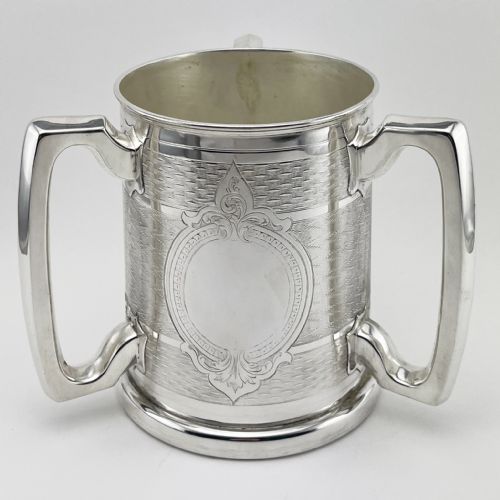
- A large drinking vessel typically featuring two or three handles, designed to be passed among company during celebrations and civic toasts. In presentation pieces, this form becomes a symbolic trophy rather than a functional utensil.
- Electroplated Nickel Silver
- A base metal alloy of copper, nickel, and zinc coated with a layer of pure silver using an electrical current. This process became the dominant manufacturing method for presentation silver during the Victorian period.
- Chestnut Urn
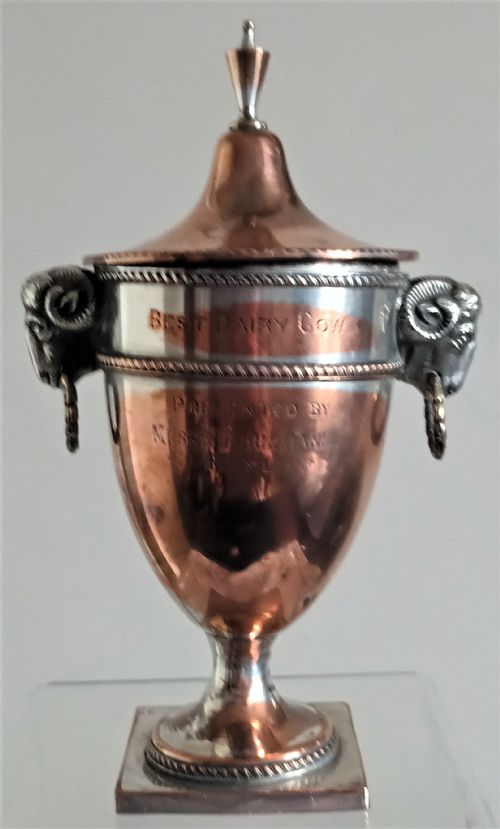
- A covered decorative vessel originally intended for serving roasted chestnuts at Georgian dining tables. Miniature versions appear among early presentation pieces and display classical urn proportions.
- Socle
- A short plain plinth or pedestal supporting a loving cup, vase, or urn. It raises the vessel visually and provides stability to the base.
Silver Plated Presentation Trophy: Frequently Asked Questions
What is a loving cup?
A loving cup is a large two-handled vessel traditionally passed around a group during toasts and civic ceremonies. In this collection, these cups serve as decorative presentation pieces that record past competitions.
Their substantial handles and deep bowls reflect their origins as communal drinking vessels before transitioning into permanent table displays.
How do I date Old Sheffield Plate?
Old Sheffield Plate is identified by its method of fusing silver to copper before the invention of electroplating in the nineteenth century. Examining the edges often reveals a thin seam of copper where the metals meet.
Pieces utilising this technique typically date from the eighteenth century to the early decades of the nineteenth century.
Where were presentation bowls used?
These bowls sat on dining tables or sideboards in clubs, homes, and civic halls as permanent records of athletic or social achievement. They frequently functioned as fruit dishes, ice buckets, or dedicated presentation prizes.
Their design allowed them to be filled with floral arrangements or prizes during annual banquets.
What does silver plate mean?
Silver plate refers to a base metal, such as copper or nickel silver, coated with a thin layer of pure silver. This allowed makers to produce large, decorative trophies without the high cost of solid silver.
Over decades of handling and cleaning, the underlying metal may gently show through, adding character to the surface.