



Silver Plated Trophy
These silver plated trophy pieces span sporting cups, loving cups, and presentation bowls created to mark athletic victories and civic milestones.
Silver Plated Trophy
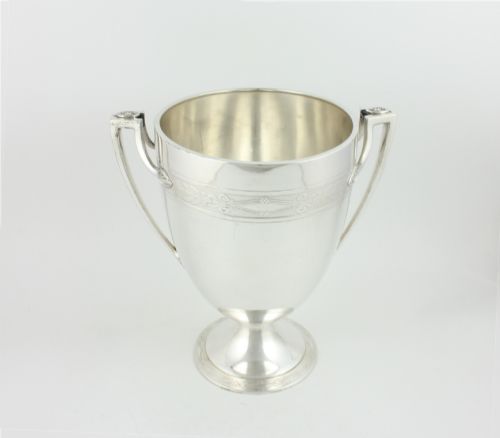
A silver plated trophy represents the physical reward for athletic success, sporting achievement, and historical competition from the eighteenth century through the mid twentieth century. Buyers seeking this phrase encounter a diverse assortment of objects, ranging from heavy lidded cups and loving cups with scroll handles to presentation bowls, wine coolers, and novelty models.
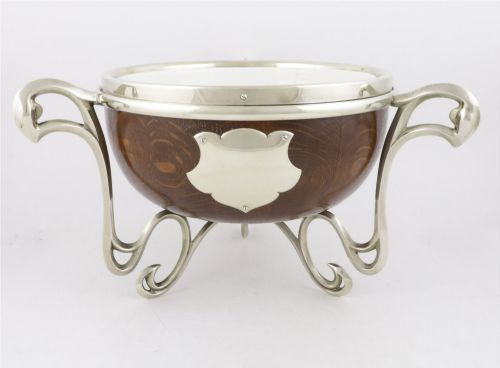
The selection on this page draws heavily from Victorian and Edwardian periods, alongside Georgian Old Sheffield plate items and later twentieth-century creations. Forms frequently incorporate organic additions such as English oak plinths, ceramic inserts, leather cricket balls, and mounted wooden barrels.
Sporting themes dominate the category, recording victories in cricket, football, tennis, rowing, shooting, horse racing, and fishing. Other examples serve civic and agricultural functions, embossed with machinery, steam engines, or specific college and institutional honours.
How they were made
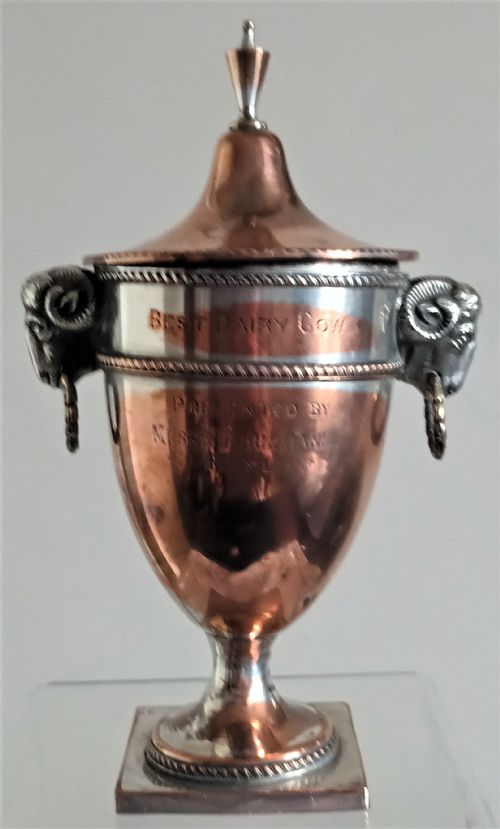
Makers utilised base metals such as copper, nickel silver, and brass, fusing them with silver through traditional plating techniques like Old Sheffield plate or later electroplating methods. Electroplated nickel silver became widespread in the nineteenth century, allowing firms to apply an even metallic coating over durable white metal cores.
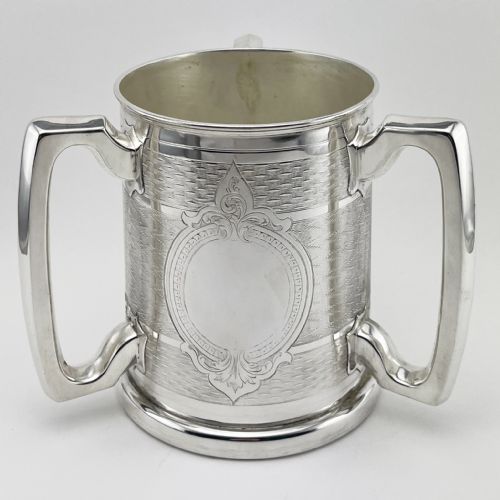
Craftsmen enriched the surfaces of these items through chasing, embossing, and engraving by hand, applying decorative scrolls, foliage, and figural scenes. Integral components such as cast scroll handles, mounted plinths, and applied shields were soldered or pinned to the main body.
Several sporting offerings step beyond standard cups to honour competitive triumphs through a mounted model aircraft and an entire display of twelve leather cricket balls.
What varies in quality
Quality rests in the heaviness of the gauge, the crispness of the hand-chased ornamentation, and the integrity of the underlying metal. Substantial vessels maintain their structural rigidity and display deep, clean relief work rather than shallow pressed patterns.
The durability of the original plating layer and the retention of crisp engraved inscriptions denoting specific sporting events or presentation dates distinguish superior examples. Pieces retaining original fitted oak bases, ceramic liners, or associated presentation elements command greater interest.
Christofle·WMF·Joseph Rodgers & Sons·Henry Bourne·Walker & Hall·Elkington & Co·Henry Hobson & Sons
The Silver Plated Trophy Glossary
- Old Sheffield Plate
- A fused composite material made by melting a sheet of silver onto a thicker copper ingot before rolling them together into plates. This technique predates nineteenth-century electroplating and produces characteristic subtle copper seams along edges.
- Electroplated Nickel Silver
- A base alloy of copper, nickel, and zinc coated with a layer of pure silver through an electrical process. This method replaced older plating techniques from the mid-nineteenth century onward.
- Loving Cup
- A large two-handled drinking vessel passed among guests at banquets and celebrations. Many examples were later repurposed or manufactured specifically as sporting trophies.
- Campagna Shaped
- A classical vase or cup profile featuring a deep bowl that flares outwards towards the rim, supported by a stem and foot. This neo-classical silhouette appears frequently on Victorian presentation pieces.
- Chasing
- A metalworking technique where the artisan pushes the metal from the front using hammer and punches to create raised decorative designs without removing material.
Silver Plated Trophy: Frequently Asked Questions
What sports are represented on these trophies?
The recorded pieces celebrate cricket, football, tennis, rowing, shooting, fishing, and horse racing. Specific competitions and collegiate events appear across the engraved dedications.
Other examples relate to agricultural shows, highlighting machinery, steam engines, and local horticultural exhibitions from the Victorian era.
How do I date an unmarked piece?
Dating relies on stylistic markers, manufacturing techniques, and any engraved presentation inscriptions. Georgian and early nineteenth-century items often utilise Old Sheffield plate methods.
Victorian and Edwardian versions display distinct aesthetic movements, shifting from heavy gothic revival and florid scrolls toward cleaner Art Nouveau and Art Deco lines.
What is the difference between Old Sheffield plate and electroplate?
Old Sheffield plate involves physically fusing a sheet of silver to copper before rolling, visible through faint copper lines at the cut edges. Electroplating uses an electrical current to bond a thin silver coat onto a nickel silver base metal.
Items created through the earlier fused method generally date from the eighteenth to the early nineteenth century, whereas electroplated items become standard after eighteen forty.
How can I display these pieces at home?
Large trophy cups and loving cups function well as centrepieces on dining tables, sideboards, or open shelving. Pieces paired with oak plinths or ceramic fruit bowls integrate easily into traditional and eclectic interiors.
Items fitted with secondary uses, such as wine coolers, biscuit barrels, or flower containers, allow for practical daily placement alongside decorative display.