
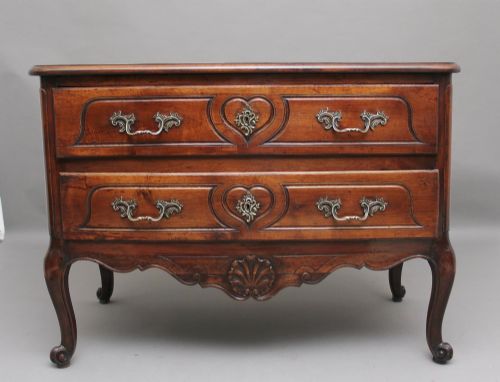

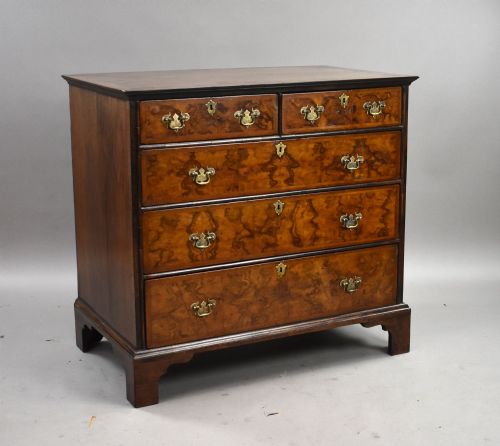
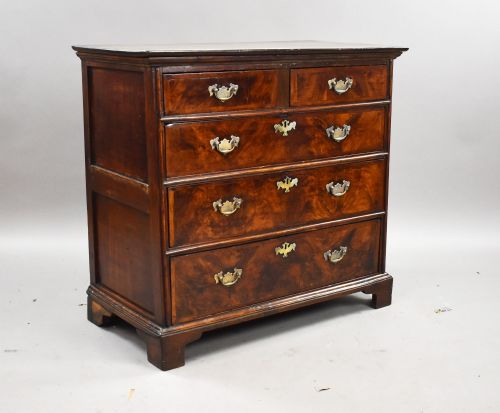
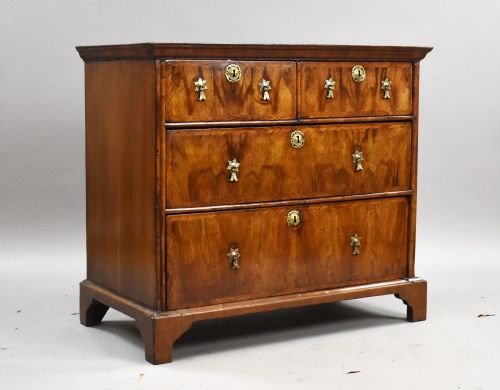



Two Drawer Walnut Commode
A two drawer walnut commode offers deep, rich timber grain and practical bedside or hallway storage rooted in centuries of cabinet-making.
Two Drawer Walnut Commode
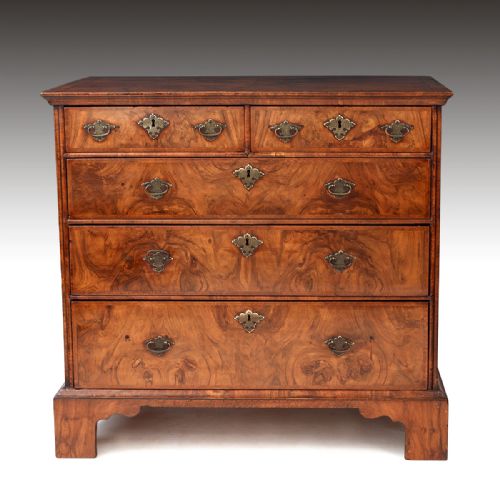
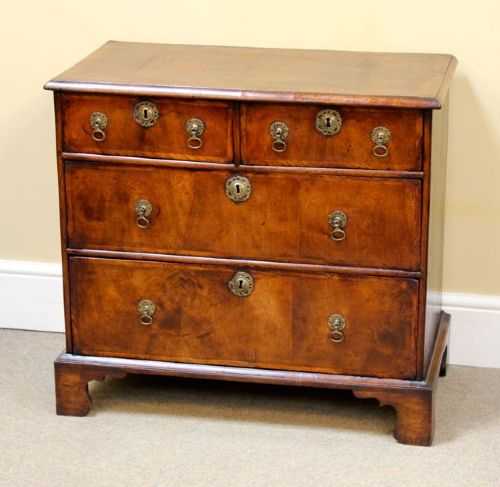
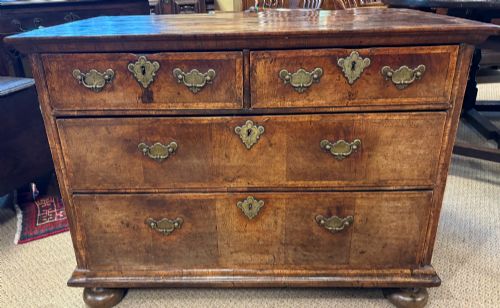
A two drawer walnut commode brings substantial timber character and compact proportions to domestic interiors. When exploring a two drawer walnut commode, collectors encounter forms spanning from the late seventeenth century through the Victorian era.
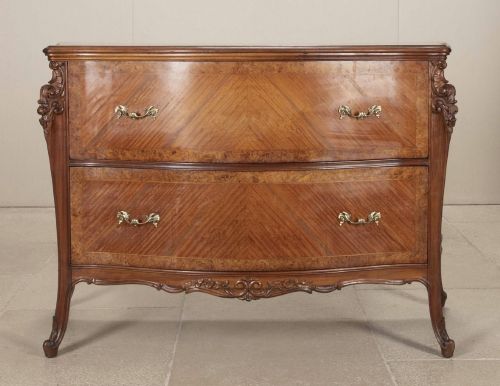
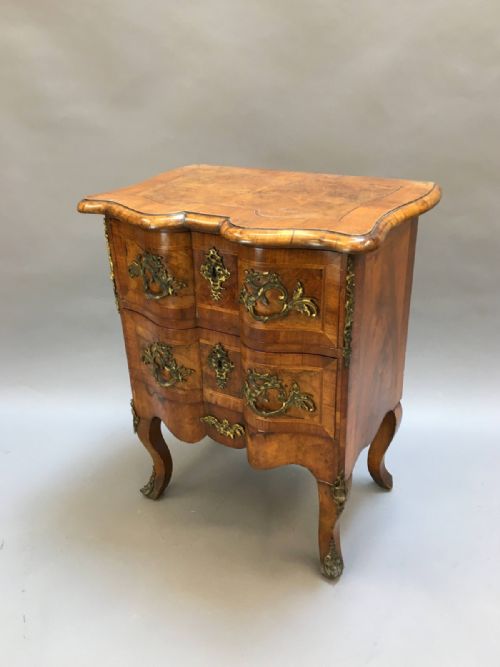
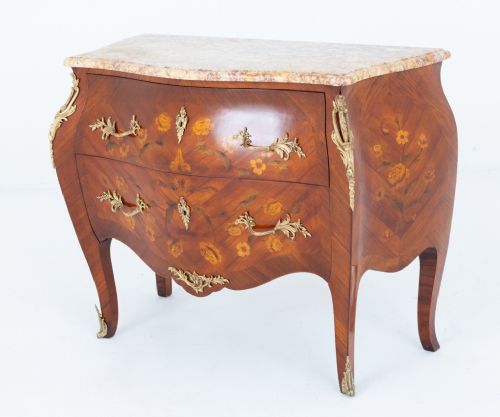
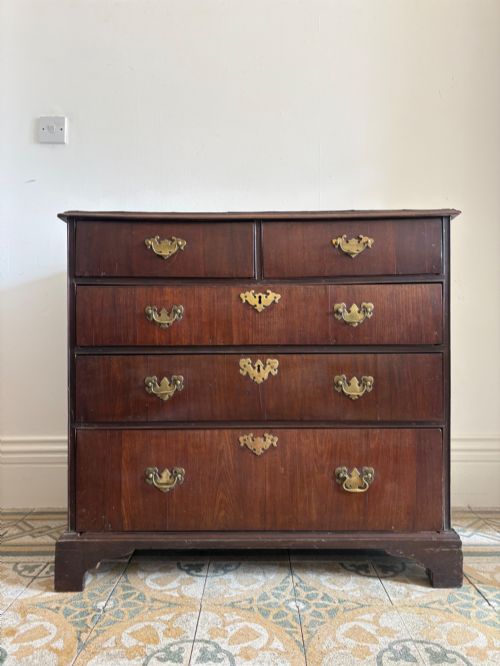
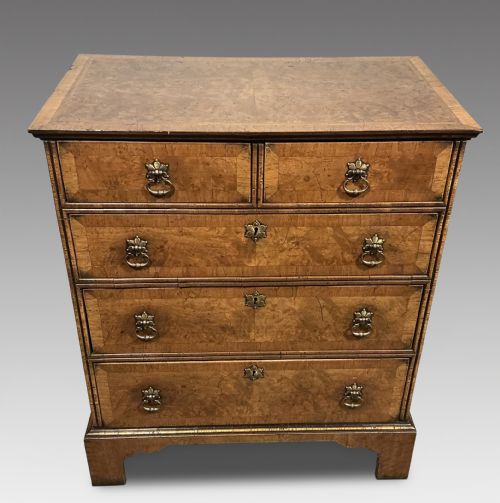
The selection ranges from early Georgian examples to continental Italian and French commodes. Cabinets appear alongside traditional chests of drawers, offering distinct regional interpretations of walnut and burr walnut furniture.
How they were made
Cabinet-makers utilised solid walnut, burr walnut, and fruitwood over secondary timbers such as oak and pine. Selected veneers provided figured patterns across drawer fronts, while structural carcases relied on sturdy softwood and hardwood framing.
Metalwork played a defining role in finishing each piece. Brass handles, ormolu mounts, and occasionally marble tops completed the construction of continental and British commodes.
Some early commodes were built in two stacked halves, likely so travelling nobility could haul their sock drawers up narrow castle stairs.
What varies in quality
The grade of timber selection dictates visual distinction across the range. Figured burr walnut veneers and well-matched grain patterns separate superior examples from plain timber builds.
Original hardware and structural integrity define the standard of survival. Intact brass handles and well-preserved marble tops elevate pieces above heavily restored alternatives.
The Two Drawer Walnut Commode Glossary
- Burr walnut
- A highly figured timber veneer harvested from the growth warts of walnut trees. This material creates swirling, decorative patterns across drawer fronts.
- Ormolu
- Gilded bronze mounts applied to furniture for decorative effect. It appears frequently on continental commodes.
- Commode
- A low chest of drawers or cabinet. The term often describes French and Italian pieces from the eighteenth and nineteenth centuries.
- Serpentine
- A wave-like curved shape typical of advanced cabinet fronts. It requires skilled woodworking to follow the sweeping contour.
Two Drawer Walnut Commode: Frequently Asked Questions
Where should I place a walnut commode?
These compact chests suit hallways, living rooms, and bedrooms where surface space is useful. Their rich timber tones contrast well against neutral walls.
Ensure placement avoids direct sunlight to protect walnut veneers from fading over time.
How do I care for walnut timber?
Dust regularly with a soft, dry cloth to prevent particle buildup on the polished surface. Avoid silicone-based sprays that can penetrate old finishes.
Maintain stable room humidity to prevent timber movement and veneer lifting.
Are these commodes made in sections?
Earlier examples, particularly from the seventeenth and eighteenth centuries, are often constructed in two separate stacking sections. This aided transport in period homes.
Later Victorian and continental pieces typically utilise a single unified carcase.
What is the difference between British and continental commodes?
British examples usually present as chests of drawers with straightforward timber construction and brass hardware. Continental pieces, particularly French and Italian items, often incorporate marble tops and ormolu mounts.
Both styles utilise walnut and burr walnut as the primary aesthetic surface.