


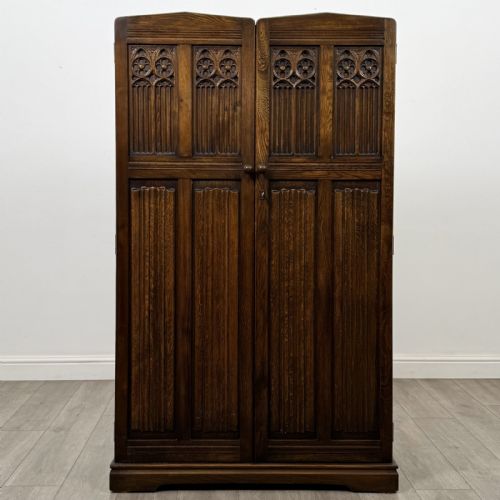
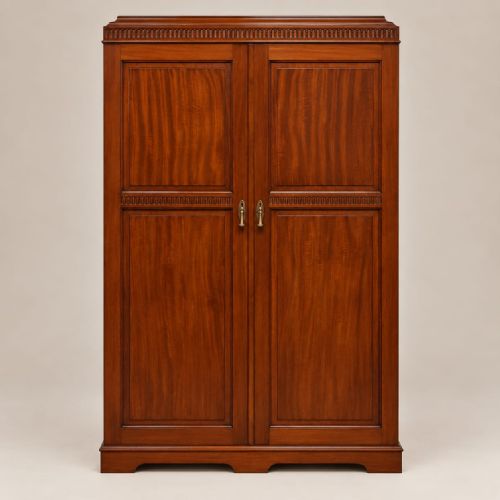
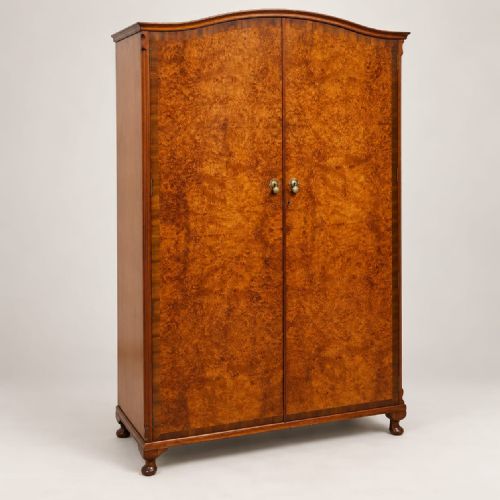
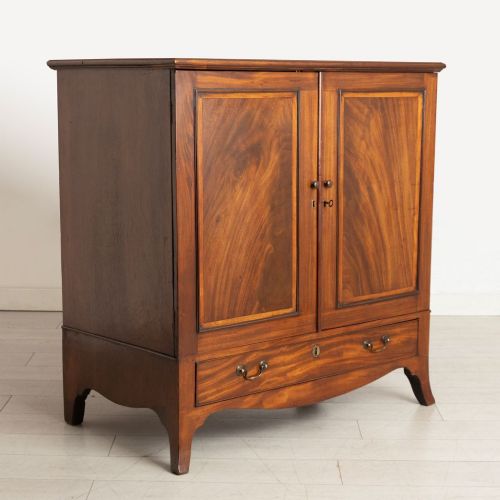
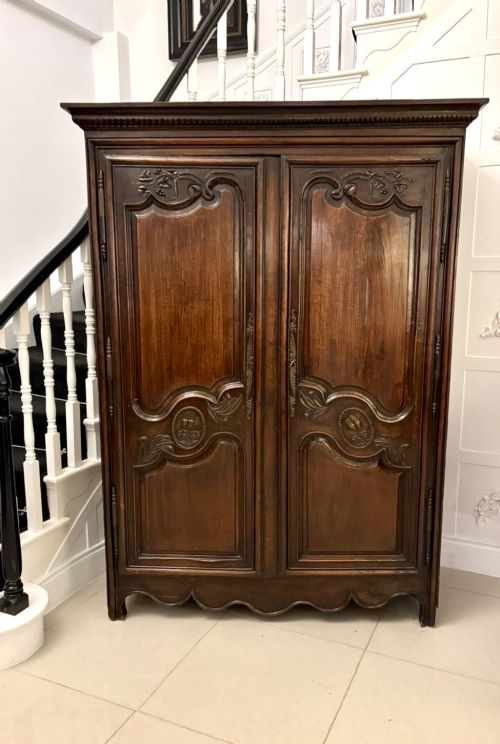
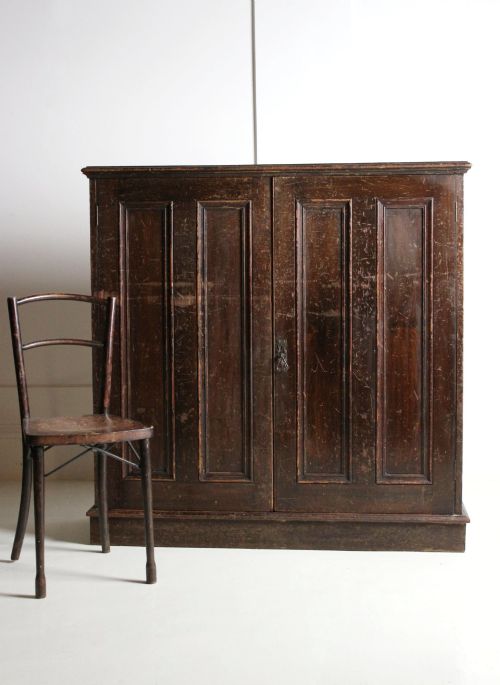
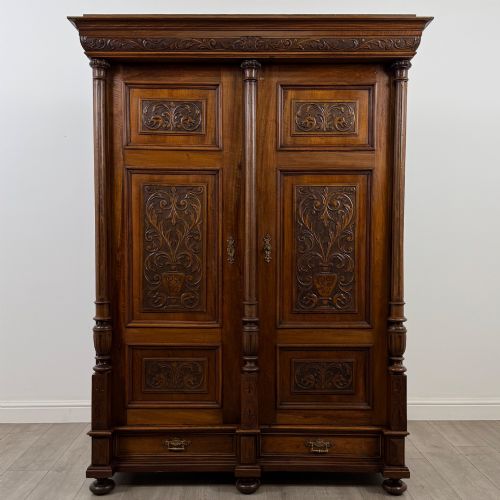
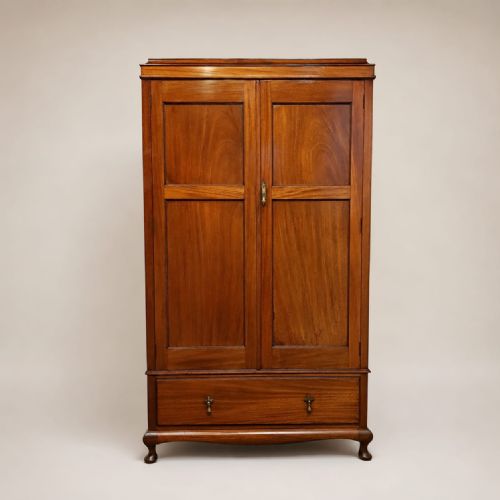
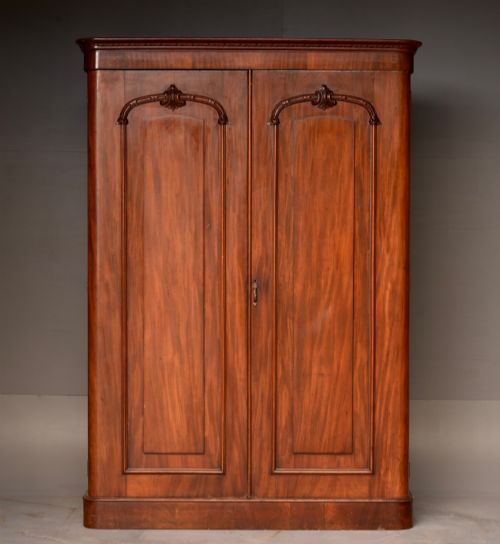

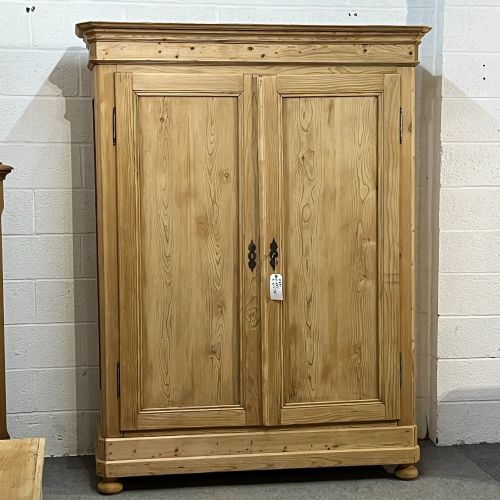
Two Door Wooden Armoire
A two door wooden armoire brings generous storage and architectural presence to a room, offering sturdy hanging space behind twin panels of period timber.
Two Door Wooden Armoire
A two door wooden armoire provides substantial hanging and shelving capacity through paired doors opening to reveal deep internal storage. Buyers encounter this form across multiple centuries, from substantial 18th century examples to refined Victorian and Edwardian interpretations.
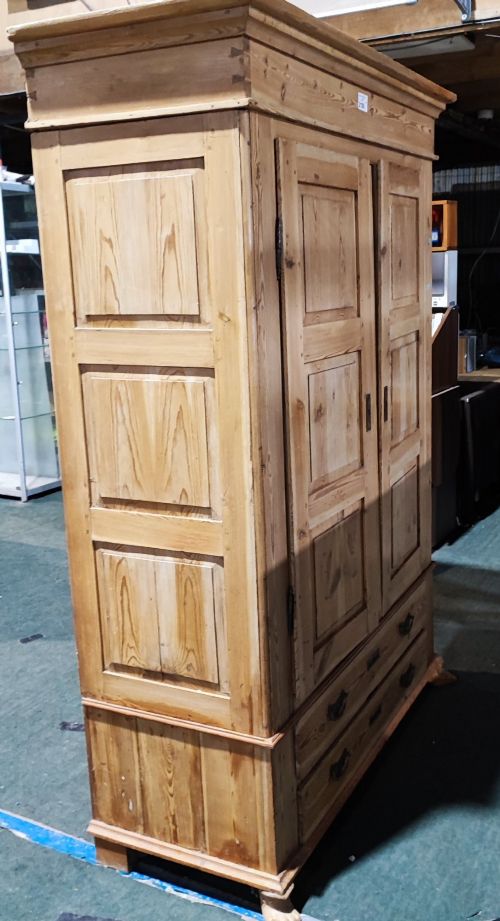
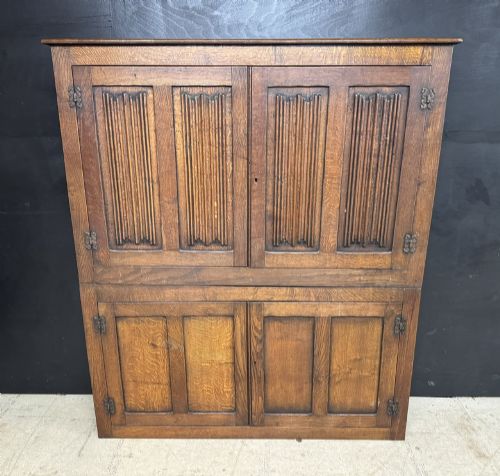
The selection ranges from robust pine and oak country pieces to highly polished mahogany and walnut urban wardrobes. Regional variations include French provincial designs alongside English Georgian and later Art Deco interpretations.
Makers utilised these large case pieces for household linen, garments, and general storage within principal chambers and halls. Surviving examples often retain original configuartions of interior shelves, hooks, and hanging rails.
Materials and construction methods
Carpenters constructed these large cabinets using solid native timbers alongside exotic veneers applied to stable secondary woods. Mahogany, walnut, pine, and oak form the primary structural bodies, joined with traditional framing techniques to withstand seasonal movement.
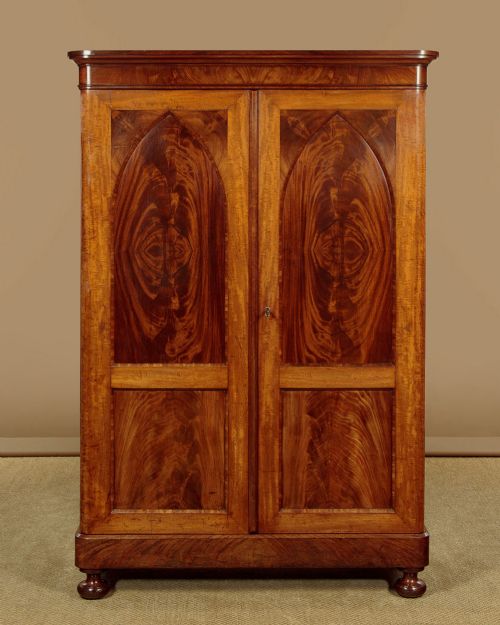
Surface treatments vary widely from polished flame mahogany and figured walnut to painted finishes and wax coatings. Brass hardware, including hinges, escutcheons, and locks, provides both structural reinforcement and decorative accent.
Many larger regional pieces utilised knockdown construction with pegged joints, allowing the cabinet to be dismantled for transport and reassembled on site.
Two Door Wooden Armoire Retail Price Guide 2026
Typical asking prices for two door wooden armoire among the pieces listed under this phrase on Sellingantiques today, from the lower quarter to the upper quarter. They describe what is for sale here now, not the wider market.
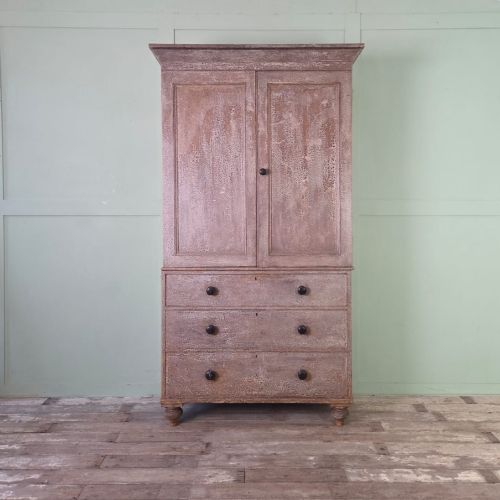
Some antique pine wardrobes carry old layers of paint applied by generations of owners who simply fancied a brighter bedroom.
Evaluating the standard of execution
The standard of a two door wooden armoire rests upon the selection of timber and the precision of its joinery. Superior pieces display continuous grain matching across the twin doors and crisp mouldings executed directly in the solid wood.
Internal cabinetry and secondary woods reveal the original workshop priorities, where hand-cut dovetails on internal drawers and tidy backboards distinguish better productions from utilitarian utility cupboards.
Proportion and architectural balance govern the visual success of the piece, separating well-resolved cabinetmaker work from heavier vernacular builds.
Heals
The Two Door Wooden Armoire Glossary
- Armoire
- A large upright cupboard or wardrobe with two doors, traditionally used for storing garments and linens. Originating as a continental storage piece, the form evolved to serve similar functions in British and European interiors.
- Flame Mahogany Veneer
- A thin slice of mahogany timber cut from the fork of the tree where branches meet the trunk, producing a distinctive flickering flame pattern. Cabinetmakers laid this decorative veneer over stable secondary woods to create striking door panels.
- Linen Press
- A tall two-door cabinet featuring internal sliding trays or shelves originally designed for storing folded household linen. Lower sections frequently incorporate a bank of drawers.
- Knockdown Wardrobe
- A large wardrobe engineered with pegged or bolted joints that permit complete disassembly for transport. This method enabled bulky furniture to travel up narrow staircases into upper bedrooms.
- Bun Feet
- Low, flattened spherical feet supporting the base corners of a heavy case piece. They lift the cabinet slightly off the floor and add a grounded, architectural profile.
Two Door Wooden Armoire: Frequently Asked Questions
How do I assemble a knockdown wardrobe?
Knockdown wardrobes utilise interlocking panels held together by internal wooden pegs, bolts, or metal brackets. Assembly requires two people to align the heavy side panels with the base and cornice before securing the backboards and hanging the doors.
Marking the original orientation of loose components during dismantling ensures correct alignment during reassembly.
Were these cabinets used for clothes?
Large two door cupboards served primarily for storing folded textiles and linens before modern hanging wardrobes became standard. Many older examples lack deep hanging space and rely on internal shelves or shallow pegs.
Later Victorian and Edwardian variants increasingly incorporated full-length hanging rails alongside internal shelving.
How do I tell an 18th-century piece from a Victorian one?
Eighteenth-century examples often display hand-sawn timber boards, pegged mortise and tenon joints, and subtle hand-planed mouldings. Their proportions tend to be more architectural, with distinct cornices and fielded panels.
Victorian cabinets generally feature machine-sawn elements, standard brass hardware, and heavier carcass construction designed for larger urban bedrooms.
How do I care for polished wood surfaces?
Maintain polished mahogany and walnut surfaces by applying traditional beeswax periodically to nourish the dry timber. Avoid placing these large wooden pieces near direct heat sources or strong sunlight which can fade finishes and cause timber to split.
Dust regularly with a soft, dry cloth to prevent accumulation in carved details and mouldings.