

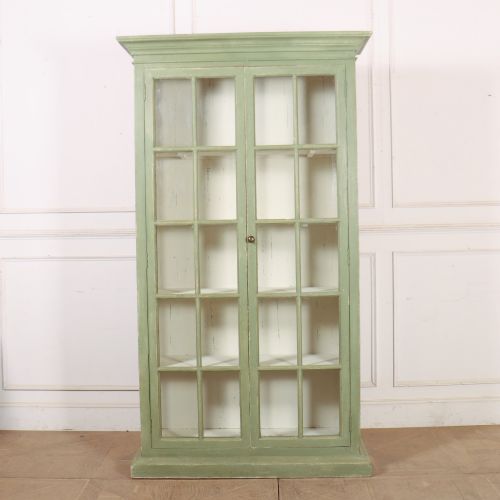
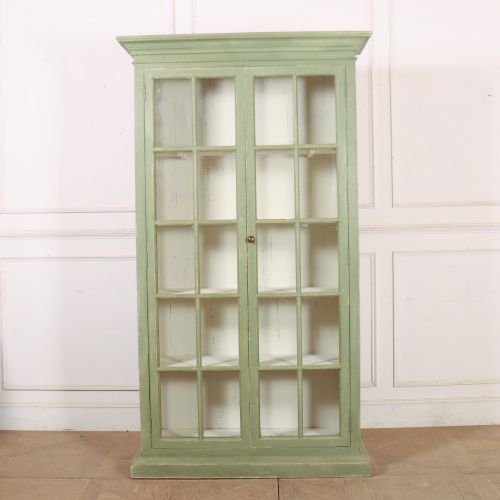
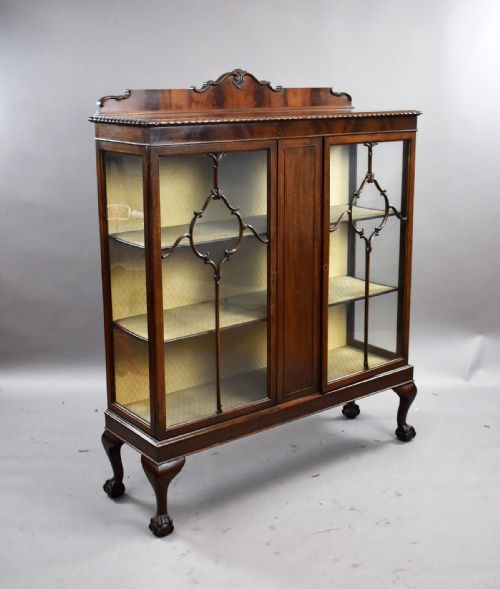
Two Door Vitrine
A two door vitrine brings architectural glass and fine timber together to hold collections securely in a drawing room.
Two Door Vitrine
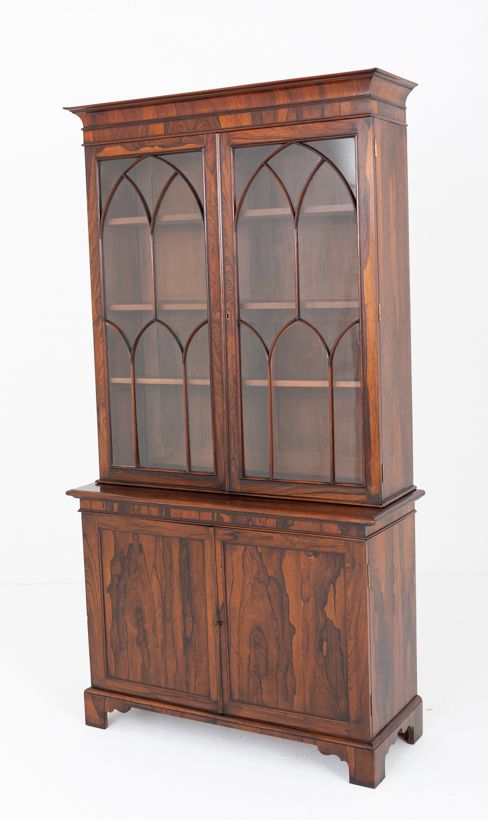
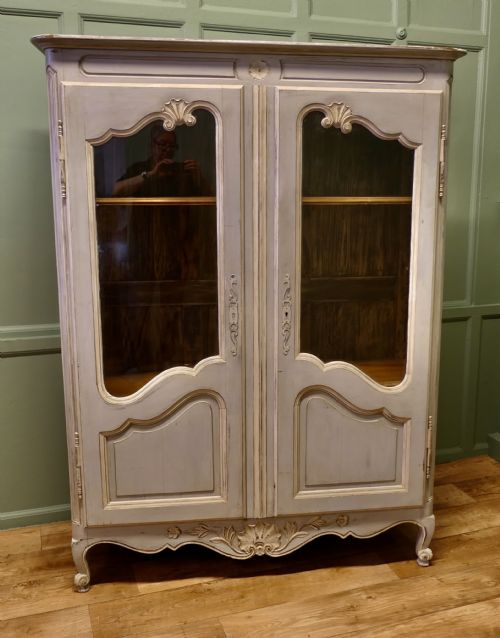
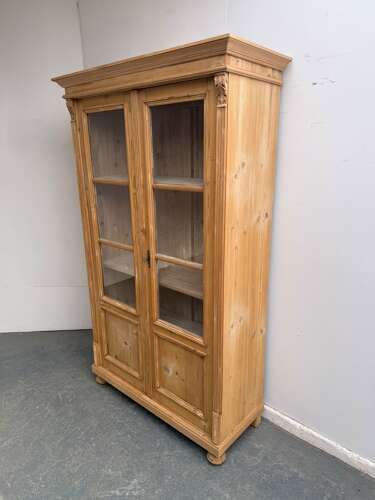
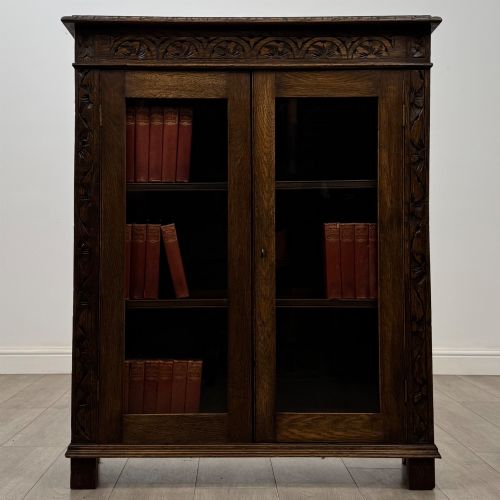
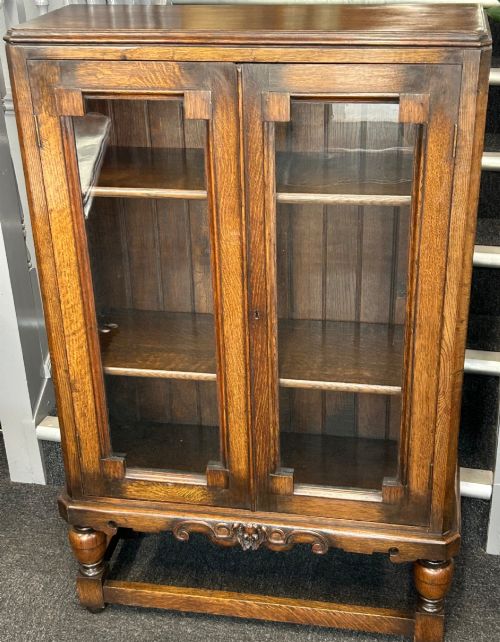
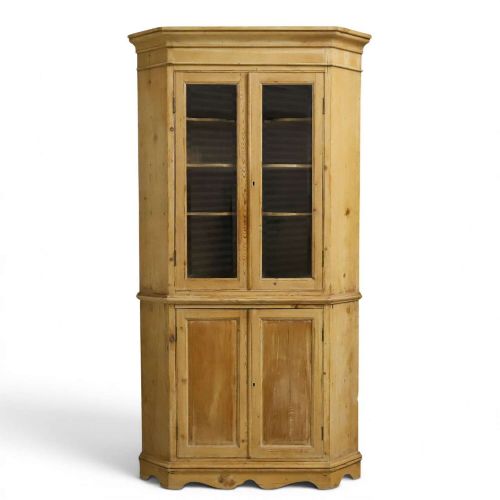
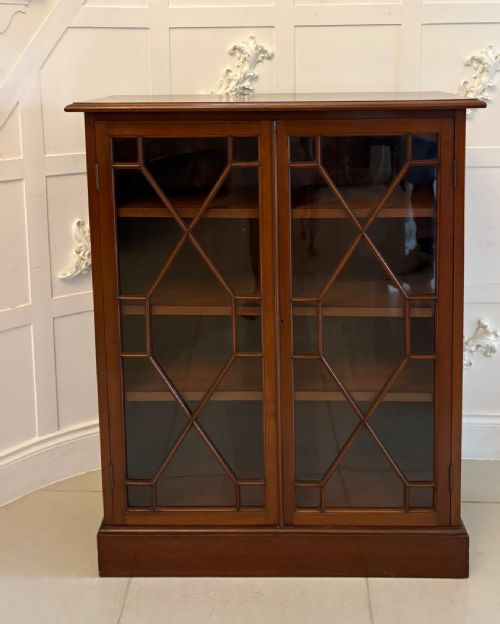
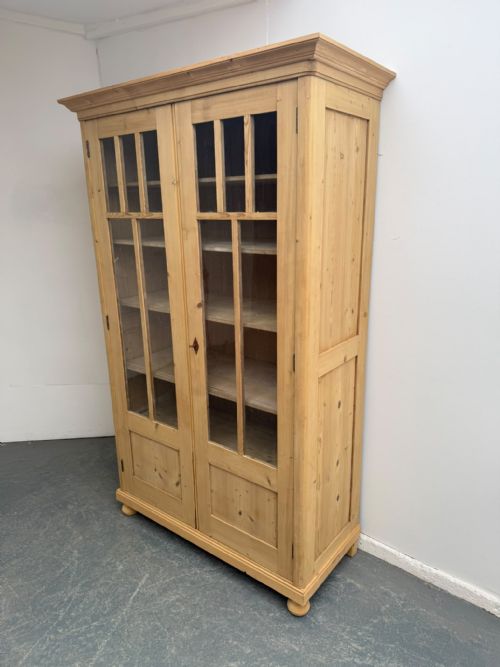
A two door vitrine provides tall glazed display storage across nineteenth-century and early twentieth-century periods. These cabinets appear in formal mahogany, walnut, and satinwood alongside painted pine and oak country formats.
Most examples function as bookcases and display cabinets combined, offering adjustable internal shelving behind twin glass doors. The form stretches from Victorian drawing-room showpieces to streamlined Art Deco designs and revival styles.
How they were made
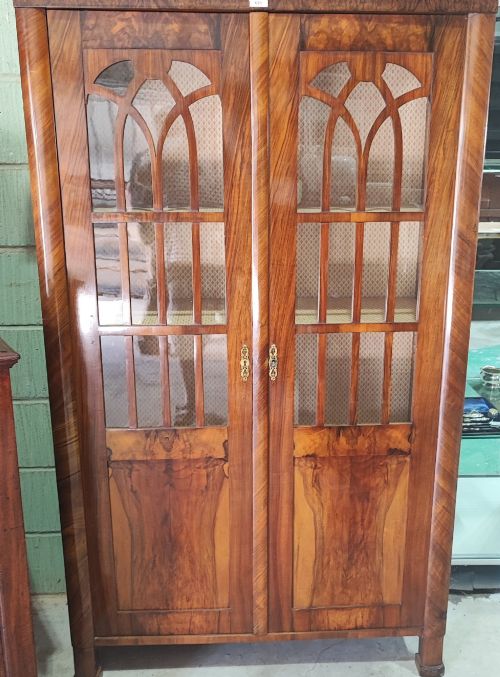
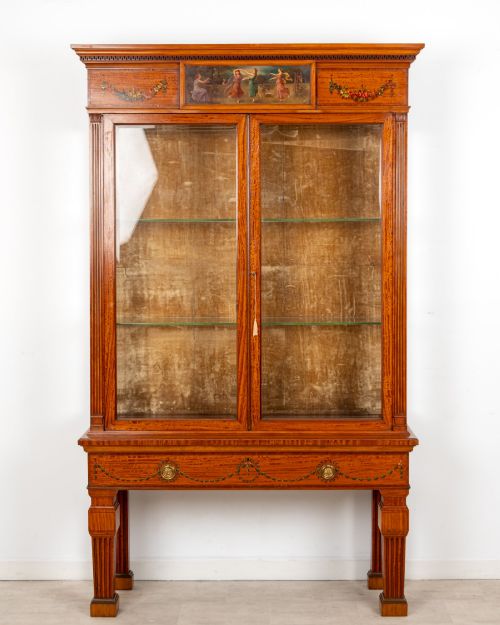
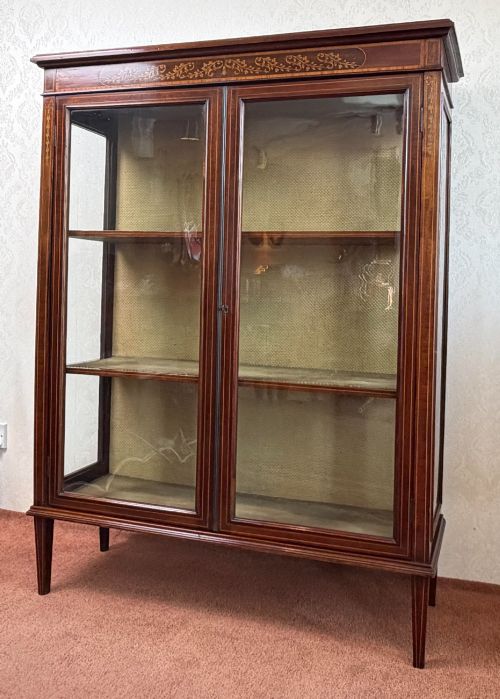
Cabinetmakers constructed carcasses in solid timbers and applied veneers including burr walnut, mahogany, and figured satinwood. Brass mounts, gilt metal, and ormolu decorate the facades of continental and high-status English pieces.
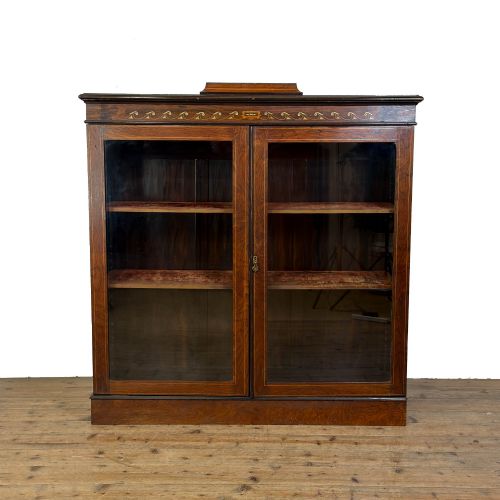
Glazing bars divide the large glass panels into geometric or arched patterns, while marquetry inlay and painted finishes decorate selected Edwardian and French examples.
Listings span the nineteenth century, Victorian era, Edwardian period, and 1930s, constructed in mahogany, walnut, oak, satinwood, and pine.
What varies in quality
The choice of timber figure and the precision of veneer matching dictate the visual weight of the cabinet. Finely cut marquetry and crisp brass mounts separate standard production from exceptional pieces.
Structural integrity depends on the weight of the glass doors and the joinery supporting tall upright frames, where heavier timbers prevent warping over time.
Hampton & Sons·Epstein
The Two Door Vitrine Glossary
- Vitrine
- A glass-fronted cabinet designed specifically for displaying porcelain, curiosities, or books. These pieces usually feature large glazed doors to maximise visibility from the room.
- Marquetry
- Decorative patterns formed by fitting contrasting pieces of veneer into a timber ground. This technique often appears on the friezes and doors of late nineteenth-century cabinets.
- Ormolu
- Gilt bronze mounts applied to furniture edges and feet, frequently seen on French revival pieces. The material adds metallic contrast to dark walnut and mahogany surfaces.
- Vernis Martin
- A type of Japanese-inspired lacquer varnish used on fine French furniture panels. It provides a glossy translucent finish over painted scenes.
Two Door Vitrine: Frequently Asked Questions
How do I clean the glass?
Use a gentle glass cleaner applied to a cloth rather than directly onto the timber frames. Moisture can damage antique wood finishes and polish over time.
Take care around old putty and fragile glazing bars when wiping nineteenth-century cabinet doors.
Are the shelves adjustable?
Many nineteenth-century and Edwardian cabinets utilise wooden support racks or metal pins for shelf height adjustment. Fixed shelving also occurs in simpler country workshop pieces.
Check the internal depth before storing larger volumes behind the glass doors.
Where should I place a vitrine?
Position the cabinet away from direct sunlight to protect fragile book bindings and polished timber veneers from fading. Stable room temperatures prevent the wood and glue joints from drying out.
Allow sufficient floor clearance for the double doors to open fully without striking adjacent furniture.
How do I date these cabinets?
Look to the timber choices, construction methods, and revival styles visible in the carcass and door frames. Victorian and Edwardian pieces often display distinct moulding profiles and hardware.
Trade labels or inscribed paper markers sometimes survive on the reverse or inside the drawer lining.