
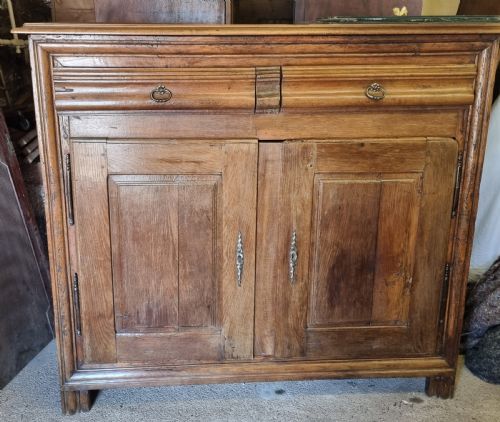
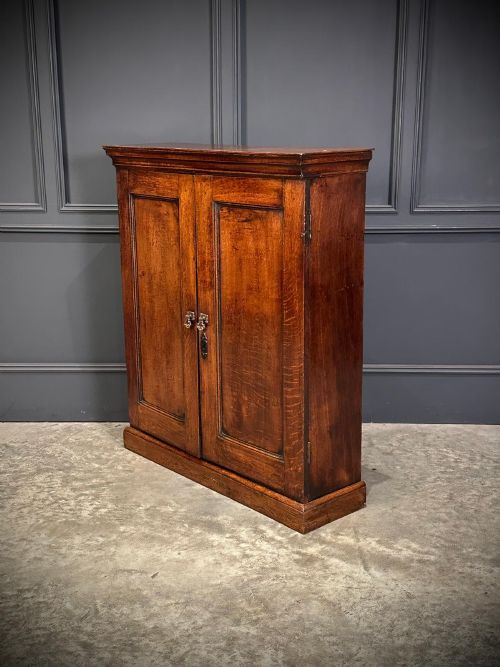
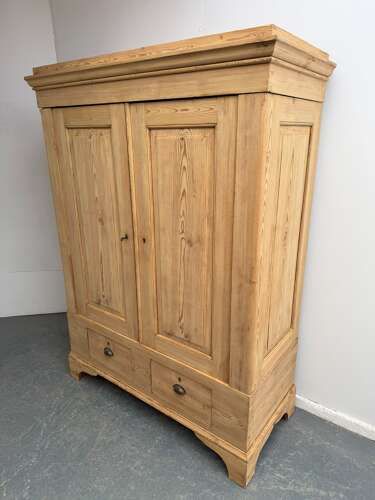
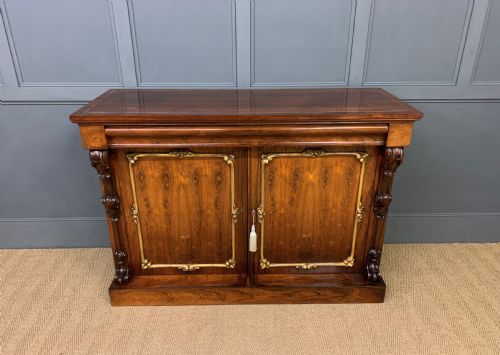
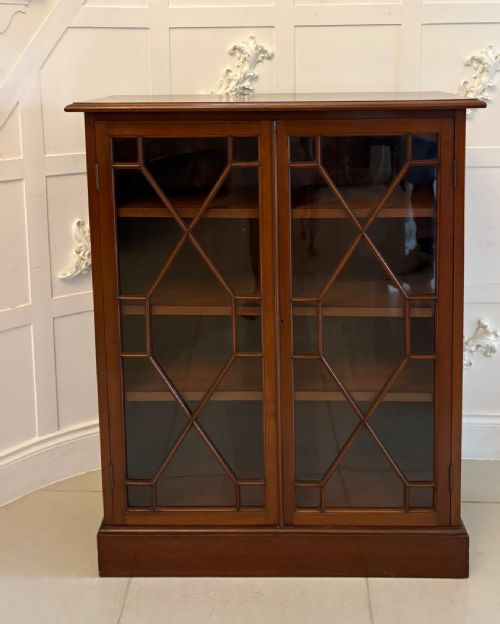
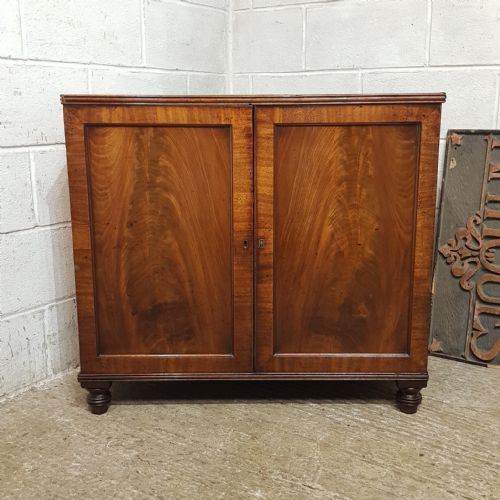
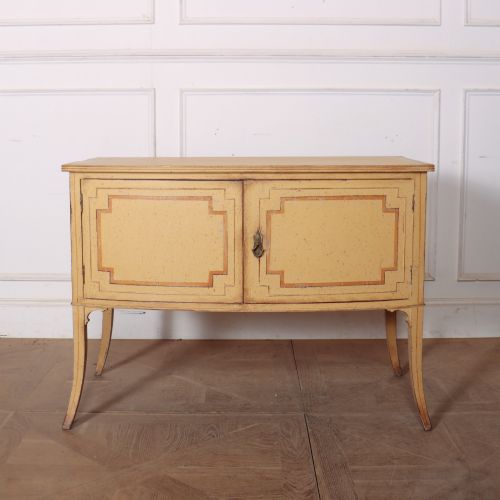

Two Door Low Cupboard
A two door low cupboard offers compact storage with a low profile, combining practical utility with period character.
Two Door Low Cupboard
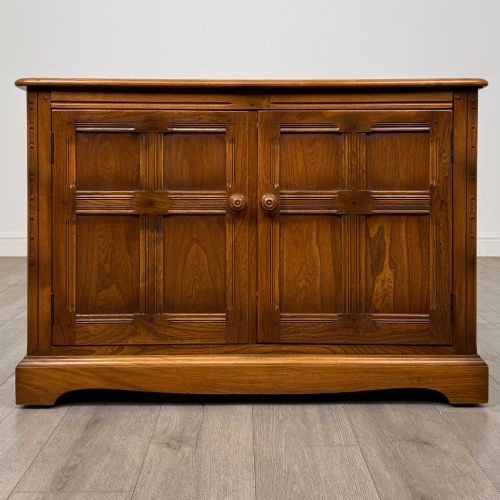
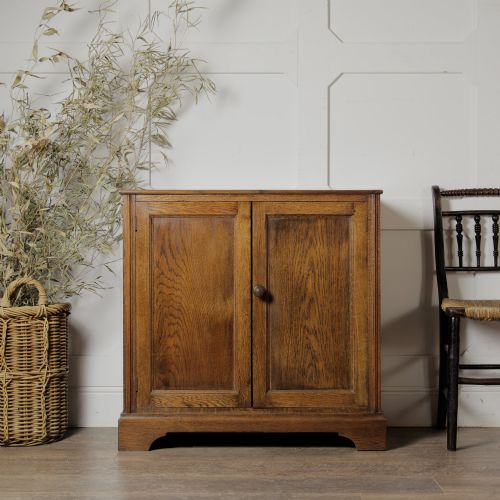
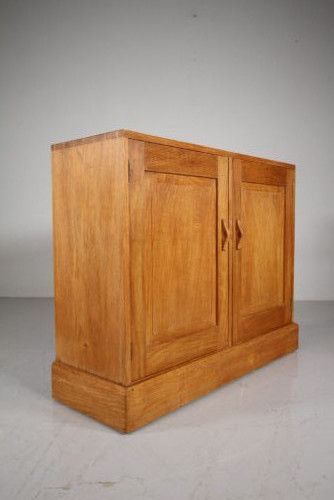
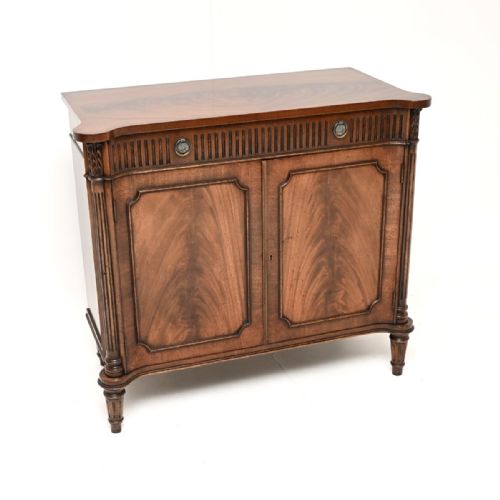
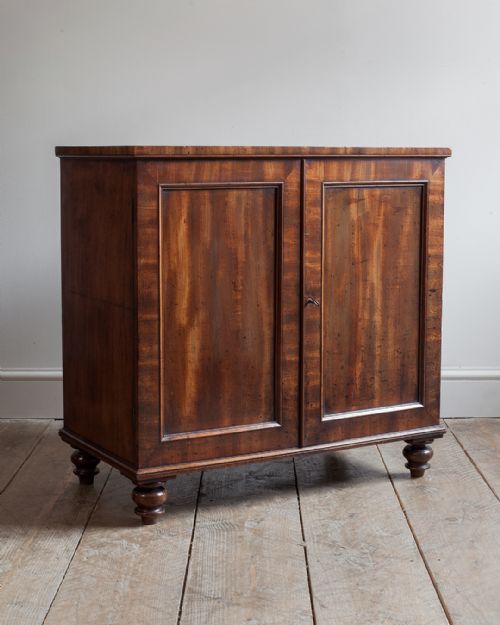
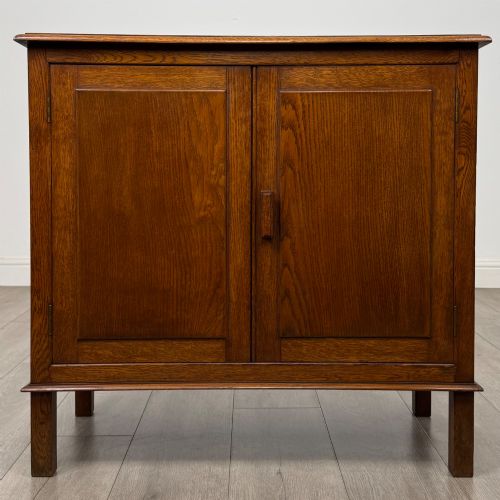
A two door low cupboard provides accessible shelving or storage space beneath a surface that sits well below eye level. These pieces appear across multiple periods, including the Georgian, Regency, and Victorian eras, as well as the Edwardian period and the 1920s.
The version most commonly met on this page is constructed from timber such as oak, mahogany, or pine. Makers shaped these cabinets for domestic rooms, schoolrooms, and studies, utilising doors to conceal contents while keeping the top surface free for display or daily use.
What Varies in Quality
The selection of timber dictates much of the distinction in quality across these cupboards. Plain utility pieces utilise straightforward pine or standard oak, whereas finer examples display figured mahogany, carefully matched walnut veneers, or exotic woods like rosewood.
Construction methods and secondary details further separate standard items from superior work. Dovetailed drawer joints, well-fitted doors with original brass hardware, and thoughtful proportions mark the difference between basic utilitarian storage and accomplished cabinet making.
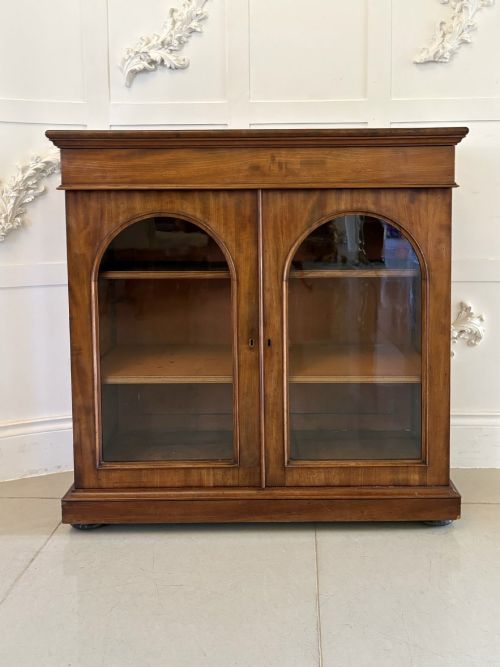
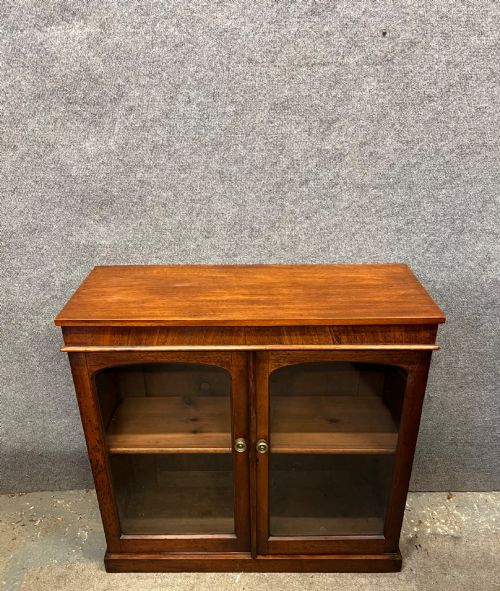
The selection includes side cabinets, glazed bookcases, and fitted cupboards alongside traditional low storage forms.
Whytock and Reid of Edinburgh·Harrods
The Two Door Low Cupboard Glossary
- Side Cabinet
- A low storage piece designed to stand against a wall, frequently featuring cupboards or drawers. These items served dining rooms and reception rooms for storing tableware or linen.
- Figured Mahogany
- Mahogany timber exhibiting an attractive, rippled grain pattern. Cabinet makers reserved this material for prominent exterior surfaces to create visual depth.
- Glazed Bookcase
- A cabinet featuring glass-fronted doors intended for the display and protection of books. They often sit upon a low cupboard base.
- Panelled
- Construction method where thin panels of wood fit into grooves within a surrounding structural frame. This technique prevents warping as humidity changes.
- Ormolu
- Gilded bronze mountings applied as decorative hardware on furniture. They appeared on select refined pieces during periods influenced by French design.
Two Door Low Cupboard: Frequently Asked Questions
What rooms suit a two door low cupboard?
These cupboards suit living rooms, hallways, and dining spaces because their reduced height keeps sightlines open.
The flat top surface also provides a convenient place for lamps, books, or decorative objects without crowding the wall space.
How do I distinguish Georgian from Victorian low cupboards?
Georgian pieces generally display restrained classical proportions with clean lines and understated timber framing. Victorian examples often incorporate heavier mouldings, darker finishes, or turned feet.
Examining the internal construction and secondary woods like pine or oak helps clarify the period of manufacture.
Were these cupboards used for specific storage tasks?
Domestic variations stored household linen, books, or tableware depending on whether they stood in a parlour, library, or bedroom.
Larger institutional examples served schools or offices for ledgers and supplies.
How should I care for antique timber furniture?
Keep wooden furniture away from direct heat sources and sudden temperature shifts to prevent timber splitting. Regular dusting with a soft cloth maintains the finish without moisture damage.
Occasional applications of appropriate wax help nourish older polished surfaces.