

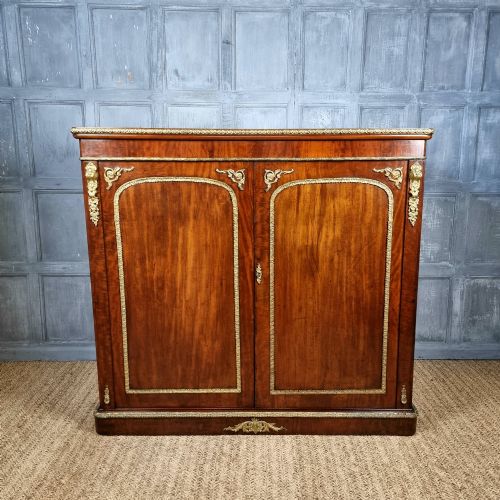
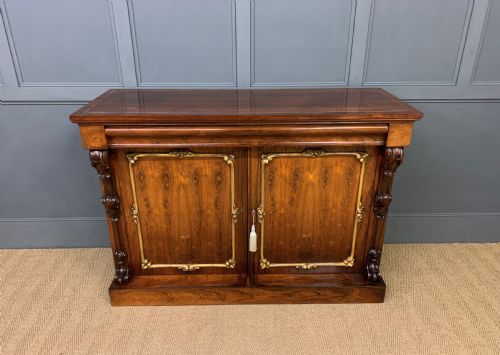
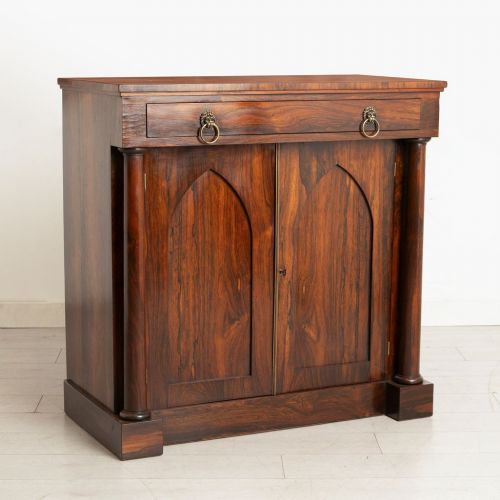
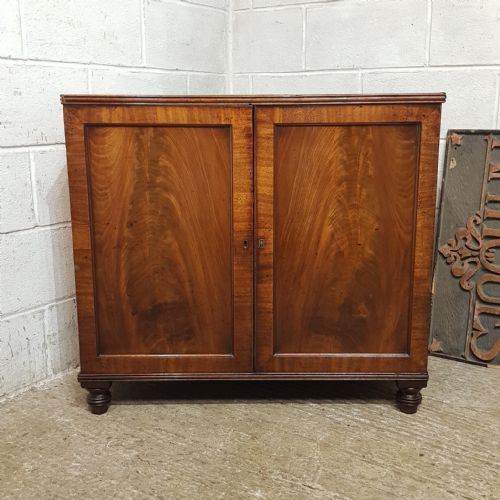



Two Door Chiffonier
A two door chiffonier brings architectural presence and compact storage to a room, offering the enclosed lower cupboards characteristic of nineteenth-century dining and reception spaces.
Two Door Chiffonier
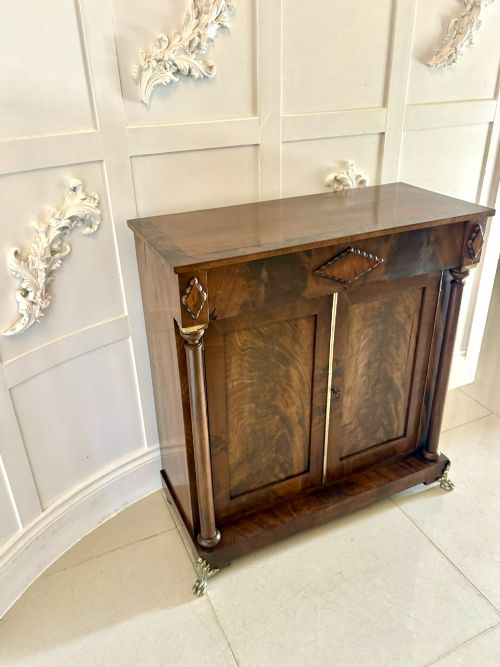
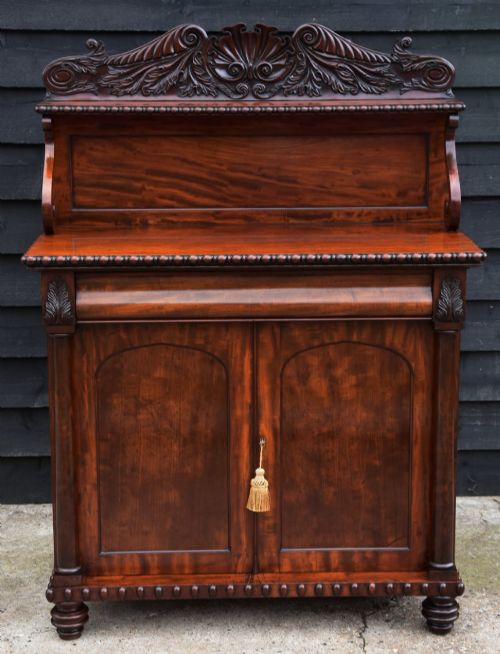
A two door chiffonier is a compact sideboard or low cabinet typically found in nineteenth-century settings, designed to house china, linen or books behind enclosed lower doors. These pieces emerge predominantly from the Regency, William IV and Victorian periods, reflecting shifting domestic needs for convenient dining room storage.
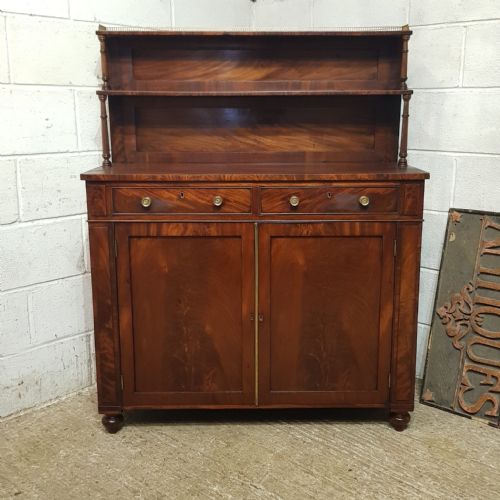
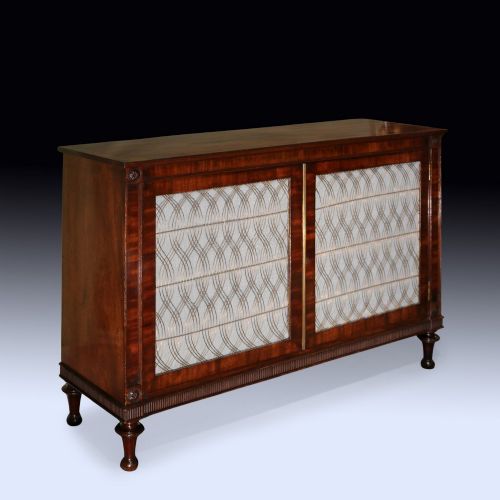
The version most likely to be met on this page is a mahogany or rosewood low cabinet, often topped by a small tiered superstructure or simple shelf, though many survive as clean-lined server bases. Their lower sections are consistently divided into a pair of panelled doors, sometimes fitted with glass or brass grilles.
Cabinet makers working during the Georgian, Regency and Victorian eras produced these items in various regional interpretations, including Irish cedar and Anglo-Indian satinwood examples. The form bridges the gap between a full sideboard and a low bookcase, functioning flexibly in contemporary living spaces.
How They Were Made
Construction relies heavily on solid timber frames faced with figured mahogany, flame mahogany veneer, or rich rosewood, supported by secondary woods like pine or cedar. Cabinet makers applied thin veneers carefully to the primary surfaces to create symmetrical grain patterns across the double doors.
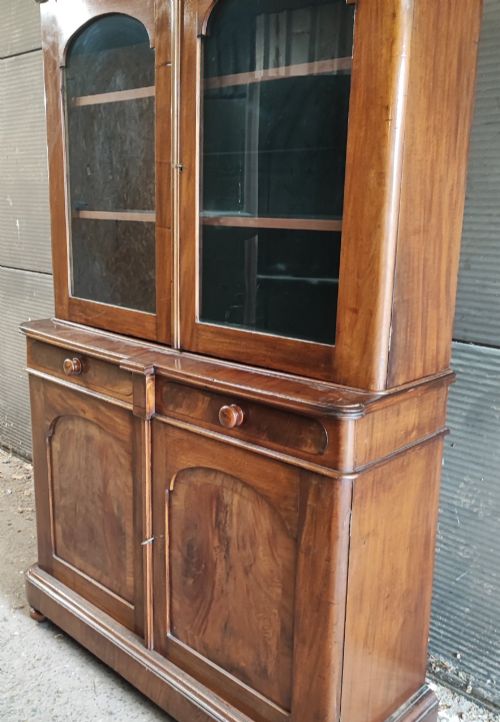
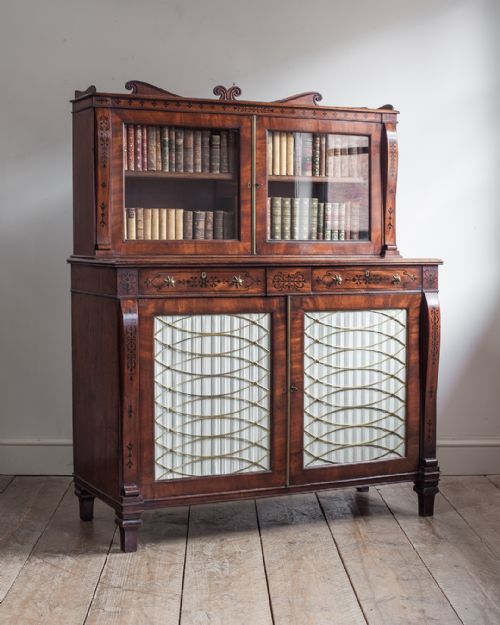
Metal elements played an integral role in both structure and decoration, utilising brass for inlaid stringing, grille panels, hinges and locks. Glass panes occasionally replaced wooden door panels to display books or collections within the interior shelves.
Some nineteenth-century makers hid shallow drawers just beneath the top surface for secret storage.
What Varies In Quality
The standard of a two door chiffonier is defined by the selection of timber figures, such as matched flame mahogany or rich rosewood veneers, and the precision of cabinet joinery. Superior examples display thoughtful grain continuity across the two doors and refined proportions in their feet, cornices and internal shelving.
Decorative embellishments set finer pieces apart, including detailed brass inlay, finely cast grille work, or structural additions like marble tops. Simpler vernacular pieces rely on honest local timbers and straightforward panel construction rather than ornate detailing.
Gillows
The Two Door Chiffonier Glossary
- Chiffonier
- A low cabinet or sideboard featuring enclosed lower storage, frequently topped with a shelf or superstructure. Originating in France, the form evolved in Britain during the nineteenth century to serve dining and drawing rooms.
- Flame Mahogany
- A wood veneer cut from the fork of the mahogany tree, producing a distinctive rippled, flame-like pattern. Cabinet makers prized this figure for its decorative impact on primary furniture surfaces.
- Rosewood
- A dense, dark timber with contrasting grain markings, popular in Regency and Victorian cabinet making. Its rich natural colour made it a preferred choice for formal side cabinets.
- Brass Grille
- A lattice of fine brass wire fitted into cabinet doors in place of wood or glass. It allowed air circulation and partial visibility while maintaining an elegant Regency aesthetic.
Two Door Chiffonier: Frequently Asked Questions
What is a two door chiffonier?
A two door chiffonier is a low nineteenth-century cabinet designed for storage, featuring a pair of doors beneath a flat top or tiered shelf. They were commonly used in dining rooms and parlours.
These pieces combine the utility of a cupboard with the compact footprint of a side table, making them versatile for modern interiors.
How were they used originally?
In nineteenth-century homes, these cabinets served to store dining accessories, linens, and sometimes books or writing materials. The top surface provided space for serving food or displaying decorative objects.
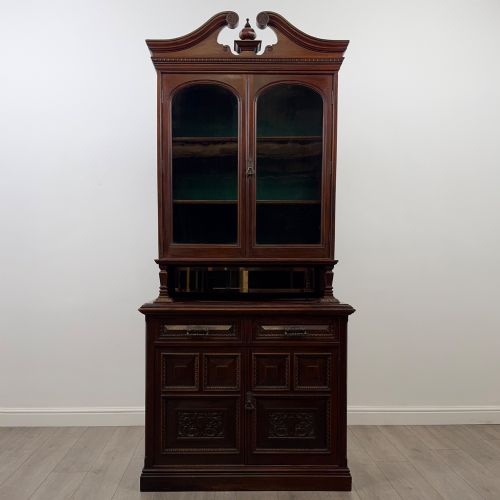
Upper shelves on certain models held glassware or ceramics, keeping everyday items close at hand in reception spaces.
How do I tell Regency from Victorian pieces?
Regency pieces often display crisper classical lines, rosewood veneers, brass inlay, and finer proportions dating from the early decades of the century. They lean towards architectural restraint and elegance.
Victorian examples frequently utilise heavier mahogany timbers, flame veneers, and more robust mouldings reflecting later nineteenth-century tastes in domestic furniture.
How do I live with a chiffonier?
A chiffonier works well in living areas, hallways, or dining spaces as a low credenza or media surface. The enclosed cupboards keep clutter hidden while the top offers display space.
Their shallow depth allows them to fit comfortably against walls in narrower rooms without dominating the floor plan.