



Two Armed Sconce
A two armed sconce brings period illumination and decorative weight to a wall, relying on twin branches for balance.
Two Armed Sconce
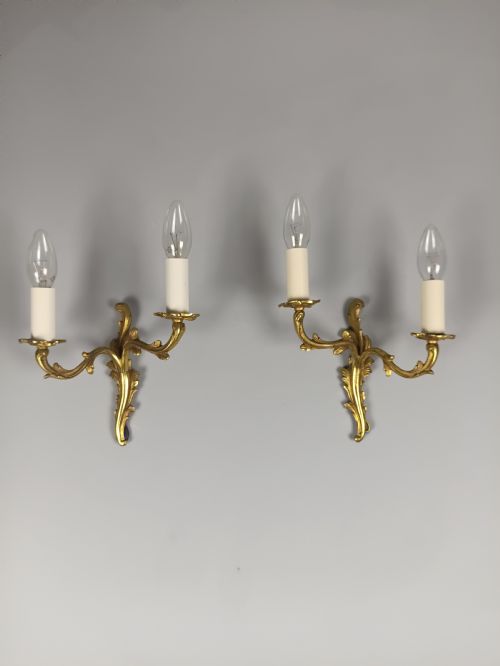
When you search for a two armed sconce, you encounter wall-mounted lighting fixtures designed with twin candle branches or bulb holders projecting from a central backplate. These pieces emerge predominantly in pairs or sets from the Victorian and Edwardian eras through to the early decades of the twentieth century.
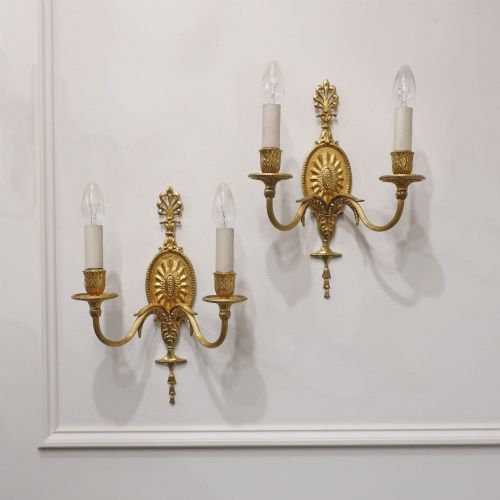
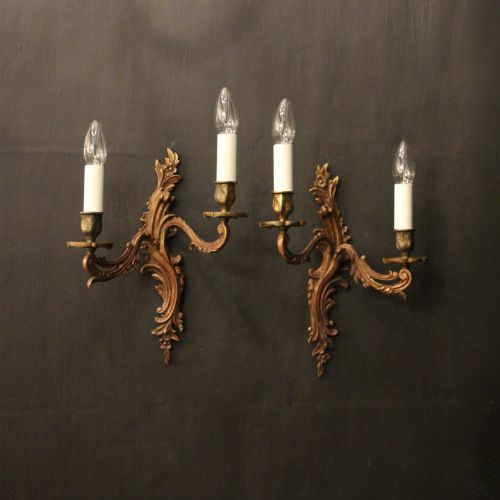
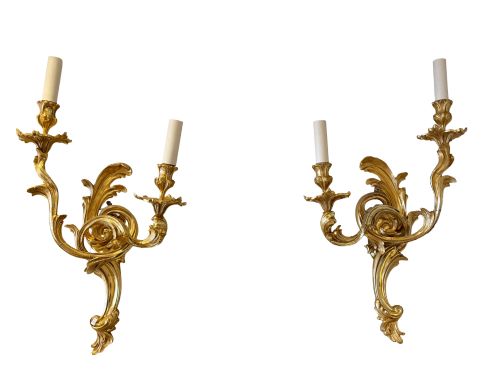
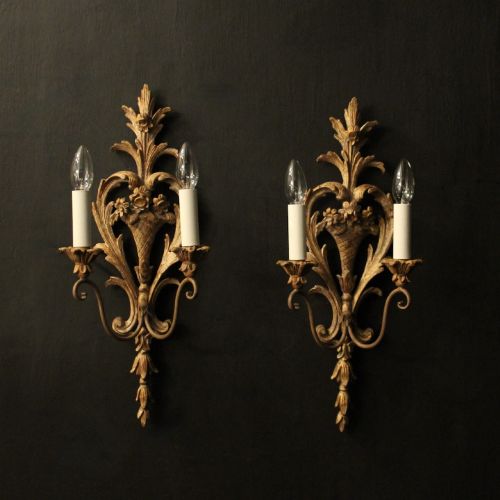
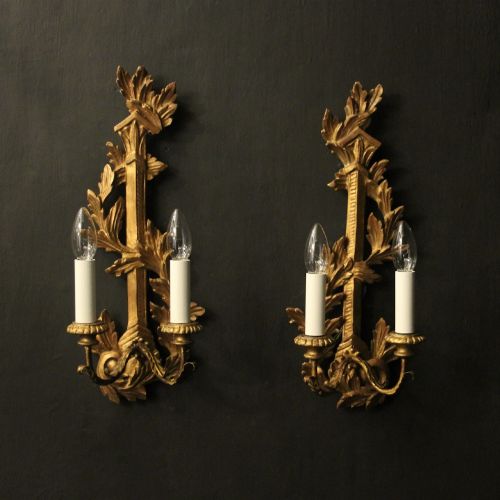
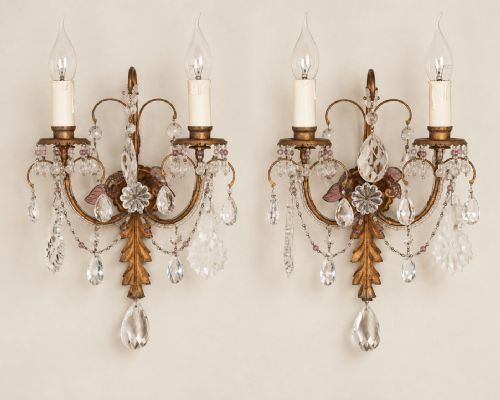
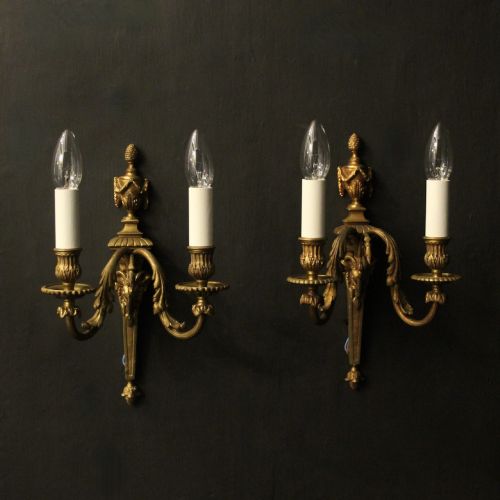
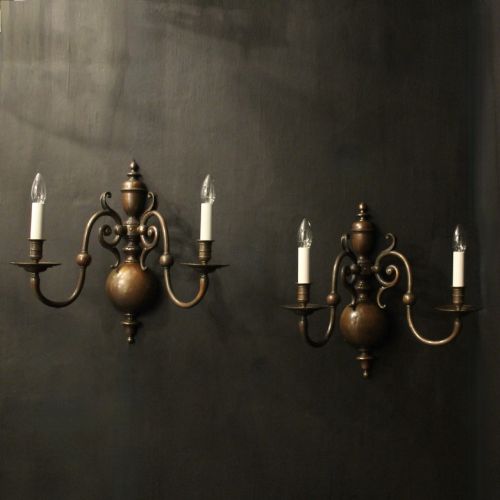
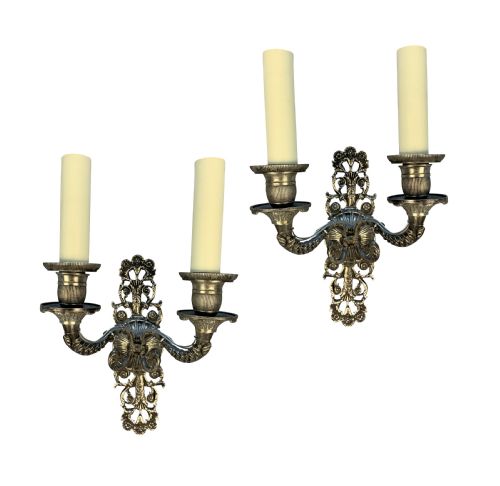
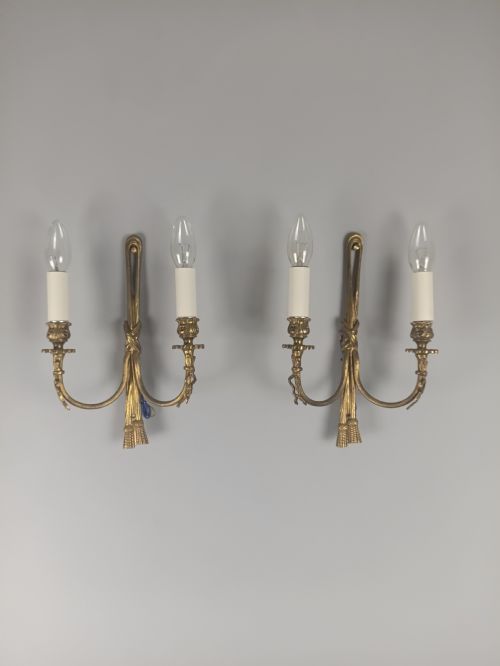
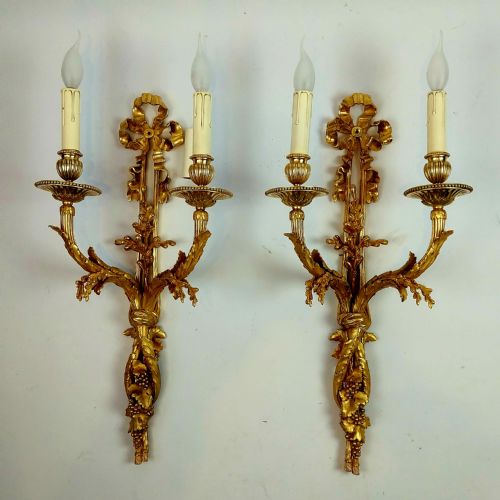
The versions most common on this page are French and English designs taking the form of wall lights, candelabra, and small chandeliers fashioned for domestic interiors. Styles range from French Rococo and Empire to Neoclassical Revival and simple domestic brassware.
Makers and designers from these periods utilised metal casting and wood carving to produce functional art that decorated drawing rooms, hallways, and boudoirs. Buyers find that these fixtures retain their original purpose while adding distinct historical character to a modern wall.
Materials and construction
The construction of these pieces relies heavily on cast metals including brass, bronze, and gilt bronze, often highlighted with ormolu, gold leaf, or silver plating. Artisans shaped these materials through casting and chasing, creating detailed surface ornamentation for the backplates and arms.
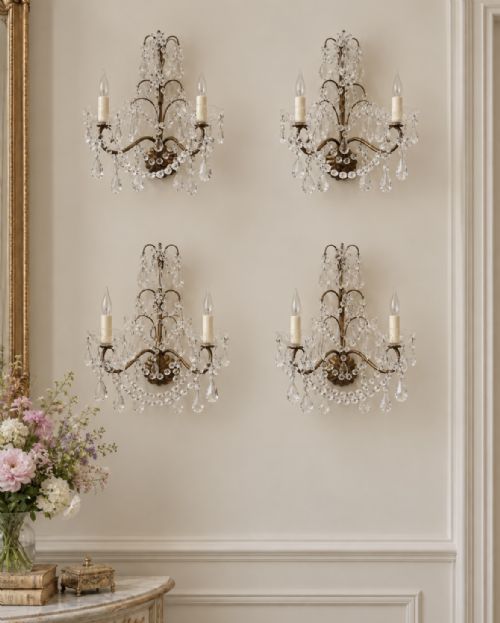
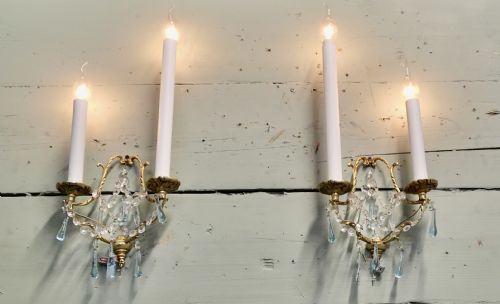
Alternative examples incorporate carved wood such as giltwood and gilded polychrome finishes, particularly in Florentine and French provincial workshops. Crystal and glass drops frequently adorn the more elaborate pieces, dangling from the arms to refract the light from candles or early electric bulbs.
Two Armed Sconce Retail Price Guide 2026
Typical asking prices for two armed sconce among the pieces listed under this phrase on Sellingantiques today, from the lower quarter to the upper quarter. They describe what is for sale here now, not the wider market.
Listings feature items spanning the nineteenth century through the 1930s, constructed predominantly from brass, bronze, giltwood, and silver-plated metal.
Factors determining quality
Quality in these lighting fixtures rests on the crispness of the metal casting and the depth of the chasing work on the bronze or brass surfaces. Superior examples display sharp relief and carefully finished details on the backplate and drip pans, whereas lesser pieces show softer contours and simpler press-formed metal.
The choice of finishing materials further separates standard items from exceptional ones, with genuine fire-gilding, heavy ormolu, and hand-carved giltwood commanding greater appreciation than modern electroplate. Original matching components, harmonious proportions between the backplate and the twin arms, and integrated crystal drops indicate higher atelier standards.
The Two Armed Sconce Glossary
- Ormolu
- Gilded bronze produced by applying a mercury and gold amalgam to a bronze object and heating it until the mercury vaporised. This technique creates a durable, golden finish seen on many nineteenth-century French pieces.
- Giltwood
- Timber, commonly lime or pine, that has been carved and coated with fine layers of gold leaf or gesso. It provides a rich, decorative surface for Italian and French wall lights.
- Candelabra
- A branched candlestick holder designed to support multiple candles or lights from a single base or wall mounting. Twin arm variations distribute the illumination evenly across the wall.
- Backplate
- The flat or shaped metal or wooden portion of a sconce that fastens securely to the wall. It serves as the structural anchor for the projecting arms.
- Rococo Revival
- A nineteenth-century design movement characterised by asymmetrical scrolls, C-scrolls, floral motifs, and naturalistic shell forms. It draws heavily on eighteenth-century French aesthetics.
Two Armed Sconce: Frequently Asked Questions
How were two armed sconces originally lit?
These fixtures originally held wax or tallow candles in small drip pans positioned at the end of each arm. The flame provided ambient room lighting before the widespread adoption of gas and electricity.
Many surviving examples have since been rewired for electricity to suit contemporary homes while preserving the antique metalwork and backplates.
How do I identify French Empire style?
French Empire pieces draw inspiration from classical antiquity, featuring military motifs, laurel wreaths, urns, and symmetrical geometric lines. The bronze and ormolu work on these fixtures tends to be structured and formal.
They often incorporate rich gilding and severe architectural proportions distinct from the flowing curves of Rococo.
Are crystal drops original to these sconces?
Crystal pendants and drops were added to many Edwardian and late Victorian wall lights to catch and multiply the flickering light. Their presence depends on the specific model and the level of ornamentation desired by the original buyer.
Examining the suspension loops and wire fixings helps determine if the drops belong to the period of the backplate.