





Twist Stem Table
These twist stem table pieces bring vertical movement and turned detail into a room, offering functional surfaces and lighting supported by spiralling shafts.
Twist Stem Table
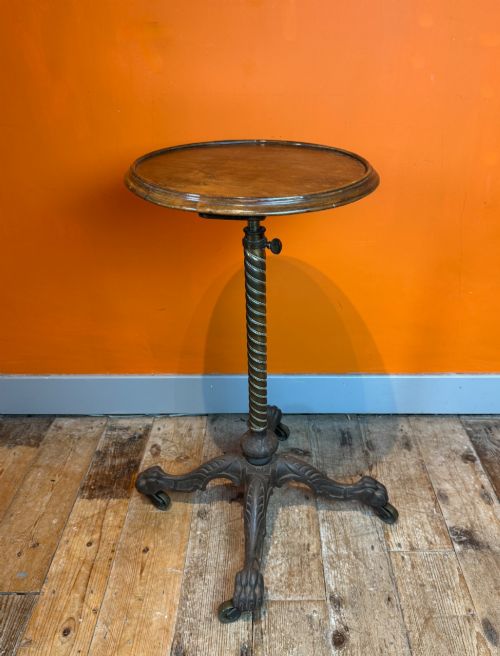
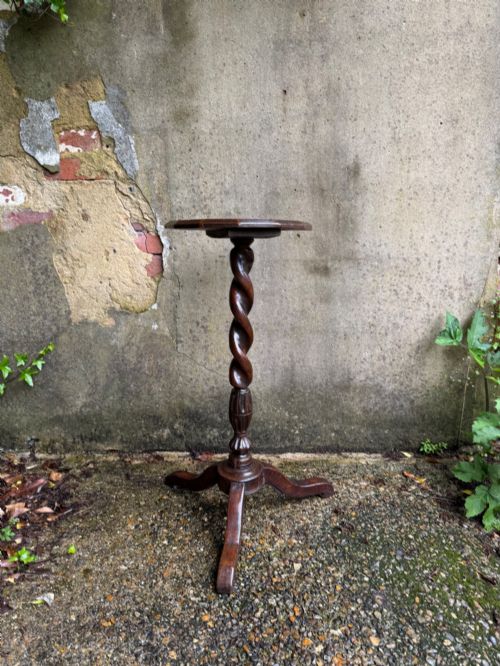
A twist stem table brings together occasional surfaces and column forms, uniting functional furniture with spiralling architectural supports. When looking for a twist stem table, you encounter items ranging from early wooden stands to turned metal lighting supports and wine tables.
The selection on this page spans several distinct eras, drawing heavily on nineteenth century craftsmanship alongside Edwardian and Art Deco pieces. You find occasional tables, wine tables, and various lamp bases that utilise carved, incised, or double helix stems.
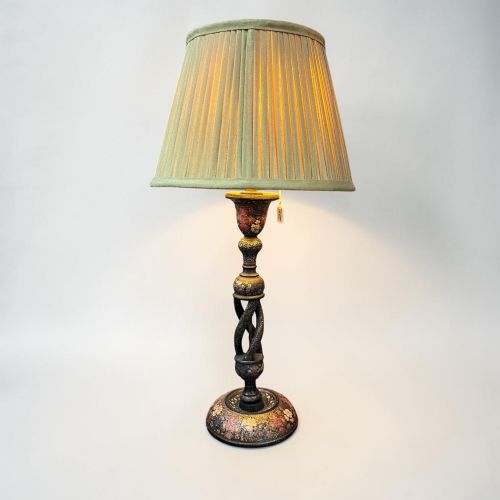
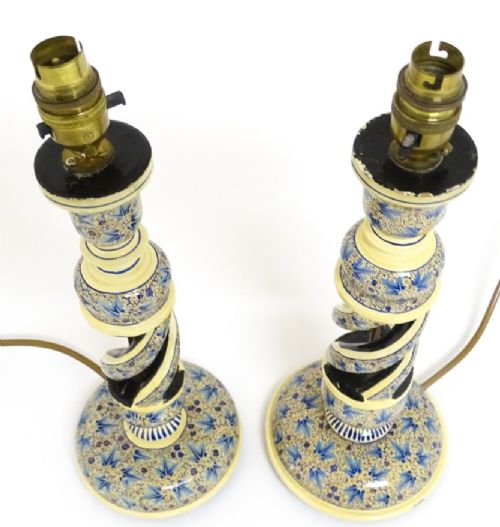
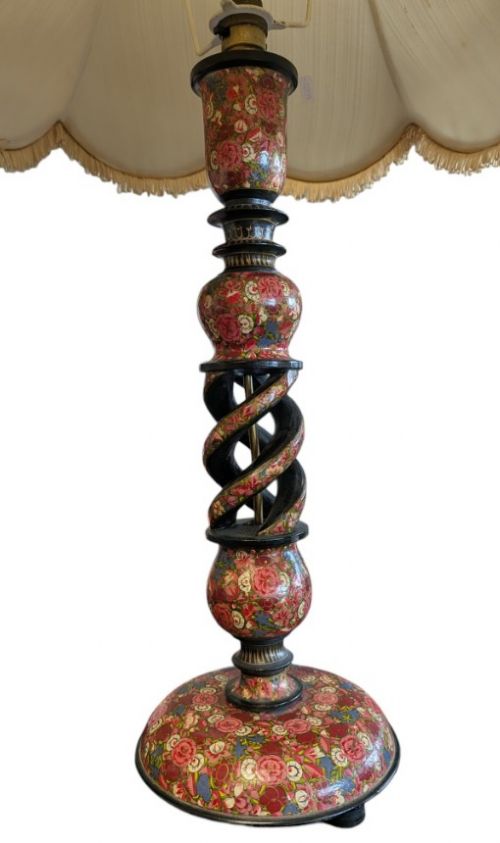
Origins vary across English cabinet making traditions and imported decorative arts, notably hand painted Kashmiri work. Walnut, oak, and mahogany appear frequently alongside brass, bronze, and chrome, showing how makers adapted the spiralling motif across generations.
Materials and construction
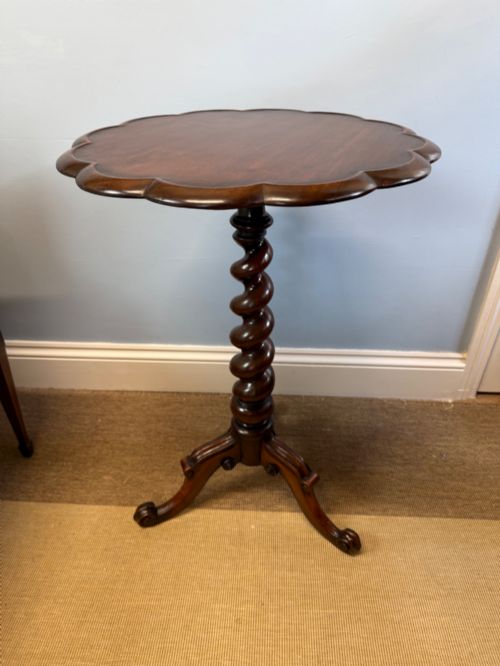
Wood construction relies on turning solid timber like walnut, oak, and mahogany on a lathe to create sharp or softened spiral stems. Marquetry and inlay often complement these turned wooden shafts on circular wine table tops.
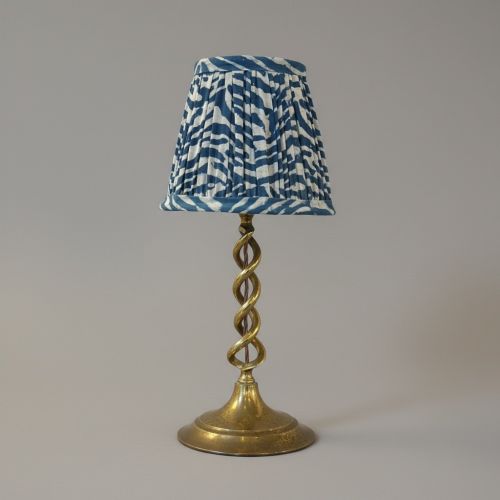
Metal versions utilise brass, bronze, copper, and chrome, cast and shaped into columns or double helix stems. Heavier bases in cast iron provide stability for telescopic display stands and tall floor or table lamps.
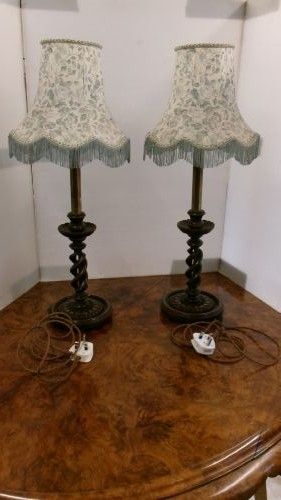
Surface decoration includes hand painted lacquer work seen on Kashmiri items, alongside polished wood finishes and patinated metals. Fabric shades frequently complete the lighting pieces, pairing with opaline glass components.
Twist Stem Table Retail Price Guide 2026
Typical asking prices for twist stem table among the pieces listed under this phrase on Sellingantiques today, from the lower quarter to the upper quarter. They describe what is for sale here now, not the wider market.
Early oil lamps cross paths with Kashmiri hand painted lacquer on stems that simply refuse to stand straight.
Distinctions in quality
Quality shows in the precision of the turning on the stem, where crisp, deep spirals require greater skill than shallow, machine cut grooves. The choice of timber or metal weight dictates the structural integrity and feel of the piece.
Inlaid tops and marquetry execution set finer occasional tables apart from simpler utilitarian items, showing tighter grain matching and cleaner joints. Surface preservation, whether original hand painted lacquer or polished walnut, affects the overall visual impact.
T Thomason & Co
The Twist Stem Table Glossary
- Twist stem
- A shaft turned on a lathe to form a continuous spiral or helix, appearing on table supports and lamp bases.
- Occasional table
- A small, movable table designed for a specific, non essential function in a room, such as holding a lamp or drink.
- Marquetry
- Decorative patterns formed by small pieces of wood veneer fitted into a larger surface, common on circular wine tables.
- Opaline glass
- A milky, translucent glass often used for shades on period lamps to diffuse light evenly.
- Telescopic stand
- An adjustable vertical standard allowing the height of a display table or lamp to be altered mechanically.
Twist Stem Table: Frequently Asked Questions
What is a twist stem table?
A twist stem table is an item featuring a spirally turned wooden or metal column that supports a surface or a lamp fitting. These pieces range from small wine tables to tall lighting stands.
They combine functional utility with decorative turned woodwork or metalwork, drawing on design styles from the eighteenth century through to the Art Deco period.
How do I date a twist stem table?
Dating depends on identifying the primary materials, construction methods, and stylistic cues present in the turning and base. For instance, heavy brass casting and specific patination point towards Victorian or Edwardian workshop practices.
Secondary woods, finish types, and associated elements like opaline shades or hand painted lacquer further narrow the period of manufacture.
Where should I place a twist stem table?
These tables and lamp stands suit corners, beside seating, or in hallways where vertical height adds interest without taking up excessive floor space. Their slender stems make them practical for smaller rooms.
Matching the timber tone or metal finish to existing room furnishings helps integrate the piece naturally into the interior.
What materials were used for twist stems?
Wood is the most traditional material, with makers turning solid oak, walnut, and mahogany into spiralling columns. Marquetry often adorns the table tops.
Metal versions utilise brass, bronze, copper, and chrome, sometimes combined with cast iron bases to provide necessary weight and stability for taller lamp standards.