



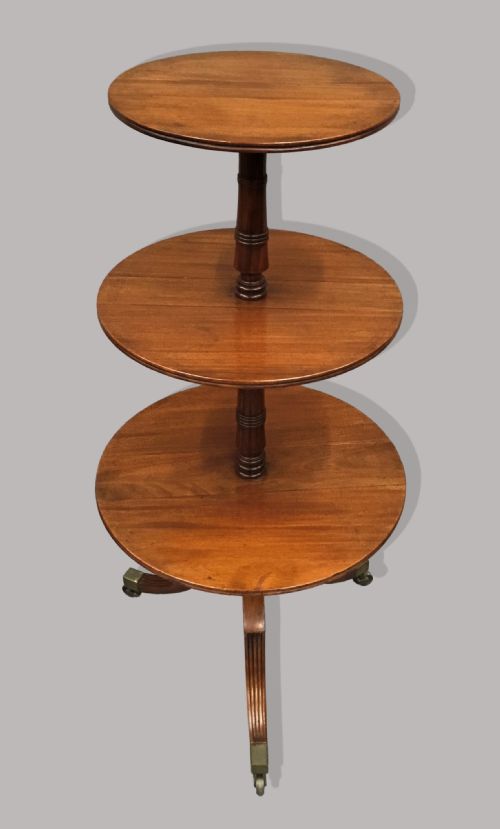


Edwardian Dumbwaiter Stand
An Edwardian dumbwaiter stand is a tiered serving piece designed for convenience, offering multiple levels to hold dishes within reach during a meal.
Edwardian Dumbwaiter Stand
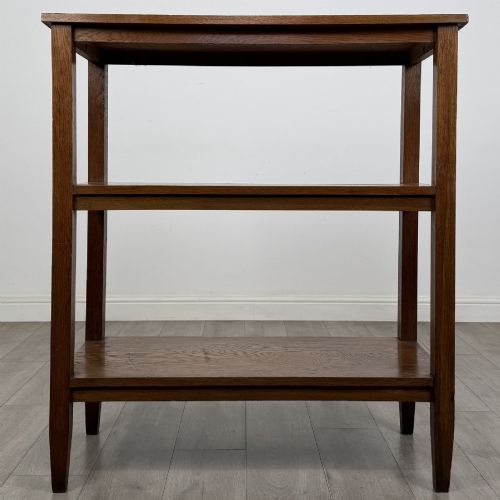
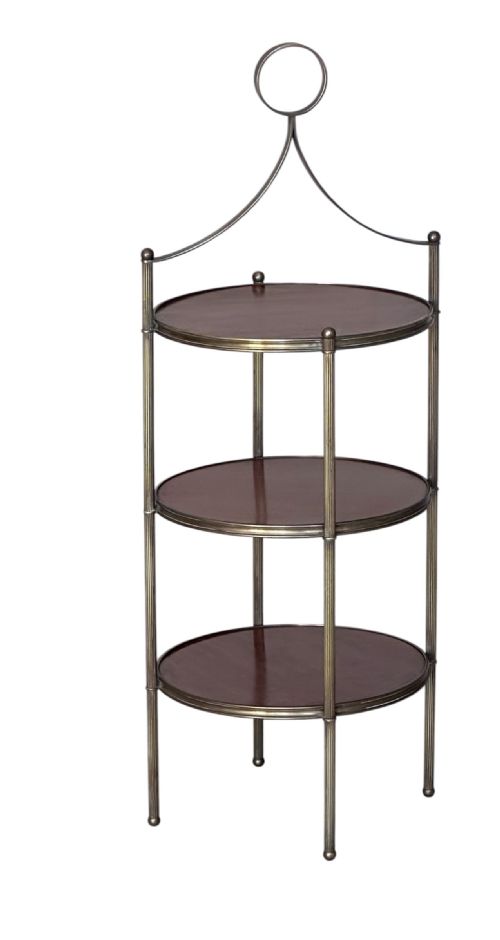
When you search for an edwardian dumbwaiter stand, you encounter tiered serving furniture that also includes related forms like oak three tier buffets, folding cake stands, and adjustable display tables. These pieces originate across several periods, with Edwardian examples appearing alongside Victorian, Georgian, and early twentieth-century variations.
The practical function remains consistent across these forms, providing layered surfaces for display or service in dining rooms and drawing rooms. Folding mechanisms and revolving shelves frequently feature in the selection, allowing the stands to be adjusted or stored when not in use.
How they were made
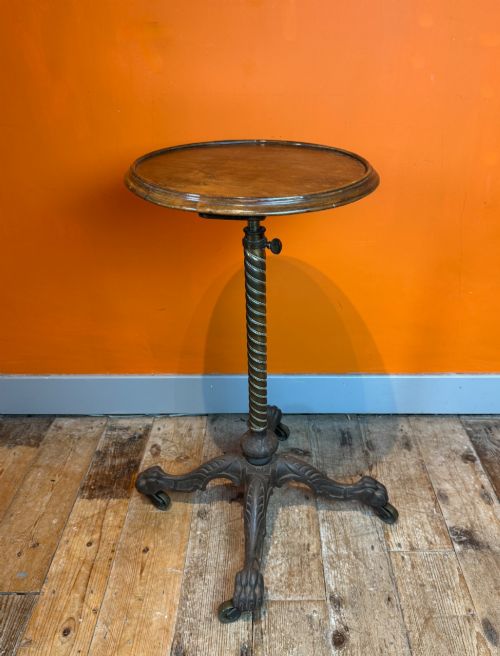
Cabinet makers constructed these stands primarily using mahogany and oak, frequently incorporating walnut, satinwood, and marquetry inlay for decorative surface contrast. Brass fittings and cast iron bases provide structural support, particularly on adjustable telescopic display tables and heavy serving pieces.
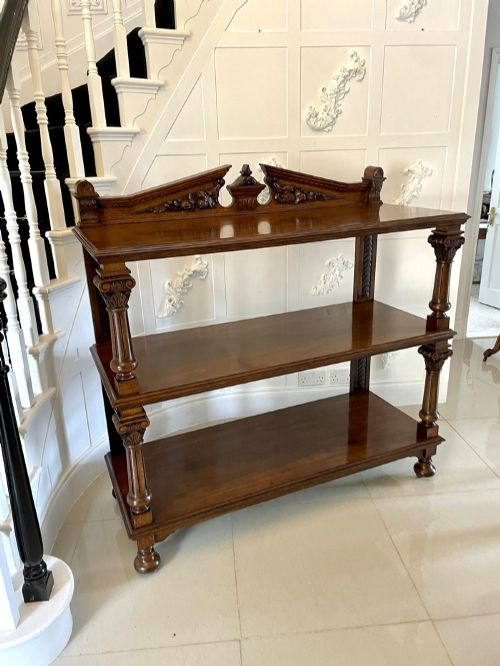
Folding frames require precise hinge work and pivoting joints, enabling multiple tiers to collapse flat while maintaining stability when erected. Carved details and raised galleries are worked directly into the timber frame, combining structural utility with period ornamentation.
Edwardian Dumbwaiter Stand Retail Price Guide 2026
Typical asking prices for edwardian dumbwaiter stand among the pieces listed under this phrase on Sellingantiques today, from the lower quarter to the upper quarter. They describe what is for sale here now, not the wider market.
The listings span multiple eras, featuring mahogany, oak, walnut, and satinwood across tiered stands, étagères, and cake stands.
What varies in quality
The calibre of timber selection and inlay work dictates the visual distinction of a piece, with figured mahogany and intricate marquetry marking finer examples. Solid brass mechanisms and heavy cast iron bases demonstrate superior manufacturing standards compared to simpler ironmongery.
Joinery execution on folding tiers and revolving sections determines the smoothness of operation and long-term durability. Crisp carving on the woodwork and well-defined raised galleries separate standard utility items from higher quality production.
The Edwardian Dumbwaiter Stand Glossary
- Dumbwaiter
- A freestanding tiered stand used for holding food, tableware, or books without requiring servant attendance during a meal.
- Étagère
- A piece of furniture consisting of a set of open shelves for displaying small objects or ornaments.
- Gallery
- A raised wooden or brass rail running along the edge of a shelf to prevent items from sliding off.
- Marquetry
- Decorative veneer applied to furniture in geometrical patterns or pictorial designs using different coloured woods.
- Telescopic
- Adjustable in height through a sliding mechanism secured by a key or screw fitting.
Edwardian Dumbwaiter Stand: Frequently Asked Questions
What is an Edwardian dumbwaiter stand?
It is a tiered wooden stand originally designed to hold plates, dishes, or tea service items near a dining table.
Today, these stands function effectively as display surfaces for plants, books, or decorative objects in living spaces.
How do I use a tiered stand?
The multiple levels provide convenient vertical display space without occupying a large footprint on the floor.
Folding versions allow the tiers to collapse for storage when floor space is needed.
Are these pieces made of solid wood?
Many examples utilise solid mahogany or oak for the structural frames and shelves.
Some pieces incorporate decorative wood veneers and marquetry inlay across the surfaces.
How can I tell the period apart?
Period identification relies on timber choice, carving styles, and hardware materials like brass or cast iron.
Design influences range from Georgian and Victorian revivals through to early twentieth-century production.