


Twinned Wall Sconces
Twinned wall sconces bring balanced illumination and period character to a room, formed primarily as pairs or sets in cast metals and gilded finishes.
Twinned Wall Sconces
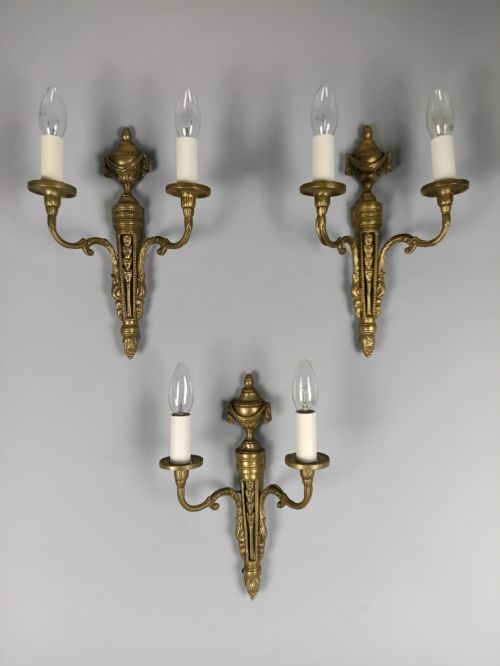
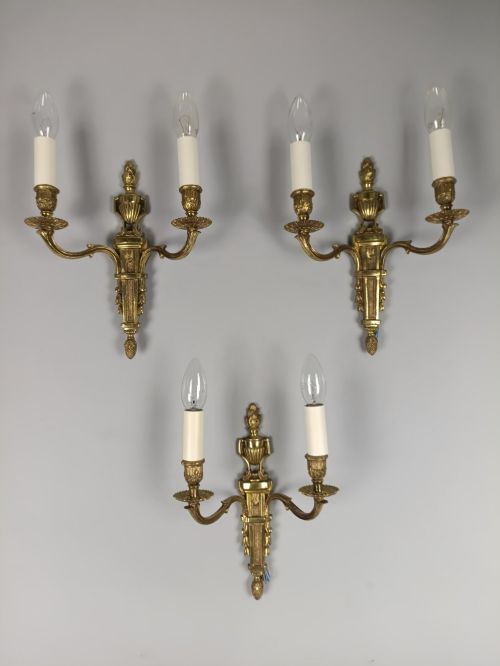
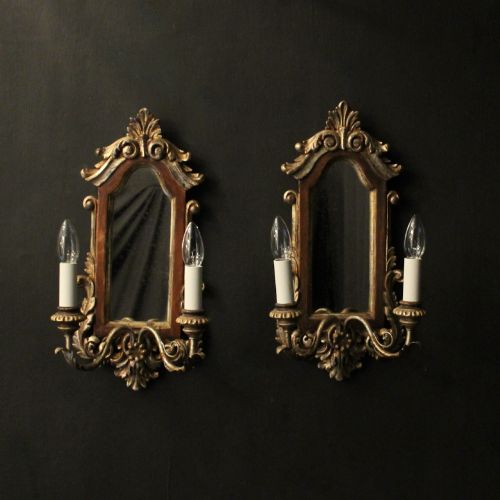
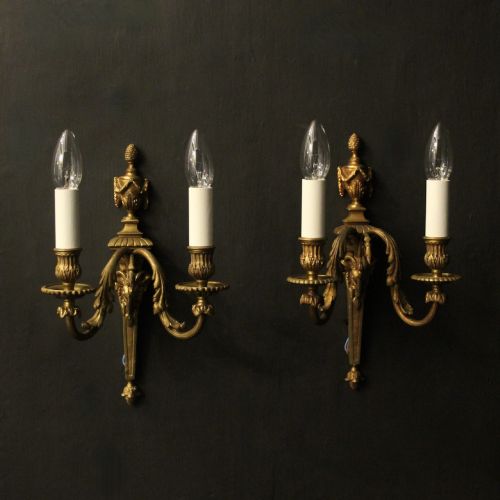
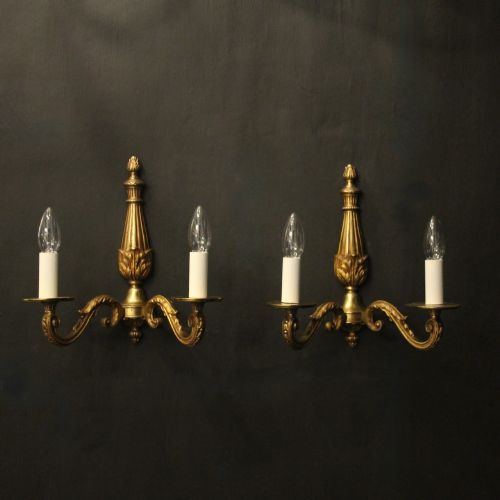
Twinned wall sconces designate multi-arm light fittings designed to mount directly onto vertical surfaces, encompassing wall lights and girandoles. Most examples found here emerge from French and English workshops spanning the nineteenth and early twentieth centuries, particularly the nineteen-twenties and nineteen-thirties.
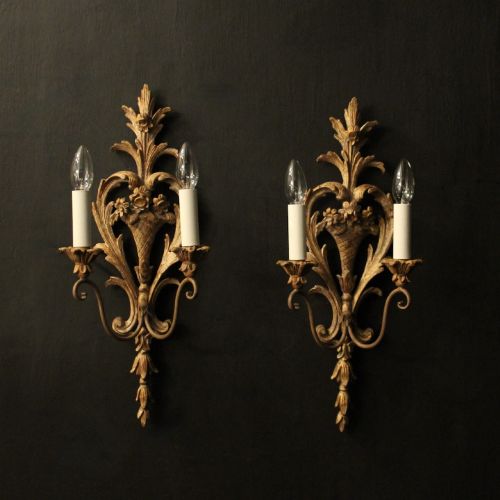
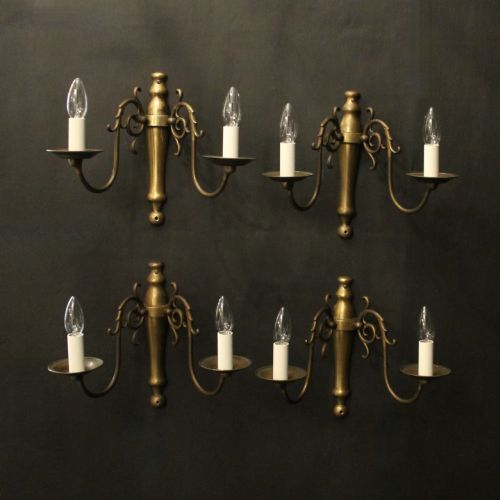
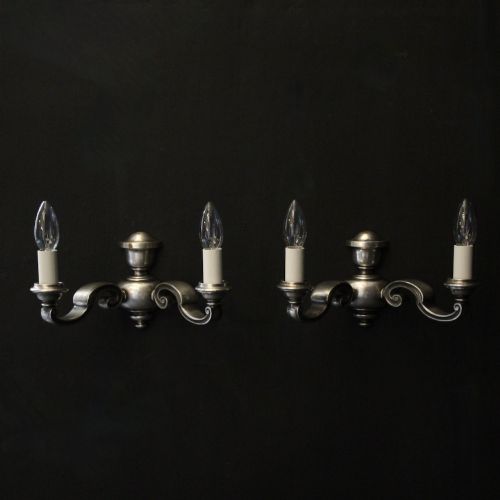
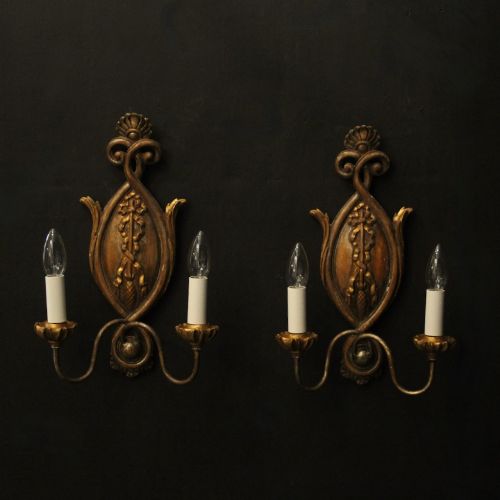
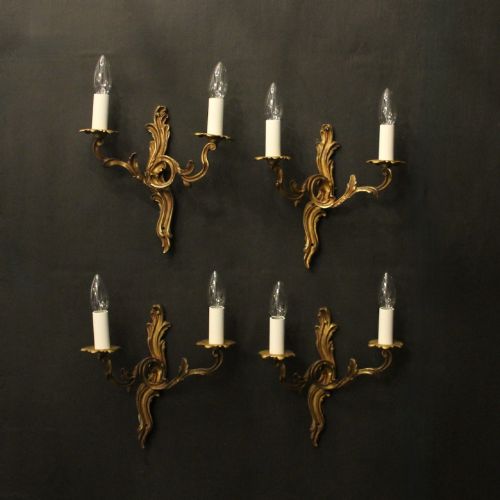
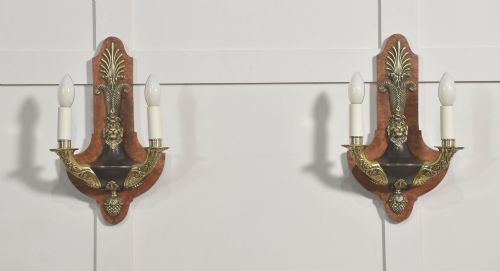
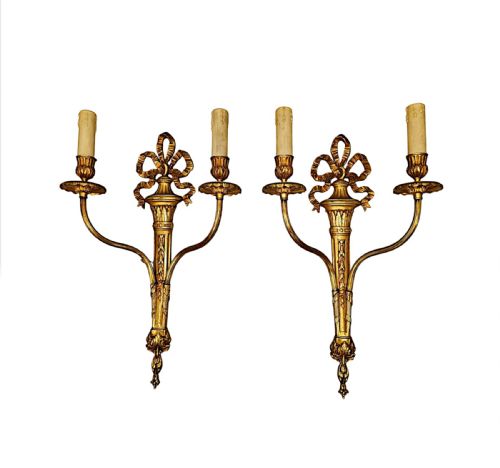
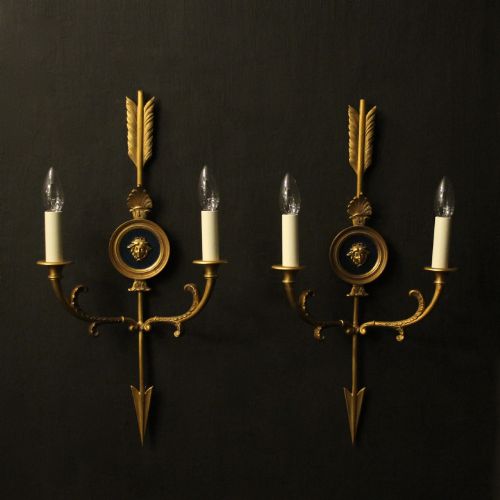
The configurations typically feature twin branches or arms designed to hold two candles or bulbs, often presented in symmetrical pairs or larger sets of three and four. Forms range from restrained classical profiles to exuberant floral ribbons and Rococo scrolls.
Materials and construction
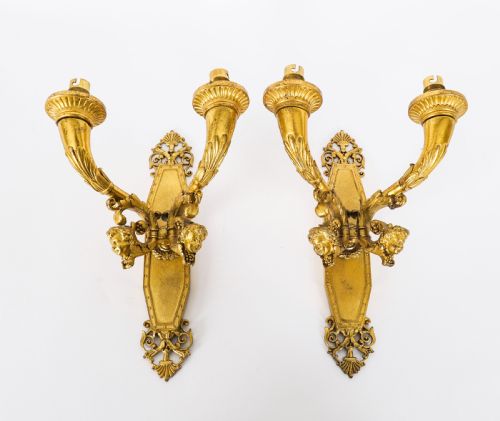
Foundry methods dominate the creation of these pieces, utilising brass, bronze, and ormolu that are cast and subsequently chased to define intricate surface detail. Gilded bronze and gilded brass appear frequently, alongside carved and giltwood variants from Florentine makers.
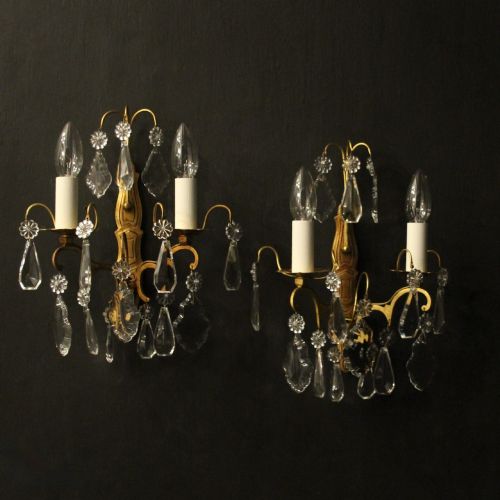
Secondary elements include silver plating, crystal drops, and burr walnut backplates, combined with electrical adaptations or original socket fittings depending on the era of manufacture.
Twinned Wall Sconces Retail Price Guide 2026
Typical asking prices for twinned wall sconces among the pieces listed under this phrase on Sellingantiques today, from the lower quarter to the upper quarter. They describe what is for sale here now, not the wider market.
Listings feature brass, bronze, and giltwood materials across Victorian, Edwardian, and mid-century periods.
Distinctions in manufacture
Quality separates in the crispness of the metal chasing and the depth of the original gilding, where hand-finished bronze exhibits sharper relief than mass-produced brass castings. Heavier gauge metalwork provides structural rigidity to the twin branches, preventing sag over decades of use.
The articulation of decorative motifs, from acanthus leaves to ribbon bows, dictates the sophistication of the piece, alongside the preservation of original patination on the metal surfaces.
Bruce Talbert·Casier
The Twinned Wall Sconces Glossary
- Ormolu
- Gilded bronze produced by applying a mercury and gold amalgam to a bronze base and heating it. This technique creates a durable, luminous golden surface characteristic of fine French decorative metalwork.
- Girandole
- A branched wall light incorporating a mirror or reflective backplate. The reflective surface amplifies the candle or electric illumination within the room.
- Rococo
- An artistic style marked by asymmetrical C-scrolls, shell motifs, and naturalistic plant forms. Pieces from this tradition display flowing, organic contours across the arms and backplates.
- Giltwood
- Timber carved and coated with a thin layer of gold leaf or gilt composition. This finish appears frequently on Italian wall lights and girandoles.
Twinned Wall Sconces: Frequently Asked Questions
How do I install antique wall lights?
Professional installation by a qualified electrician is recommended for hardwired fittings, particularly when mounting heavy cast bronze backplates to lath and plaster walls. Brackets must be secured securely to bear the weight of the metal arms.
Rewiring often proves necessary for older pieces to meet current safety standards, ensuring internal wiring accommodates modern electrical loads while preserving the exterior aesthetic.
Were these lights originally for candles or electricity?
Nineteenth-century examples and earlier variants were built exclusively for candles or oil, featuring drip pans beneath the nozzles to catch melting wax. Later twentieth-century productions frequently incorporated electrical wiring from the outset or were adapted subsequently.
Inspecting the interior of the nozzle and the channel through the arm reveals whether the piece was designed for wax or wired for power.
How should I clean gilded brass fittings?
Dusting gently with a dry, soft-bristled brush prevents the accumulation of grime in the recessed chased details of the metal. Aggressive metal polishes strip away the gold leaf or ormolu surface entirely, causing permanent damage.
Warm water with mild soap applied sparingly on a damp cloth suffices for removing stubborn surface marks without harming the antique finish.
What rooms suit twin arm wall sconces?
Pairing these fittings on either side of a fireplace, mirror, or doorway creates visual symmetry and balanced secondary lighting in reception rooms and hallways. Lower placement works effectively in dining spaces to cast a warm, intimate glow at eye level.
Choosing sets of four allows uniform illumination across larger wall expanses in grander architectural interiors.