

Twin Light Appliques
Twin light appliques deliver balanced illumination through dual branches, bringing historical character and decorative symmetry to interior walls.
Twin Light Appliques
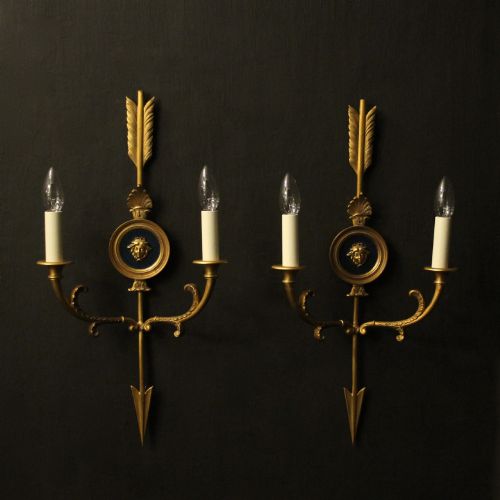
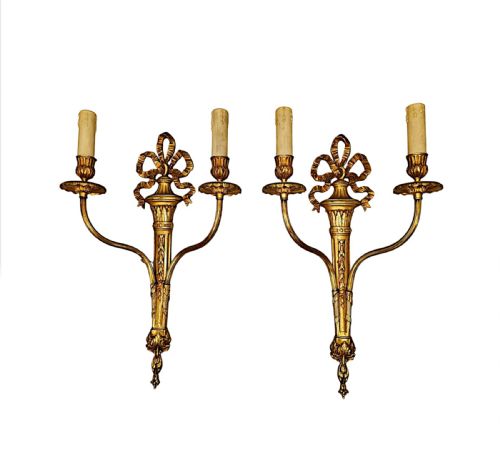
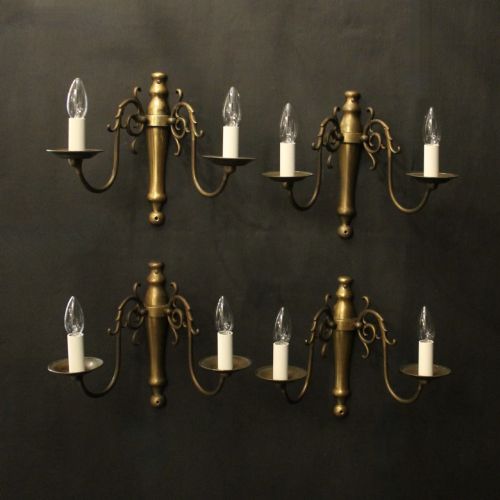
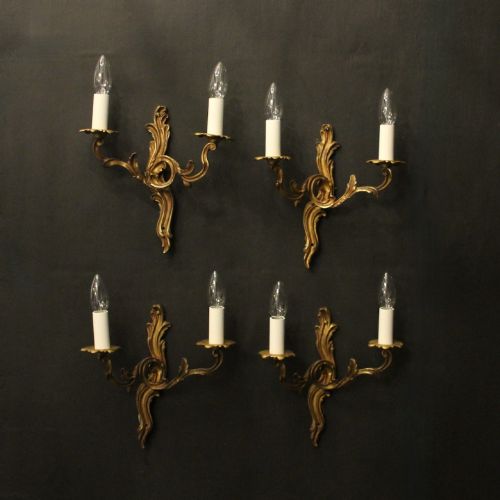
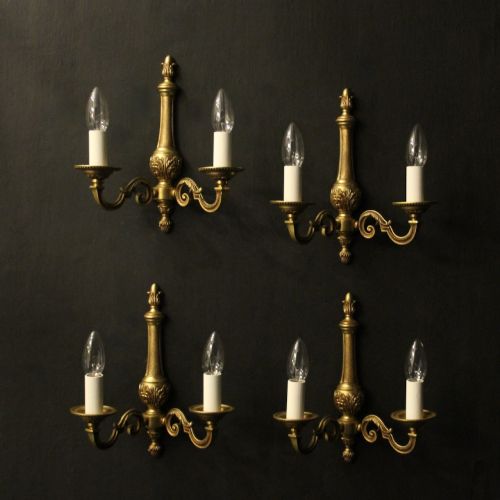
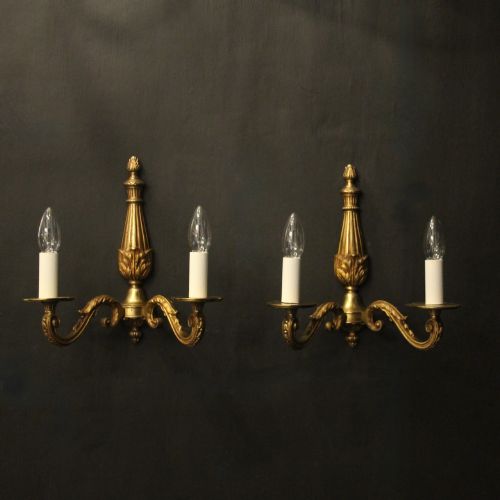
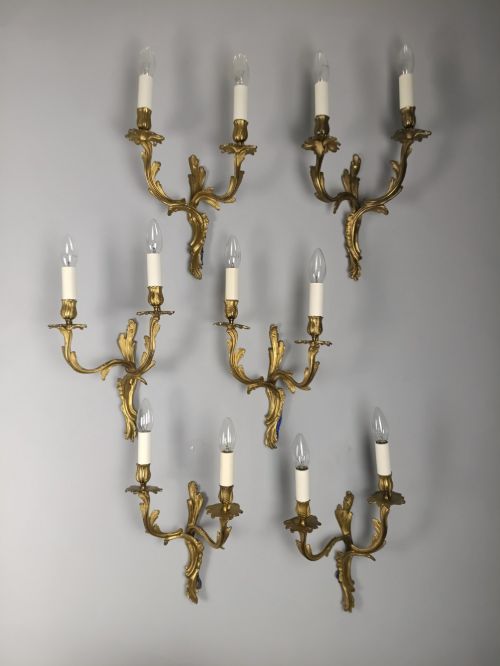
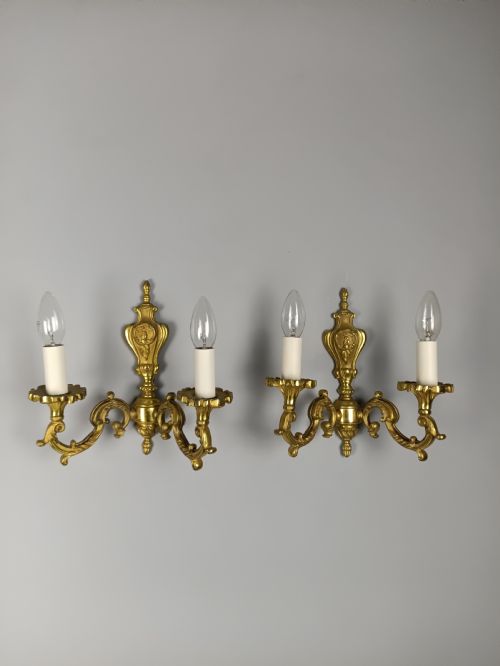
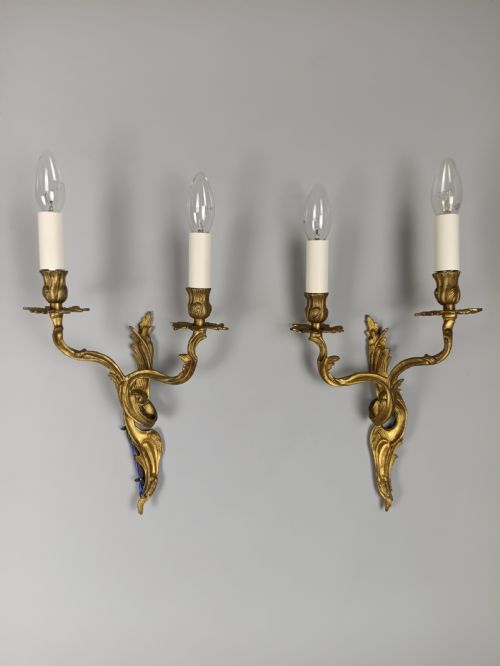
The selections available here lean heavily toward French origins, spanning multiple decades from the nineteenth century into the twentieth century. These pieces predominantly utilise two arms to hold candles or electric bulbs in a symmetrical arrangement.
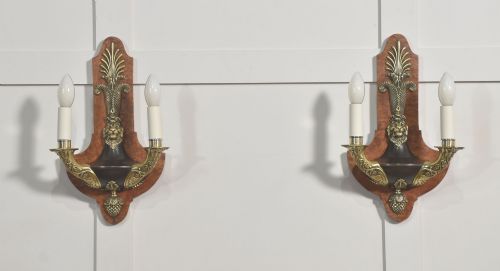
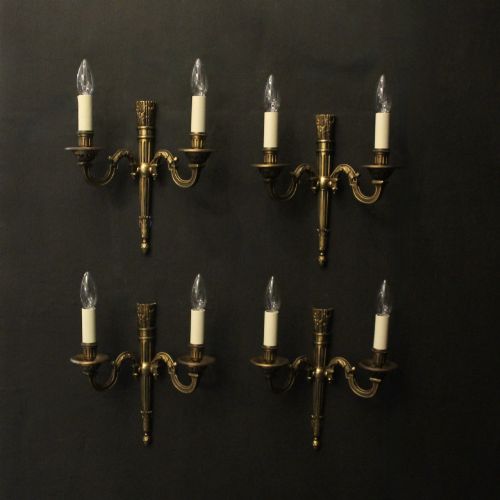
Forms range from compact pairs to extensive matching sets designed for larger spaces. The underlying designs draw upon historical vocabularies including French Rococo, Empire, and Louis XVI styles.
Materials and construction
Makers utilised cast and forged metals for the structural body and twin arms of these wall lights, selecting brass, bronze, and ormolu. Many surfaces received a layer of gilding, creating the characteristic gold-toned finish seen across French and English examples.
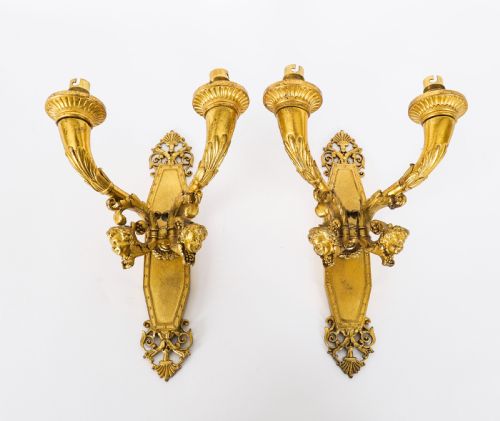
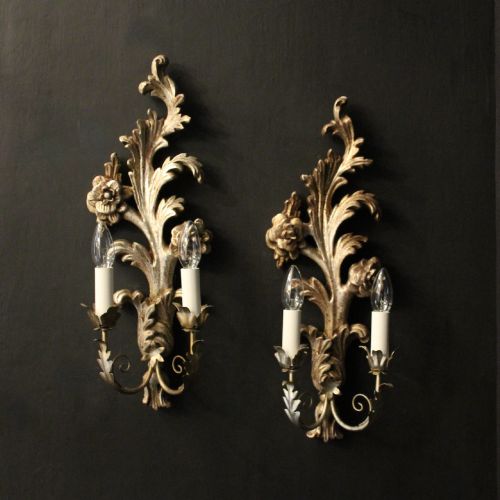
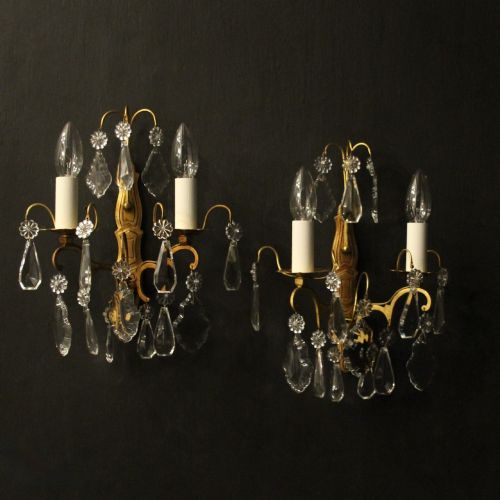
Alternative materials appear in specific regional traditions, such as carved and silvered or gilt wood in Florentine examples. Detail work incorporates applied elements like crystal drops, green enamel, or carved cherubs to enhance the visual texture of the backplate and arms.
Listings feature brass, bronze, and giltwood materials across Victorian, Edwardian, and twentieth-century periods.
Quality and craftsmanship
Quality rests in the crispness of the metal casting and the depth of the chased detail along the backplate and arms. Superior examples exhibit intricate relief work where foliage, scrolls, or figural components retain sharp definition rather than soft edges.
The weight of the metal and the integrity of the joints between the backplate and the twin branches distinguish robust construction from lighter alternatives. Finish application also matters, as skilled historical gilding or metal finishing holds an even tone and ages with a stable patina.
F. & C. Osler·Maison Baguès
The Twin Light Appliques Glossary
- Applique
- A wall-mounted lighting fixture designed to direct light outward into a room. These fixtures attach directly to vertical surfaces and frequently hold two or more branches.
- Ormolu
- Finely ground high-carat gold applied to a bronze base using a mercury amalgamation process. This technique produces a durable, rich golden surface typical of high-end French metalwork.
- Giltwood
- Timber that has been coated with a thin layer of gold leaf or gold paint. Florentine workshops frequently employed this technique on carved wooden wall lights.
- Backplate
- The foundational flat or shaped section of a wall light that fixes directly to the wall surface. It supports the weight of the twin arms and houses the mounting brackets.
- Sconce
- A traditional term for a candleholder or light fixture fixed to a wall. The word is frequently used interchangeably with applique in historical lighting contexts.
Twin Light Appliques: Frequently Asked Questions
How do twin light appliques mount to walls?
These fixtures secure to vertical surfaces using a rear mounting plate fixed with appropriate screws and wall anchors. The weight of the metal branches requires solid attachment points.
Wiring runs through the backplate to connect with existing wall circuits for electrified models. Older pieces intended solely for candles simply rely on stable wall mounting without electrical integration.
Where should twin light appliques be placed?
Twin light appliques work effectively when positioned on either side of a fireplace mirror, hallway console, or architectural doorway. This placement utilises the dual arms to cast balanced illumination.
Height placement depends on ceiling dimensions and eye level, typically positioning the central light source slightly above head height. Matching sets allow for coordinated lighting across larger wall expanses.
How do I clean gilded brass wall lights?
Dust these metal fixtures gently with a dry, soft cloth to prevent the accumulation of particles in recessed cast details. Avoid harsh chemical polishes that can strip historical gilding from the bronze or brass surface.
Gentle wiping preserves the aged patina developed over decades. Crystal drops, where present, can be unclipped and washed separately in mild soapy water before drying thoroughly.
How can I identify French Rococo revival pieces?
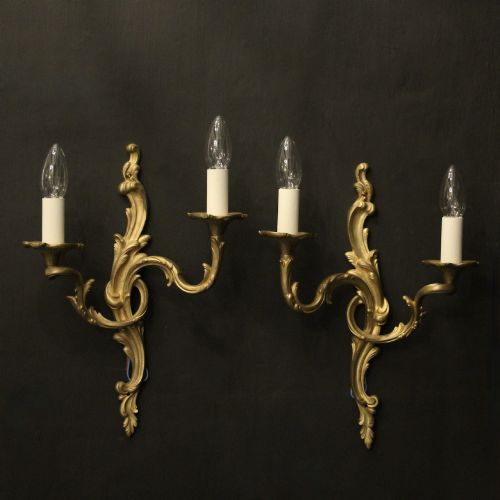
French Rococo revival twin light appliques display asymmetrical scrollwork, C-scrolls, and naturalistic plant motifs such as acanthus leaves. The casting often emphasises flowing, organic lines rather than strict geometric symmetry.
These pieces frequently utilise gilded bronze or brass and date primarily to the nineteenth and early twentieth centuries. The stylistic focus draws directly on eighteenth-century French decorative arts.