

Twin Candle Wall Lights
Twin candle wall lights deliver symmetric illumination and period charm, bringing functional historical warmth directly to your walls.
Twin Candle Wall Lights
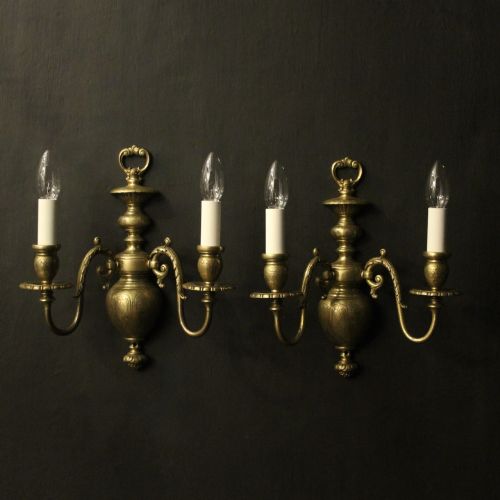
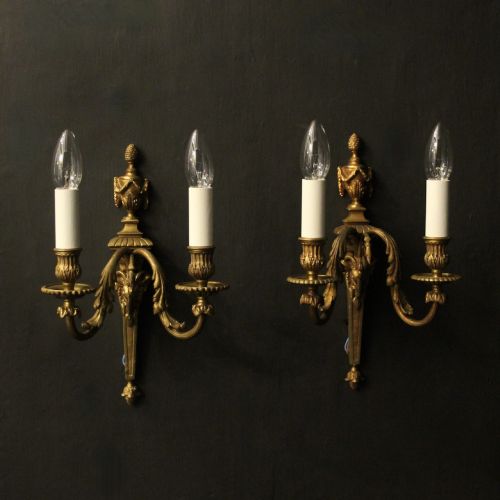
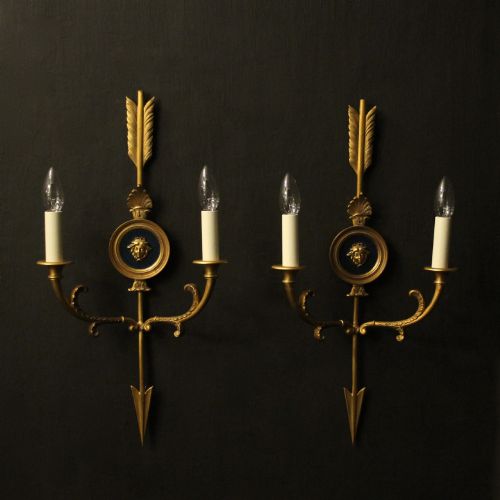
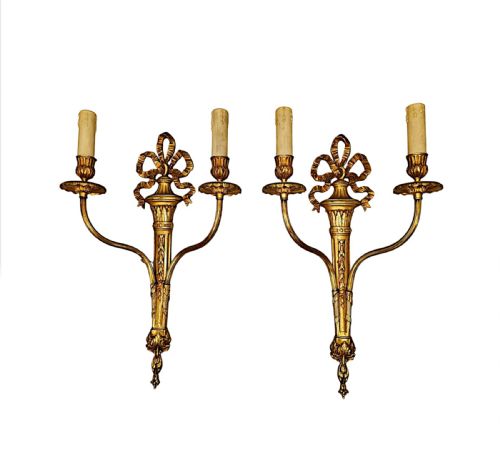
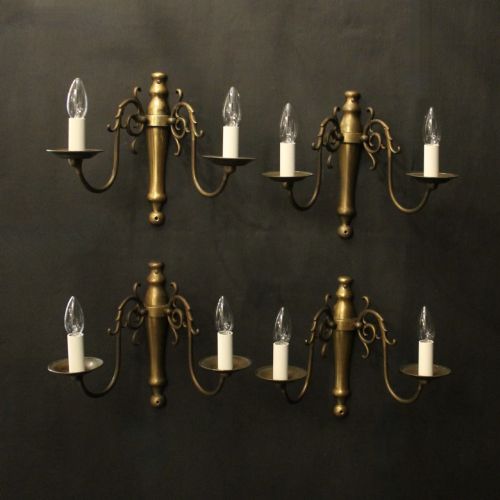
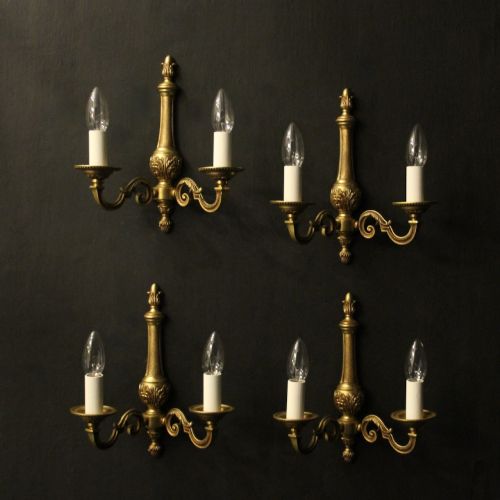
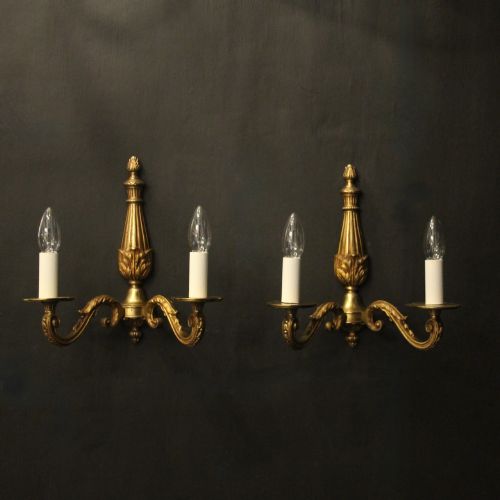
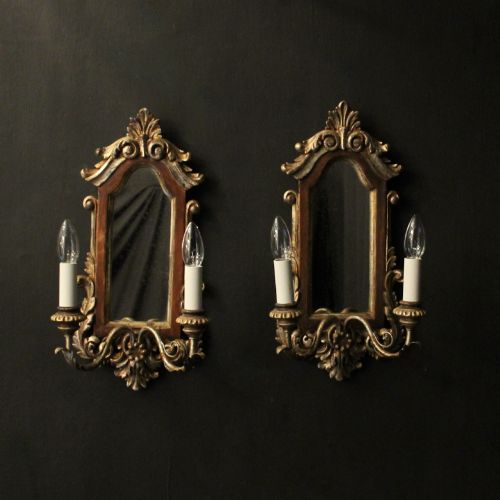
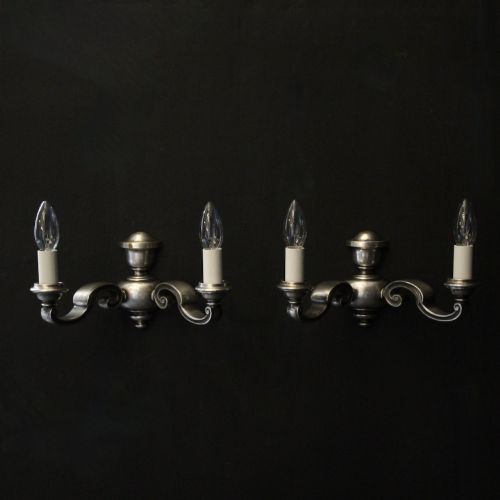
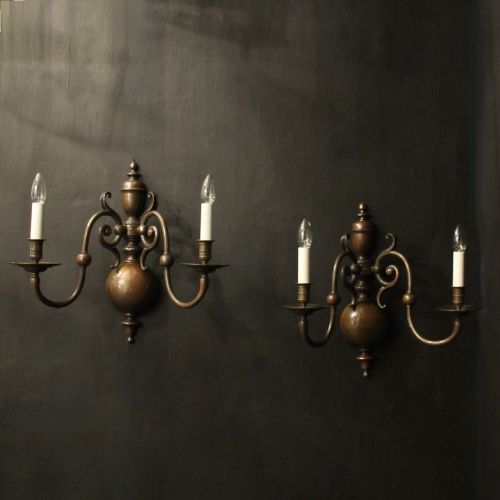
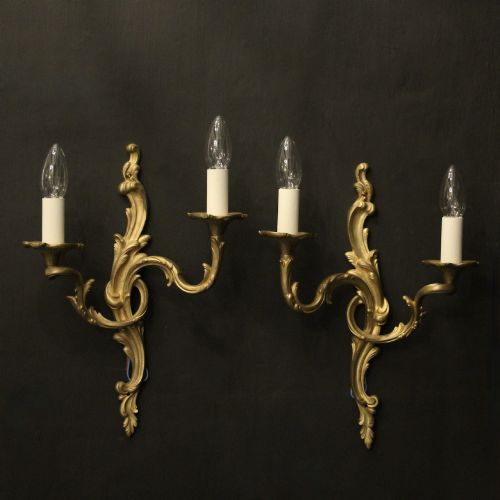
Twin candle wall lights are decorative wall-mounted fixtures designed to hold two candles or simulate candle lighting across living spaces. When you search for twin candle wall lights, you encounter wall sconces, girandoles, and half lanterns originating from the nineteenth and twentieth centuries. The selection spans English, French, Italian, and Florentine workshops reflecting various historical revivals.
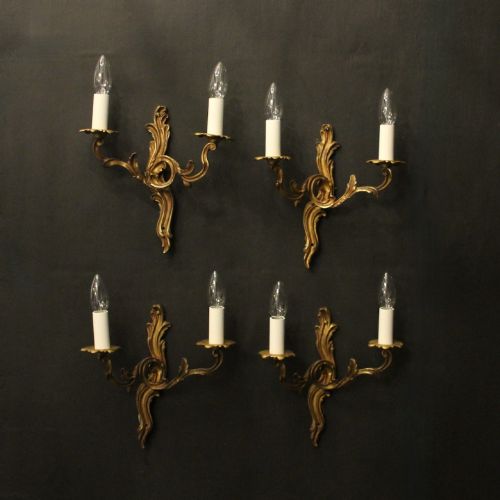
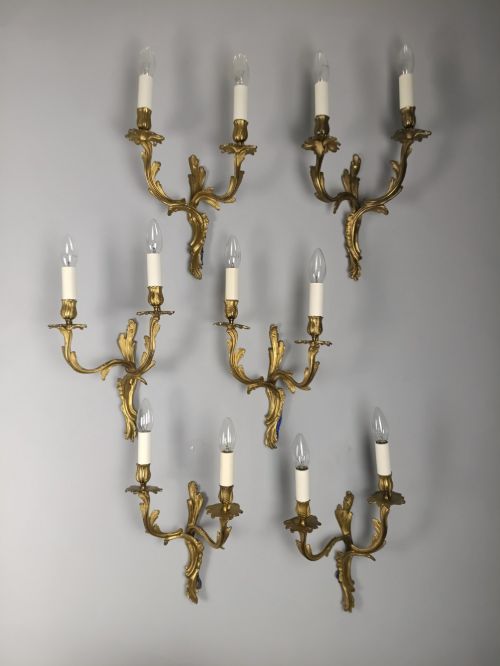
You meet French pieces most frequently on this page, particularly twentieth-century items featuring gilded brass and bronze. These pieces often display twin arms and ornamental details such as ribbons or Rococo motifs. English and Italian examples also appear, offering alternative brass, bronze, and giltwood constructions.
Materials and construction
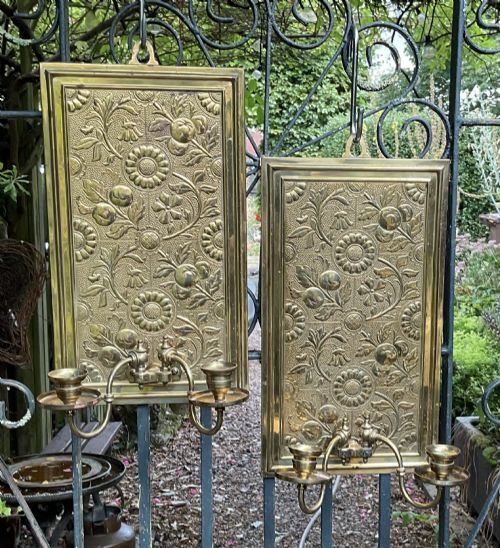
Craftsmen built these wall fixtures primarily using cast metals including brass, bronze, and ormolu, alongside carved wooden giltwood. Many pieces received surface gilding or silver plating to enhance their reflective quality under candlelight. Workshops shaped metal into twin arms, backplates, and decorative motifs like ribbons and cherubs.
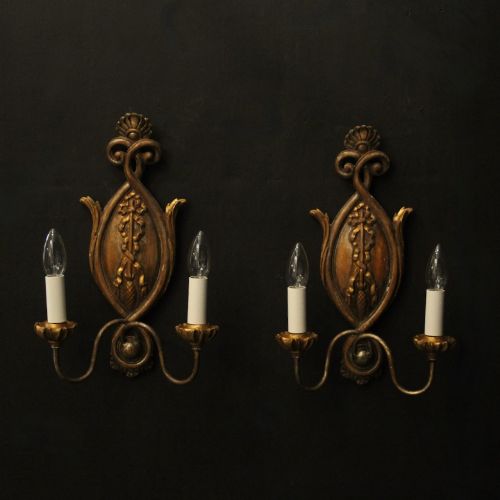
Makers employed traditional casting and carving techniques to produce the ornate backplates and symmetrical arms characteristic of these sconces. Italian and Florentine examples utilise carved wood finished in gilt, whereas French and English pieces rely heavily on cast metals.
Several pieces feature mischievous wooden cherubs holding twin candle branches, dutifully keeping watch over the evening room.
Quality and craftsmanship
The integrity of the surface finish dictates visual appeal. Hand-carved giltwood items show precision in their floral and scroll work, while cast bronze fixtures benefit from careful chasing of the metal surface after removal from the mould.
Bruce Talbert·F. and C. Osler
The Twin Candle Wall Lights Glossary
- Girandole
- A branched wall light featuring a mirror or highly reflective backplate. The reflective surface multiplies the light cast by the twin candles.
- Ormolu
- Finely ground high-carat gold applied to a bronze base metal. This technique creates a rich golden finish common on French decorative pieces.
- Sconce
- A wall-mounted lighting fixture attached directly to a vertical surface. Historically designed for candles, many now accommodate electrical fittings.
- Rococo Revival
- A nineteenth-century design style mimicking the asymmetrical curves, scrolls, and natural motifs of the French eighteenth century. Pieces in this style often incorporate shell and floral ornamentation.
Twin Candle Wall Lights: Frequently Asked Questions
How do I install antique wall lights?
Many vintage and antique wall fixtures require professional wiring or adaptation to meet current electrical standards. Consult a qualified electrician to mount them securely to standard wall junction boxes.
Ensure the weight of heavier bronze or giltwood pieces is supported adequately by wall anchors rather than plaster alone.
Were these lights originally electric?
Most pieces from the nineteenth and early twentieth centuries were originally designed for wax candles or oil. Mid-century examples introduced integrated electrical wiring from the workshop.
Many surviving candle sconces have been rewired later in their lives to accommodate small electric bulbs safely.
How do I clean gilded metal fittings?
Dust surfaces gently using a soft, dry microfibre cloth to protect delicate gold leaf or gilt finishes. Avoid harsh chemical polishes that can strip away thin layers of gilding.
Professional conservation is recommended for deep cleaning or repairing damaged metalwork on antique bronze and brass.
How do I distinguish French and English styles?
French twin candle wall lights frequently feature elaborate Rococo curves, cherubs, and ribbon motifs executed in gilded bronze. English examples often favour restrained brass or silver-plated designs associated with Adam or Georgian revivals.
Italian and Florentine pieces lean toward carved giltwood and floral girandole forms.