



Turned Wooden Mortar
These turned wooden mortar examples are solid utilitarian vessels formed on a lathe, prized by collectors for their rich grain and honest domestic history.
Turned Wooden Mortar
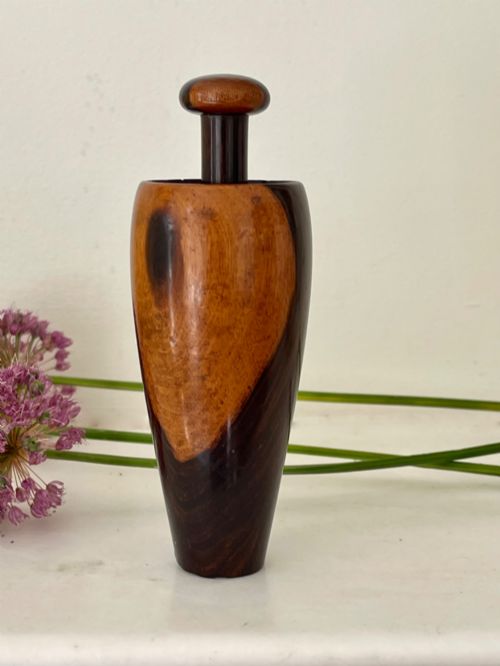
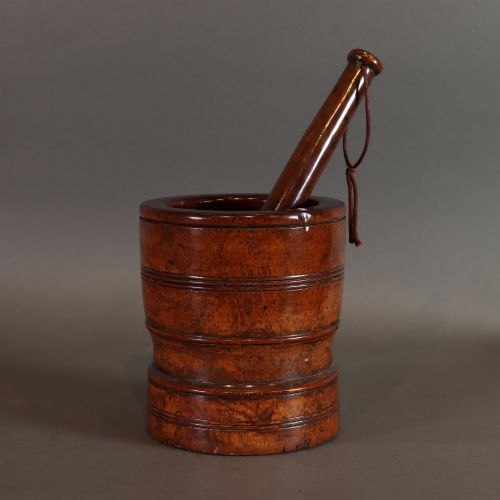
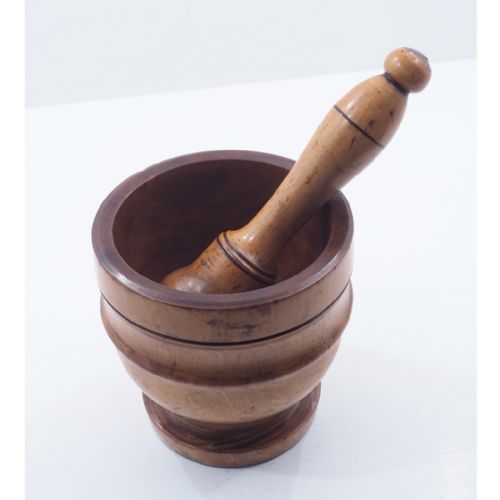
A turned wooden mortar serves as a heavy kitchen or apothecary bowl designed for grinding dry goods and herbs with a matching pestle. When you search for a turned wooden mortar, you encounter pieces that range from humble domestic treen to dense botanical hardwoods intended for pharmacy use.
The selections available here span multiple centuries, stretching from seventeenth century English examples down to mid nineteenth century kitchenalia. Formats vary from small spice grinders to substantial chemists vessels used in professional dispensaries.
How they were made
Makers shaped these vessels on a lathe using dense timbers such as lignum vitae, walnut, fruitwood, and olive wood. The dense nature of these woods allowed the turner to cut clean profiles without the bowl splitting under the pressure of the pestle.
Treen artisans relied on seasoned hardwoods that could withstand repetitive impact and friction. The natural oil content within species like lignum vitae provided a durable finish that resisted moisture from herbs and spices.
Some seventeenth century lignum vitae mortars are so dense they sink straight to the bottom of a bucket of water like a stone.
What varies in quality
The distinction between standard kitchenalia and finer collector pieces lies in the choice of timber and the crispness of the lathe turning. Dense exotic woods like lignum vitae command greater interest due to their exceptional weight and deep natural patina.
Proportion and wear also define the standing of a piece. Well balanced walls with harmonious rings show the skill of the original turner, while surviving matching pestles complete the historical integrity of the vessel.
The Turned Wooden Mortar Glossary
- Treen
- Small handmade wooden domestic objects. This term encompasses everything from spoons and bowls to mortars used in daily life.
- Lignum vitae
- A remarkably heavy and dense tropical hardwood. Artisans utilised this material for its exceptional durability and oily self lubricating nature.
- Pestle
- The handheld club shaped tool used for crushing and grinding substances within the mortar bowl. Surviving matched pairs are particularly valued by collectors.
- Apothecary
- A historical practitioner who prepared and sold medicines. Their mortars were heavy duty vessels built for compounding pharmaceuticals.
Turned Wooden Mortar: Frequently Asked Questions
What were turned wooden mortars used for?
These vessels were utilised in kitchens, households, and pharmacies for crushing dried herbs, spices, and medical ingredients into powders.
The matching pestle provided the downward force needed to break down stubborn roots and seeds against the rounded base of the bowl.
How do I care for an antique wooden mortar?
Keep the wood conditioned by avoiding excessive moisture, harsh detergents, and direct heat sources that might cause the grain to split.
A light application of food safe mineral oil or beeswax will help preserve the natural patina of the hardwood over time.
How can I tell the age of a wooden mortar?
Age is determined by observing the tool marks left from lathe turning, the species of timber, and the overall style of the profile.
Seventeenth century pieces often display heavier proportions and distinct tool chatter compared to nineteenth century iterations.
Are pestles always original to the mortar?
Many surviving vessels retain their matched pestles, though centuries of domestic use meant components were occasionally separated.
A genuinely matched pair shares identical wood species, wear patterns, and tonal ageing consistent with simultaneous use.