
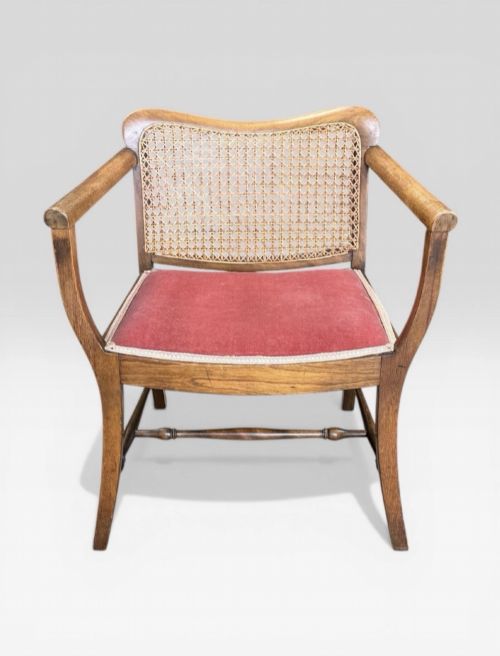
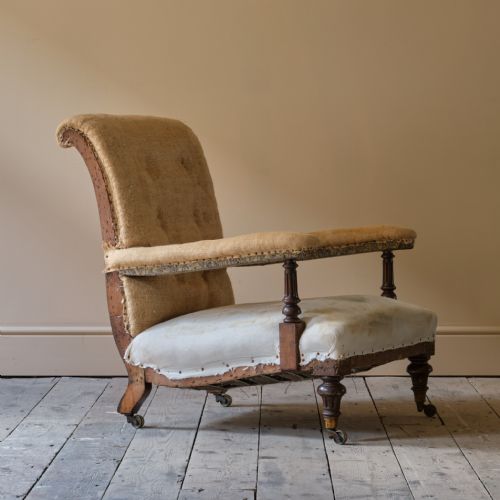


Turned Wood Open Armchair
A turned wood open armchair brings tangible vernacular character to a room, offering robust construction and rhythmic spindlework that command attention.
Turned Wood Open Armchair
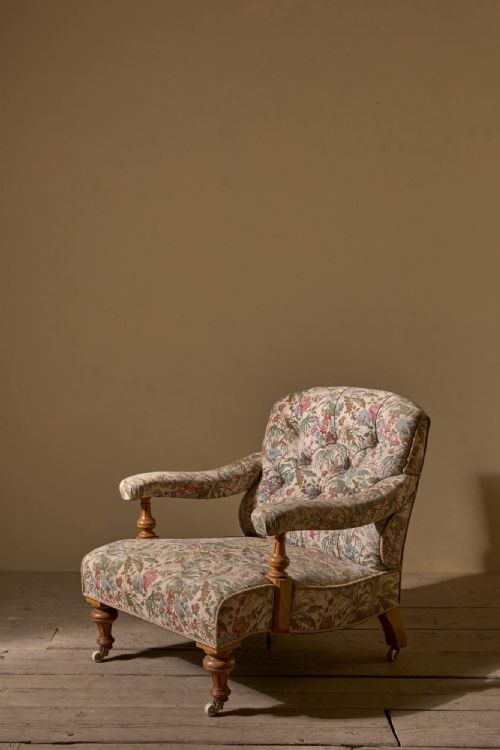
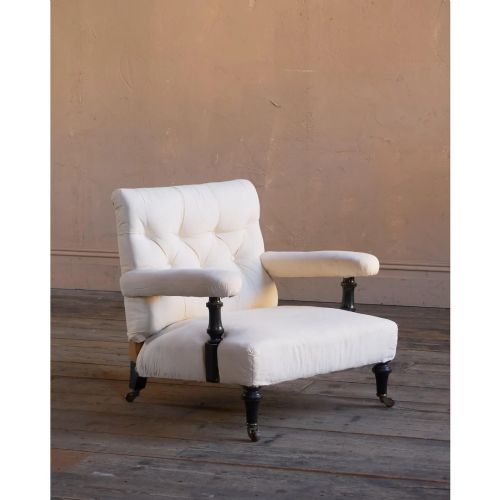
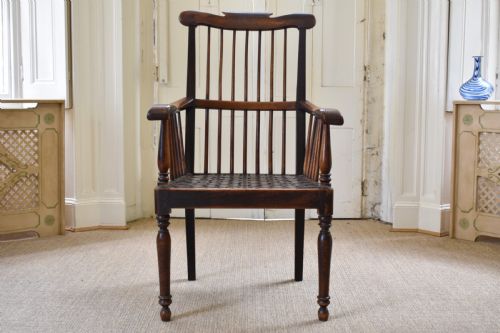
A turned wood open armchair is defined by its exposed timber framework and unpadded arms, drawing on domestic traditions across the British Isles and beyond. You encounter pieces spanning from the seventeenth century through the Victorian era, reflecting regional tastes and workshops.
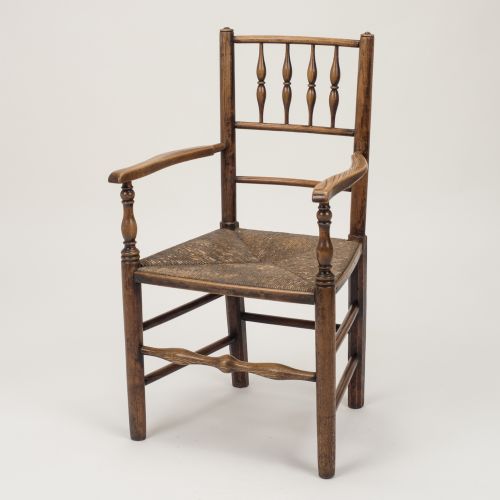
The selections available here lean heavily towards nineteenth century country and vernacular forms, alongside occasional revival and colonial interpretations. Common regional variants range from solid elm ladderbacks to ash Sussex chairs and robust spindleback designs.
The category encompasses both straightforward country seating and more elaborate library or drawing room chairs featuring bobbin turned detailing. Makers utilised local timbers such as elm, ash, laburnum and oak to build seating meant for enduring daily use.
Materials and construction methods
Makers built these frames predominantly from native hardwoods like elm, ash, walnut and oak, selecting each timber for its specific structural strength. Regional joiners often combined flexible green woods for spindles with rigid timbers for the primary load-bearing posts.
Turning lathes shaped the distinctive bobbin, spindle and columnar members that give these armchairs their architectural rhythm and visual lightness. Traditional joinery secured the components without reliance on modern adhesives, relying instead on pegged mortise and tenon joints.
Seating surfaces varied according to function and origin, ranging from solid timber squabs to woven rush and upholstered pads covered in velvet or fabric. Metal accents such as brass castors appeared on refined library examples, while country chairs kept simple wooden feet.
Turned components were sometimes weighted with lead shot inside the hollows to improve the balance of the armchair.
Distinctions in quality and execution
Quality in a turned wood open armchair rests upon the crispness of the lathe work and the harmonious proportion of the frame. Superior examples demonstrate confident turning where every bobbin or spindle is cleanly carved and evenly spaced.
The choice of timber heavily influences the standing of a piece, with figured laburnum or dense walnut commanding greater appreciation than standard utility woods. Original surfaces and untouched patina elevate a chair far above examples that have suffered aggressive modern sanding and refinishing.
Structural integrity dictates longevity, separating sturdy survivals from chairs compromised by excessive shrinkage or poor historical repairs at the joints. The balance between open arm framing and comfortable ergonomic proportions distinguishes master joinery from simple provincial output.
Mellier and Co·James Shoolbred·Robert Strahan
The Turned Wood Open Armchair Glossary
- Bobbin turned
- A style of turning that produces a series of rounded wooden spheres or discs resembling a string of bobbins. This decorative method gained popularity during the seventeenth century and saw revivals in the nineteenth century.
- Spindleback
- A chair back constructed with a series of slender, turned wooden rods set vertically between the top rail and the seat. These members provide support while keeping the chair light in weight.
- Rush seat
- A seating surface woven from dried marsh rushes, creating a durable and slightly elastic mesh. This technique appears frequently on country and vernacular chairs.
- Elm
- A tough, interlocking hardwood native to Britain, prized by chairmakers for its resistance to splitting under stress. It was frequently used for solid saddle seats.
- Vernacular furniture
- Domestic objects made by local craftsmen following regional traditions rather than metropolitan academic styles. These pieces prioritise utility and local materials over high-style ornamentation.
Turned Wood Open Armchair: Frequently Asked Questions
How do I date a turned wood armchair?
Dating relies on examining the turning style, joinery methods and timber species used throughout the framework. Earlier seventeenth century pieces show heavier proportions and distinct tool marks, while nineteenth century revivals often emulate these historic traits with more uniform machine assistance.
Secondary indicators include the wear patterns on the feet and the method of securing the seat frame. Comparing the construction details against documented regional typologies helps narrow down the decade of production.
Were these chairs meant for dining or relaxing?
Open armchairs served multiple domestic functions depending on their cushioning and room placement. Library and drawing room variants provided comfortable seating for reading, whereas rush-seated country versions functioned as versatile household chairs.
The absence of upholstered side panels kept the design open and accessible for daily tasks. Many examples sat comfortably in parlours, halls or bedrooms rather than exclusively around a dining table.
What is the difference between a country chair and a revival chair?
Country chairs emerged from regional vernacular traditions where makers utilised whatever local timber was readily accessible. They prioritised utilitarian strength and straightforward construction over adherence to academic design rules.
Revival chairs date to the nineteenth century when makers consciously copied seventeenth or eighteenth century historic styles. These later pieces often incorporate sophisticated finishes and refined turning that mirror earlier eras with deliberate accuracy.
How should I care for an antique wood frame?
Maintain the timber by keeping the chair away from direct heat sources and dramatic humidity fluctuations. Gentle dusting with a dry cloth prevents grime accumulation without risking the historic surface.
Applying a microcrystalline wax periodically helps nourish exposed wood and protects the patina. Avoid modern liquid polishes containing silicone, which can penetrate open grain and damage the finish over time.