




Turned Leg Upholstered Bench
A turned leg upholstered bench offers solid support and traditional seating, uniting turned timber supports with textile tops.
Turned Leg Upholstered Bench
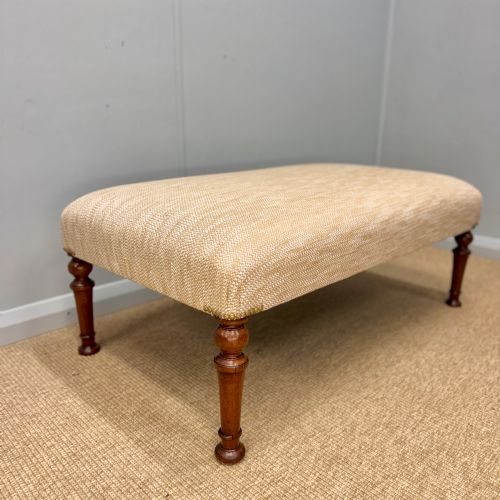
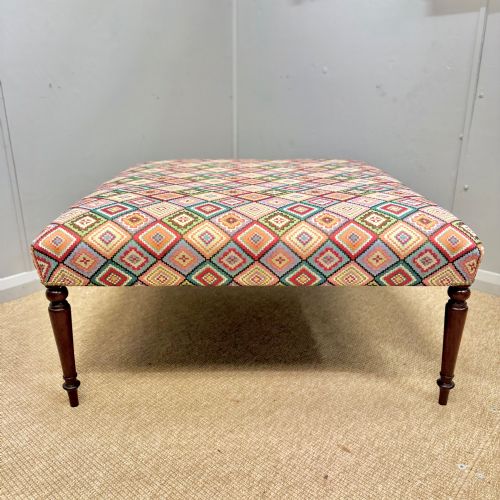
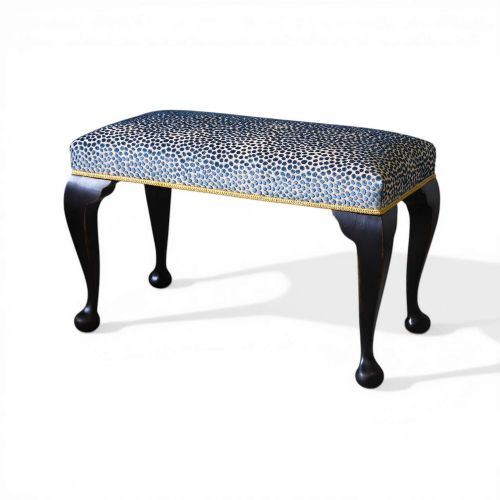
A turned leg upholstered bench brings together sturdy timber framing and cushioned seating, appearing across various historical periods from the Georgian era through to the Edwardian period. Buyers searching for a turned leg upholstered bench will find forms ranging from long footstools and window seats to piano stools and hall benches.
The pieces on this page span the nineteenth century and the early twentieth century, taking in Victorian, Edwardian, and Regency styles alongside English Country House and French Country aesthetics. Most examples utilise traditional timber frames paired with textile or leather upholstery, sometimes supported by brass castors.
How they were made
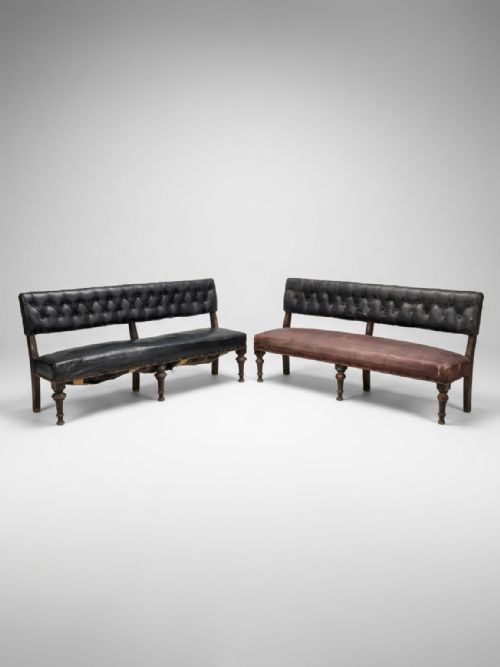
Craftsmen built the frames using timbers such as mahogany, walnut, oak, rosewood, satinwood, and ebonised wood, shaping the supports by hand. Upholstery methods incorporated fabric, linen, and textile coverings, occasionally finished with deep buttoning or supported by brass hardware.
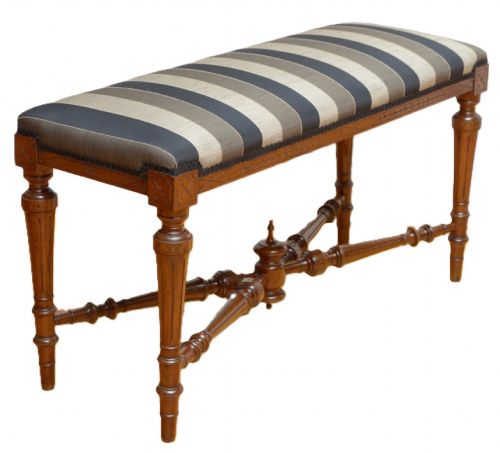
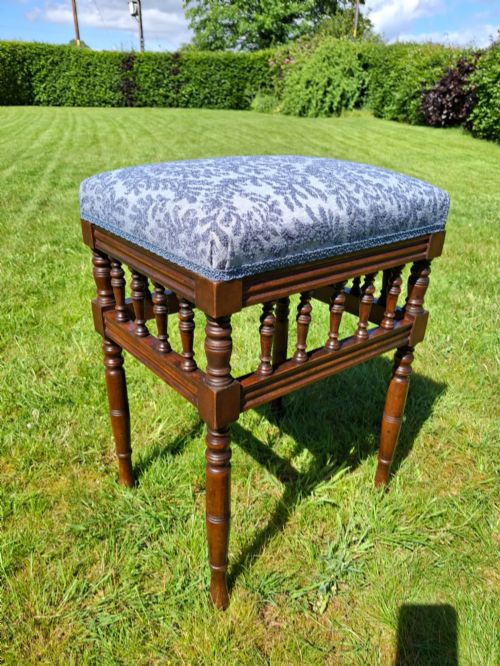
Woodworking techniques relied on solid timber construction, with turned legs formed on a lathe to create cylindrical or decorative profiles. Frames were designed to carry padded seats, securing the textile layers firmly to the wooden base.
The listings on this page span the Georgian, Victorian, and Edwardian periods, utilising mahogany, walnut, oak, and rosewood.
What varies in quality
Quality shows in the selection and preparation of the timber frame, where denser woods like mahogany, walnut, and rosewood provide greater durability than softer alternatives. The precision of the turning on the legs and the elegance of the overall proportions distinguish finer examples from simpler utilitarian seating.
The standard of upholstery work also separates the pieces, with well-executed buttoning and high-grade textile coverings reflecting greater care in manufacture and restoration. Structural stability and the retention of original brass castors or specific inlays further define the better examples.
Angerstein
The Turned Leg Upholstered Bench Glossary
- Turned leg
- A support shaped on a lathe to create cylindrical or decorative profiles. This technique is common on chairs, tables, and benches from the Georgian period onwards.
- Window seat
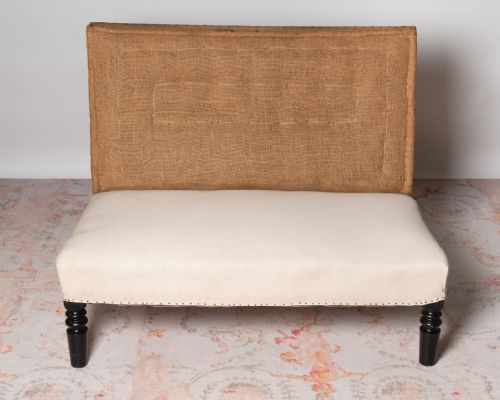
- A long, narrow form of seating designed to fit beneath a window recess. These pieces frequently feature upholstered tops and decorative wooden frames.
- Duet stool
- An elongated seat built for two people to sit side by side, often used at a piano or in a drawing room. They appear in Victorian and later styles.
- Ebonised wood
- Timber treated with a dark finish to imitate expensive ebony. This treatment is frequently found on nineteenth-century pieces.
- Kilim
- A flat-woven textile originating from the Middle East or Eastern Europe. It is sometimes utilised as a durable covering for antique footstools.
Turned Leg Upholstered Bench: Frequently Asked Questions
Where were these benches used?
These benches were placed in hallways, bedrooms, drawing rooms, and beside windows throughout the house. Their compact footprint allowed them to fit easily into circulation spaces and reception rooms.
They served multiple domestic functions, operating as seats for putting on shoes, footrests before armchairs, or extra accommodation for guests during social gatherings.
How do I identify a Victorian piece?
Victorian examples often employ dense timbers like walnut and mahogany, frequently featuring deep buttoned upholstery and turned wooden supports. Many incorporate brass castors for ease of movement across carpets.
Proportions during this period tend to be substantial and sturdy, reflecting the robust manufacturing standards of the nineteenth century.
What is a window seat?
A window seat is a long, low form designed specifically to sit within the architectural recess of a window. They usually combine an upholstered top with exposed wooden frames.
Earlier examples from the Georgian and Regency periods display refined proportions, while later Victorian versions often feature more ornate carving or turned legs.
How do I care for the upholstery?
Care depends on whether the covering is made from linen, standard textile, leather, or woven carpet like kilim. Regular light dusting and professional cleaning help preserve the fabric.
Avoiding direct sunlight prevents the textile colours from fading and protects the underlying wooden frame from drying out.