
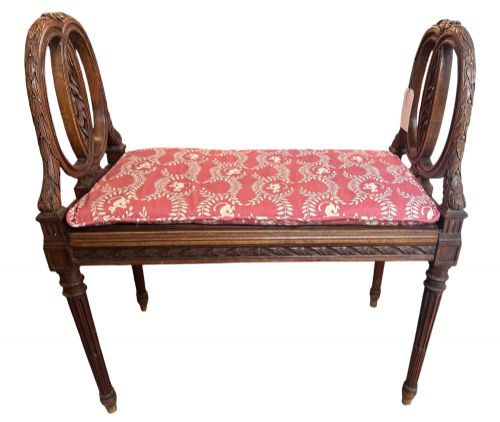


19th Century French Banquette
These 19th century french banquette examples offer seating built for domestic ease, combining regional character with period craftsmanship.
19th Century French Banquette
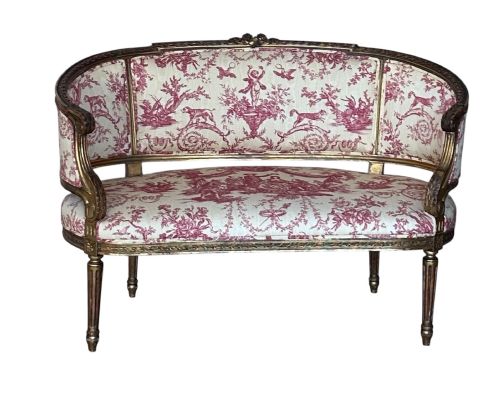
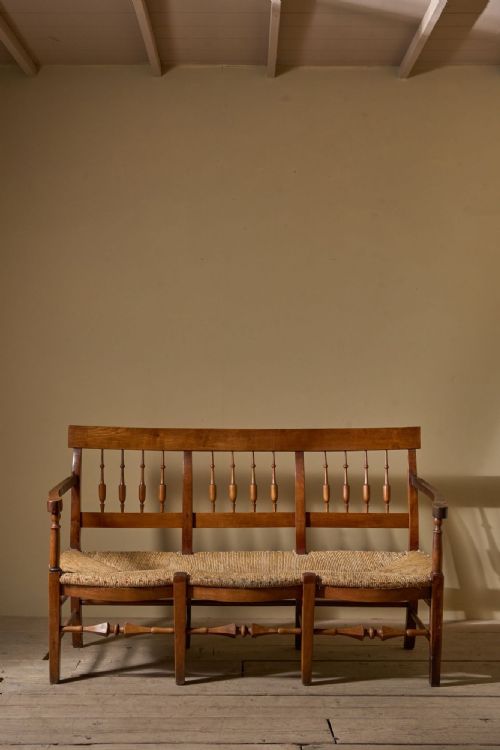
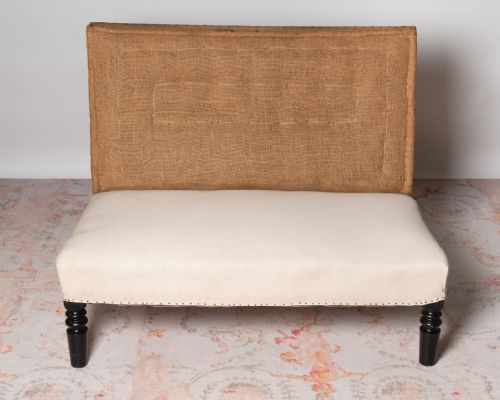
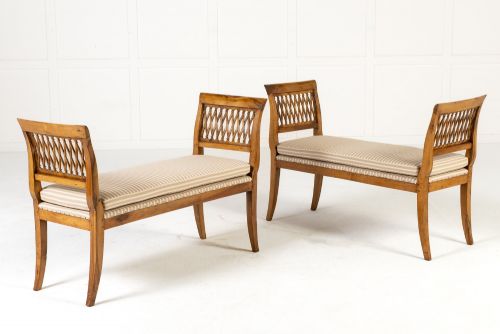
A 19th century french banquette encompasses long seating forms such as window seats, hall benches, sofas, canapés, and daybeds originating from France. The listings on this page show these pieces predominantly taking the form of window seats and hall benches alongside settees and sofas.
Most examples date firmly to the nineteenth century, including pieces associated with the year 1900. These items serve practical seating functions in domestic spaces while displaying distinct period aesthetics.
The styles recorded across the inventory span French provincial, French country, Louis XV style, Louis XVI style, Neoclassical, and chateau designs. Buyers encounter everything from carved walnut window seats to rush seated hall benches and upholstered daybeds.
Materials and construction
Makers constructed these frames primarily using solid hardwoods such as walnut, cherrywood, oak, and painted wood. Structural framing often incorporates carved details characteristic of Louis XV and Louis XVI revival aesthetics.
Seating surfaces utilise natural materials like woven rush and cane alongside upholstered textiles including cotton, linen, embossed leather, and designer fabrics such as Vaas by Emma Grant.
Recorded styles range from rustic French country to formal Neoclassical and Louis XVI designs.
Distinctions in quality
The standard of carving on wooden frames separates everyday regional pieces from more formally styled Louis XV and Neoclassical examples. Hand-shaped cabriole legs and detailed relief work on walnut or cherrywood demand greater joinery skill.
The integrity of original woven elements, such as rush and cane seats, influences the overall character of provincial items. Similarly, the choice of upholstery textiles, ranging from simple linen to embossed leather, alters the visual weight of the piece.
The 19th Century French Banquette Glossary
- Banquette
- A long upholstered bench or seat designed for domestic rooms and occasionally billiard spaces. These items provide extended seating while maintaining a compact footprint against walls or beneath windows.
- Canapé
- A traditional French sofa featuring an upholstered backrest and seat supported by exposed wooden framing. This form typically reflects court styles like Louis XV or Louis XVI.
- Rush
- A fibrous marsh plant woven to create durable, textured seating surfaces on provincial chairs and benches. It appears frequently on country seating.
- Window seat
- A long, narrow bench proportioned specifically to sit beneath domestic window frames. These pieces offer low-profile seating without obstructing natural light.
- Cabriole leg
- A furniture leg that curves outward in a convex arc and tapers inward in a concave arc, ending in a modest foot. This shape defines much of eighteenth and nineteenth century French seating.
19th Century French Banquette: Frequently Asked Questions
Where were these benches used?
These seating forms served multiple rooms across French homes, functioning as hallway furniture, bedroom daybeds, and window-side perches. Their versatile proportions allowed them to fit easily into secondary living spaces.
Larger variations also appeared in specialised settings, such as snooker rooms where long benches accommodated players and spectators.
How do I identify Louis XV style?
Louis XV style pieces are characterised by asymmetrical curved lines, naturalistic floral carvings, and flowing cabriole legs. The woodwork often lacks straight angles, favoring organic contours.
This aesthetic draws on eighteenth-century court designs while appearing frequently in nineteenth-century revival furniture.
What is a banquette de billiard?
A banquette de billiard is a specialised long bench designed specifically for placement alongside billiard tables. These pieces provided comfortable, elongated seating for players waiting their turn.
They often featured durable upholstery materials like embossed leather to withstand heavy usage.
Are rush seats original?
Rush seating represents a traditional method of constructing durable, breathable surfaces for provincial chairs and benches. Many nineteenth-century country pieces retain woven rush as a primary feature.
Over decades of use, organic seating materials may be re-woven to maintain structural integrity while preserving the rustic aesthetic.
How do I style a window seat?
Window seats function well beneath low windows or along narrow corridor walls where bulky furniture would obstruct movement. Their low backs or backless designs keep sightlines open.
Adding simple linen or cotton cushions enhances comfort while respecting the historical character of the wooden frame.