
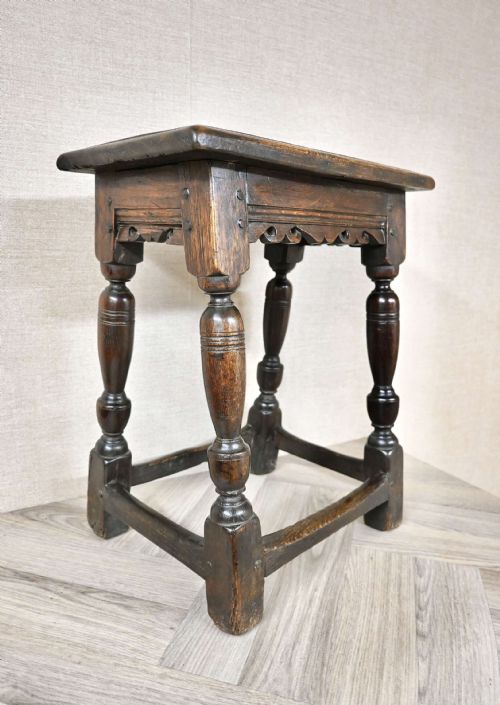
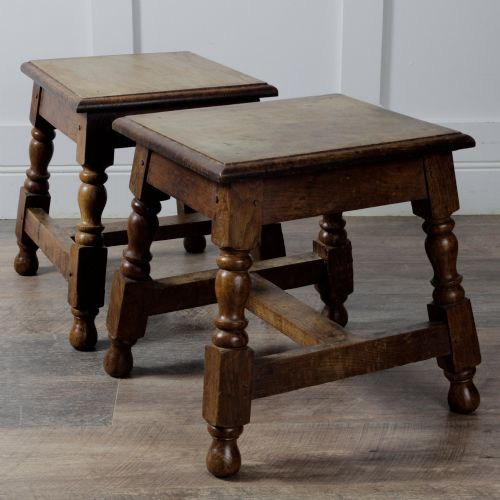
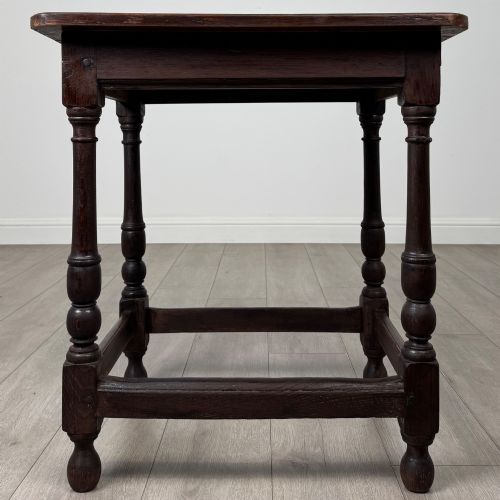
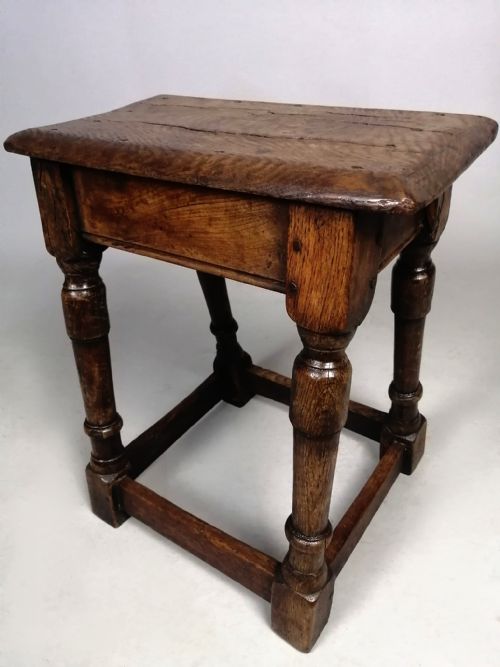
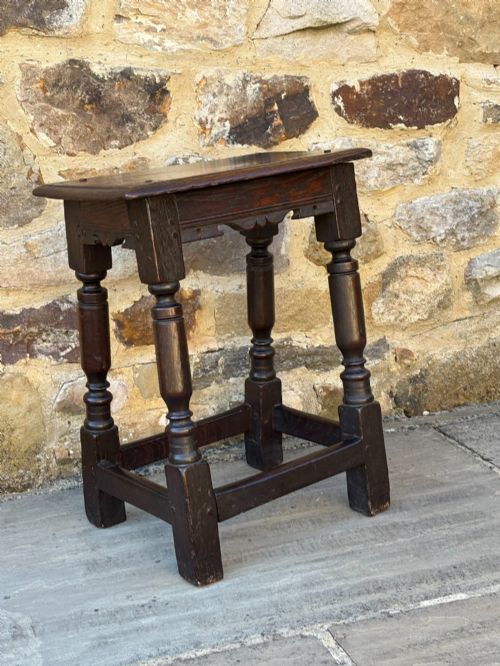
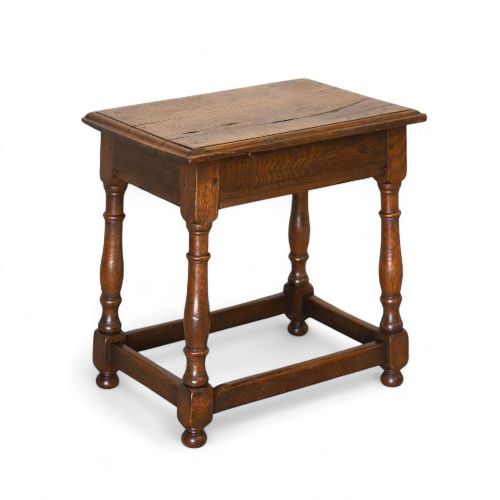
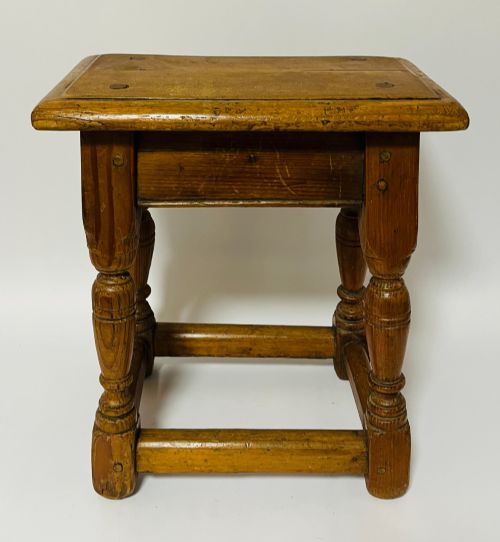
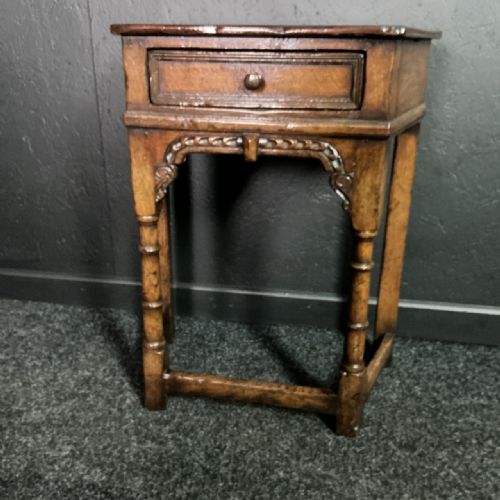

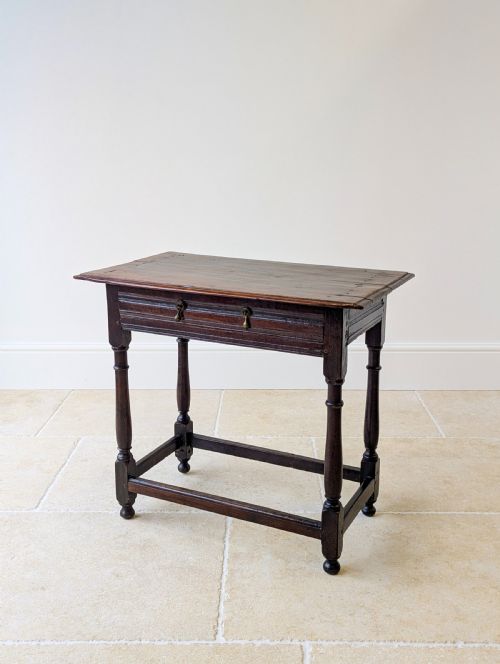


Turned Leg Side Stool
A turned leg side stool offers sturdy utility and timeless craftsmanship, anchoring provincial interiors through centuries of practical seating and surface space.
Turned Leg Side Stool
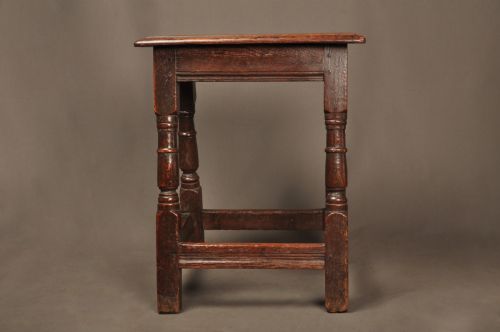
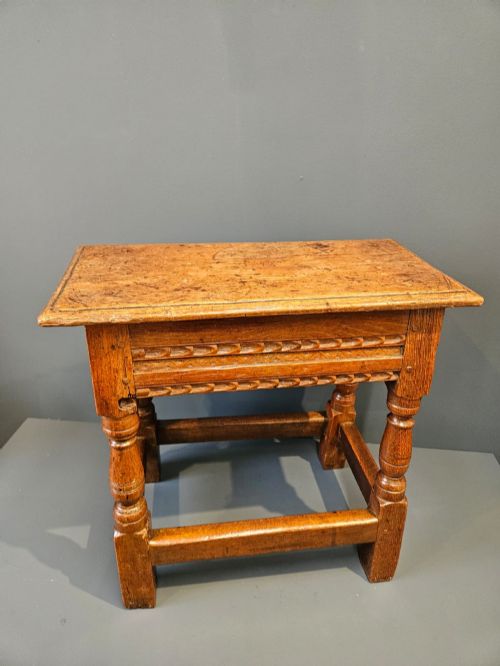
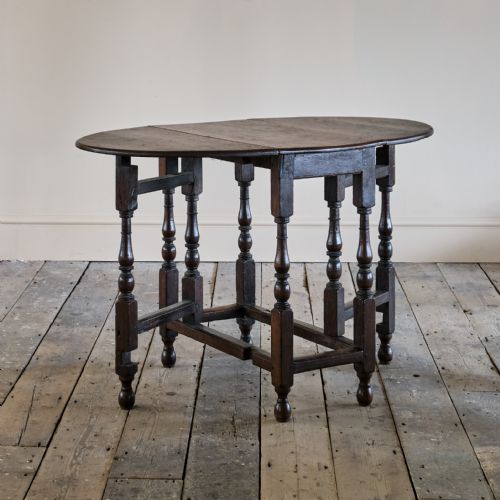
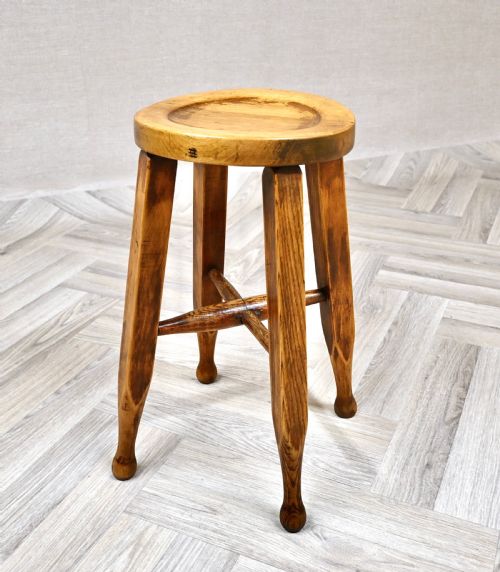
When you search for a turned leg side stool, you encounter robust seating and small support tables rooted in historic domestic traditions. The listings present pieces spanning from the seventeenth century through the Edwardian era, reflecting vernacular and formal British design.
Joint stools and occasional tables dominate the selection, frequently constructed as low seating or compact stands. These items emerge from periods including the Georgian era, the Arts and Crafts movement, and later Jacobean revivals.
Country workshops and provincial makers produced these objects for everyday household tasks, ranging from milking to fireside seating. Oak and elm versions appear most frequently, accompanied by ash, pine, and mahogany examples.
Materials and Joinery Techniques
Makers relied primarily on native hardwoods such as oak and elm, selected for their durability and grain. Timber was often jointed with pegged mortise and tenon construction, ensuring rigid frames without metal fasteners.
Turning lathes shaped the upright supports into bobbin, baluster, or simple cylindrical profiles. Seats and tops utilised solid planks or rush webbing, depending on whether the piece functioned as a stool or a small table.
Regional country workshops produced these utilitarian forms using local timber and traditional turning techniques.
Assessing Build Quality and Surface Integrity
Quality rests in the originality of the timber and the tightness of the structural joints. Untouched surfaces retain historic patination and deep colour, whereas heavily restored examples lose their textural nuance.
The precision of the turned legs and the thickness of the top boards distinguish provincial utility work from finer period interpretations. Retaining original pegging and minimal timber replacement elevates an example.
The Turned Leg Side Stool Glossary
- Joint Stool
- A sturdy wooden stool built with mortise and tenon joints, traditionally used for sitting or as a small surface. These pieces often feature pegged construction and rectangular tops.
- Turning
- A woodworking technique where timber rotates on a lathe while a chisel shapes it into cylindrical or decorative profiles. This method creates the characteristic legs found on seventeenth-century and revival furniture.
- Mortise and Tenon
- A traditional woodworking joint where a protruding tongue fits tightly into a corresponding cavity. This method secures the frame of early tables and seating without relying on modern adhesives.
- Patina
- The surface sheen and colour developed by wood through age, handling, and light exposure over decades or centuries. Untouched examples display rich variations across the timber.
Turned Leg Side Stool: Frequently Asked Questions
How do I date an old stool?
Examine the tool marks, timber shrinkage, and joinery methods visible on the underside and frame. Hand-riven boards and pegged joints often point towards earlier seventeenth or eighteenth-century origins.
Later nineteenth-century revival pieces mimic these styles but frequently display machine-cut elements or different secondary woods. Comparing the patination and wear patterns helps clarify the age of the item.
Were these used for sitting or tables?
Many early pieces served dual purposes as compact seating and elevated surfaces for household items. Their sturdy frames accommodated weight while remaining small enough to move easily around a room.
Over time, similar turned leg designs transitioned strictly into side tables or occasional stands. The height and surface wear generally indicate whether a piece saw primary use as a seat or a table.
Can I use these daily?
Solid hardwood construction ensures these items remain functional for regular seating or display purposes. Checking the stability of the leg joints guarantees they handle everyday weight safely.
Positioning them away from direct heat sources protects the historic timber from drying out or splitting. Gentle polishing maintains the surface without stripping the accumulated character.
What is a joint stool?
A joint stool is an early form of wooden seating constructed using tightly fitted pegged joints rather than nails. They provided stable, elevated platforms in historic households.
Their robust design allowed them to double as small side tables when required. Surviving examples showcase various regional turning styles across oak and elm.