
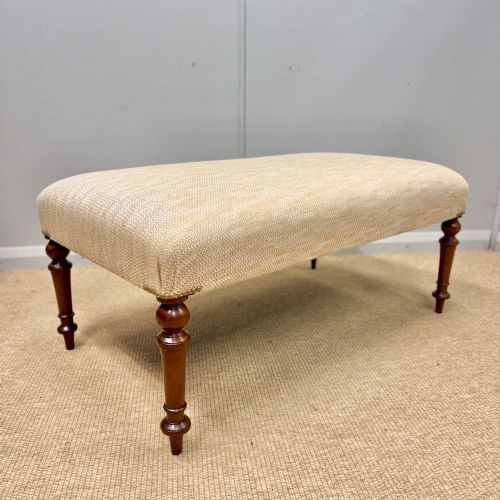
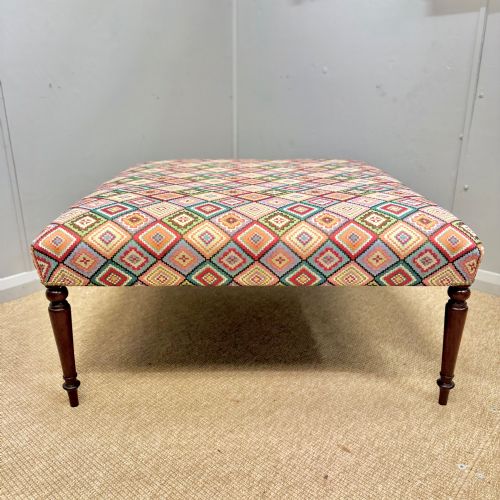
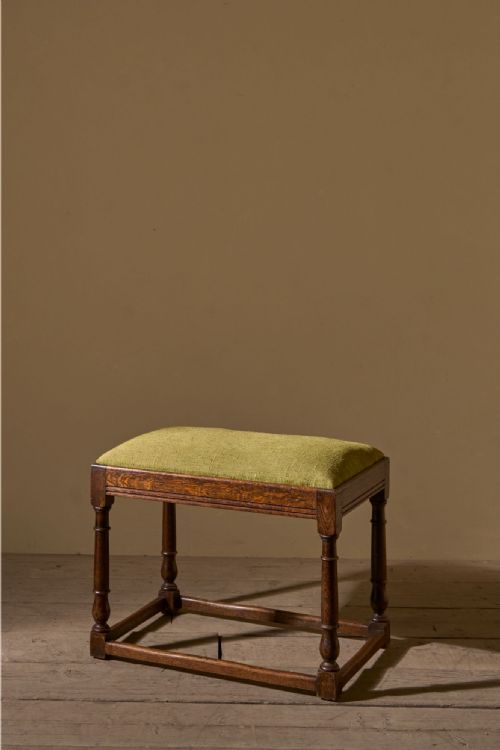
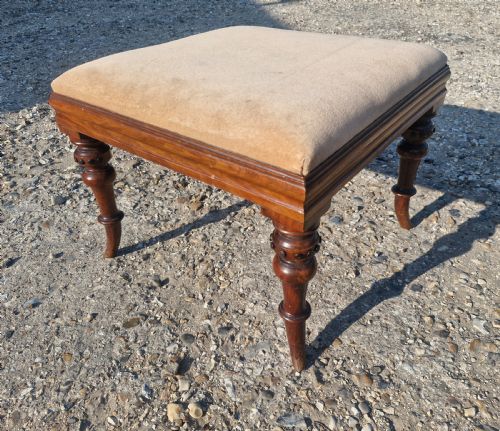
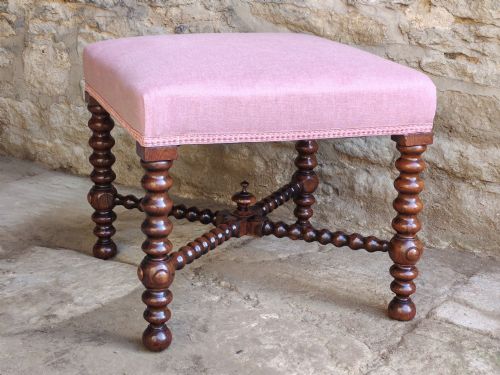
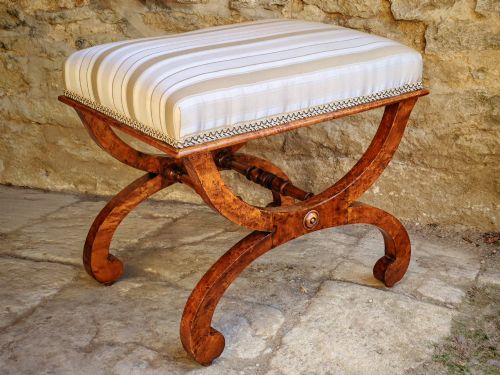

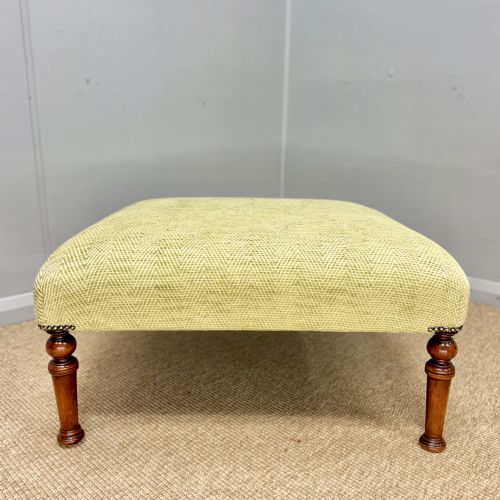


Turned Leg Ottoman Stool
These turned leg ottoman stool pieces bring practical comfort and period character to a room, offering versatile seating and footrests.
Turned Leg Ottoman Stool
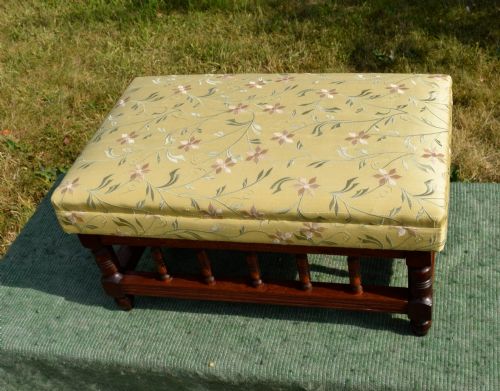
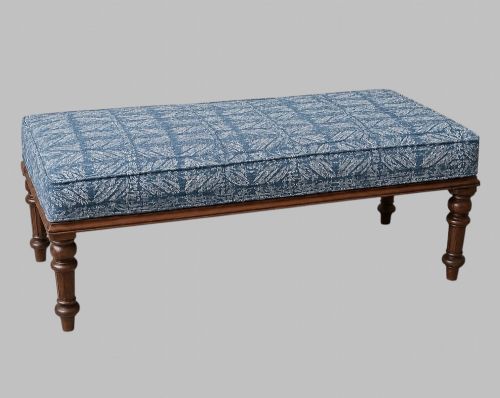
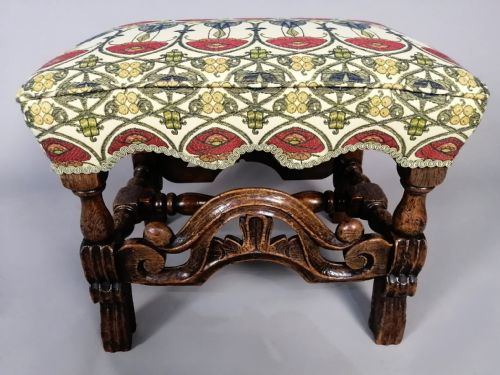
A turned leg ottoman stool serves as a functional low seat, footrest or bench within traditional interiors. Buyers searching for a turned leg ottoman stool will find numerous Victorian and nineteenth-century examples alongside Edwardian and early twentieth-century pieces.
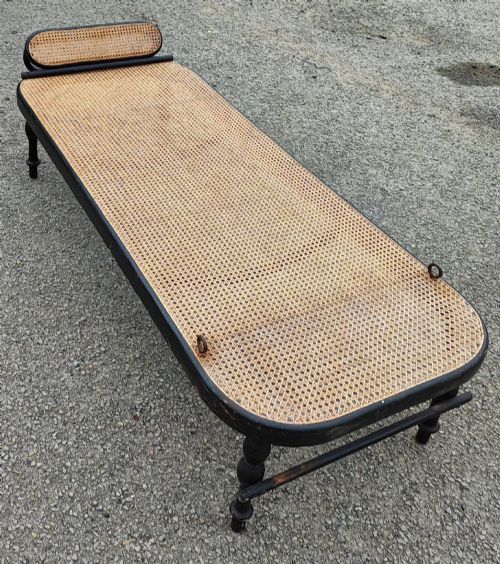
The selection spans various forms including square footstools, long window seats, day beds and large country house ottomans. Mahogany, walnut and oak frames appear frequently, often raised on castors or featuring distinct turned wooden supports.
How they were made
Cabinetmakers shaped dense hardwoods like mahogany, walnut and oak into sturdy frames with carved or turned structural members. Brass castors were frequently fitted to the base of larger nineteenth-century examples to ease movement across heavy carpets.
Traditional upholstery methods utilised textiles such as leather, linen, wool, tapestry and chenille, often secured with deep buttoning or modern specialist fabrics. Caned tops also feature on select mahogany and oak frames from the period.
What varies in quality
The structural integrity of the timber frame and the precision of the turning set superior examples apart from standard utility items. Dense hardwoods like rosewood and burr maple indicate finer regional or metropolitan workshop origins compared to simpler elm or oak frames.
The standard of upholstery and the choice of covering material greatly influence the character and execution of each piece. Professional recovery using heavy linen, kilim or designer textiles demonstrates greater care in preservation.
The Turned Leg Ottoman Stool Glossary
- Ottoman
- A low upholstered seat or bench without arms or back. These pieces function as footstools or casual seating.
- Turned leg
- A wooden support shaped on a lathe to create cylindrical or decorative profiles. This feature defines the structural aesthetic of the base.
- Buttoning
- A method of securing upholstery stuffing by pulling twine through the fabric to create deep indentations. This technique provides both pattern and firmness.
- Castor
- A small wheel attached to the base of a furniture leg to assist mobility. Brass versions commonly appear on nineteenth-century footstools.
Turned Leg Ottoman Stool: Frequently Asked Questions
How do I use an ottoman stool?
These low pieces serve primarily as comfortable footrests before armchairs or sofas. They also function well as impromptu seating or centre tables in larger rooms.
Larger formats, such as window seats and long benches, fit effectively at the foot of a bed or beneath a window recess.
Which periods are common for these stools?
The majority of pieces originate from the nineteenth century, with strong representation from the Victorian era. Edwardian and early twentieth-century examples also appear regularly across the selection.
Earlier Regency and William IV pieces occasionally surface, identifiable by distinct timber choices and classical framing details.
What woods were used for the frames?
Mahogany, walnut and oak form the foundation of most surviving frames. Cabinetmakers occasionally utilised finer decorative timbers such as rosewood and burr maple.
Simpler woods like elm appear on smaller domestic footstools intended for everyday household utility.
Are the upholstery fabrics original?
Few pieces retain their earliest fabric coverings due to natural wear over the decades. Many frames have been professionally reupholstered in period-appropriate textiles, heavy linens or branded designer fabrics.
This modern recovery work ensures the furniture remains functional and clean for contemporary domestic interiors.