

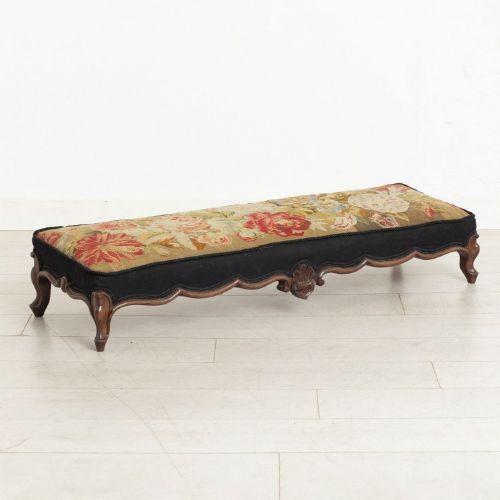


Low Padded Ottoman Bench
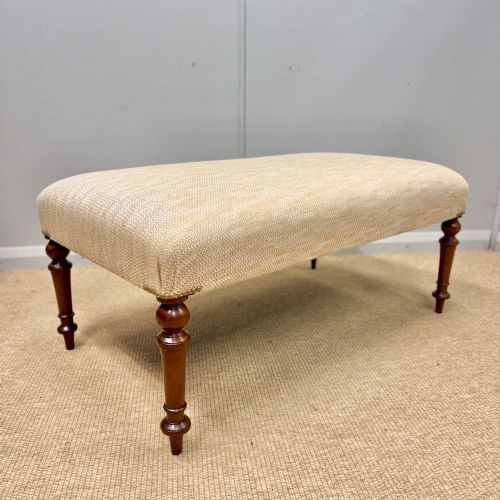
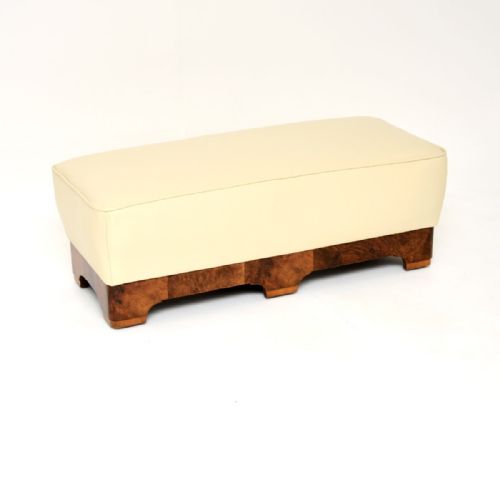
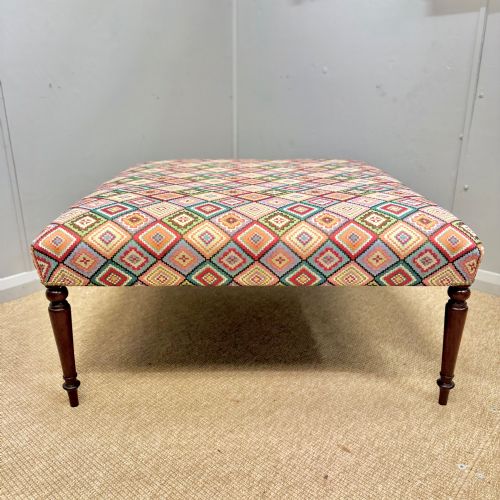
These low padded ottoman bench pieces provide low-level seating and foot support, bringing period character and comfort to a room.
Low Padded Ottoman Bench
A low padded ottoman bench search covers a variety of low seating forms, including footstools, fender stools, and long hall seats. Most pieces found here date from the nineteenth century into the early twentieth century, spanning Victorian, Edwardian, and Art Deco periods.
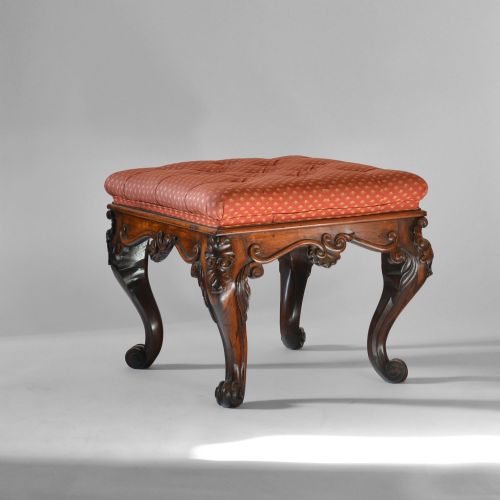
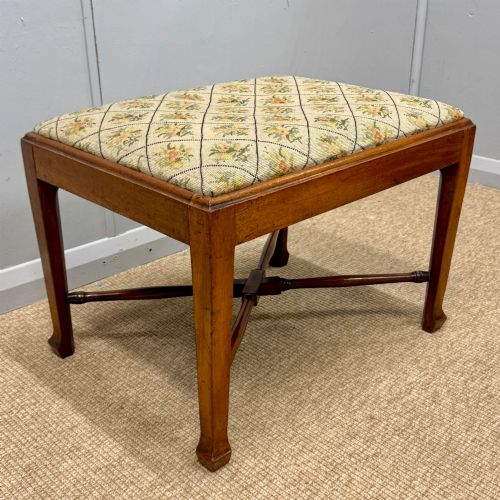
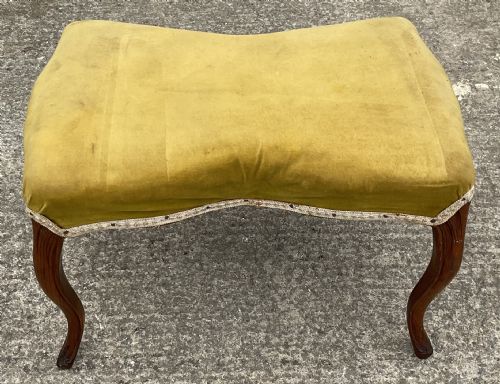
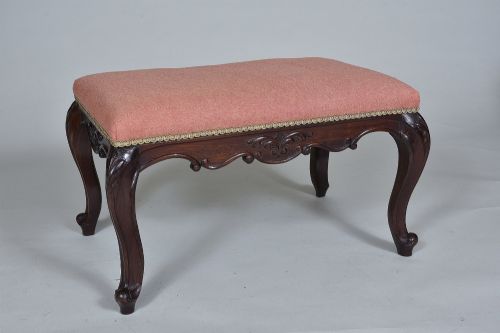
The most common formats on this page are walnut or mahogany framed footstools and longer benches, often resting on cabriole legs or brass castors. Forms range from compact Victorian walnut designs to large English country house proportions.
Makers drew on diverse historical revivals, producing Queen Anne, Georgian, and Louis XIV styles alongside Anglo-Indian and French country pieces. These items function equally as movable footrests and as centre stools positioned in larger rooms.
Materials and construction
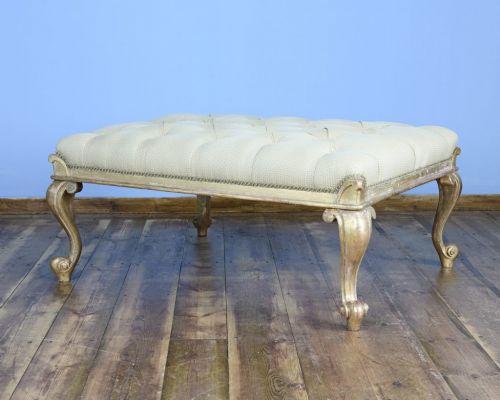
Frames are constructed predominantly from hardwoods such as walnut, mahogany, rosewood, teak, and oak, occasionally featuring carved giltwood or painted finishes. Joinery follows traditional cabinet-making methods suited to load-bearing seating.
Upholstery incorporates fabric, leather, wool, textile, and woven rattan, frequently supported by deep buttoning or fresh modern padding. Hardware details include brass castors for mobility and cross stretchers for structural rigidity.
Several low padded ottoman bench examples ride entirely on brass castors, ready to roll across the floor at a moment's notice.
Distinctions in quality
Quality rests upon the crispness of the timber carving and the selection of cabinet woods, such as burr walnut veneers or dense figured mahogany. Superior examples display balanced proportions, robust frame construction, and harmonious revival detailing.
The Low Padded Ottoman Bench Glossary
- Fender stool
- A long, low stool designed to fit in front of a fireplace hearth. These pieces typically feature narrow rectangular proportions.
- Cabriole leg
- A furniture leg that curves outward and then tapers inward, finishing in a pad, scroll, or claw foot. This form originates from classical antiquity and defines much eighteenth-century and revival seating.
- Cross stretcher
- Horizontal wooden bracing connecting the legs of a stool or table to increase stability. They often intersect near the centre and may include decorative turnings.
- Parcel gilt
- A finishing technique where portions of a wooden or carved frame are highlighted with thin gold leaf. The remaining surface exposes the natural wood, paint, or gesso beneath.
- Deep buttoning
- An upholstery technique where twine is pulled through padding and secured with buttons in a diamond pattern. This method creates characteristic folds and keeps internal stuffing evenly distributed.
Low Padded Ottoman Bench: Frequently Asked Questions
What is a fender stool?
A fender stool is a long, low seat specifically proportioned to sit along a hearth. They allowed people to warm themselves close to the fire.
These pieces usually have narrow depths and substantial lengths. They remain useful today in front of low fireplaces or long sofas.
How do I use a low padded ottoman bench?
These pieces serve multiple functions as footrests, low seats, or small coffee tables with the addition of a tray. Their compact height makes them versatile additions to living rooms and dressing areas.
Position them before armchairs or use them as centre stools in open spaces. Their movable nature allows for easy reconfiguration of a room.
Are these pieces upholstered in original fabric?
Most antique stools have undergone reupholstery over time to ensure structural soundness and hygiene. Listings occasionally note original fabric, but modern replacement is standard practice for older seating.
When buying, examine the quality of the current upholstery work rather than expecting period textiles. Frames and wood finishes remain the primary indicators of age.