


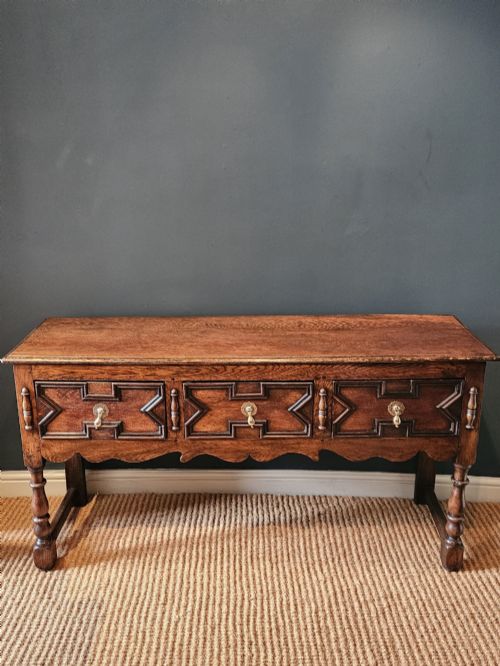
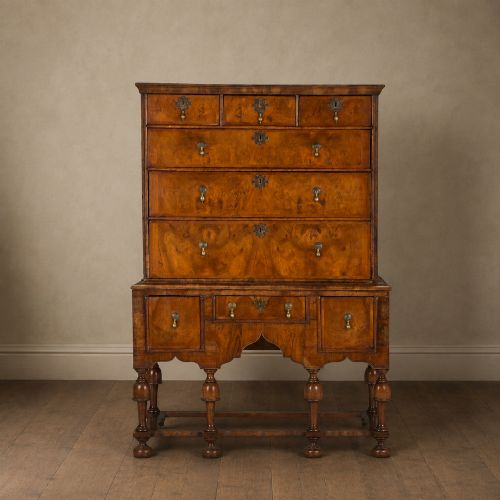
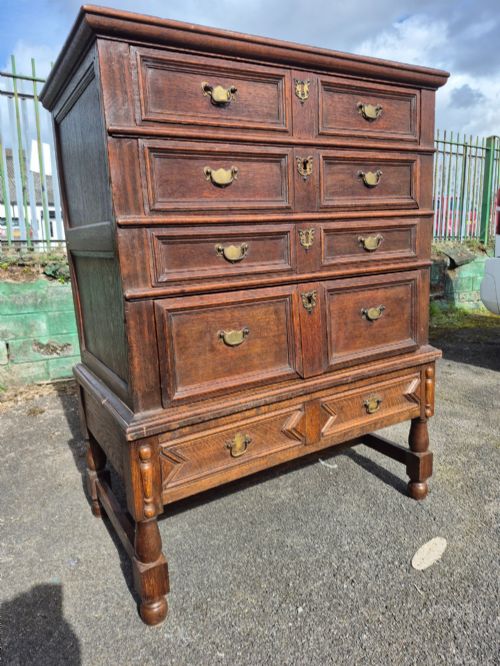
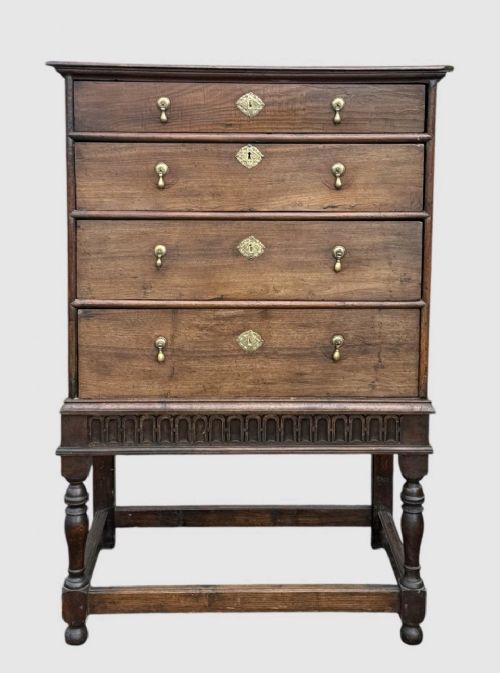



Turned Leg Chest
Turned leg chests bring together centuries of timber-working expertise, offering practical storage grounded in sturdy, visible supports.
Turned Leg Chest
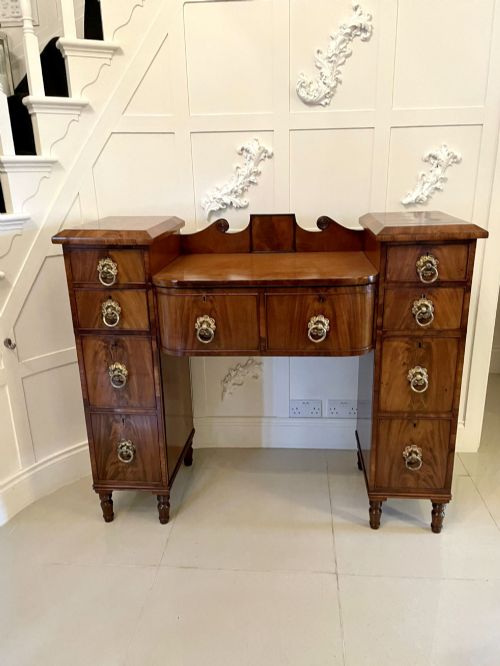
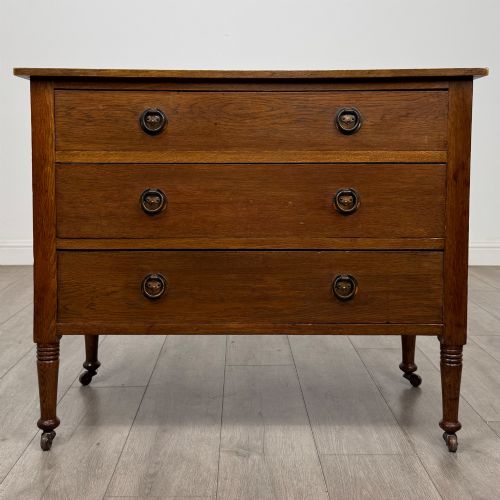
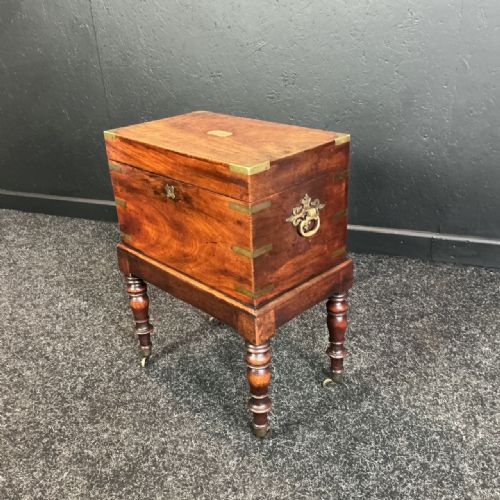
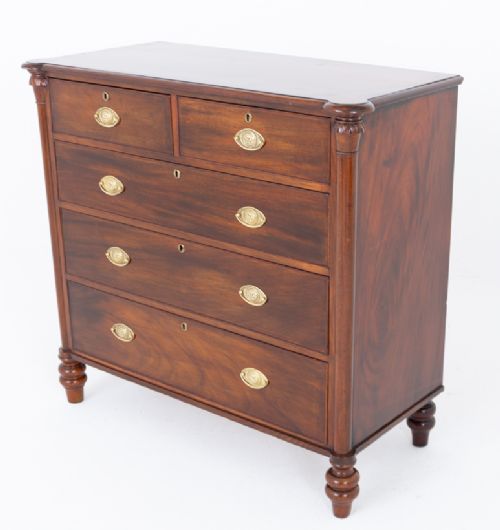
A turned leg chest is a storage piece raised on shaped wooden supports, spanning periods from the seventeenth century through to the Edwardian era. These pieces appear in forms such as chests of drawers, cabinets on stands, and chests on stands.
The oak, walnut, and mahogany variants reflect the shifting domestic fashions of Georgian, Victorian, and earlier workshops. Buyers meet these pieces in regional oak formats alongside more polished walnut and mahogany iterations.
How they were made
Cabinet makers utilised solid timbers like oak and mahogany alongside decorative veneers such as laburnum, olive wood, and kingwood. These surfaces frequently display intricate oyster cutting and parquetry patterns.
Structural elements rely on traditional joinery paired with lathe-turned supports, sometimes enhanced with brass fittings or boxwood stringing.
Materials span oak, walnut, mahogany, kingwood, boxwood, olive wood, and laburnum across periods from the seventeenth century to the twentieth.
What varies in quality
The refinement of the turning and the choice of surface timber dictate the standing of a piece. Finer examples exhibit precise oyster veneers or geometric mouldings that demonstrate the maker's control over challenging materials.
Integrity of construction across the carcase and the retention of original timber surfaces separate standard utilitarian items from exceptional cabinet work.
The Turned Leg Chest Glossary
- Oyster veneer
- Cutting small branches obliquely to produce circular or oval patterns resembling oyster shells. This technique flourished during the seventeenth century on walnut and olive wood surfaces.
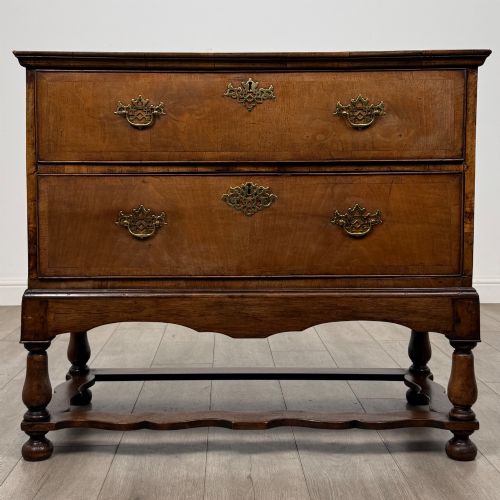
- Chest on stand
- A two-part storage form featuring an upper drawer section set upon a separate supporting frame with legs. This configuration elevates the storage space from the floor.
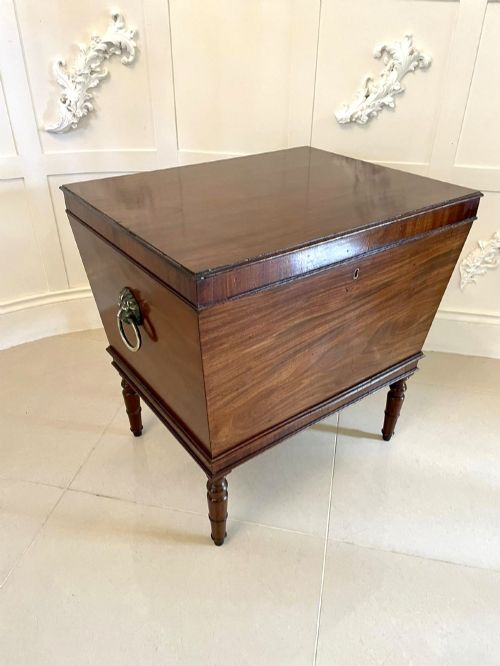
- Cellarette
- A lockable container used for storing wine bottles near the dining table. These items often feature internal divisions and sturdy timber construction.
- Parquetry
- Geometric mosaic woodwork formed by small veneer pieces laid down in repeating patterns. It creates decorative geometric surfaces on cabinet doors and tops.
- Geometric moulding
- Raised wooden mouldings applied in rectilinear or rectilinear-curved patterns onto drawer fronts and panels. This style is characteristic of seventeenth and early eighteenth-century work.
Turned Leg Chest: Frequently Asked Questions
What periods do these chests come from?
These pieces date from the seventeenth century through to the early twentieth century, encompassing William and Mary, Queen Anne, Georgian, and Victorian eras.
The styles shift from heavy seventeenth-century oak and elaborate walnut veneer stands to the refined mahogany forms of the Georgian and Victorian periods.
How were cellarettes used?
Cellarettes served as dedicated containers for keeping wine cool and secure within dining rooms before fitted sideboards became common.
Servants would draw bottles from these lockable boxes as required during long dining sessions.
What is an oyster veneer?
Oyster veneering involves slicing small branches across the grain to create decorative roundels resembling oyster shells.
Cabinet makers arranged these cross-sections closely together to cover large surfaces on seventeenth-century walnut and olive wood furniture.
How do I care for antique timber?
Antique wood requires stable indoor humidity levels and protection from direct sunlight to prevent timber movement and fading.
Occasional application of appropriate wax polish maintains the lustre of the finish without building up heavy residues.
What distinguishes a chest on stand?
A chest on stand consists of an upper storage carcase resting on a distinct open-frame base supported by turned legs.
This form lifts the main drawers higher off the floor and provides a lighter visual silhouette than a standard chest.