
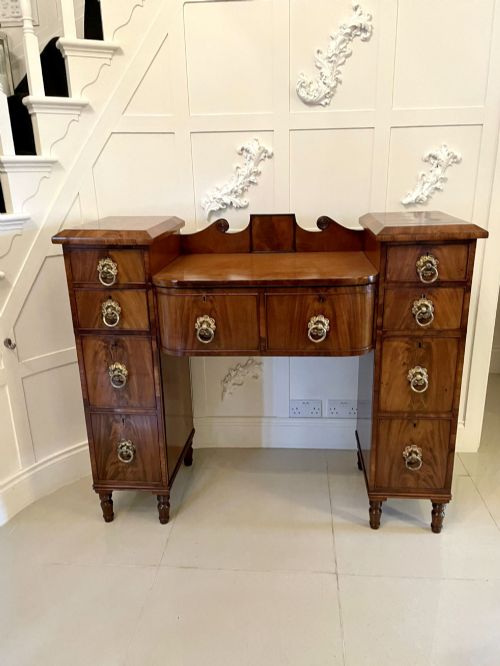

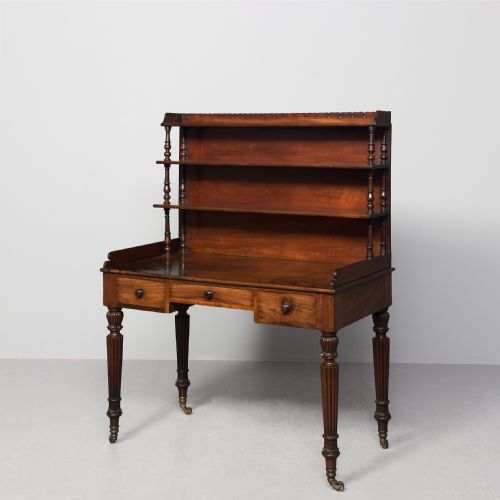
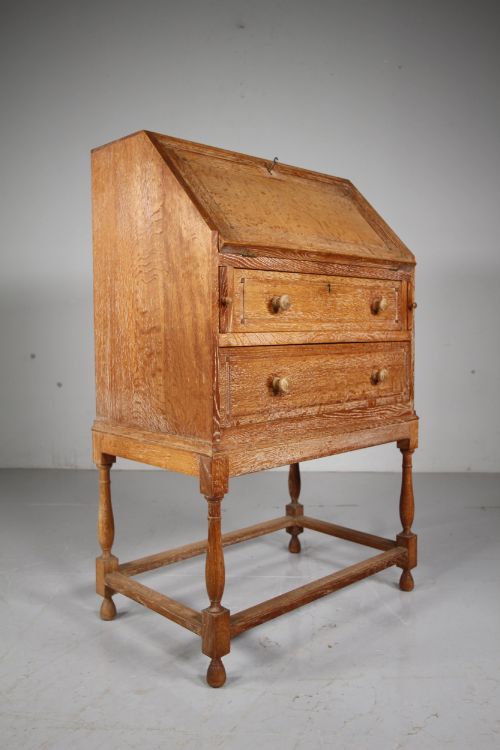
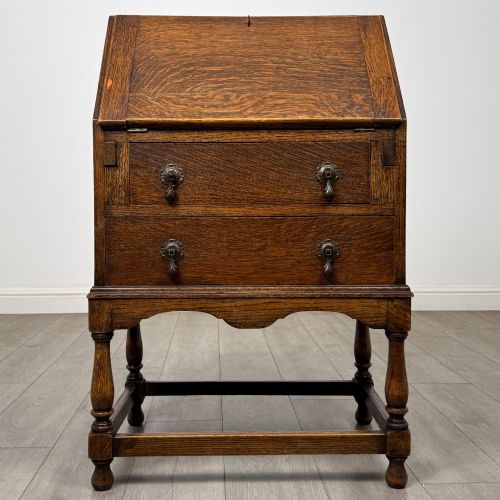
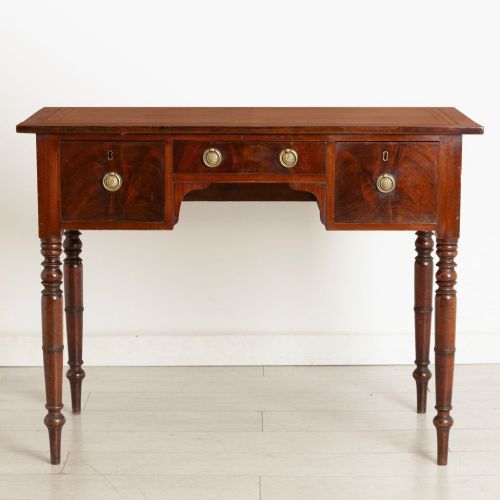
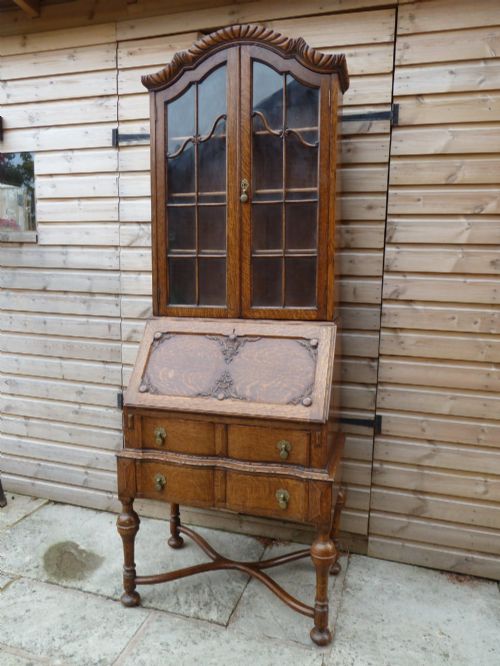
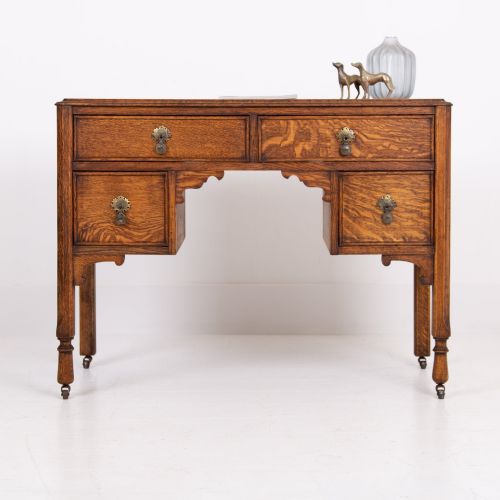
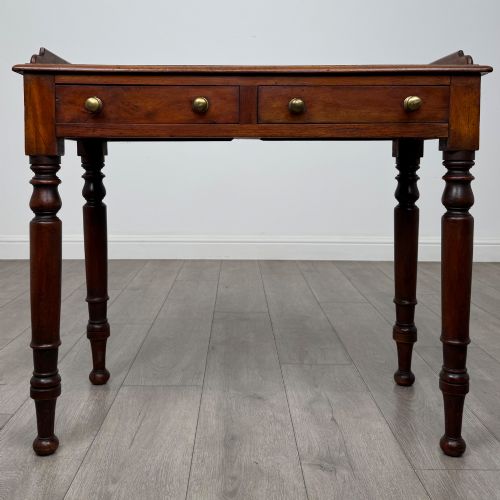
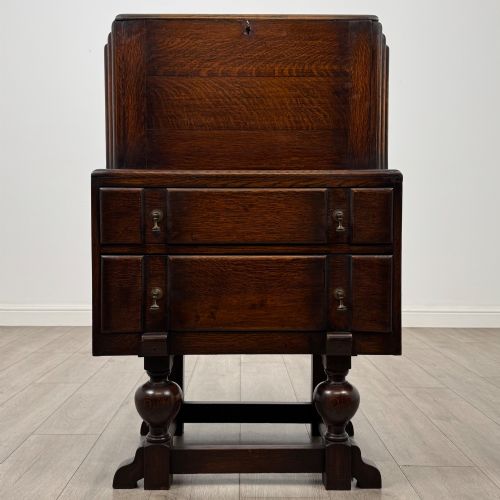
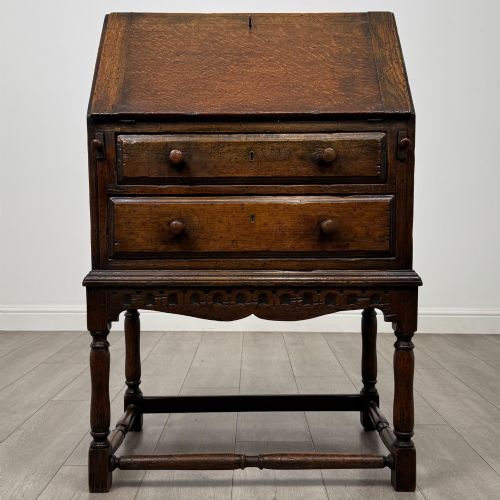
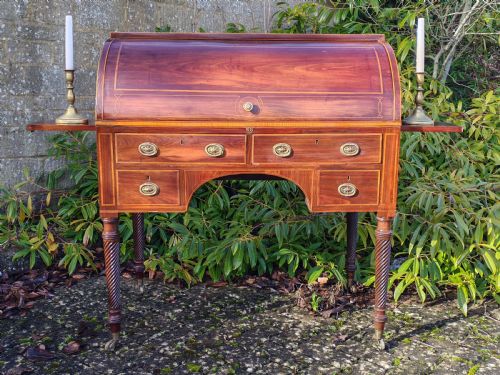
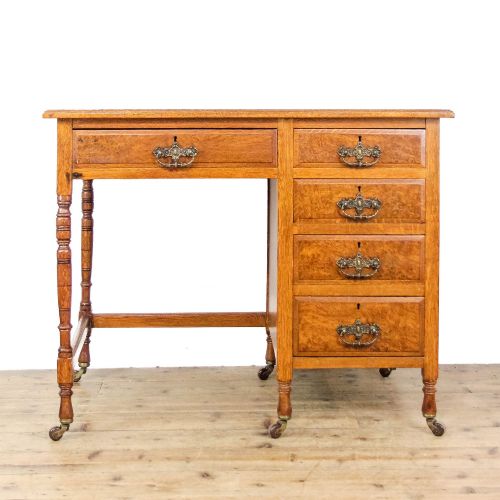


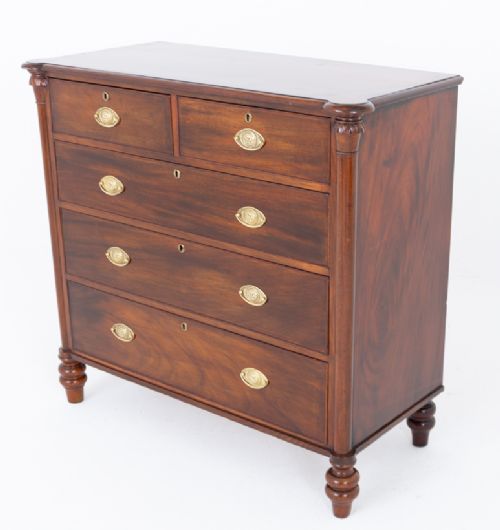
Turned Leg Bureau
A turned leg bureau combines practical workspace and concealed storage, bringing period character and warm timber tones into a working room.
Turned Leg Bureau
A turned leg bureau provides a fitted writing surface above storage drawers, often featuring a sloping fall front that conceals pigeonholes and small compartments.
The turned leg bureau forms part of a wider group of desks, writing tables, and bureau bookcases spanning the Georgian, Victorian, and Edwardian eras.
Oak and mahogany dominate the materials seen across these writing desks, alongside walnut, elm, and satinwood inlay.
Materials and construction methods
Cabinet makers built these desks primarily in solid oak and mahogany, often utilising burr walnut or flame mahogany veneers for decorative effect.
Brass fittings, leather writing inserts, and turned wooden supports complete the construction, combining structural timber frames with functional hardware.
Listings feature oak, mahogany, and walnut across Georgian, Victorian, and Edwardian periods.
Distinguishing quality in period desks
The refinement of the timber selection dictates much of the distinction between pieces, with figured grains and matched veneers raising the standard of the work.
Design execution in the interior compartments and the proportion of the turned legs separate standard workshop output from finer cabinet making.
James Mein of Kelso·Heals of London·Heal and Sons·Maple and Co
The Turned Leg Bureau Glossary
- Bureau
- A desk featuring a sloping lid that drops down to form a writing surface and reveals interior pigeonholes. These pieces often sit above multiple storage drawers.
- Fall front
- The hinged panel on a bureau that drops down horizontally to create the writing desk. When closed, it conceals the inner compartments.
- Turned leg
- A structural support shaped on a lathe to create cylindrical profiles with decorative rings and bulbs. Found on tables, desks, and seating.
- Pigeonhole
- A small, open compartment inside a desk or bureau used for sorting letters and papers. These compartments are typically arranged in rows above small drawers.
Turned Leg Bureau: Frequently Asked Questions
What is a turned leg bureau?
A turned leg bureau is a writing desk featuring a sloping front flap that opens for writing, supported by lathe-turned wooden legs.
These pieces combine storage drawers with fitted interior compartments for paperwork.
How do I date an oak bureau?
Dating relies on timber choice, construction methods, and hardware styles associated with periods like the Georgian or Edwardian eras.
Earlier pieces show specific hand-tool marks and traditional joinery within the drawer linings.
Where should I place a bureau?
A bureau suits studies, living rooms, or hallways where floor space allows the fall front to open fully.
Keep wooden writing surfaces away from direct heat sources to prevent timber movement.
Are these desks practical for daily use?
The enclosed writing compartments and built-in drawers offer functional storage for modern stationery and laptops.
The writing height matches traditional standards used for seated correspondence.