
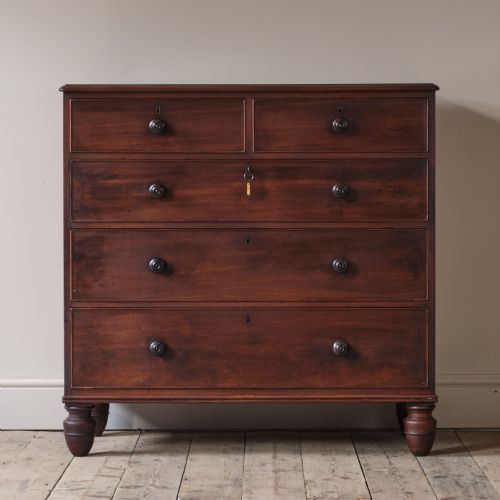
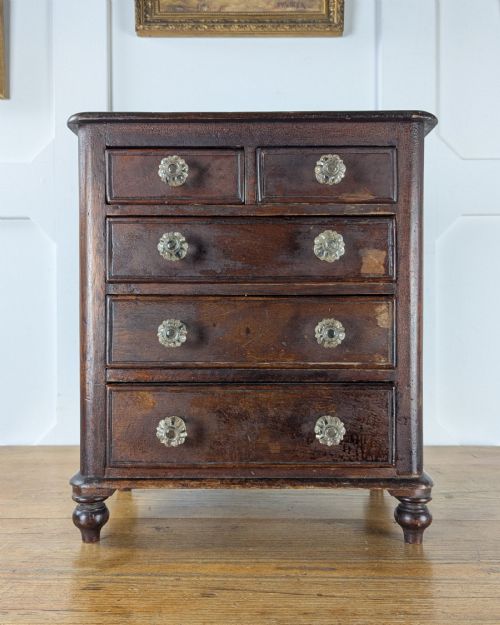
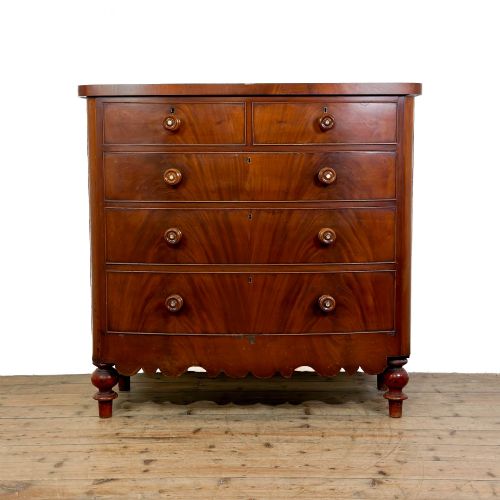
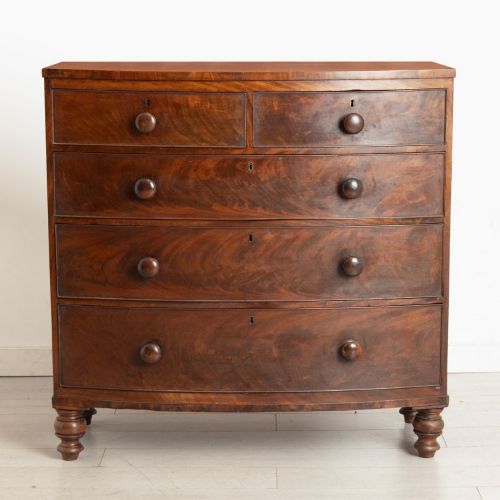
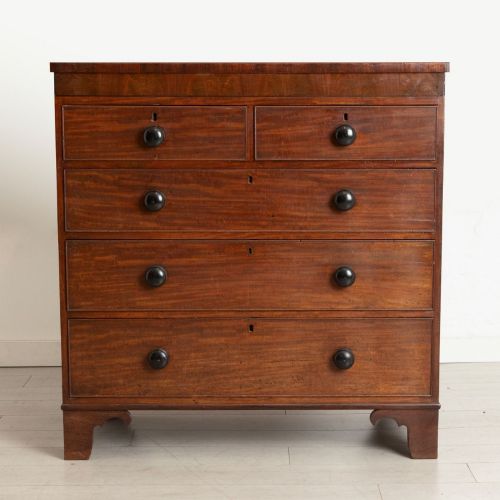


Turned Foot Mahogany Chest
A turned foot mahogany chest provides dependable storage with the rich grain of nineteenth-century timber.
Turned Foot Mahogany Chest
A turned foot mahogany chest is a storage piece defined by solid timber construction and distinct rounded feet. Most examples on this page date from the Victorian and Georgian periods, showcasing the traditional forms of nineteenth-century cabinetmaking.
Buyers encounter standard chests of drawers alongside smaller formats like miniature apprentice pieces and bow front designs. These items serve practical bedroom or living space storage while displaying the characteristic warmth of mahogany.
Origins span the nineteenth century, encompassing Regency and George IV stylistic variations. Each piece reflects the domestic utility and aesthetic preferences of its specific era.
How they were made
Cabinetmakers utilised solid mahogany and flame mahogany veneer applied over secondary woods such as pine. Brass hardware and mother of pearl details frequently accent the primary timber surfaces.
Construction methods include tongue and groove joinery, particularly visible in nineteenth-century workshops like T & G Seddon. Turned feet are integrated into the base framework to elevate the body of the chest.
Listings feature mahogany, pine, and brass across Victorian and Georgian periods.
What varies in quality
The sophistication of the timber grain separates standard utility items from finer work, especially where flame mahogany veneer is selected for drawer fronts. The crispness of the turned feet and the precision of the joinery further distinguish the cabinetmaker's skill.
Proportion and decorative restraint dictate the aesthetic success of the piece, with bow front profiles requiring considerable technical mastery from the maker.
T & G Seddon
The Turned Foot Mahogany Chest Glossary
- Flame mahogany
- A veneer cut from the fork of the mahogany tree to create a distinctive, swirling flame-like pattern. This material was reserved for primary display surfaces.
- Bow front
- A convex curved front profile popular during the Regency and Georgian periods. It softens the boxy silhouette of a standard chest.
- Apprentice piece
- A smaller scale furniture item created by a trainee craftsman to demonstrate skill. These miniature chests replicate full-size designs in every detail.
- T & G Seddon
- A notable nineteenth-century cabinetmaking firm known for marked institutional and domestic furniture. Their pieces indicate documented workshop production.
- George IV
- A stylistic and historical period spanning the early nineteenth century. Furniture from this era often combines classical proportions with rich mahogany veneers.
Turned Foot Mahogany Chest: Frequently Asked Questions
What is a turned foot mahogany chest?
A turned foot mahogany chest is a traditional storage unit constructed from mahogany timber featuring distinct rounded supports at the base. These pieces primarily date from the nineteenth century.
They offer deep drawer storage while displaying the rich grain and warm reddish-brown tones characteristic of period mahogany furniture.
How do I date a mahogany chest?
Dating relies on observing construction techniques, hardware styles, and overall proportions relative to known historical periods like the Georgian and Victorian eras. Secondary woods and joinery methods provide further clues.
Changes in foot design and drawer configuration help narrow the production window within the nineteenth century.
What are apprentice chests?
Apprentice chests are smaller scale versions of full-size chests of drawers produced by trainees to master their craft. They duplicate standard construction methods on a reduced scale.
These miniature items function as tabletop display pieces while maintaining authentic period joinery and timber selection.
How do I care for mahogany furniture?
Maintenance involves keeping the timber away from direct sunlight and consistent heat sources to prevent veneer splitting. Regular dusting with a soft cloth preserves the polished surface.
Application of appropriate wax feeds the wood and maintains the natural lustre of the nineteenth-century finish.